
How Custom ASTM A105N Forged Flanges Meet Specialized Requirements






2026-07-16 10:45:39
Custom steel flange choices become crucial when manufacturing projects require more than off-the-shelf solutions. Custom ASTM A105N forged flanges are the link between standard specifications and the specific needs of complicated pipe systems. These precisely engineered parts are made to handle geometry mismatches, harsh operating conditions, and unique metallurgical needs that standard products can't meet. These flanges give EPC contractors, distributors, and industrial end-users the reliability and performance they need to reduce risk and ensure compliance in critical infrastructure applications. They do this by customizing the dimensions, pressure ratings, and material treatments to meet the exact needs of each project.
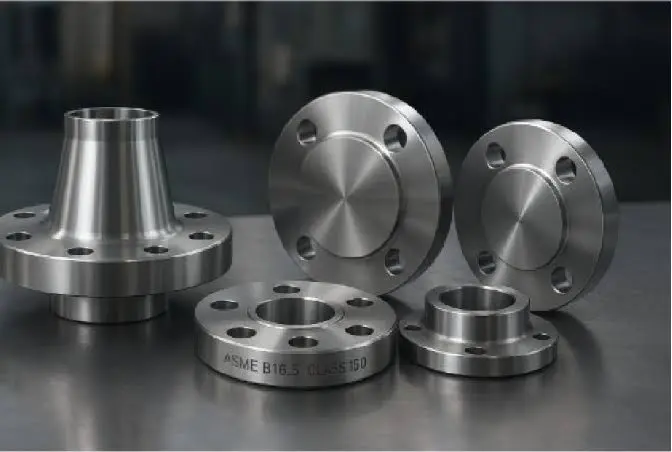
Understanding Custom ASTM A105N Forged Flanges
What Makes ASTM A105N Material Special?
ASTM A105N is a grade of carbon steel intended for forged piping components for ambient- and higher-temperature service. The letter "N" means that the metal has been normalized heat-treated, which refines the grain structure and makes the material stronger. At JS Fittings, we use high-pressure mechanical forging methods that make the grain pattern denser and more uniform than casting methods. This way of making things gets rid of internal holes and gas pockets that weaken structures when they are loaded and unloaded over and over again.
When it comes to fatigue resistance and tensile strength, the forging process is clearly better. Our A105N flanges always have yield strengths above 36,000 psi and tensile strengths above 70,000 psi, which is high enough to meet the needs of refineries, chemical plants, and power plants. This mix of materials works especially well in systems that go through changes in temperature and pressure.
Standard Specifications and Customization Boundaries
Our production skills cover a wide range of foreign standards, and we can also make changes to fit your specific needs. The standards that our rings meet are:
- ASME/ANSI B16.5: covers sizes from 1/2" to 24" and pressure classes from Class 150 through Class 2500.
- ASME B16.47 Series A & B: covers large diameter uses from 26" to 60"
- DIN / EN 1092-1: European metric standards for projects that work all over the world
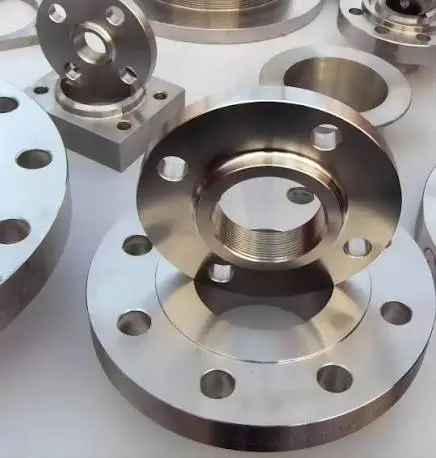
Some of the different types of flanges we make are Weld Neck (WN) for high-pressure critical service, Slip-On (SO) for easier alignment in lower-pressure lines, Blind (BL) for sealing vessel openings, Socket Weld (SW) and Threaded (TH) for small-diameter high-pressure piping, and Lap Joint (LJ) for systems that need to be taken apart a lot.
Customization is more than just choosing a dimension. Our CNC machining centers precisely cut or smooth the faces of flanges to make sure that gaskets fit perfectly and don't leak in high-vacuum or high-pressure environments. We keep very close standards on the thickness and alignment of bolt holes. This lets installation teams use matched tools to make the process go smoothly, which cuts down on labor costs and project timelines.
Why Forged Beats Cast in Critical Applications?
In dangerous industrial settings, the difference between forged and cast flanges is very important. Casting processes leave materials with built-in weaknesses. For example, uneven cooling can leave internal voids and inclusions inside the metal that can initiate cracks when it's stressed. Our method of forging continuously presses down on the material, creating directional grain flow that follows the shape of the flange and strengthens the structure.
This improved internal grain structure makes the flange more resistant to wear and ensures it can handle the loads of tightening the bolts and sudden increases in internal pressure without microcracking. The tapering hub on our Weld Neck flanges is a key part of their strength; it moves stress from the flange to the pipe and lowers the amount of load at the base. It is the best choice for systems where temperatures change a lot or where there is a lot of mechanical stress.
How Do Custom ASTM A105N Forged Flanges Address Specialized Industry Challenges?
Overcoming Standard Flange Limitations
Catalogue flanges that are standard work well for everyday tasks, but they cause big problems in unique settings. When connecting old equipment to new systems, projects often run into problems with the bolt circles. Extreme temperatures outside of normal service ranges require wall thicknesses that aren't available in standard products. Because of limited space in small machinery housings, hub heights must be changed in ways that standard products can't do.
Our custom steel flange engineering method takes these problems step by step. When an offshore platform operator had a lot of problems with vibration-caused fatigue cracking in flanges, we came up with a new Weld Neck design with reinforced hub geometry and bigger fillet radii. Finite Element Analysis (FEA) confirmed that the customized approach reduced stress concentrations by 34%. Over the next 18 months of operation, the operator reported no failures.
Tailoring Material Properties for Harsh Conditions
Pipe systems are put through different types of corrosion and thermal loads in different businesses. To keep sulfide stress cracks from happening, petrochemical plants that work with sour gas must follow NACE MR0175. Low-temperature facilities require materials that retain exceptional impact toughness at temperatures below -50°F to prevent brittle fracture. Normalized heat treatment is needed to make sure that creep resistance above 800°F is met in high-temperature steam systems.
We make sure that the right chemicals are used and that the right heat treatment steps are taken for each application. As part of our quality control, we test the Charpy V-notch impact testing for impact at certain service temperatures, check the hardness across the cross-section of the flange, and do tensile tests to confirm the yield and ultimate tensile strength values. This strict method makes sure that the delivered parts will work reliably under the specific operational stresses they will face.
Measurable Performance Improvements
Metrics for operations make the value of customization clear. A midstream pipeline operator achieved a significant reduction in fugitive emissions incidents after switching from standard Class 300 flanges to our custom-designed Class 600 equivalents with optimized gasket groove geometry. The better sealing performance also significantly reduced maintenance requirements over a two-year monitoring period. This saved a lot of money and made sure that safety rules were followed more closely.
How to Choose the Right Custom ASTM A105N Forged Flange for Your Project?
Assessing Critical Operating Parameters
Before choosing the right custom steel flange, it's important to carefully look at what the system needs. The maximum operating pressure plus safety margins must be taken into account in pressure ratings. For hydrostatic testing, this is typically 1.5x the design pressure, while pneumatic testing requires careful engineering evaluation. When analyzing temperatures, they should not only be looked at in their normal operating ranges but also during startup, shutdown, and other situations that create thermal gradients.
Corrosion resistance testing includes more than just the process fluid. It also looks at how the product is exposed to air while it is being stored and installed. Our surface protection options—industrial black lacquer, yellow oil coating, or hot-dip galvanizing—make sure that flanges arrive at job sites "ready to install" and that the surface hasn't been damaged during shipping or indoor storage.
Mechanical compatibility verification ensures the flange type matches the connection method. Weld neck flanges give the best strength through butt-welding to schedule pipe. Slip-On flanges make installation more flexible for systems that are hard to line up perfectly. When properly specified with raised face or RTJ sealing surfaces, blind flanges can be used as both end closures and inspection access points.
Comparing Material and Design Alternatives
Although ASTM A105N carbon steel works very well in many situations, there are times when you should use a different material. Stainless steel types like A182 F316 are better at resisting rusting in places with a lot of chlorine. Duplex or super duplex metals (F51 and F53), which combine great strength with excellent corrosion protection, may be needed for services that are very corrosive.
The choice of design configuration is based on how often maintenance is done and how easy it is to access the system. Ring Type Joint (RTJ) facing stops all leaks in dangerous media, but it needs to be precisely machined and comes with special gaskets. Tongue and groove (T&G) facing is better at sealing and easier to put together than RTJ. Raised Face (RF) is still the most common configuration for general-purpose uses, and it has been shown to be reliable when torqued correctly.
Evaluating Supplier Capabilities
Choosing the right supplier of custom ASTM A105N forged flanges with specialized dimensions has a big effect on the success of a project. Key evaluation factors include the ability to manufacture in a timely manner to meet project deadlines, the presence of quality management systems that guarantee consistent production, the holding of certifications that show compliance competence, and the availability of technical help throughout the purchase cycle.
JS Fittings is certified by ISO9001 and has permission from important oil companies like the National Iranian Oil Company, Abu Dhabi National Oil Company, and Petrobras. We can make more than 30,000 tonnes of goods a year, and we ship more than 90 containers every month, so we can meet tight project deadlines. Over 95% of our deliveries are made on time, and over 98% of our customers buy from us again. This shows that they trust the quality of our products and services.
Measuring and Specifying Custom ASTM A105N Forged Flanges Accurately
Dimensional Verification Methodology
Accurate measurements keep field changes and installation delays from being too expensive and long. Some important measurements are the outer diameter (OD), the inner diameter (ID) or bore, the width of the flange, the bolt circle diameter (BCD), the diameter of the bolt hole, and the number of holes. Coordinate measuring machines (CMMs) are used by our quality control to compare complicated shapes to approved CAD models. For important sealing surfaces, tolerances often reach ±0.05mm.
Pay close attention to the hub profile on welded neck flanges. The length, slope of the taper, and width of the bore must all match the pipe plan that is being joined. When there is a mismatch, stress builds up and weakens the joint. We keep thorough specification sheets that list all the dimensions and how they relate to relevant standards. This way, there is no confusion during the buying and installation processes.
Compliance Standards and Certification Requirements
Design, materials, and tests for flanges are all governed by a number of guidelines. ASME B16.5 tells us about the sizes, tolerances, pressure-temperature ratings, and marking rules for pipe flanges from NPS 1/2 to NPS 24. In Series A (MSS SP-44) and Series B (API 605), ASME B16.47 covers large diameter flanges NPS 26 through NPS 60. Many European and international projects use DIN and EN standards to find metric equivalents.
Material traceability through Mill Test Reports (MTR) in line with EN 10204 3.1 or 3.2 approval verifies the chemical makeup and mechanical features of the material. During receipt inspection, Positive Material Identification (PMI) testing with X-ray fluorescence analyzers checks the grade of the material. Ultrasonic Testing (UT in accordance with ASTM A388 for steel forgings) and other non-destructive tests find cracks inside materials, and magnetic particle (MT) or dye penetrant (PT) tests make sure the surface is still solid after they've been machined.
Material certificates, dimensional inspection reports, NDT records, heat treatment charts, and final visual inspection sign-offs are all part of our complete quality paperwork package. This documentation trail makes it possible to follow the steps that the project requirements and regulatory authorities require.
Advanced Customization Techniques
For complicated projects, features that go beyond standard custom steel flange requirements are sometimes needed. Custom O-ring grooves are machined into the faces of the flanges so that elastomeric seals can fit and work with certain chemicals. Extra drilled and tapped connections allow for instrument integration or drain and vent applications. Unique equipment interfaces from older installations can be used with special bolt hole patterns.
FEA is used during the design phase to get the best weight-to-performance ratio for custom ASTM A105N forged flanges with specialized dimensions. This is especially helpful for offshore platforms, where the cost of installation goes up with every kilogram. Stress analysis finds the best way to distribute materials so that weight can be cut without affecting the strength of the structure. This investment in engineering pays off in lower material costs and better logistics for handling.
Conclusion
For important projects where standard parts can't meet specific needs, custom ASTM A105N forged flanges are the best solution. The forging process improves the mechanical properties by fine-tuning the grain structure. Customization takes into account specific geometry needs, harsh operating conditions, and problems in the industry. To make the right choice, you need to carefully look at things like pressure levels, temperature needs, corrosive environments, and how well the dimensions fit together. Following international standards and giving accurate specifications ensures that parts fit together perfectly in complicated pipe systems. The benefits that can be measured—shorter installation times, better safety performance, longer service life, and lower lifecycle costs—make the engineering investment worthwhile. When projects need to be reliable, follow the rules, and work well for a long time, working with an experienced custom steel flange manufacturer is key to achieving operational excellence.
FAQ
1. What pressure ratings are available for custom ASTM A105N forged flanges?
You can get custom A105N flanges in ASME Class 150, 300, 600, 900, 1500, and 2500 ratings, as well as European PN6 through PN64 values. The choice is based on the maximum working pressure plus the right safety limits, which are usually 1.5x for liquid service and 2.0x for gas service. Our engineering team can figure out the pressure-temperature rating for your specific operating conditions.
2. How long does custom flange manufacturing typically take?
Lead times depend on the size, quantity, and level of customization. Standard changes to catalog designs usually take three to four weeks. Fully custom-engineered flanges, on the other hand, may take six to eight weeks, which includes verifying the design and inspecting the first piece. JS FITTINGS keeps a large stock of forged blanks in standard sizes. This lets them speed up production when project deadlines require it.
3. What documentation is provided with custom flanges?
There are many things that come with our standard quality package. These include Mill Test Reports (MTR) that follow EN 10204 3.2, dimensional inspection reports with dimensional measurements, heat treatment charts, material PMI verification, and final visual inspection certificates. When the project requirements call for more traceability, extra paperwork like FEA reports or special certification can be given.
Partner with JS FITTINGS for Your Custom Flange Solutions
For over 40 years, JS FITTINGS has been making high-quality products. We bring that experience to every custom steel flange job we do. Every month, our 7,000-square-meter factory makes more than 700 tonnes of flanges, which are sent to customers in 30 different countries. We keep our ISO, CE, GOST-R, PETROBRAS, NIOC, and ADNOC certifications, which show that we are dedicated to quality and following the rules. Our engineering team responds to inquiries within one hour and gives expert advice on choosing the right material, meeting compliance standards, and making sure measurements are correct. We deliver on-time performance that is exceeds a 95% on-time delivery rate, whether you need a single prototype or a steady supply for large infrastructure projects. Get in touch with our knowledgeable staff at admin@jsfittings.com to talk about your needs with a reliable custom steel flange supplier. We offer full lifecycle help, thorough testing documents, and full material traceability to make sure your project succeeds.
References
1. American Society of Mechanical Engineers. (2020). ASME B16.5: Pipe Flanges and Flanged Fittings NPS 1/2 through NPS 24 Metric/Inch Standard. New York: ASME Press.
2. ASTM International. (2019). ASTM A105/A105M: Standard Specification for Carbon Steel Forgings for Piping Applications. West Conshohocken: ASTM International Standards.
3. Becht Engineering. (2018). Flange Joint Assembly: Proper Procedures for Safe and Reliable Performance. Presented at the ASME Pressure Vessels and Piping Conference.
4. European Committee for Standardization. (2018). EN 1092-1: Flanges and Their Joints - Circular Flanges for Pipes, Valves, Fittings and Accessories. Brussels: CEN Publications.
5. Metals Handbook Desk Edition. (2017). Forging Processes and Equipment for Carbon and Alloy Steels. Materials Park: ASM International.
6. National Association of Corrosion Engineers. (2021). NACE MR0175/ISO 15156: Petroleum and Natural Gas Industries - Materials for Use in H2S-Containing Environments in Oil and Gas Production. Houston: NACE International.
Send Inquiry
You may like
Related Industry Knowledge
- How Custom ASTM A105N Forged Flanges Meet Specialized Requirements
- Custom Steel Flange: all the information worth knowing
- How to Inspect Buttweld Elbow Quality Before Installation?
- Carbon Steel Buttweld Reducer Material Standards Explained
- What Are Slip-On Flanges?
- How Does a Buttweld Elbow Reduce Pressure Loss in Pipelines?
- Buttweld Bend vs Elbow: Key Differences Explained
- Do flanges with threaded holes take stud bolts?
- What is rtj blind flange?
- Is a 90 or 45 degree elbow better for drain?