
Buttweld Bend in Petrochemical Systems: A Technical Guide






2026-08-03 11:01:47
When petrochemical facilities demand reliability under extreme pressures and corrosive environments, the choice of piping components becomes critical. A buttweld bend serves as a precision-engineered fitting that changes flow direction in transmission pipelines while maintaining structural integrity and hydraulic efficiency. Unlike mass-produced elbows with fixed geometries, these bends are custom-manufactured through induction heating or cold-forming processes to meet specific radius requirements—typically ranging from 3D to 8D—enabling smooth fluid flow and compatibility with pipeline inspection tools. This technical guide addresses the core concerns of EPC contractors, distributors, and industrial end users who prioritise minimising project risk, ensuring compliance, and securing long-term operational performance in demanding petrochemical applications.
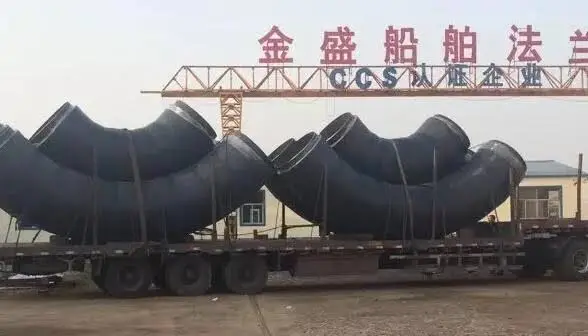
Understanding Buttweld Bends: Fundamentals and Specifications
Parts of petrochemical pipe systems need to be able to handle high pressures, corrosive chemicals, and changes in temperature. The main difference between fittings is their bend radius compared with the pipe diameter of the pipe. When the turning radius is typically larger than standard elbow radii, the component is commonly referred to as a buttweld bend. Common bend radii include 3D, 5D, 6D, and 8D. In contrast, fittings with radii of 1D or 1.5D are classified as elbows. There are short radius (1D) and long radius (1.5D) choices. This change in shape has a direct effect on how the flow works, how much pressure drops, and how well the equipment works together.
Material Standards and Grade Selection
The type of material used decides how well a buttweld bend can handle corrosion, high temperatures, and dynamic stress. There are different grades of carbon steel available, such as API 5L grades (B, X42, X52, X60, X65, X70, X80) in both PSL1 and PSL2 specifications, as well as sour service versions for environments with hydrogen sulphide. ASTM A234 covers carbon and alloy steel fittings, including grades such as WPB, WPC, WP11, WP22, and other alloy grades specified by the standard, and ASTM A403 covers grades of stainless steel (304/304L and 316/316L). Materials from the ASTM A860 WPHY line and ASTM A420 WPL6 are commonly used for low-temperature service applications. Duplex 2205 stainless steel is better at resisting pitting than regular austenitic types, making it a good choice for corrosion-resistant installations in chloride-rich settings.
Dimensional Specifications and Tolerances
Standards such as ASME B16.49 for induction bends and ASME B16.9 for wrought butt welding fittings define dimensional and manufacturing requirements that make sure everything works together in the field. The sizes range from 1/2 inch to 60 inches (DN15 to DN1500), and they can be manufactured from seamless or welded pipe depending on size, application requirements, and manufacturing capability. You can choose wall thicknesses from Schedule 10 to Schedule 160, and for high-pressure service, you can get double extra-strong (XXS) versions. Standard increments for bending angles are 15°, 30°, 45°, 60°, and 90°. Custom angles can also be made from isometric drawings. End preparations are made according to ASME B16.25 standards, and they have bevelled edges or transition taper boring to make welding and installation easier.
Comparing Buttweld Bends with Other Pipe Fittings: Making the Right Choice
The choice between buttweld bends and other parts depends on how well they work with hydraulics, how much room you have, and the total cost of ownership. Standard elbows make it cheap to change directions in small spaces, but they also cause more pressure drops and turbulence. Socket-welded fittings work well for smaller-diameter jobs where welding isn't possible, but they cause stress points that aren't good for high-cycle-wear settings.
Radius Impact on Flow Dynamics
Flow resistance is much lower at buttweld bends with longer radii than at elbows with short radii. At the same flow rates, a 5D buttweld bend causes about 60% less pressure drop than a 1.5D elbow. This means that the system will need fewer pumps over its lifetime. This smooth curve reduces turbulence, which speeds up erosion and rust in systems that deal with slurries or multiphase fluids. Computational fluid dynamics studies show that buttweld bends with a larger radius keep velocity profiles more uniform. This lowers vibration and noise and makes parts last longer in pulsating flow conditions.
Piggability and Inspection Compatibility
Long-distance petrochemical pipelines require internal inspection using intelligent pigs—automated tools that traverse the pipeline bore to evaluate corrosion, wall thickness, and structural integrity.Standard elbows make it hard for pigs to get through because they are tightly curved and could have internal breaks. Buttweld bends with radii of 3D or more make sure that there are no obstacles in the way, so repair work can be done without any problems. This feature is very important for owners who are in charge of thousands of kilometres of transmission lines, because it would be too expensive to dig up the outside of the lines to check them. Quality buttweld bends have smooth internal transitions that keep pigs from getting stuck, which can stop production and require expensive retrieval operations.
Material and Manufacturing Method Considerations
Forged fittings have better mechanical properties and a more uniform grain structure, but they are limited in size and cost more per unit. Fabricated buttweld bends can fit bigger sizes and custom curves thanks to induction heating, which softens steel in specific areas so that it can be bent without breaking. To keep the mechanical qualities and stop the grains from getting coarse, this method needs careful temperature control. Post-bend heat treatment (PBHT), which can be normalising, cooling, or hardening, gets rid of any remaining stresses and fixes the microstructure of the steel. Manufacturers must check the hardness values across the buttweld bend to make sure there aren't any weak spots that could cause cracks when the material is loaded and unloaded over and over again.
Installation and Manufacturing Insights for Buttweld Bends
The accuracy of manufacturing has a direct effect on how well a buttweld bend is installed and how reliable it is in the long run. Before induction bending can happen, straight pieces of pipe must be heated to transformation temperatures. Then, the desired curve is made by applying mechanical pressure. The temperature control and bending speed decide how thick the walls are. The outer curve (extrados) gets thinner while the inner curve (intrados) gets thicker. Good manufacturers start with a heavier-scheduled pipe so that the wall thickness at the extrados after bending is thicker than the minimum design requirements set by ASME B31.3 or B31.8 codes.
Quality Control Measures
Ovality, which measures how out of round the bent piece is, is checked for in dimensional inspection. Too much ovality makes it harder to align the welds in the field and could lower the pressure ratings. Depending on how bad the application is, applicable standards define allowable ovality limits depending on the bend size, wall thickness, and service requirements of the stated width. Ultrasonic testing (UT) checks to see if the wall thickness is regular and finds internal laminations. Surface cracks created by bending stress can be seen with magnetic particle inspection (MPI) or dye penetrant testing (DPT). By testing the hardness of the material across the heat-affected area, you can be sure that there aren't any weak spots. Tensile and Charpy V-notch impact tests on spare samples show that the material keeps its required toughness, which is especially important for use in low temperatures.
Installation Best Practices
Ensuring that the end preparation bevels match the welding procedure specifications is the essential first step in a proper installation. During tack welding, alignment tools keep the components properly aligned, which stops rotational misalignment that causes stress clusters. Straight tangent sections, which are the lengths of the pipe that are not affected by the buttweld bend, provide safe areas for welding heat input. This keeps the weld separate from the altered microstructure in the bent section. When welding, the steps must take into account any possible changes in the carbon equivalent between the parent pipe and any heat treatment that has already been done. Post-weld heat treatment needs depend on the type of material, the thickness of the wall, and the working conditions. Pressure vessel rules give specific instructions on how to do this.
Putting on a coating protects against corrosion from the outside for the whole life of the installation. For buried pipes, three-layer polythene (3LPE) systems protect them mechanically and keep water out. Fusion-bonded epoxy (FBE) is resistant to chemicals and can be used in thin films that are good for conditions below the sea. Liquid epoxy coats on the inside keep the product from getting dirty and cut down on friction losses during long-distance shipping. Field joint coating devices that restore safety after installation welding are needed to make sure that the coating stays the same across all welds.
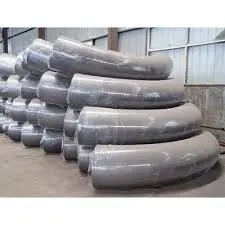
Procurement Guide: Buying Buttweld Bends for Petrochemical Systems
The success of a procurement depends on criteria for evaluating suppliers that balance technical ability, cost, and service reliability. Reputable makers of buttweld bends have quality management systems that are written down and approved to ISO 9001. These systems also have petrochemical-specific qualifications from big operators. When you evaluate a supplier's capabilities, you should check their ability to make things, their methods for tracking materials, and the accuracy of their testing tools.
Supplier Qualification Criteria
As part of technical capability, you can get different grades of materials, a wide range of sizes, and help with custom engineering for buttweld bends. Manufacturers that work with global EPC contractors keep stock of standard specs and can also make prototypes for special needs. Manufacturing lead times range from three to twelve weeks, depending on how complicated the product is. For turnaround maintenance, faster options are available. Minimum order numbers (MOQ) show the smallest batch amounts that are cost-effective, but sellers who are flexible can take sample orders for testing purposes.
Documentation of testing and certification is needed to meet insurance and regulatory requirements. Material test reports (MTR) connect heat numbers to chemical make-up and mechanical properties of the buttweld bend. Reports on nondestructive testing show the results of inspections and list the requirements for acceptance. Third-party inspection services watch over the making and testing of things, giving high-stakes projects an extra layer of security. Controlling the production process is proven by certifications from groups such as Lloyd's Register, Bureau Veritas, or TÜV.
Cost Structure Analysis
Pricing depends on the materials chosen, how hard the product is to make, and how many of them are ordered. Carbon steel buttweld bends are usually 40–60% less expensive than stainless steel buttweld bends, but in corrosive work, better materials may be worth it because they last longer. Custom curves and angles that aren't standard make production more difficult and raise base prices by 15 to 30 per cent. When orders go over 50 tonnes, volume discounts become important, and container-load quantities are best for freight economics. Coating adds 10–25% to the cost of bare pipe, but it stops corrosion, which saves a lot of money in the long run.
The mechanics of delivery have an effect on project plans and cash flow. Suppliers who have experience with shipping containers can easily handle paperwork, clearing customs, and moving goods within the country. Delivery rates of more than 95% on time show that the production planning and logistics partnerships are reliable. Stock programmes let distributors keep local inventory, which cuts down on lead times for standard specifications and takes the risk of inventory off of end users.
Advantages and Value Proposition of Using Buttweld Bends in Petrochemical Systems
Good buttweld bends are better for engineering, which directly translates to better project and operation results. When it comes to long-distance uses, improved flow features cut pumping energy use by 30 to 50 per cent compared to elbow-heavy routeing. Over decades of use, these energy savings add up and often cover the cost of the initial part within three to five years. Less turbulence also lowers the rate of erosion in systems that deal with rough particles or corrosive fluids, which means that checks and repairs can be put off longer.
Superior stress distribution leads to enhanced structural integrity throughout the piping network.Short-radius elbows create higher local stress concentrations compared with longer-radius bends, which may increase fatigue risk under cyclic loading conditions when pressure is cycled. Longer-radius buttweld bends spread stress more widely, so they last three to five times longer in pulsing work before they break. This dependability cuts down on unexpected downtime, which is very important when production stops, costing tens of thousands of dollars an hour in lost work and safety issues.
There are fewer weld joints and better field fit-up, which make installation faster. Custom angle butt-weld bends get rid of the need for multiple welds and accurate angular alignment in compound fitting setups. Ovality control makes sure that buttweld bends fit perfectly with adjacent pipe sections. This cuts down on the need for grinding and rework, which take a lot of time and effort in the field. These construction savings make up for higher component costs, especially in crowded areas where it's hard to weld.
In businesses that are controlled, the benefits of safety and compliance are very important.Certified butt-weld bends manufactured according to ASME B16.49 requirements support pipeline systems designed under applicable codes such as ASME B31.4 or B31.8. Material traceability lets you check the chemical make-up and mechanical qualities, which is very important for pressure vessel approval. Big companies like the National Iranian Oil Company, the Abu Dhabi National Oil Company, and Petrobras continue to approve quality makers as approved suppliers. This makes it easier to get approvals for projects.
Conclusion
When choosing the right pipe parts, you have to weigh the initial costs against how well they will work over time in petrochemical settings. When compared to other fittings, buttweld bends offer measurable benefits such as lower pressure losses, better piggability, and higher wear resistance. By choosing materials that are right for the job and taking into account things like temperature, pressure, and corrosive exposure, you can avoid early failures that are unsafe and cost a lot of money. How well a buttweld bend is made affects its material features, accuracy in measurements, and how well it can be installed in the field. Strategies for buying things should give more weight to sellers who can show they have the technical know-how, certifications, and a history of on-time delivery. The initial investment in properly specified, well-made buttweld bends pays off over decades of operation through lower energy costs, longer service life, and less downtime.
FAQ
1. What distinguishes a pipe bend from an elbow in technical specifications?
The primary distinction is the bending radius relative to the nominal pipe diameter. As normal catalogue items, elbows come with radii of either 1D (short radius) or 1.5D (long radius). Buttweld bends use radii of 3, 5, 8, or unique values, which are usually made by induction heating based on what the customer wants. This shape affects flow resistance. For example, longer arcs lower pressure drop and make it easier for pipeline inspection tools to pass.
2. Why does wall thickness vary around a bent section?
When a buttweld bend is formed, the outer curve gets longer and thinner (extrados) while the inner curve gets shorter and thicker (intrados). Good makers start with a heavier-schedule pipe, so the thickness at the thinnest place after bending is greater than what the code requires. Based on the final bend radius and pressure rating, ASME B16.49 gives ways to figure out how much starting thickness is needed.
Partner with JS FITTINGS for certified butt weld bend solutions.
JS FITTINGS has been manufacturing products for more than 40 years and can help with petrochemical pipe jobs that need the highest quality and most reliable service. Our induction bending facilities are ASME B16.49-compliant and can make custom radius shapes for buttweld bends from 3D to 20D in sizes from 1/2 inch to 60 inches. They use API 5L, ASTM A234, and ASTM A403 materials. Strict quality control, such as ultrasonic testing, hardness verification, and third-party inspection services, ensures that every buttweld bend meets the requirements of the pressure piping codes and the operator's instructions. As approved suppliers to big energy companies like NIOC, ADNOC, and Petrobras, we keep our ISO 9001, CE, and GOST-R certifications, which make it easier for projects to get approved. Our expert team helps engineers choose the right materials, come up with the best coatings, and set up your system in a way that makes it work best. We work with both large EPC contractors and distributors who need a flexible MOQ because we ship more than 90 containers every month and have an on-time delivery rate of over 95%. Email our experts at admin@jsfittings.com to talk about your buttweld bend needs and get specific quotes from a reputable maker that wants your project to succeed.
References
1. American Society of Mechanical Engineers. (2021). ASME B16.49: Factory-Made Wrought Steel Buttwelding Induction Bends for Transportation and Distribution Systems. New York: ASME Press.
2. Mohitpour, M., Golshan, H., & Murray, A. (2007). Pipeline Design and Construction: A Practical Approach (3rd ed.). New York: ASME Press.
3. Nayyar, M. L. (Ed.). (2019). Piping Handbook (8th ed.). New York: McGraw-Hill Education.
4. American Petroleum Institute. (2018). API Specification 5L: Specification for Line Pipe (46th ed.). Washington, DC: API Publishing Services.
5. Bai, Y., & Bai, Q. (2014). Subsea Pipeline Design, Analysis, and Installation. Oxford: Gulf Professional Publishing.
6. Escoe, A. K. (2006). Piping and Pipeline Assessment Guide. Burlington: Gulf Professional Publishing.
Send Inquiry
You may like
Related Industry Knowledge
- Buttweld Bend with Tangent Length: Design Considerations
- Class 150 Flat Face (FF) Forged Steel Flange for Water Service
- Slip-on flange vs weld neck flange: What are the differences?
- Types of ASTM A105 weld neck flange
- ASTM A105 Weld Neck Flange: Complete Guide
- ASTM A263/A264 Standard for Corrosion-Resistant CRA Clad Pipe
- FBE Coated Steel Pipe: The Ultimate Guide (Process & Specs)
- ASTM A105 Carbon Steel Forged Steel Flange Specifications
- What are butt weld fittings?
- Do blind flanges require hydrotesting?