
Class 150 Flat Face (FF) Forged Steel Flange for Water Service






2026-07-20 11:07:30
Choosing the right pipe connection part is important for managing water distribution networks, municipal wastewater systems, or industrial water treatment facilities. Incorrect component selection can lead to severe project delays, system failures, and substantial cost overruns. ANSI B16.5 class 150 flange: Class 150 flat-face forged steel flanges made to ANSI B16.5 standards are a tried-and-true solution for water service applications. They have standardized dimensions, provide reliable sealing performance, and are compatible with a wide range of equipment. These flanges make good connections between lines, valves, pumps, and tanks, and they keep the system's integrity when the pressure is modest. Their flat face design meets the needs of water infrastructure by protecting fragile equipment from damage and making sure that pipes of all shapes and sizes don't leak.
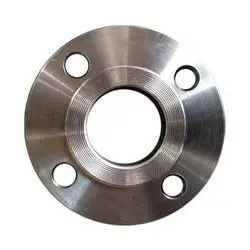
Understanding ANSI B16.5 Class 150 Flat Face Forged Steel Flanges
Understanding why these flanges are important for commercial uses is the first step in building a solid water pipe system. The ANSI/ASME B16.5 standard sets standardized bolt patterns, sizes, and pressure values for Class 150 flanges. This makes sure that they can be used anywhere in the world.
Why Does Flat Face Design Matter in Water Systems?
The flat face configuration is different from the more common raised face configuration because it has a gasket seating area that is fully flat. This form is especially useful for connecting steel pipes to tools or valves made of cast iron. Cast iron is inexpensive and has good corrosion resistance when used in water, but it is still pretty fragile. When a raised-face flange bolts against a flat cast-iron surface, the extra stress at the raised part can cause the body of the equipment to crack when it is tightened. This type of failure can't happen because the flat face design spreads the bolt load evenly across the whole flange surface. Because of this feature, flat face flanges are essential in municipal water systems that still use cast iron parts because they last a long time and work well.
Pressure Ratings and Performance Parameters
Knowing pressure ratings keeps you from over-engineering or dangerously underspecifying. The designation "ANSI B16.5 class 150 flange" is more of a nominal rating than a strict pressure limit. When the temperature is between -20°F and 100°F, carbon steel flanges made to ASTM A105 standards can handle about 285 psi. This rating goes down as the operating temperature goes up. At 500°F, the highest working pressure that is allowed drops to about 170 psi. Most water service uses stay well within these limits. For example, municipal systems rarely go above 150 psi, and industrial cooling water lines work within 50–200 psi. This gap gives you great safety factors while keeping the cost-effectiveness of higher-rated options.
Material Options and Corrosion Resistance
For water service, you need materials that are both strong and resistant to corrosion. Carbon steel A105 is still the most cost-effective option for use in fresh water, where corrosion rates can be kept under control with good system design and water chemistry management. Stainless steel grades like A182 F304 or F316 are needed when working with salty water, seawater, or water that has been treated with chemicals in factories. The chromium in stainless steel creates a passive oxide layer that makes rusting much less likely, even in places with a lot of salt. Based on our manufacturing experience, many early flange failures in water systems can be avoided by choosing the right materials during the design stage.
Available Flange Types and Their Water Service Applications
Different types of connections, including the ANSI B16.5 class 150 flange, need different lip designs. With a full-penetration butt weld between the flange hub and pipe, weld neck flanges make the strongest connection. This makes them ideal for high-vibration pumping stations where fatigue resistance is important. Slip-on flanges fit over the end of the pipe and only need two fillet welds to connect. This makes installation easier for most distribution lines with moderate stress levels. Blind flanges are used to close the ends of piping systems during maintenance or for future system expansion. Threaded flanges allow pipe connections without welding and are commonly used in smaller-diameter services where welding is impractical or undesirable. Different types are used for different projects, and picking the right setup affects both the cost of installation and the stability over time.
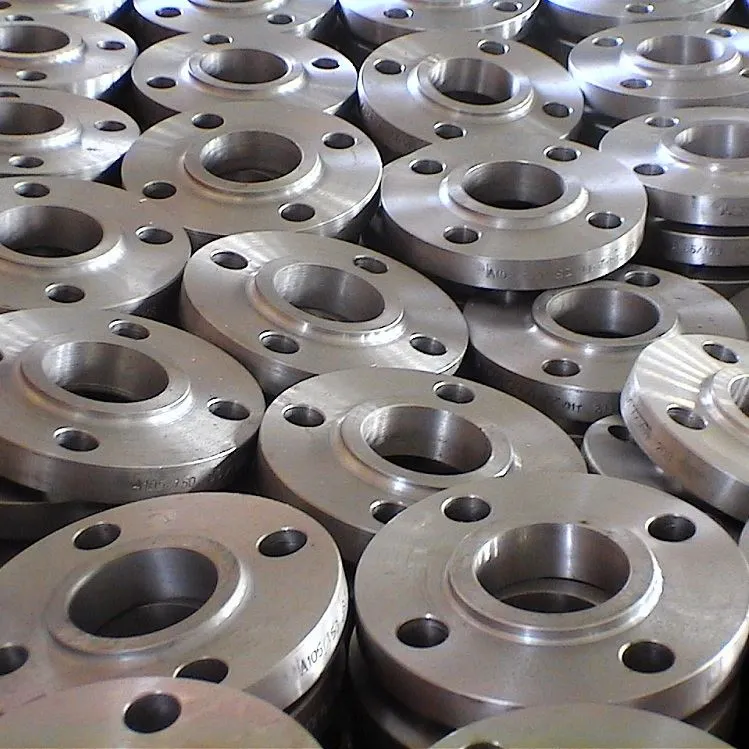
How to Identify and Select the Right Class 150 FF Forged Steel Flange?
Before making a purchase decision, you need to know both the technical details and the practical compatibility factors that will make sure the new system works well with the old one.
Reading Flange Markings and Certifications
Every high-quality flange has lasting marks that tell you important things. To find out where the material came from, look for the name or brand of the maker, the material grade, the pressure class, and the heat number. The appearance of "B16.5" shows that the dimensions meet the standard. The chemical composition analysis and mechanical property test results in the mill test reports show that the flange meets the material requirements. When looking at different suppliers, make sure to ask for these documents right away. Reliable companies like JS FITTINGS keep full records for every production lot, which lets you follow the product from raw materials to finished goods.
Matching Bolt Patterns and Dimensions
Proper dimensional alignment significantly streamlines the installation process. A 4-inch Class 150 flange has an outer diameter of 9 inches, a bolt circle diameter (BCD) of 7.50 inches, and eight holes that are 0.75 inches in diameter. When standards are followed correctly, these measurements stay the same no matter what manufacturer they come from. But mixing pressure classes doesn't work because Class 150 and Class 300 flanges for the same pipe size have different bolt circle diameters and hole counts, so they can't connect. Make sure that any replacement flanges exactly match the specs of the old equipment. This is especially important when doing a retrofit, and the original paperwork may not be complete.
Size Selection and Pipe Schedule Coordination
To keep the connection point free of turbulence, pressure loss, and erosion, the inside diameter of the pipe connected to the flange must match the outside diameter of the flange. In general, water lines use Schedule 40 pipe, but in high-pressure areas, they use Schedule 80 pipe, which is stronger. For slip-on flanges, the flange bore must be slightly larger than the pipe's outside diameter, while for weld neck flanges, the bore should precisely match the pipe's inside diameter to provide a smooth flow path. If they don't, there will be a flow restriction or a ledge where debris can build up. Standard bore flanges can fit popular pipe schedules for nominal pipe sizes from 1/2 inch to 24 inches. When connecting pipes with different standards or walls that aren't the same thickness, custom boring is needed.
Comparing Class 150 with Alternative Standards
Specifications for projects often list more than one flange standard, so buying teams need to know the differences, including ASME B16.5 Class 150 flange specifications. Class 300 flanges can handle higher pressures, but they are heavier and more expensive than they need to be for most water uses. European DIN flanges have metric measurements that can't be used with ANSI equipment without adapters. For big water transfer lines, ASME B16.47 covers flanges with diameters greater than 24 inches. Each standard was created for a different industry, but the ASME B16.5 Class 150 flange, also known as the ANSI B16.5 Class 150 flange, remains the most popular choice for water infrastructure in North America because it offers the best mix of features, availability, and cost for pressures below 285 psi.
Installation and Maintenance Best Practices for Class 150 Flat Face Flanges
During the flange's service life, the reliability of the system and the cost of running it are directly affected by how well it is installed and maintained.
Step-by-Step Installation Guidelines
First, look for damage, rust, or other things that could get in the way of sealing on the flange faces and gasket surfaces. Use a wire brush and appropriate solvent to clean all sealing surfaces, removing rust, debris, or any shipping protectants that could interfere with gasket seating. Make sure the seal is centered on the face of the flange. If it's not, the compression will be uneven, which could lead to a leak. Carefully bring the ends together, making sure the pipes stay in place to avoid putting stress on them. Before tightening any of the bolts, make sure they are in all of the holes. Instead of going around the ring one step at a time, tighten in a star pattern. This spreads the load evenly on the bolts and keeps the gasket from distorting. Tighten bolts several times, gradually increasing the torque until it reaches the value that was set based on the size of the bolt and the grade of the material. For water service, a typical 3/4-inch carbon steel bolt needs about 150 to 180 ft-lbs of torque. However, you should always check the engineering specifications for your specific application.
Gasket Selection for Water Applications
The choice of gasket material affects how well it seals and how often it needs to be maintained. Full-face gaskets that go over the whole flange face work best with flat face setups because they spread the load evenly across the bolts and keep fragile materials from getting crushed. Compressed non-asbestos fiber gaskets are popular in city uses because they are cheap, don't absorb water well, and can be pressed down.For water systems treated with aggressive chemicals or experiencing higher temperatures, high-performance elastomeric or PTFE-bonded gaskets are typically specified. The seal has to be able to handle the highest pressure and temperature in the system while also working with any chemicals used to treat the water. When putting things back together, don't use the same gaskets again because the compression set from the first installation makes them less effective.
Leak Detection and Troubleshooting Methods
Do a full leak test on the system after it has been installed before turning it on for real. Visual inspection during the first pressurization often shows problems right away, like seals that aren't set properly or bolts that aren't torqued enough. For buried or insulated lines that are hard to see, monitoring pressure with gauges to detect pressure loss over time is the best way to make sure the system is working right. If you notice leaks, don't just tighten the bolts all the way down—this can damage the gaskets or crack the flanges. Instead, release the pressure in the system, take apart the joint, look for damage or contamination, replace the seal if needed, and put it back together the right way. If there is persistent leaking after proper installation, it's likely that the flange face is damaged, warped, or has dimension issues that need to be fixed by replacing the part.
Preventative Maintenance Strategies
Inspections that happen on a regular basis find problems with the ASTM A105 Class 150 flange before they become major problems. Plan to look at exposed flanges every six months to see if they are corroding, weeping around gaskets, or bolts wearing out. When working in places that are acidic, protect the flange faces with coats while they are shut down and keep up with cathodic protection systems that are already there. Keep spare flanges in dry places with coverings to keep them from rusting. Corrosion on sealing faces makes the gasket less effective even if the flange is structurally sound. Write down all the maintenance tasks you do, including the torque values you use when putting things back together. This will help you find problems that keep happening and set maintenance intervals that are based on actual service conditions instead of arbitrary schedules.
Conclusion
ANSI B16.5 class 150 flanges made to established standards are essential parts of water service infrastructure because they are reliable, compatible, and good value for money, which is what procurement professionals want. Their standard sizes make them compatible with systems all over the world, and their flat faces keep cast iron equipment commonly found in public water systems from getting damaged. The right choice based on pressure needs, material fit, and size matching makes links that don't leak and keep the system's integrity for decades of use. Best practices for installation and regular maintenance help parts last longer and keep running costs low. When you need to get these important parts, work with well-known makers who can show quality through thorough paperwork and track records of past performance.
FAQ
1. What pressure can Class 150 flat-face flanges actually handle in water service?
ANSI B16.5 class 150 flanges can safely handle 285 psi at temperatures around 100°F, despite the "150" name. This number is higher than the normal water system pressures of 50 to 150 psi, which gives you a lot of safety margins. The rating goes down at higher temperatures, reaching a low point of about 170 psi at 500°F, though these temperatures are rarely reached in water applications.
2. Can I connect a Class 150 flat face flange to a raised face flange?
Connecting flat face and raised face flanges requires careful evaluation. When connecting to cast iron equipment, the raised face should generally be removed or the connection should follow the applicable engineering standards to avoid excessive flange loading. An ANSI B16.5 class 150 flange with a raised face bolts against a flat face on cast iron equipment that is easily broken. The tightening forces focus on the raised part, which can crack the iron. To safely spread loads across the whole plate, use face types that match or full-face gaskets with steel backing rings.
3. How do I choose between a weld neck and a slip-on flange for water applications?
Weld neck flanges are stronger because they have full-penetration butt welds. This means they can be used in demanding situations where there is vibration or temperature cycling, like pump discharge connections. Slip-on flanges work well and are cheaper for general distribution pipes with low to moderate stress levels. They only need fillet welds to attach.
Partner with JS FITTINGS for Your Water Infrastructure Projects
When you buy ANSI B16.5 class 150 flanges from a reputable maker, you can be sure that your water service projects will meet strict requirements and stay on schedule and on budget. JS FITTINGS has been manufacturing high-quality piping components for more than 40 years and has supplied Class 150 flanges to water infrastructure projects in more than 30 countries. Our ISO 9001-certified factories use high-tech testing tools like optical emission spectrometers (OES) and ultrasonic flaw detection systems to keep a close eye on quality. We keep common sizes in stock so they can be shipped right away. Our monthly capacity of over 700 tonnes of flanges meets the needs of large projects, and we deliver 95% or more of them on time. You can email our technical team at admin@jsfittings.com to talk about your specific application needs, get detailed specifications, or get competitive quotes that come with full mill test documentation, international certifications like CE and GOST-R, and approvals from major energy companies around the world.
References
1. American Society of Mechanical Engineers. (2020). ASME B16.5: Pipe Flanges and Flanged Fittings: NPS 1/2 Through NPS 24 Metric/Inch Standard. New York: ASME Press.
2. American Water Works Association. (2019). AWWA Manual M11: Steel Pipe—A Guide for Design and Installation (5th ed.). Denver: American Water Works Association.
3. Becht, C. (2017). Process Piping: The Complete Guide to ASME B31.3 (4th ed.). New York: ASME Press.
4. Ellenberger, J.P. (2018). Piping and Pipeline Calculations Manual: Construction, Design Fabrication and Examination (2nd ed.). Oxford: Butterworth-Heinemann.
5. Nayyar, M.L. (2019). Piping Handbook (8th ed.). New York: McGraw-Hill Education.
6. Singh, R. (2021). Applied Welding Engineering: Processes, Codes, and Standards (3rd ed.). Cambridge: Butterworth-Heinemann.
Send Inquiry
You may like
Related Industry Knowledge
- Welding Neck Flange – Composition, Material, Standard, and Dimensions chart
- Types of ASTM A105 weld neck flange
- How long does FBE Coated Steel Pipe last?
- Slip-On Flange Uses and Applications
- What is CRA clad pipe?
- Lap Joint Pipe Flanges: How and When to Use Them
- ASTM A105 Carbon Steel Forged Steel Flange Specifications
- Sch 40 Buttweld Reducer vs Sch 80 Pressure Performance
- How to Choose the Right Buttweld Elbow for High-Pressure Piping
- Does ASME require hydrotesting for a blind flange?