
Welding Neck Flange – Composition, Material, Standard, and Dimensions chart






2026-07-17 10:43:29
The ASTM A105 weld neck flange is a forged carbon steel piping part with a long, tapered hub that is butt-welded to a pipe directly. It is one of the most reliable flange configurations for high-pressure and high-temperature environments because the mechanical stress is transferred from the flange to the pipe. These flanges are sized according to ASME B16.5 standards and made from materials that meet ASTM A105 standards. They are commonly available in pressure classes from 150# to 2500# and sizes from 1/2" to 24" according to ASME B16.5 requirements. For special industrial jobs, unique sizes can also be made.
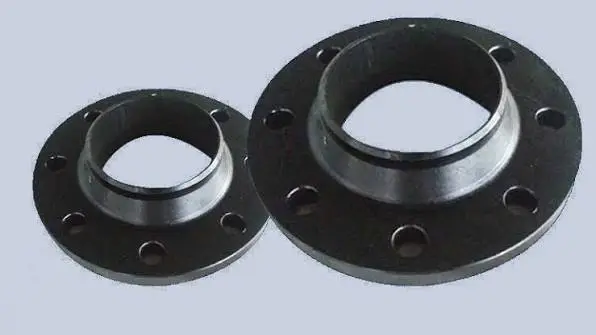
Understanding ASTM A105 Weld Neck Flange Material and Composition
The metallurgical makeup of the ASTM A105 weld neck flange material is very important to how well the flange works in tough industrial settings. This killed carbon steel is made with specific chemical elements that make it easier to both machine and weld, which are important qualities for EPC contractors and industrial project developers who have to meet tight installation deadlines.
Chemical Composition and Its Impact
Manganese levels in the mixture range from 0.60% to 1.05%, which improves strength and mechanical properties. The maximum amount of phosphorus is 0.035%, which helps improve toughness and weldability, which keeps welding parts from becoming brittle. The maximum amount of sulfur is 0.040%, which controls machinability and material quality, which makes sure that the material can be machined easily without losing its flexibility. The carbon content is controlled at a maximum of 0.35%. This is a good range for materials used in critical infrastructure projects because it strikes a balance between strength and weldability.
These controlled alloying elements make sure that the flange maintains structural integrity under thermal cycling and vibration. Distributors and stockists like this consistency because it means they can count on the quality of their stock, which helps them build trust with end users who want certified suppliers.
Mechanical Properties for High-Stress Applications
The mechanical properties of ASTM A105 material are very good and meet strict industry standards. Tensile strength must be at least 70,000 psi (485 MPa), and yield strength must be at least 36,000 psi (250 MPa). Controlling the hardness to a maximum of 187 HBW makes sure that the material can be machined accurately for precision-bored applications where the bore diameter needs to match the internal diameter of the pipe that is being used.
This precision-bored design gets rid of any internal flow restrictions. This stops turbulence and localized erosion that can cause the system to fail early. This feature is especially helpful for medium and small engineering firms because it lowers long-term maintenance costs and cuts down on unplanned downtime, which is a big problem for factories with continuous production lines.
When you forge something, the grain flow of the steel lines up with the shape of the flange. This makes it stronger and more impact-resistant than cast alternatives. In order to meet ASME B16.5 standards, this forging process is commonly used for ASTM A105 pressure flange production, from Class 150 for normal uses to Class 2500 for high-pressure settings like power plants and petroleum processes.
Material Comparisons and Selection Guidance
When looking at your options, ASTM A105 carbon steel is clearly better than ASTM A350 low-temperature carbon steel and stainless steel types like ASTM A182. The A105 specification is best for work at normal to high temperatures and is suitable for normal and moderately elevated temperature services when the applicable design codes and service conditions are satisfied. This means it can be used in many oil and gas situations where temperature changes aren't too extreme but high pressures are needed.
Stainless steel flanges are better at resisting corrosion, but they are also much more expensive. This can put a strain on project budgets for government infrastructure projects that have to follow strict tender rules. ASTM A350 flanges are designed for low-temperature and pressure service applications. They are too specific for standard refinery and pipeline installations, where A105 material works just as well and costs much less.
Industrial end users and plant maintenance teams often choose ASTM A105 weld neck flanges because replacement parts are easy to find, lead times are faster, and the material can be welded, so it can be fixed in the field without the need for special tools or heat treatment methods. This operating flexibility directly answers the reason people buy, which is to avoid downtime and lower the total cost of ownership.
ASTM A105 Weld Neck Flange Standards, Certifications, and Dimensions Chart
Industrial buyers who are in charge of projects in more than one jurisdiction must make sure that international standards are met. The ASTM A105 weld neck flange meets the dimensions set by ASME B16.5. These dimensions describe how the flange should be faced and drilled, and have bolt holes that are recognized around the world. This standardization makes sure that the pipes work with systems made anywhere in the world. This lowers the risk of buying things and makes transportation easier for wholesalers who serve a variety of regional markets.
Industry Standards and Certification Requirements
In addition to ASME B16.5 standards, these flanges may also require ISO 9001 quality management systems and, for specific oilfield applications, API 6A requirements, and PED (Pressure Equipment Directive) standards for installations in the European Union. Manufacturers with CE marking, applicable regional certifications, and approvals from national oil companies like NIOC (National Iranian Oil Company), ADNOC (Abu Dhabi National Oil Company), and Petrobras show that they have been rigorously checked by a third party, which is what procurement decision-makers need to reduce project risk.
JS FITTINGS keeps full traceability by using high-tech testing tools like spectral analyzers to check the material and ultrasonic flaw detection systems to find flaws inside the product that can't be seen with the naked eye. This dedication to quality assurance meets the important need to meet bidding standards and lowers the life-cycle cost by stopping field failures that cause expensive project delays.
Comprehensive Dimensions Chart Overview
To choose the right flange for each job, you need to understand how measurement charts work. The 150#, 300#, 600#, 900#, 1500#, and 2500# pressure class ratings directly correspond to the highest working pressure that can be used at certain temperatures. Class 150 flanges are good for low-pressure systems, while Class 600 and 900 versions are popular in industrial process pipes where pressures can reach several hundred psi.
The bolt hole diameter is carefully made to match the pipe schedule, which could be Schedule 40, 80, 160, or XXS (double extra strong). This makes sure that the inside diameter of the flange matches the inside diameter of the pipe perfectly. This alignment is very important for getting rid of flow interruptions that lead to erosion, cavitation, and energy losses. These problems have a direct effect on operational efficiency for industrial end users who want to lower their total cost of ownership.
You can get flange facings in two different styles: Raised Face (RF), where a gasket is compressed between raised surfaces, or Ring Type Joint (RTJ). In the RTJ style, a metal ring fits into machined grooves to make a strong seal that can withstand high temperatures and pressures. For key service uses where safety and preventing leaks are very important, government infrastructure projects often call for RTJ facings.
Standard sizes run from 1/2" to 24", which is big enough to meet most industrial pipe needs. For specific uses like large-diameter gearbox pipelines and power plant cooling water systems, JS FITTINGS can make sizes larger than 24 inches. They can do this by using their more than 40 years of experience in manufacturing to make solutions that fit the exact needs of each project.
Manufacturing Process and Quality Assurance
Spectral analysis is used to make sure that the raw material chemical composition meets the requirements of ASTM A105. Forging is done at controlled temperatures to get the best grain structure and mechanical properties. Heat treatment evens out the material's hardness, removing any stresses that were created during forging and making sure that the whole flange body has consistent hardness.
As required by ASME B16.5 specifications, machining operations include precisely boring, facing, and drilling bolt holes. Non-destructive testing (NDT) techniques like magnetic particle inspection, ultrasonic testing, and radiographic examination find flaws on the surface and below that could affect performance. Visual inspection checks for accuracy in measurements, surface finish, and correct marking with heat number, material grade, pressure class, and manufacturer identification.
Each A105 WN flange shipment comes with a package of paperwork that includes mill test reports (MTRs) that certify the chemical composition and mechanical properties, dimensional inspection reports, and third-party certification from companies like Lloyd's Register, Bureau Veritas, or TÜV. This complete traceability meets the documentation needs of EPC contractors who need to show project owners and regulatory authorities that they are following the rules.
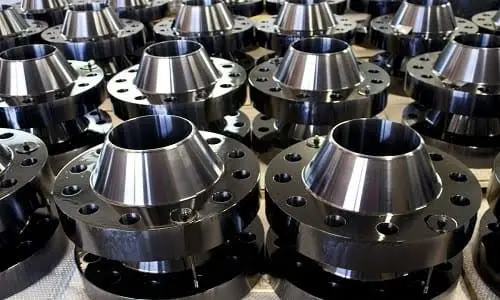
Application Areas and Inspection of ASTM A105 Weld Neck Flanges
ASTM A105 weld neck flanges are very useful in many fields where safety and dependability are very important. Their design and material properties directly solve the problems that petrochemical plants, oil and gas infrastructure, power plants, and water treatment systems face in their daily work.
Primary Industrial Applications
These flanges are used a lot in petrochemical processing plants for units that handle high-temperature and high-pressure hydrocarbons, process gases, and chemical feedstocks. The tapered hub design absorbs thermal expansion and mechanical vibration, which stops fatigue cracking that can cause catastrophic leaks. This is especially helpful in units like catalytic cracking, reformers, and distillation columns, where temperature changes often.
The butt-weld connection enables radiographic inspection of the weld joint, providing verification according to applicable project specifications and piping codes—a key concern for government infrastructure projects managing public safety responsibilities. Weld neck flanges are used in oil and gas production facilities for wellhead connections, pipeline manifolds, and compressor stations where pressure integrity is critical to operational safety and environmental compliance.
These flanges are used in power plants' steam systems, boiler feedwater circuits, and condensate return lines because they are made of high-temperature materials that have been shown to be stable. The smooth internal flow path reduces pressure drop and turbulence, which helps the overall system work more efficiently and saves money on pumping energy costs. This directly helps industrial end users reach their goals of lowering their total cost of ownership.
For high-pressure pumping stations, treatment plant piping, and distribution mains, where long service life and little maintenance are important to keep costs down over time, ASTM A105 weld neck flanges are used. This is because the material can provide reliable performance in properly controlled water service environments, which makes it good for places where replacements are hard to get, and downtime costs a lot of money.
Inspection Guidelines and Quality Control
Following the right inspection steps will make sure that flanges meet the requirements and work properly for as long as they are used. Before they are installed, they should be checked for dimensional accuracy using calibrated measuring tools. The flange diameter, bolt hole spacing, facing surface finish, and bore diameter should all be compared to ASME B16.5 standards. Any deviation from these standards can lead to problems with gasket sealing or bolt load distribution that weakens the joint.
Visual inspection finds flaws on the surface, like cracks, laps, seams, or too many tool marks that could become stress points. Magnetic particle inspection (MPI) or dye penetrant testing finds flaws that break through the surface and cannot be seen with the naked eye. This is especially important for critical service applications where failure would have serious consequences.
Reviewing the documentation makes sure that the material can be tracked back to the mill test reports that confirm its chemical composition and mechanical properties. Third-party certifications from inspection agencies show that the manufacturing processes meet certain standards, which meet the need for trusted suppliers that distributors and trading companies that serve quality-conscious customers stress.
The butt-weld connection between the flange and pipe must be inspected using radiographic or ultrasonic methods to make sure it is solid. This non-destructive check is required for ASME B31.3 process piping installations in hazardous service to make sure the welds are free of porosity, incomplete fusion, or crack-like defects that could spread under cyclic loading.
As part of preventive maintenance, the weld heat-affected zone of a large-diameter A105 weld neck flange class 600/900/1500 should be checked for corrosion on a regular basis. This is because microstructural changes can create localized corrosion susceptibility. To keep the gasket compressed properly, bolt tightening torque should be checked using calibrated torque wrenches, and the flange faces should be looked at for signs of erosion, pitting, or gasket embedment that could mean there are sealing problems that need to be fixed.
Conclusion
In conclusion, for high-pressure pipe systems in all kinds of industries, ASTM A105 weld neck flanges offer a good balance of structural efficiency, material performance, and economic value. Their precision-bored flow path, tapered hub design, and forged carbon steel construction make them reliable and low-cost over their entire life. They also meet strict safety and compliance standards. By knowing about the different types of materials, their measurements, how they should be used, and the best ways to buy them, you can make smart choices that lower the risk of a project, make sure you follow the rules, and help your business reach its safety, dependability, and cost goals.
FAQ
1. Are ASTM A105 weld neck flanges suitable for high-pressure service?
ASTM A105 weld-neck flanges are designed to work with high pressures. They have pressure class rates that range from 150# to 2500#. The tapered hub design evenly spreads stress, and the butt-weld link lets radiographic testing check the integrity of the joint. Because it has a tensile strength of 70,000 psi and a forged grain structure, the material can handle high pressures in petrochemical, oil and gas, and power generation applications.
2. How can I verify the quality and certifications of purchased flanges?
The first step in checking for quality is to look over mill test results that show the chemical makeup and mechanical traits that can be linked to specific heat numbers. Independent proof comes from third-party inspection certificates from companies like Lloyd's Register or Bureau Veritas. Physical inspection should confirm proper marks, including material grade, pressure class, and manufacturer identification. Suppliers with a good reputation, like JS FITTINGS, offer complete documentation packages and keep their ISO 9001 certification, which shows that they manage quality in a systematic way.
3. Can ASTM A105 flanges be used in corrosive environments?
The corrosion resistance of ASTM A105 carbon steel is not very good, so it should only be used in mildly corrosive environments. When there is a high chance of rusting, you need stainless steel options like ASTM A182 F316 or protective coatings and cathodic protection systems. Talk to materials experts about how to figure out the rate of corrosion and choose the right materials based on the temperature, work conditions, and projected service life.
Partner with JS FITTINGS for Certified ASTM A105 Weld Neck Flange Supply
As a trusted ASTM A105 weld neck flange provider, JS FITTINGS has been making high-quality products for over 40 years and serves industrial markets around the world. Our ISO-certified factories make precision-engineered flanges that meet ASME B16.5 standards for all pressure classes, from 150# to 2500#. We keep a large inventory so that orders can be filled quickly. We also support custom specs from DN15 to DN2000 and offer full technical support backed by approvals from NIOC, ADNOC, and Petrobras. Get in touch with our team at admin@jsfittings.com to talk about your project needs and get a reasonable quote backed by our 95%+ on-time delivery record and 98% customer return rate.
References
1. American Society of Mechanical Engineers, "ASME B16.5: Pipe Flanges and Flanged Fittings NPS 1/2 Through NPS 24 Metric/Inch Standard," ASME International, 2020.
2. ASTM International, "ASTM A105/A105M: Standard Specification for Carbon Steel Forgings for Piping Applications," ASTM Volume 01.05, 2021.
3. Becht Engineering, "Flange Joint Assembly: Design, Installation, and Maintenance Best Practices," Pressure Vessel and Piping Technology Journal, Vol. 143, 2019.
4. Mokhatab, Saeid and Poe, William A., "Handbook of Natural Gas Transmission and Processing: Principles and Practices," Fourth Edition, Gulf Professional Publishing, 2019.
5. Singh, Karan and Solanki, V.S., "Materials Selection for Process Equipment: Corrosion Considerations in Oil and Gas Applications," International Journal of Engineering Research and Technology, Vol. 9, Issue 8, 2020.
6. Nayyar, Mohinder L., "Piping Handbook," Eighth Edition, McGraw-Hill Education, 2020.
Send Inquiry
You may like
Related Industry Knowledge
- What is ASME B16.5: A Guide to ASME B16.5 carbon steel flange
- Buttweld Bend Dimensions: LR, SR & Custom Radius Guide
- What is FBE Coated Steel Pipe?
- Long Radius Buttweld Elbow: Ultimate Guide 2026
- The Ultimate Guide to Slip-On Flanges: Exploring Applications and Benefits
- How to Select a Buttweld Reducer for Process Piping?
- Buttweld Tee Pressure Ratings Explained for Industrial Piping
- What is carbon steel pipe made of?
- What is the difference between seamless and welded pipe?
- Is a 90 or 45 degree elbow better for drain?