
How does a slip on flange work






2026-11-11 15:01:47
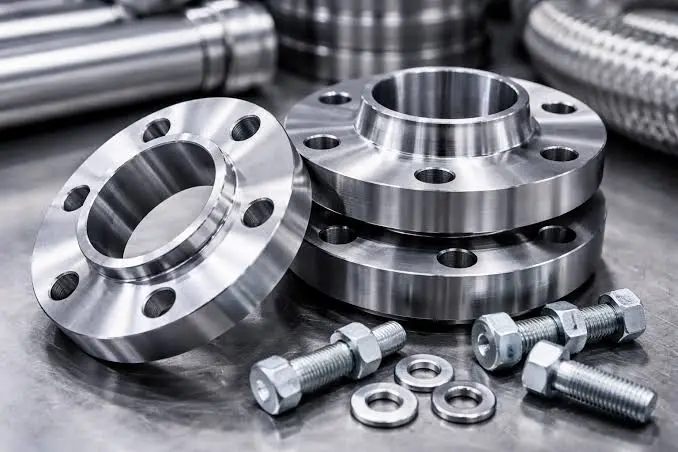
A steel slip on flange works by sliding over the end of a pipe and locking into place with two fillet welds, one outside and one inside. Its bore is slightly larger than the pipe's outside diameter, so a fitter can rotate it to line up bolt holes before welding. After welding, the flange holds the pipe and carries load into the joint. Bolts then compress a gasket between two flange faces, and that compression creates the seal. This design suits low-to-medium pressure piping, where easy alignment, lower cost, and simple assembly matter more than peak fatigue strength.
I wrote this guide for EPC teams, distributors, local installers, public works buyers, and plant owners across the United States. It covers how the joint works, which dimensions and ratings to check, how to install it, and what to send a supplier. Use it to close specification gaps before you place an order.
How Does a Steel Slip-On Flange Work?
The Basic Operating Principle and Load Path
The pipe fits into the bore of the flange and is inserted to the depth specified in the installation procedure. Two fillet welds are then applied: one at the hub on the outside and another inside the bore. The flange is first positioned and tack-welded to maintain alignment before the final welds are completed. These welds secure the flange to the pipe and transfer loads between the pipe and flange. Bolts then connect the flange to its mating flange, compressing the gasket to form a sealed joint. Although a weld neck flange with a butt-weld connection is generally preferred for demanding service conditions, a steel slip-on flange can be suitable for stable, moderate-pressure applications when permitted by the applicable design code.
How the Seal Forms
The welds hold the pipe in place, but the gasket makes the seal. The tight bolts squeeze the seal in the middle and pull the two sides of the plate together. The gasket stops the flow of fluid by filling in small holes on the surface. Most people choose raised face (RF) because it puts the bolt load on a smaller area of the seal. Welds that are strong can still leak if the bolts are not lined up right or if the face is broken. When the lip isn't lined up correctly, it puts uneven pressure on the gasket, which can hurt the seal. So, the nuts, the type of seal, and the order in which they are tightened are just as important as the sizes of the flanges.
Where This Design Fits and Where It Does Not
A steel slip-on flange works well in piping systems where operating pressure and temperature remain relatively stable. People often use it for fire protection, water treatment, low-pressure oil lines, industrial cooling water, compressed air, and general utility piping. In light duty, it's also used for building, chemical, and power projects. Steel slip-on flanges are good for places that are tight because they have a small hub. The same design loses ground when there are frequent pressure changes, strong vibrations, or large bending loads. Compared with weld neck flanges, slip-on flanges generally have lower fatigue resistance because their attachment relies on fillet welds rather than a butt weld with a tapered hub. Engineers often select different designs for heavy-duty cycles or high-temperature applications because of these limitations. The ruling code and the project expert make the final decision.
Steel Slip-On Flange Specifications, Dimensions, and Pressure Ratings
Key Dimensions to Check
To begin, identify the nominal pipe size (NPS). After that, check the flange's outside diameter, thickness, bore, bolt circle diameter, number of bolt holes, and facing dimensions. Its weight also affects shipping, lifting, and handling costs. The flange bore must be sized correctly to fit the pipe and allow proper clearance for the required fillet welds. A very tight tolerance is used to machine the hole by JS FITTINGS so that the steel slip-on flange fits over most pipe sizes without any force. Our steel slip-on flanges come in sizes ranging from 1/2 inch to 60 inches. If you need a size that isn't listed, we can also make it just for you. Always compare your pipe plan and model to the Forged Slip On Flange Manufacturer with ISO Certification table before you place an order.
Pressure Classes and Facing Types
We have Class 150, 300, 600, 900, and 1500, as well as PN6, PN10, PN16, PN25, and PN40. Class 150 or 300 is what most people have. There's no set rule for what class number to use. For ASTM A105 material in ASME B16.5 Group 1.1, a Class 150 flange is rated for 285 psig, while a Class 300 flange is rated for 740 psig at temperatures from -20°F to 100°F. These pressure ratings decrease as the operating temperature rises. Always check the applicable pressure-temperature rating table for the selected material and service conditions. Cast iron or other low-strength materials work best with flat faces, while most plants work best with raised faces. Metal rings are used in ring-type joints (RTJ) for heavier-duty use. Pick a face and make sure the gasket fits it.
Standards: ASME, EN, and DIN
In the US, most jobs need ASME B16.5 for NPS 1/2 to 24 and ASME B16.47 Series A or B for NPS 26 to 60. In European projects that follow EN 1092-1, PN ratings are used. Older systems still use specifications that are based on DIN. That's why I never use Class 150 to match PN16. Class and PN grades are different. Types of bolts, width, and face can be different between sizes that look the same. Before you place your order, make sure you know what kind of finish, size, rating, face, bore, material, and certificate you need. Get a drawing that is okay before you ask for parts that are made just for you. JS FITTINGS also meets GOST and JIS standards.
Materials and Installation of a Steel Slip-On Flange
Material Grades and Forged Construction
The ASTM A105 carbon steel is good for pipes in general that need to work at mild temperatures. It can be used for water, utility, and industrial lines. The job of ASTM A350 LF2 is to do its job in cold weather. In ASTM A182 types F304 and F316, stainless steels can be used in places that are acidic, coastal, or chemical. The addition of molybdenum to F316 improves its resistance to pitting and crevice corrosion, particularly in chloride-containing environments. To make the grain structure smoother and lower the risk of porosity, forging is better than casting. This is why forged steel slip-on flanges are ideal for pressure pipes. You should get the material test certificate (MTC), heat number traceability, dimensional reports, and any NDT records you need for your project. They use a spectrum device to check the chemical composition, and they have an ISO 9001 system in place.
Fit-Up and Welding Steps
First, clean and inspect the pipe end and flange bore. Position the pipe inside the flange, maintaining the setback specified by the applicable piping code or welding procedure. Then, rotate the steel slip-on flange until the bolt holes align with the required centerlines. Check the alignment and squareness before applying tack welds. After that, qualified welders follow the approved WPS and apply the outside fillet weld at the hub and the inside fillet weld at the bore. To minimize distortion, control heat input and use an appropriate welding sequence and pass technique. After the welds have cooled, clean and visually inspect them. Magnetic particle or liquid penetrant testing can also be performed when required by the project specifications.
Gasket Selection and Bolt Tightening
The process fluid chemistry, design temperature, and flange facing configuration govern gasket selection. Spiral-wound gaskets are standard for raised-face (RF) flanges, whereas full-face sheet gaskets are utilized for flat-face (FF) flanges. Ensure all sealing faces are meticulously cleaned and dry; apply an approved anti-seize lubricant uniformly to the stud bolt threads and nut-bearing surfaces per ASME PCC-1 (never apply lubricant to the flange gasket face).The ASME PCC-1 says to tighten the nuts several times, each time making the load a little higher. Make the nuts tighter in a cross shape. After setting up the torque wrench, check that the ends are lined up and that there is enough space around the joint. Most of the time, unequal load on the bolts, not a broken steel slip-on flange, is to blame for leaks at a flange.
Advantages, Limitations, and Comparison with Other Flanges
Advantages That Save Time and Cost
Steel slip on flanges are generally less expensive than weld neck flanges. Installation preparation can also take less time because the pipe does not require the same end preparation as a butt-weld connection. Assembly is substantially faster because slip-on flanges can be rotated freely over the pipe OD during fit-up, simplifying bolt-hole alignment with valves, pumps, and equipment nozzles. The compact hub geometry also avoids clearance interference in congested piping racks compared to the extended tapered hub of a weld neck flange. The dual fillet weld configuration delivers long-term reliability provided the piping system operates under steady conditions without excessive mechanical vibration, severe stress concentrations, or large thermal transients. Because it is thinner, a steel slip-on flange is lighter than a weld neck flange of the same size and rating. Because of these qualities, EPC teams, distributors, and local installers can cut down on time and costs.
Limitations to Weigh
Two fillet welds hold the load, so it's very important that the welds are good for steel slip-on flanges. Weld neck flanges are better at resisting wear, but these don't work as well. Also, the room behind the inner weld can let rust start in places that are wet or exposed to salt. Most of the time, X-rays aren't helpful for fillet welds, so shops use visual, magnetic particle, or liquid penetrant checks instead. When these things are used for a reasonable amount of time and the welds are carefully checked, the risks are smaller. This steel slip-on flange isn't good for fast cycles, high pressure at high temperatures, or clean lines where things can get stuck in the cracks. The project code will usually point to a design with a weld neck in this case.
Slip-On vs. Weld Neck, Socket Weld, and Threaded Flanges
A weld neck flange has a tapered hub and connects to the pipe through a butt weld. This design provides a more gradual transition for stress distribution and generally performs better under high pressure, cyclic loading, and temperature fluctuations. A steel slip-on flange is less expensive and easier to install, but it generally offers lower fatigue resistance under demanding service conditions. Socket weld flanges have a pocket that is set back and an outside weld. Because they leave a small gap at the pipe end, they work well with small-bore lines. Threaded flanges are useful in places that don't allow hot work because they don't need to be welded. But they don't work well when the service is dangerous, the temperature changes, or there is shaking. Next, look at how much the line will cost over its whole life. Then, sort by how bad the service is.
Procurement Guide, Common Mistakes, and Final Checklist
What to Send With Your Inquiry
If you fill out the whole form, we can give you the right quote the first time. These are the things I ask buyers to give me:
- Size and pipe data: The nominal pipe size, outside diameter, pipe schedule, and piping drawing should all be provided. You should also specify the applicable pressure class or PN rating, flange facing, and dimensional standard, such as ASME B16.5 or EN 1092-1. These details determine the required bore, flange dimensions, and bolt pattern. Missing or inaccurate information can result in incorrect flange selection.
- Material and documents: Make a list of the papers you need and the grade, like ASTM A105, A182 F304, or F316. This is shown by MTCs, heat tracking, measurement reports, NDT records, and third-party inspections, among other things. Tell the person giving you the quote if you need any marking, coating, or packaging done so that they can do the whole job, not just the forging.
- Quantity and delivery: Tell them how much the order is, when you want it shipped, where it's going, and the Incoterms. The cost is based on factors such as freight, order size, machining, and testing. We can provide a more accurate quotation and delivery estimate when these details are available. The flange size, material, pressure class, facing, and quantity can all affect its price and weight. If you need multiple sizes or facing types, include these requirements in your inquiry.
An in-depth question keeps your schedule safe and cuts down on the number of emails you send back and forth.
How to Judge a Supplier
Check how much they can make, how well they can track, their quality processes, their history of exports, and how quickly they can respond. JS FITTINGS, based in Hebei, has more than 30 years of experience in manufacturing pipe fittings and flanges. Its production facility covers more than 7,000 square meters. The company operates under an ISO 9001 quality management system and maintains the applicable CE and GOST-R compliance documentation for relevant products. Major international energy operators, including ADNOC and Petrobras, rely on our proven manufacturing quality. We make and ship 700 tons of flanges to more than 30 countries every month. We are on time more than 95% of the time. End users will be more likely to trust sellers who have these signs. There are also buyers in the public and private sectors who can add them to tender files. Within an hour, we'll answer your questions, and we can do sample production and trial sales for small amounts.
Mistakes to Avoid and a Quick Checklist
Flange selection depends on more than nominal size alone. Make sure you check the facing, temperature, pressure class, wall thickness, and material. When you mix ASME, EN, DIN, or JIS parts without first checking their sizes, the bolt holes often don't line up. Other mistakes include using the wrong type of material, not aligning things correctly, bolting things in the wrong way, using the wrong seals, not welding properly, and not checking the work afterward. Thermal cycling is also important, so consider the frequency and extent of temperature changes before selecting a steel slip-on flange design. Before you sign off on a purchase order, make sure you know the pipe's OD, grade, material, standard, face, hole, bolt pattern, welding process, inspection scope, MTCs, packing, and Incoterms. You can find holes in the requirements right away by quickly going over that list.
Conclusion
A steel slip on flange is fitted over the pipe and secured with two fillet welds. When connected to a mating flange, bolts compress the gasket between the flange faces to create a seal. This installation needs two fillet welds. You can easily line it up, it doesn't cost as much as a weld neck flange, and it works with water, air, and utility lines that have steady low to medium loads. There's more to the right pick than just pipe size. People who want to buy something should make sure that the standard, pressure class (PN rating), face, material, and bore all match. Also, they should remember that as temperature goes up, pressure limits go down. Many things can be done with forged grades A105, F304, or F316 that have MTCs. As long as the welds are clean, the gaskets are right, and the bolts are all the way tight, the joint is tight. You need a different design for repetitive, high-pressure, or clean work.
FAQ
1. What is the main difference between slip-on and weld neck flanges?
A steel slip-on flange is cheaper and easy to line up because it only needs two fillet welds. A weld neck flange delivers superior fatigue and bending resistance due to its integral tapered hub and full-penetration circumferential butt weld.
2. Can a slip-on flange handle high pressure?
Higher pressure classes (such as Class 600 or 900) may utilize slip-on configurations only when explicitly permitted by the governing design code (e.g., ASME B31.3), provided fatigue, cyclic loading, and mechanical stress levels are thoroughly verified. For heavy-duty or high-temperature service, engineers usually pick a weld neck flange. Everything is up to the project engineer.
3. Which materials are common for a steel slip-on flange?
You can use steel ASTM A105 for most things, and steel ASTM A350 LF2 is better for use in cold places. ASTM A182 F304 and F316 are two kinds of stainless steel that can be used in acidic or salty environments. F316 offers better resistance to chloride-induced pitting and crevice corrosion than F304, although its suitability still depends on chloride concentration, temperature, and other service conditions.
Request a Steel Slip-On Flange Quotation from JS FITTINGS
Send an email to admin@jsfittings.com with your plan, pipe size, pressure class, and material. In an hour, someone will get back to you. We are a steel slip on flange maker with ISO 9001 certification. Our sizes range from 1/2 inch to 60 inches. Also, we can make custom sizes and take on small test orders.
References
1. ASME B16.5, Pipe Flanges and Flanged Fittings: NPS 1/2 Through NPS 24 Metric/Inch Standard, 2020
2. ASME B16.47, Large Diameter Steel Flanges: NPS 26 Through NPS 60 Metric/Inch Standard, 2020
3. ASME B31.3, Process Piping, 2022
4. ASME PCC-1, Pressure Boundary Bolted Flange Joint Assembly, 2019
5. ASTM A105/A105M, Standard Specification for Carbon Steel Forgings for Piping Applications, 2021
6. EN 1092-1, Flanges and Their Joints: Circular Flanges for Pipes, Valves, Fittings and Accessories, PN Designated, Part 1: Steel Flanges, 2018
Send Inquiry
You may like
Related Industry Knowledge
- How is stainless steel pipe made
- What Is a 45 degree buttweld elbow?
- Why Use ASME B16.9 Buttweld Tee in Critical Pipelines?
- Low-Temp Carbon Steel Forged Steel Flange: A350 LF2 Grade
- What is Carbon Steel Pipe and Its Applications in Industry?
- Buttweld Bend for Oil & Gas Pipelines: Material & Specs
- Long Radius Buttweld Elbow vs Short Radius Elbows: Which One to Use?
- Buttweld Elbow Dimensions Guide for ASTM A234 WPB Fittings
- What is A312 stainless steel pipe? Everything You Need to Know
- Industrial Buttweld Reducer Selection for Refinery Projects