
Buttweld Bend for Oil & Gas Pipelines: Material & Specs






2026-07-24 11:17:50
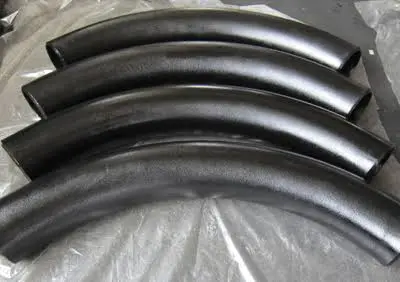
When designing oil and gas transmission systems, selecting the right pipe fittings becomes mission-critical. A buttweld bend serves as a specialized component that redirects flow in pipelines while maintaining structural integrity under extreme pressure and temperature conditions. Unlike standard off-the-shelf elbows with fixed 1D or 1.5D radii, these engineered fittings feature extended bending radii—typically ranging from 3D to 8D—that minimize turbulence, accommodate inline inspection tools, and reduce stress concentrations at directional changes. Understanding the material specifications and manufacturing standards behind these components helps procurement professionals make informed decisions that balance safety, compliance, and project economics.
Understanding Buttweld Bends in Oil & Gas Pipelines
Pipeline engineers face a fundamental question: when should you specify a bend instead of an elbow? The answer lies in understanding radius-to-diameter ratios and their impact on system performance.
Defining Bend Versus Elbow Configurations
The industry distinguishes these fittings based on their bending radius relative to pipe diameter. When the bending radius is typically 3D or greater, the component is generally classified as a bend—such as 3D, 5D, 6D, or 8D configurations. Conversely, fittings with 1D (short radius) or 1.5D (long radius) fall into the elbow category. This distinction matters because extended-radius turns make flow paths that are smoother and have lower pressure drops compared with sharper directional changes, depending on flow conditions and radius selection. This is very important for transmission pipelines that transport oil and gas over long distances, like those that run hundreds of miles.
Common Bend Angles and Their Applications
When planning a pipeline route, you need to be able to adapt to terrain challenges, existing infrastructure, and environmental restrictions. Standard bend angles are 45 degrees and 90 degrees, but unique angles, from 15 degrees to compound curves, can be made to fit specific isometric needs. A 45-degree bend is usually used for slow changes in direction where flow disruption must be kept to a minimum. A 90-degree bend is used for straight-route connections at pump stations or manifold connections. We can make things at any angle that you specify in your engineering plans, so they align accurately with on-site conditions.
Why Long-Radius Bends Dominate Large-Diameter Pipelines?
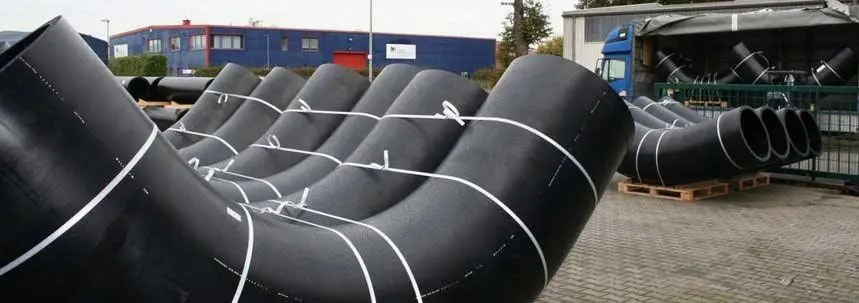
When bending large-diameter steel pipes, especially ones bigger than 24 inches, long-radius configurations are almost always used. The engineering rationale behind this choice lies in pipeline maintenance capabilities: larger radii allow inline inspection (ILI) tools, commonly referred to as "smart pigs," to pass through and clean internal surfaces, look for corrosion, and check the thickness of walls. There is enough of a curve in a 36-inch pipeline for these tools to be able to move through it without getting stuck, which would require expensive shutdowns and drilling. In addition to being easier to pig, longer bends spread mechanical stress more evenly across the curved section. This makes it less likely for fatigue cracks to start in smaller shapes when pressure changes frequently.
Material Requirements & Manufacturing Process
Material selection drives both immediate project costs and lifecycle performance in corrosive, high-pressure environments typical of hydrocarbon service.
Carbon Steel Grades for Pipeline Bends
Most types of pipeline steel are governed by the API 5L standard. The numbers X42 through X80 show minimum yield strengths ranging from 42,000 to 80,000 PSI. We have API 5L Grade B in stock for moderate-pressure gathering systems, X52 and X60 for conventional transmission pipelines, and X65 through X80 for high-pressure applications where reducing the wall thickness reduces overall material costs. The carbon content, manganese levels, and microalloying elements of these grades are strictly controlled to make sure they can be welded and have the low-temperature hardness needed for Arctic or offshore sites.
ASTM A234 covers more than just API 5L. It covers wrought carbon and alloy steel fittings, including buttweld bends as well. For temperatures up to 400°F, the WPB grade is the workhorse material. For higher temperatures, the WP1, WP5, WP9, WP11, WP22, and WP91 alloys are used in refinery piping and steam systems. Each grade strikes a balance between cost, resistance to creep, and resistance to oxidation. Procurement teams have to do this while taking into account design pressures and fluid properties.
Stainless and Specialty Alloys
Corrosive service conditions, like sour gas with hydrogen sulfide, seawater injection systems, or acidic condensate, require corrosion-resistant alloys. The ASTM A403 WP304/304L and WP316/316L stainless steels offer basic corrosion resistance. The low-carbon "L" versions are better for welding because they prevent carbide precipitation in areas that are heated. Duplex 2205 stainless steel is even better than regular stainless steel because it has a microstructure that is a mix of austenitic and ferritic elements. This gives it twice the yield strength of regular stainless steel and protects it from chloride-stress corrosion cracks in offshore platforms.
ASTM A420 WPL6 provides good low-temperature toughness for services down to approximately -50°F, while LNG cryogenic applications typically require specialized low-temperature materials qualified for much lower temperatures. High-yield low-temperature grades from ASTM A860 (WPHY series) are similar to current high-strength pipeline steels. They also keep their Charpy impact toughness at temperatures below zero, which is important to keep the Arctic pipeline from breaking.
Induction Bending Manufacturing Process
Through controlled localized heating, our induction bending process can turn straight pieces of pipe into precise curves. The pipe passes through an induction coil that heats a localized area to approximately 1,600–2,000°F depending on material grade and process requirements. This is hot enough to lower the yield strength while keeping the dimensions the same. As the hot area leaves the coil, clamping forces from the outside shape the pipe to the required radius, and water quenching fixes the shape. When the project needs very soft curves, this method can make turns up to 60 inches in diameter with radii as large as 20D.
Controlling Wall Thinning and Ovality
There are problems that come with bending because the outer wall (extrados) thins and stretches, and the inner wall (intrados) swells and squeezes. Our process engineering figures out the minimum wall thickness of the starter pipe to make sure that the post-bend extrados thickness is higher than what is required by ASME B31.3 and B31.8 codes. The usual range for thinning is between 8% and 15%, based on the radius. Effects are more significant for smaller bend radii. We check the real wall thickness by using ultrasonic scanning at several points along each bend and writing down the results in material test reports.
The ovality, which is the gap between the largest and smallest lengths in the bent section, is also closely looked at. Too much out-of-roundness makes field welding harder and could mean expensive cold-working is needed to get things back to being round. For most jobs, we keep ovality below 3% by making sure alignment tools fit right and root passes go all the way through without any breaks. This physical control gets rid of the need for rework in the field, which slows down project plans.
Post-Bend Heat Treatment Requirements
Induction heating changes the microstructure of steel in the bend zone, which could lead to hard spots or residual stresses. Post-bend heat treatment (PBHT), when required, may include processes such as normalizing, quenching, and tempering depending on material grade and project requirements to recover the qualities of a material. We put finished bends into ovens that are set to heat them evenly to certain temperatures (1,650°F for normalizing carbon steel), hold them there for certain amounts of time based on the thickness of the wall, and then cool them in controlled conditions. After that, testing for hardness makes sure there are no brittle spots that could cause cracks when the load is cycled.
ASME B16.49 provides requirements for factory-made induction bends and butt-welded seamless pipe bends, while heat treatment requirements depend on material specifications and project requirements. Our quality processes keep track of time-at-temperature charts and hardness walks across heat-affected zones. This gives third-party inspectors from classification societies and project engineers a way to check the work and make sure it's done right.
Comparison & Selection Criteria for Pipeline Projects
Choosing between fitting types and specifications requires balancing technical performance against commercial realities.
Bends Versus Standard Elbows
Standard buttweld elbows made according to ASME B16.9 are cheaper and can be ordered right away in standard sizes and plans. It takes days for a 90-degree long-radius elbow with a 1.5D radius to ship from a dealer and costs 30–40% less than a custom 5D bend. But this economy comes with trade-offs in terms of performance. For example, the greater curve makes turbulence worse, which raises the rate of erosion and pressure drop in fast flows. When pipelines move faster than 15 feet per second, like when gas is being sent, the energy loss from elbows adds up over hundreds of fittings, which could mean that bigger pipes or more compression are needed to meet flow goals.
Seamless Versus Welded-Bend Construction
The way pipes are made affects the quality and cost of bends. Seamless pipe is commonly available in small to medium diameters, offering the advantage of having no longitudinal weld seams. This makes seamless bends ideal for high-pressure nodes requiring high structural integrity without the risk associated with weld seam vulnerabilities. For diameters larger than 24 inches, bends are typically produced from welded pipe. When the pipe is longer than 24 inches, it needs to be welded using LSAW (Longitudinal Submerged Arc Welding) or HSAW (Helical Submerged Arc Welding). When welded pipe is used, seam orientation is controlled according to bending procedures and project requirements to minimize stress effects, which is perpendicular to the directions of highest stress. This keeps the ability to contain pressure. With modern X-ray inspection and automated welding, seam quality is as good as that of seamless pipe for diameters up to 60 inches.
Radius Selection for Pigging and Flow Optimization
The smallest bend radius needed for pigging to work depends on the inspection tool, but 5D is commonly selected for many transmission pipelines, although the minimum acceptable radius depends on the pig design and inspection requirements. Some cleaning pig designs might not be able to fit through 3D bends that are too tight, as they would block more advanced magnetic flux leakage (MFL) or ultrasonic inspection tools. We suggest talking to inspection service providers during the planning phase to make sure that the tools will work with the planned bend angles. It is too expensive to add sharper bends after the project has been completed.
Flow-modelling software helps figure out how much the pressure drops when you change the radius. A larger-radius bend generally produces lower pressure losses than a 1.5D elbow, with the actual difference depending on flow conditions and geometry. Extending to 5D lowers the losses to about 40% of elbow values. For long-distance pipes that change directions a lot, this optimization can get rid of one compression station, which saves a lot of money on capital costs that are much higher than the costs of adding a fitting.
Carbon Steel Versus Stainless Economics
Differential material costs for Buttweld seamless pipe bends need a thorough lifecycle analysis. Stainless steel bends are 4 to 6 times more expensive than their carbon steel counterparts, but they don't need to be painted and could last decades longer in places that are acidic. This challenge is typically addressed by using carbon steel coated with three-layer polyethylene (3LPE) or fusion-bonded epoxy (FBE), which can significantly extend corrosion protection compared with bare steel, although the additional cost depends on coating specifications and project conditions. We look at how likely it is that a product will rust, how easy it is to maintain, and how long it's supposed to last in order to suggest the best material and coating choices.
Conclusion
Selecting buttweld bends for oil and gas pipelines demands comprehensive evaluation of materials, manufacturing processes, and application-specific performance requirements. Extended-radius designs from 3D to 8D provide superior flow characteristics, can accommodate inline inspection tools, and better spread mechanical stresses than normal elbows. It is important to choose materials that are compatible with the fluid chemistry, pressure, and temperature. These materials include API 5L pipeline types, ASTM A234 carbon and alloy steels, and corrosion-resistant stainless steels. Controlling wall thickness, minimizing ovality, and doing post-bend heat treatment are all examples of manufacturing quality that have a direct effect on long-term reliability. When procurement workers understand these technical basics, they can choose parts that improve safety, compliance, and project costs throughout the lifespan of an asset.
FAQ
1. What distinguishes a butt-weld bend from a long-radius elbow?
The primary difference lies in bending radius and manufacturing method. Long-radius elbows have a 1.5D curve and are common catalogue items that meet ASME B16.9. They come in set angles like 45 degrees and 90 degrees. Buttweld bends utilize custom radii, usually 3D, 5D, or higher, that are made through induction bending processes that can make any angle. This wider radius lowers flow turbulence by 30–60% compared to regular elbows and lets pipeline inspection gauges pass through. This is why bends are necessary for long-distance pipeline systems that need to be inspected and cleaned on a regular basis.
2. Can buttweld bends withstand sour service conditions?
Yes, as long as it is made from the right materials and is heated the right way. Materials must meet the requirements of NACE MR0175/ISO 15156 for sour service, which means being in an area with hydrogen sulphide that can cause sulphide stress cracking. When we make bends, we use API 5L PSL2 sour-service grades or ASTM A860 WPHY materials that have controlled hardness levels below 22 HRC in the base metal, the weld, and the heat-affected zones. To get rid of any remaining stresses and hard spots, post-bend heat treatment is needed. Certificates of material testing show that it meets the chemical makeup standards for carbon, sulfur, and phosphorus, which affect its resistance to hydrogen embrittlement.
3. What are typical delivery timelines for custom bend orders?
Lead times are based on the details and the number of orders. Stock configurations made of standard materials ship within five to seven business days if they are already in stock. It takes three to four weeks to make, heat treat, and inspect custom induction bends up to 24 inches in diameter. Large-diameter welded turns from 26 to 60 inches take five to seven weeks to complete, which includes getting the pipe, bending it, heating it afterward, coating it, and checking the finished dimensions. Changes to the production plan may be able to handle rush orders. We answer questions within an hour and give you rough schedules and prices to help you plan your project. For unique work, the minimum order size is usually five pieces, but this can be changed depending on the specifics of the project and the supply of materials.
Partner with JS FITTINGS for Reliable Pipeline Components
JS FITTINGS brings over four decades of specialized manufacturing experience to your most demanding pipeline projects. As a qualified buttweld bend supplier for NIOC, ADNOC, and Petrobras, we maintain rigorous quality standards backed by ISO 9001, CE, and GOST-R certifications. Our 7,000-square-meter facility produces bends from DN15 to DN1500 in materials spanning API 5L X-grades, ASTM A234 alloys, and ASTM A403 stainless steels—all manufactured to ASME B16.49 and B16.9 standards. With monthly production exceeding 800 tons, on-time delivery rates above 95%, and technical response times within one hour, we support EPC contractors, distributors, and engineering firms throughout the project lifecycle. Contact our team at admin@jsfittings.com to discuss your specifications, request material test certificates, or obtain competitive pricing on buttweld bends engineered for lasting performance in critical hydrocarbon service.
References
1. American Society of Mechanical Engineers. (2018). ASME B16.49: Factory-Made Wrought Steel Buttwelding Induction Bends for Transportation and Distribution Systems. New York: ASME Press.
2. American Petroleum Institute. (2020). API Specification 5L: Specification for Line Pipe, 46th Edition. Washington, DC: API Publishing Services.
3. ASTM International. (2019). ASTM A234/A234M: Standard Specification for Piping Fittings of Wrought Carbon Steel and Alloy Steel for Moderate and High Temperature Service. West Conshohocken, PA: ASTM International.
4. Mohitpour, M., Golshan, H., & Murray, A. (2007). Pipeline Design and Construction: A Practical Approach, Third Edition. New York: ASME Press.
5. Palmer, A.C., & King, R.A. (2008). Subsea Pipeline Engineering, Second Edition. Tulsa, OK: PennWell Corporation.
6. National Association of Corrosion Engineers. (2015). NACE MR0175/ISO 15156: Petroleum and Natural Gas Industries—Materials for Use in H₂S-Containing Environments in Oil and Gas Production. Houston, TX: NACE International.
Send Inquiry
You may like
Related Industry Knowledge
- Buttweld Reducer Pressure Ratings for Critical Service Lines
- Slip-on flange vs weld neck flange: What are the differences?
- Collaborative Art of Lap Joint Pipe Flange and Stub End
- ASTM A105 Carbon Steel Forged Steel Flange Specifications
- What is seamless carbon steel pipe used for?
- Best Buttweld Elbow Materials for Corrosive Industrial Pipelines
- Carbon Steel Concentric Buttweld Reducer Buying Guide
- Industrial Buttweld Reducer Selection for Refinery Projects
- Why Is Long Radius Buttweld Elbow Preferred in Oil & Gas?
- Is a 90 or 45 degree elbow better for drain?