
What is Carbon Steel Pipe and Its Applications in Industry?






2026-08-04 09:41:03
Industry carbon steel pipe stands as the backbone of modern infrastructure, serving as an iron-carbon alloy with carbon content typically below 0.35% for industrial piping applications. This material addresses the fundamental challenge faced by EPC contractors, project developers, and industrial end-users: balancing exceptional strength against cost pressures. Unlike stainless steel, carbon steel pipe relies on carbon content rather than expensive alloying elements for mechanical performance, making it the go-to solution for high-pressure fluid transport, structural applications, and energy transmission where budget control meets uncompromising safety requirements.
Understanding Carbon Steel Pipe: Basics and Types
Industrial carbon steel pipe is mainly composed of iron and carbon, with small amounts of manganese, silicon, sulfur, and phosphorus added. The carbon percentage usually falls between 0.05% and 2.1%, which has a direct effect on how hard and strong the material is. This simple chemistry is highly adaptable to a wide range of temperatures and pressures.
Chemical Composition and Mechanical Properties
Weldability and hardness are both affected by the carbon percentage. Low-carbon versions (0.05% to 0.30%) are very easy to weld, which is very important for quick installation in the field. Manganese levels between 0.29% and 1.06% make the material more resistant to impact. Phosphorus and sulfur levels must be kept very low (usually below 0.035%) to avoid brittleness that could cause the material to break catastrophically under load.
Different grades have very different tensile strengths, ranging from 48,000 psi for ASTM A53 Grade A to over 80,000 psi for API 5L X70. Yield strength standards make sure that pipes keep their structural integrity when they are under a lot of stress. Industry-grade carbon steel pipe can be used in heat exchangers in power plants because it has a thermal conductivity of about 50 W/(m·K).
Manufacturing Methods: Seamless vs. Welded
The structure and function of pipes are determined by two main ways they are made. Hot extrusion or piercing of solid steel billets makes seamless industry carbon steel pipe with uniform wall thickness and no longitudinal seams. This method is perfect for oil and gas pipeline systems that need to work above 1,000 psi because it gives better pressure ratings and removes the risk of weld-line failure.
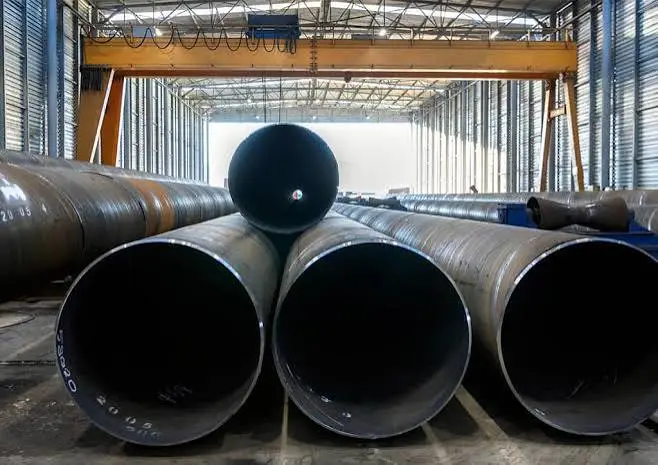
Welded pipes are made from steel strips or plates that are shaped into tubes and then joined together using different types of welding. Electric Resistance Welded (ERW) pipes are good for general building and uses with less pressure. Longitudinally Submerged Arc Welded (LSAW) pipes are welded automatically and then tested with radiographic testing (RT) to make sure the weld strength fits the stability of the base metal. Spiral Submerged Arc Welded (SSAW) pipes are a cost-effective solution for large-diameter water transmission pipelines.
Knowing these differences in production helps procurement teams choose the right pipes for the job, balancing the cost of the original investment with the performance needs over the life of the pipe.
Carbon Steel Pipe Grades and Specifications
To get around pipe grades, you need to know how international standards set limits on how well materials can do their jobs. Each standard covers a different set of application needs, such as toughness at low temperatures and service at high temperatures.
ASTM Standards for General Service
The industry standard for seamless pipe in high-temperature service is ASTM A106 Grade B. This type of pipe is often used in boiler systems and superheated steam lines that work above 750°F. Its chemistry limits make sure that it works reliably when heated and cooled many times without significant loss of mechanical properties during long-term high-temperature service.
ASTM A53 covers Grades A and B of seamless and welded Industry Carbon steel pipe. Grade B has a higher tensile strength (at least 60,000 psi). This standard includes hot-dip-galvanized pipe that is covered in zinc. This protects against corrosion for outdoor installations and water delivery networks. ASTM A179 seamless Industry Carbon steel pipe is used in heat exchangers and condensers, where uniform wall thickness makes thermal transfer work well.
Low-Temperature Service Specifications
As the temperature drops, standard carbon steel pipe can suffer from a loss of impact toughness. ASTM A333 covers places where brittle fracture can occur. Grades 1 through 6 have different amounts of notch toughness, which was tested at very low temperatures using Charpy V-Notch impact methods. For Arctic pipeline projects and LNG facilities where temperatures drop below -50°F, Grade 6 specifications are necessary to prevent brittle fracture that could cause environmental disasters or supply problems.
API Standards for Oil and Gas
API 5L standards, which are similar to ISO 3183 foreign standards, govern pipeline transportation systems in the oil and gas industry. Grade B is good for general pipeline service, and X-grades (X42 to X80) show the lowest yield strength in thousands of pounds per square inch. With a yield strength of 70,000 psi, X70 pipe allows for long-distance transfer at higher pressures. This can reduce the number of pumping stations required in some long-distance pipeline projects, and the costs of running the project are lower over its lifetime.
You can get these pipes either seamless or welded (LSAW, SSAW, ERW). For sour service environments with hydrogen sulphide, PSL2 (Product Specification Level 2) requires stricter chemical composition control and mandatory impact testing.
International Standards
In European markets, DIN 2440 covers medium-weight tubes that can be connected with threaded joints, and DIN 2444 describes versions that have been hot-dip galvanized. Canadian oil and gas pipeline systems are governed by CSA Z245.1, which specifies manufacturing and quality requirements for qualified steel pipe products. NBR 8261 talks about structural pipes that are cold-drawn or cold-formed and have cross-sections that are circular, square, or rectangular. These pipes are used in South American building markets.
Industrial Applications and Benefits of Carbon Steel Pipe
Industry-grade carbon steel pipe solves important problems in many fields where failing materials can cause production delays, safety issues, or fines from the government. It can be used for everything from gathering crude oil underground to building structures above ground.
Oil and Gas Transmission Infrastructure
Upstream and midstream operations depend on API 5L pipe for transport routes that go hundreds of miles and gathering systems that collect well output. High-pressure rates can handle fluid forces inside the structure as well as dirt loads and earthquakes outside the structure. Pipes must meet NACE MR0175 standards for sour service environments with hydrogen sulphide to avoid sulphide stress cracking, which wears down materials over time.
When preventing leaks is very important, long-distance gearbox projects mostly use seamless steel pipes with diameters between 16 and 36 inches. Since there are no longitudinal welds, there are no potential failure points. This means that the asset will need fewer inspections and cost less to maintain over its 30-year planned life.
Power Generation and Boiler Systems
For steam transportation networks that work in harsh conditions, thermal power plants depend on ASTM A106 and ASTM A335 seamless pipe. Superheated steam at 1,000°F and 2,500 psi needs materials that are stable and don't change size or shape due to thermal creep. Because the industry's carbon steel pipe's mechanical properties can be predicted, engineers can make accurate calculations that make sure pipe systems meet the ASME Boiler and Pressure Vessel Code.
These examples show how choosing the right grade can lower the costs over the life of a product. Even though the starting cost of the material is higher than alternatives like ductile iron, the longer service life without having to be replaced too soon gives budget-conscious plant workers a better return on their investment.
Structural Construction and Foundation Piling
ASTM A252 pipe is used to make poles that hold up bridge supports, high-rise buildings, and platforms in the ocean. When large-diameter SAW pipe is driven deep into unstable soil, it moves the weight of the structure to bedrock or other load-bearing layers. The material's impact resistance and compressive strength mean that it doesn't buckle or break when piles are driven into it.
Welding large-diameter carbon steel pipes saves time on construction projects because fabricated steel structures can be modified and modified more easily during field installation. This makes the project go more quickly when changes need to be made to the design because of the way the site is set up. This helps contractors meet their deadlines and stay out of trouble with penalty clauses.
Water Treatment and Distribution
For corrosion protection in drinking water service, municipal water systems use ASTM A53 galvanized pipe. The zinc coating makes the equipment last longer in chlorinated settings, which supports the long-term infrastructure investment goals of municipal water authorities. SSAW pipes, which can handle high flow rates and diameters up to 60 inches, are a cost-effective way to connect treatment plants to distribution networks for large-bore water transmission mains.
Chemical Processing Facilities
When working with chemicals that don't corrode at normal temperatures, process plants use industry carbon steel pipe for non-corrosive or mildly corrosive process fluids due to its optimal balance of strength and cost-effectiveness compared to highly alloyed alternatives. When the right grades are chosen, they can handle process pressures and keep their shape when temperatures change. Because the material is easy to machine, it can be made to fit complicated piping layouts and requires less fitting work than harder alloys.
Choosing the Right Carbon Steel Pipe: Comparison and Decision Factors
When deciding what to buy, it's important to weigh the different material options against the operating conditions of the project, government rules, and the available budget. Knowing the trade-offs in performance between pipe types helps you make the best choice.
Material Comparisons
In many industrial settings, carbon-steel pipe is used instead of stainless steel, alloy steel, or galvanised steel. Stainless steel is better at resisting rust, but it costs three to five times more and should only be used in places where corrosion is a problem or for food-grade service. For certain uses, alloy steel is stronger and can handle higher temperatures better, but industry carbon steel pipe is cheaper and easier to find, so it's better for general use.
When exposed to air, galvanised industry carbon steel pipe lasts longer than stainless steel without costing as much. The zinc covering corrodes on its own, keeping the base metal from rusting. This method works well for outdoor installations, fire safety systems, and farming uses where some corrosion protection is enough.
Seamless vs. Welded Selection Criteria
Whether a pipe is seamless or welded depends on the operating pressure. Seamless pipe can handle pressures above 3,000 psi without any problems with the weld lines. This is why it is required for important long-distance gearbox projects and high-pressure steam service. Welded pipe is a cost-effective way to handle lower-pressure situations, and modern inspection methods make sure that the weld integrity meets the design requirements.
Environments that are corrosive need to be carefully looked at. Seamless pipe doesn't have weld-zone corrosion, but welded pipe that has been properly welded and then post-weld heat treated (PWHT) works just as well for less money. The choice weighs the cost of materials against the funds for inspections and repairs over the duration of the asset.
Grade Selection for Industry Demands
The design pressure and temperature are used by oil and gas companies to choose the API 5L grades. Modern pipeline projects mostly use grades X52 to X70, which allow for higher working pressures that make pipeline transportation more efficient. For low-temperature use, ASTM A333 grades with proven impact toughness are needed to keep things from breaking easily in Arctic conditions.
For high-temperature steam service in power generation projects, seamless steel pipe manufactured to ASTM A106 or A335 specifications is required.The material's creep resistance keeps its shape over decades of thermal cycles. ASTM A252 large-diameter seamless steel pipe is often used in structural applications because it is strong when compressed and easy to weld, which makes installation in the field go quickly.
Conclusion
Industry carbon steel pipe is still needed in the energy, building, and industry sectors because it is strong for the price, easy to make, and has a history of good performance. When procurement professionals know about grade specifications, manufacturing methods, and quality verification processes, they can make smart choices that balance technical needs with budget constraints. Strategic relationships between suppliers and manufacturers with proven quality systems, reliable delivery, and full testing skills lower project risk and ensure long-term asset performance. As the world's building needs increase, industry carbon steel pipe will continue to be the basis for safe, effective, and cost-effective systems that move fluids and support structures.
FAQ
1. What factors determine carbon steel pipe pricing?
Pipe pricing is influenced by material grade, raw steel costs, manufacturing methods, and market conditions. Because of stricter chemistry and testing rules, API 5L X-grades cost more than ASTM A53. The way something is made has a big effect on the price—seamless industry carbon steel pipe costs 20–40% more than welded pipe. Dimensions affect cost by affecting the amount of material used and the difficulty of production. For example, large-diameter seamless pipe needs special tools to be made. Choosing the wall thickness, the type of coating (3PE, FBE, or zinc), and any necessary tests all add to the overall cost. The end price is also affected by the current state of the steel market and the number of orders. Buying in bulk lowers the cost per unit.
2. Can carbon steel pipe perform reliably in corrosive environments?
In harsh environments, industry carbon steel pipe needs strategies for managing corrosion. Coatings on the outside (3PE, FBE, zinc) do a good job of protecting underground or outdoor systems. Corrosive process fluids can be dealt with by using CRA, clad, or lined alloy steel for the inside walls. This saves money on solid alloy costs. Materials that meet NACE MR0175 standards stop sulphide stress cracking in sour service that contains hydrogen sulphide. Regular testing programs that check the thickness of walls allow for planned repair that can be done before rust weakens the structure. With the right grade choice and protection systems, industry carbon steel pipe can be used reliably in places where unprotected steel would fail too soon.
3. How can buyers verify quality compliance before purchase?
Suppliers with a good reputation will give you mill test certificates that follow EN 10204 3.1 and list the chemical and mechanical properties as well as the dimensions. Ask for inspection reports from a third party that confirm the results of hydrostatic testing, NDT (ultrasonic, radiographic, and eddy current), and measurements. Check that the seller has ISO 9001, GOST-R, and approvals from major energy companies such as Petrobras, NIOC, and ADNOC. Look over the Charpy impact test results for low-temperature grades and make sure that the carbon equivalent numbers make the metal weldable. Pre-shipment inspection services make sure things are correct before you accept delivery.
Partner with JS FITTINGS for Reliable Industry Carbon Steel Pipe Supply
JS FITTINGS has been making high-quality products for over 40 years and can help you buy industry carbon steel pipes. We keep strict quality standards and have ISO, CE, and GOST-R certifications to prove it. This is how we get to work with big energy companies like NIOC, ADNOC, and PETROBRAS. We can make ASTM A53, A106, A333, and API 5L grades from 1/2" to 60" in diameter, and we can do it in both seamless and welded (ERW, LSAW, and SSAW) ways to meet your exact needs. Over 90 containers are shipped every month, and 95% or more of them are delivered on time, so your project schedules will stay on track. Our seven-stage quality control framework ensures consistent reliability that lowers procurement risk, from sourcing materials to after-sales support. Our technical team can help you with all of your pipe needs, whether you need standard specs or custom fabrication with special coatings. We can do this for oil and gas, power generation, or building projects. To get reasonable prices from a trusted industry carbon steel pipe manufacturer who wants your project to succeed, email our experienced international trade team at admin@jsfittings.com.
References
1. American Society for Testing and Materials (2023). ASTM A106 / A106M - Standard Specification for Seamless Carbon Steel Pipe for High-Temperature Service. ASTM International, West Conshohocken, PA.
2. American Petroleum Institute (2022). API Specification 5L - Specification for Line Pipe, Forty-Sixth Edition. API Publishing Services, Washington, D.C.
3. National Association of Corrosion Engineers (2021). NACE MR0175/ISO 15156—Petroleum and Natural Gas Industries—Materials for Use in H₂S-Containing Environments. NACE International, Houston, TX.
4. American Society of Mechanical Engineers (2023). ASME B36.10M - Welded and Seamless Wrought Steel Pipe. ASME Press, New York, NY.
5. European Committee for Standardization (2020). EN 10204 - Metallic Products - Types of Inspection Documents. CEN Management Centre, Brussels, Belgium.
6. International Organization for Standardization (2019). ISO 3183 - Petroleum and Natural Gas Industries—Steel Pipe for Pipeline Transportation Systems. ISO Central Secretariat, Geneva, Switzerland.
Send Inquiry
You may like
Related Industry Knowledge
- Heavy Wall Thickness LSAW Pipe for High-Pressure Applications
- Metallurgically Bonded CRA Clad Pipe vs Mechanically Lined Pipe
- Industrial Steel Carbon Pipe Guide for High Performance Engineering
- ASTM A252 SSAW Carbon Steel Pipe Manufacturer for Foundation Piling
- Advantages of Using ASME B16.5 Flanges in Construction and Infrastructure Projects
- Guide to ANSI B16.5 Class 150 slip-on flange dimensions
- ASTM A234 WPB Buttweld Tee Material Properties Overview
- Differences Between AWWA Flanges and ANSI Pipe Flanges
- Carbon Steel Forged Steel Flange in Oil, Gas & Power Plants
- Buttweld Tee Manufacturing Guide: Seamless or Welded?