
Advantages of Using ASME B16.5 Flanges in Construction and Infrastructure Projects






2026-07-17 10:43:32
ASME B16.5 carbon steel flanges are always the best choice when project managers and procurement specialists look at ways to connect pipes for big infrastructure and construction projects. These forged components join pieces of pipe or equipment together and make fixed seals that won't leak in pressurized systems. Their standard design gets rid of worries about compatibility, lowers the risk of procurement, and makes sure they meet international safety standards. These are all important factors that have a direct effect on project timelines, budgets, and long-term operational reliability in a wide range of industries, from treating wastewater for cities to processing petrochemicals.
Understanding ASME B16.5 Carbon Steel Flanges: Specifications and Types
What Defines the ASME B16.5 Standard?
When it comes to pipe flanges and flanged fittings from NPS 1/2 to NPS 24, the American Society of Mechanical Engineers sets the ASME B16.5 standard. This standard covers pressure classes from 150 to 2500. Standardizing materials, dimensions, tolerances, marking requirements, and pressure-temperature ratings is what this strict framework does to solve important problems in the industry. By closely linking pressure containment capabilities to specific ASTM material grades, the standard gets rid of connection problems that can happen between global component providers and lowers the risk of catastrophic leaks in high-pressure systems.
Core Material Grades and Construction
When making ASME B16.5 carbon steel flanges, the materials are usually forged to meet ASTM A105 standards for normal temperatures and A350 LF2 standards for low temperatures. Forged construction reduces the risk of internal defects such as shrinkage cavities that can occur in cast alternatives, so the flange can maintain its structural integrity even when temperatures change. CNC-drilled bolt holes and precision-machined faces make sure that the parts can be put together quickly on-site and perfectly line up with matching equipment. This cuts down on installation time and improves safety.
Available Flange Configurations
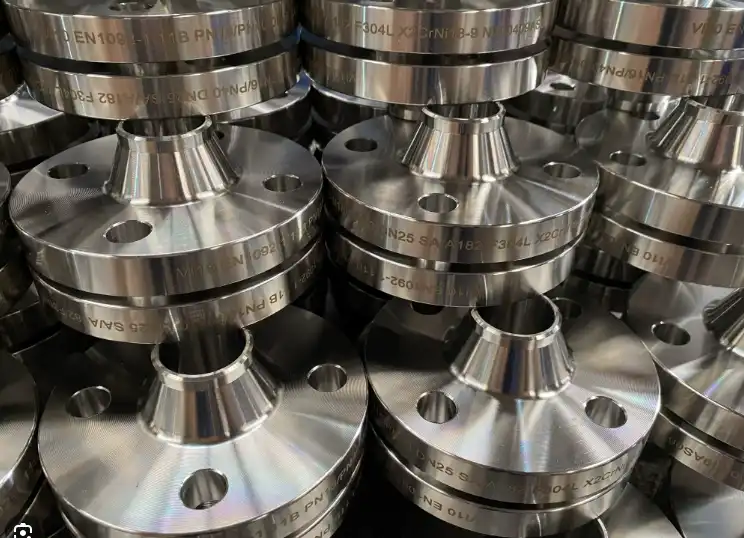
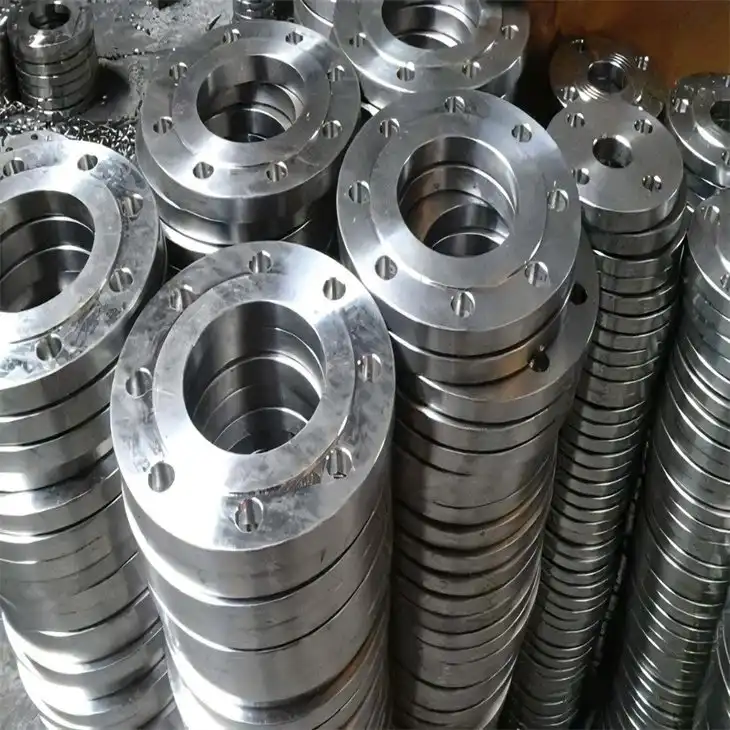
There are five main types of flanges that are used for different kinds of connections. Weld neck flanges are the strongest because they have a gradual change in thickness from the pipe to the flange. This makes them perfect for high-pressure steam lines and other important process pipes. Slip-on flanges make installation easier by sliding over the ends of the pipes before they are welded. They are cost-effective and strong enough for moderate-pressure applications. Blind flanges can be used to seal pipeline ends or vessel holes. They come in a variety of materials, sizes, and sealing surfaces, such as raised face, flat face, and male-female designs, so they can be used to provide reliable detachable closure choices for servicing access. Socket weld flanges can be used with small-bore pipes where weld neck installation isn't possible because of a lack of room. Lap joint flanges and stub ends work together in systems that need to be taken apart or aligned often.
Pressure Class and Facing Specifications
There are seven different pressure classes: 150, 300, 400, 600, 900, 1500, and 2500. These ratings determine the thickness of the wall and the size of the bolts. Different types of facings have a big effect on how well they seal. For example, raised face configurations work well with compressed gaskets, flat face designs keep fragile cast iron equipment from bending, and ring-type joint facings seal metal to metal for high-pressure situations above Class 900. Standard serrated designs commonly use surface finishes between 125 and 250 μin AARH for raised face configurations. to improve gasket grip and stop joint leaks under operating loads.
Core Advantages of Using ASME B16.5 Carbon Steel Flanges in Projects
ASME B16.5 carbon steel flanges are more useful than just mechanical connections; they directly address the main concerns of EPC builders, distributors, and industry end users.
Superior Pressure and Temperature Performance
Forged ASME B16.5 carbon steel flanges can handle the rough conditions that are common in chemical processing, oil and gas production, and supercritical power generation. Because of the tensile strength of the material and the precision engineering that went into making these parts, they can handle pressure surges well above their nominal ratings without deforming. Thermal cycling resistance is very important for building projects that have to deal with temperature changes during start-up, shutdown, and yearly changes. In steam distribution systems and hot water networks, where other connection methods often fail, these flanges have been seen to keep their seals intact through numerous thermal cycles.
Cost-Effectiveness Across Large-Scale Procurement
For medium and small engineering companies working with tight project margins, budget optimization is the most important thing to think about. When compared to stainless steel or exotic alloy options, ASME B16.5 carbon steel flanges have big material cost benefits. They can cut costs by 40 to 60 percent while providing sufficient mechanical performance for normal working conditions. When these savings are spread out over hundreds or thousands of connections in city structures, factories, or power plants, they have a big effect on the overall cost of the project without lowering safety or durability. Buying in bulk increases value even more because you get discounts for buying in bulk, and the logistics are easier.
Reliability and Safety Assurance
Poorly built pipe systems can cause downtime, damage to the environment, and safety risks. Leak-proof connections stop these problems right away. Standardized markings on ASME B16.5 carbon steel flanges show the material grade, pressure class, and manufacturer. This allows for non-destructive traceability and full quality verification all the way through the supply chain. This openness makes government procurement officers and compliance managers more confident, since they have to show that they are following bidding requirements and legal standards. There are important safety factors built into pressure ratings that allow for operational margins that handle occasional system transients without joint failure.
Versatile Application Across Infrastructure Sectors
Because these parts are flexible, they can be used in a variety of projects. Class 150 flanges with flat faces are used to connect ductile iron valves and pumps in municipal water treatment plants. Class 300 weld-neck flanges are often used in higher-pressure hot water circulation systems in district heating networks. Corrosion-resistant coatings are put on ASME B16.5 carbon steel flanges in industrial wastewater systems to make them last longer in slightly aggressive settings. Because it is so flexible, procurement specialists can use the same connection system for all phases of a project. This makes it easier to keep track of inventory, cuts down on training needs, and speeds up maintenance processes.
Comparing ASME B16.5 Carbon Steel Flanges with Alternative Standards and Materials
To make smart buying choices, you need to know how ASME B16.5 carbon steel flanges compare to other specifications and materials.
Material Performance Considerations
Because they are made to ASTM A182 F304 or F316 standards, stainless steel flanges offer better corrosion protection thanks to chromium-nickel alloying. This makes them essential for use in pharmacy, food processing, and offshore marine environments. But options made of ASME B16.5 carbon steel flanges work just as well in neutral or slightly corrosive conditions and cost a lot less. Protective coatings, such as hot-dip galvanizing, epoxy painting, or specialized polymer systems, make carbon steel last longer in moderately harsh conditions while keeping the cost benefits. Instead of random specifications, the choice between materials is based on fluid chemistry, ambient conditions, and a life cycle cost analysis.
Forged Versus Cast Manufacturing Methods
The manufacturing method has a big effect on the reliability and mechanical qualities. Forged ASME B16.5 carbon steel flanges have better grain structure alignment, higher impact resistance, and a lower risk of internal defects compared with cast parts. These features mean that there are more safety gaps in serious situations where a joint failure could have terrible results. For low-pressure, non-critical service, cast flanges may be enough, but forged construction is still the norm for infrastructure projects where long-term dependability is worth the extra cost.
Standard Compatibility and Industry Preferences
The change from ANSI B16.5 to ASME B16.5 keeps backward compatibility. In modern procurement questions, both words can still be used interchangeably, though the ASME name shows how things are run now. The API standards used in oil and gas production, on the other hand, take into account the specific needs of upstream drilling and are not standardized. Knowing these differences keeps specification conflicts from happening and ensures that the new system works well with the existing ones in the building. Distributors and stockists can optimize their inventory by focusing on ASTM A105 flanges that comply with ASME B16.5 dimensions, which are widely widely used in the industrial, civic, and building sectors.
Navigating Carbon Steel Grade Selection
As of now, ASTM A105 is widely used for carbon steel flanges in ambient and elevated temperature services where the applicable pressure-temperature ratings allow its use. It has great weldability and mechanical properties for general construction use. A350 LF2 is commonly used for low-temperature service, with the allowable minimum design temperature depending on the grade classification and impact testing requirements. It has nickel added to it to keep it from breaking easily in cold places or during cryogenic service. The right grade choice keeps things from breaking down too soon and avoids unnecessary material costs. Skilled makers help clients find this balance by giving them technical advice that is tailored to their specific working conditions.
Best Practices for Procuring ASME B16.5 Carbon Steel Flanges
Strategic decisions about where to get materials affect the success of a project by ensuring quality, keeping costs low, and making sure the supply chain is reliable.
Partnering with Certified Manufacturers
Working together with approved manufacturers who have ISO 9001 certification means they are committed to consistent quality management systems that include testing for performance, tracing materials, and checking their dimensions. For material verification, we keep up-to-date testing tools like optical emission spectrometers and ultrasonic flaw detection systems and other inspection methods that identify internal and surface discontinuities before goods leave our plant. International certifications like CE, GOST-R, and being an approved supplier for national oil companies give customers even more confidence that the products they buy meet strict global standards. Manufacturers with decades of experience, like us, bring a wealth of knowledge that helps avoid common buying mistakes.
Understanding Pricing Structures and Value
Unit costs depend on the size, pressure class, material grade, and facing type. For example, Class 150 slip-on flanges with smaller diameters have the lowest prices, while Class 2500 weld neck flanges with large bores have the highest prices. Bulk discounts usually start at container-load quantities, and prices get better as more containers are committed, which helps maximize production efficiency. Minimum order amounts match the costs of setting up the factory with the needs of the customer for flexibility. We can handle both small orders for testing purposes and large-scale project supplies of more than 800 tons of pipe fittings and 700 tons of ASME B16.5 carbon steel flanges per month.
Managing Lead Times and Logistics
Delivery times are set by the production schedule, the frequency of quality checks, and the length of time needed for international shipping. Standard configurations from stock can be shipped within days, but custom configurations that need to get special materials or have their sizes changed may take 4 to 8 weeks. We maintain our more than 95% on-time delivery record by carefully planning our production and talking to customers before problems happen. Understanding the necessary export paperwork, freight forwarding options, and port capabilities at the destination can help you avoid costly delays. Every day, our international trade team handles shipments to over 30 countries that are complicated in this way.
Leveraging Customization and Technical Support
Because each project has unique requirements, it is common for flanges to require custom dimensions, non-standard facings, or the finishes to be different from what's in the catalog. Manufacturers who are also engineers offer extra services that make their products more valuable. These extra services include expert advice on choosing the right material, finite element analysis for odd loading conditions, and help after the sale for questions about installation or changes that need to be made in the field. This way of working turns suppliers into project partners who are both responsible for the project's success. This is especially helpful for big, complicated infrastructure projects where a lot is at stake.
Conclusion
In conclusion, by making smart choices about ASME B16.5 carbon steel flanges, construction and infrastructure projects can benefit from their consistent quality, low cost, and proven dependability. The thorough standard covers all the risks that come with buying things and works with a wide range of uses, from small water systems in cities to big industrial processing. When you work with experienced manufacturers who have international certifications and decades of production experience, you can be sure that you will be able to get compliant products with technical support and quick service. Understanding the specifications, systematically comparing alternatives, and following the right installation methods will help you get the most out of the big benefits these parts offer.
FAQ
1. What pressure class should I specify for my application?
The maximum operating pressure and temperature of the system, as shown in the ASME pressure-temperature rating tables, determine which pressure class to use. Class 150 is enough for most HVAC and municipal water applications that don't need more than 285 psi of pressure at room temperature. Class 300 is for modest manufacturing processes that go up to 740 psi. The higher classes are used for specific tasks. For example, Class 600 is used for steam systems, and Classes 900–2500 are used for extreme-pressure petroleum service or supercritical power generation. By talking to manufacturers who have experience with the application, you can avoid both under-specification and over-specification, which can put safety at risk and waste money.
2. Can carbon steel flanges be customized for unique project requirements?
Manufacturers who can machine parts can make changes to the sizes, use non-standard bolt patterns, and add protective coats and special faces that aren't found in catalogs. To make a custom ASME B16.5 carbon steel flange, you usually need engineering drawings, material specs, and agreements on the number of pieces needed to cover the costs of the tools and setup. Lead times are longer than for standard products, so it's important to plan your purchases early on. We can help with customization from DN15 to DN2000 and offer full expert support.
3. How do I verify flange compliance with ASME B16.5?
Permanent markings on compliant ASME B16.5 carbon steel flanges show the material grade, pressure class, manufacturer identification, and heat numbers that allow material tracking. Test records from manufacturers show the chemical makeup, mechanical qualities, and measurements. When project requirements call for an extra quality guarantee, third-party inspection services provide independent approval. Manufacturers who are ISO-certified keep written records of their quality systems, which are audited on a regular basis. This provides systematic assurance of compliance.
Partner with JS FITTINGS for Your ASME B16.5 Carbon Steel Flange Requirements
JS FITTINGS can help you with your ASME B16.5 carbon steel flange needs. To complete a project successfully, you need to supply partners you can trust who know how to balance quality, cost, and delivery performance. With over 40 years of experience making things, JS FITTINGS has helped EPC contractors, distributors, and industrial end users in over 30 countries with their ASME B16.5 carbon steel flange needs. We are committed to meeting world quality standards, as shown by our ISO, CE, and GOST-R certifications and the fact that we are an approved supplier for big oil companies in several countries. We can produce more than 700 tons of flanges every month andd eliver more than 90 container shipments per month with an on-time delivery rate exceeding 95%. This provides large-scale projects the supply reliability they need. Our technical team answers all questions within an hour and helps customers choose the right materials, make changes from DN15 to DN2000, and get full after-sales service. Email admin@jsfittings.com to talk about your specific needs, ask for technical paperwork, or get competitive quotes from an experienced ASME B16.5 carbon steel flange manufacturer committed to your project success.
References
1. American Society of Mechanical Engineers. ASME B16.5-2020: Pipe Flanges and Flanged Fittings - NPS 1/2 Through NPS 24 Metric/Inch Standard. New York: ASME Press, 2020.
2. ASTM International. ASTM A105/A105M-21: Standard Specification for Carbon Steel Forgings for Piping Applications. West Conshohocken: ASTM International, 2021.
3. Harvey, John F. Theory and Design of Pressure Vessels. New York: Van Nostrand Reinhold Company, 1985.
4. Bickford, John H. An Introduction to the Design and Behavior of Bolted Joints. Fourth Edition. Boca Raton: CRC Press, 2007.
5. Singh, Kanchan and Soler, Alfred I. Mechanical Design of Heat Exchangers and Pressure Vessel Components. Berlin: Springer-Verlag, 1984.
6. Nayyar, Mohinder L. Piping Handbook. Seventh Edition. New York: McGraw-Hill Education, 1999.
Send Inquiry
You may like
Related Industry Knowledge
- Sourcing Custom Steel Flange: A Buyer’s Guide to Working with a Manufacturer
- ASTM A105 Weld Neck Flange: Complete Guide
- ASTM A234 WPB Buttweld Tee Material Properties Overview
- Buttweld Elbow Dimensions Guide for ASTM A234 WPB Fittings
- Getting to Know ASTM A53 ERW Pipe: Characteristics & Uses
- Carbon Steel Buttweld Reducer for High-Pressure Pipelines
- Carbon Steel vs Stainless Steel Buttweld Bend: Which to Use?
- Carbon Steel Forged Steel Flange Supply: China Factory Wholesale
- What is seamless carbon steel pipe used for?
- How to Choose the Right Buttweld Elbow for High-Pressure Piping