
Sourcing Custom Steel Flange: A Buyer’s Guide to Working with a Manufacturer






2026-07-10 10:41:44
It's very important to find the right custom steel flange when your project needs precise connections in hazardous industrial environments. A custom steel flange is a specialized component used in piping systems that is made to connect pipes, valves, pumps, and other equipment when off-the-shelf options don't work. These custom-made parts can handle Class 2500 pressure ratings or meet special requirements beyond standard flange classifications or connect old equipment to new systems. They can also handle geometry mismatches, harsh operating conditions, and complicated metallurgical needs that regular flanges can't handle.
Understanding Custom Steel Flanges: Types, Materials, and Standards
What Makes a Flange "Custom"?
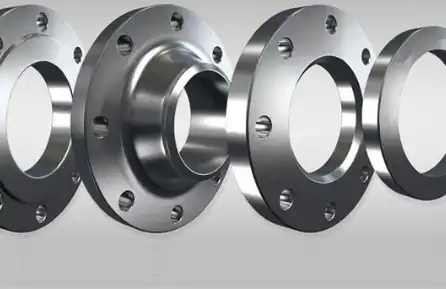
Custom steel flanges are made from proprietary drawings or specifications that have been reverse-engineered, in contrast to standard flanges, which adhere to strict specifications like ASME B16.5 or DIN standards. At JS Fittings, we've made thousands of custom configurations for clients with specific needs. For example, onshore pipelines require anchor flanges embedded in concrete thrust blocks, petrochemical reactors need large-diameter closures that are bigger than 60 inches, and power plant turbine retrofits need transition flanges to fit bore sizes that don't match.
Core Flange Types and Their Applications
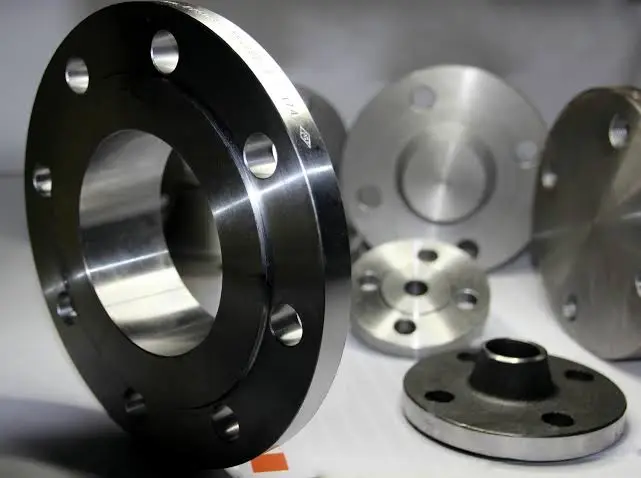
Forged carbon steel flanges are the most important parts that hold pipes, valves, pumps, and other machines together to make a safe piping system. Forged steel flanges are different from cast flanges because they go through a high-pressure mechanical forging process that refines the grain structure. This gives them better mechanical qualities that can handle high-pressure spikes and extreme temperature cycles without cracking inside.
We make all kinds of forged flanges that are meant to keep oil, gas, and industrial processing lines from leaking and to last a long time:
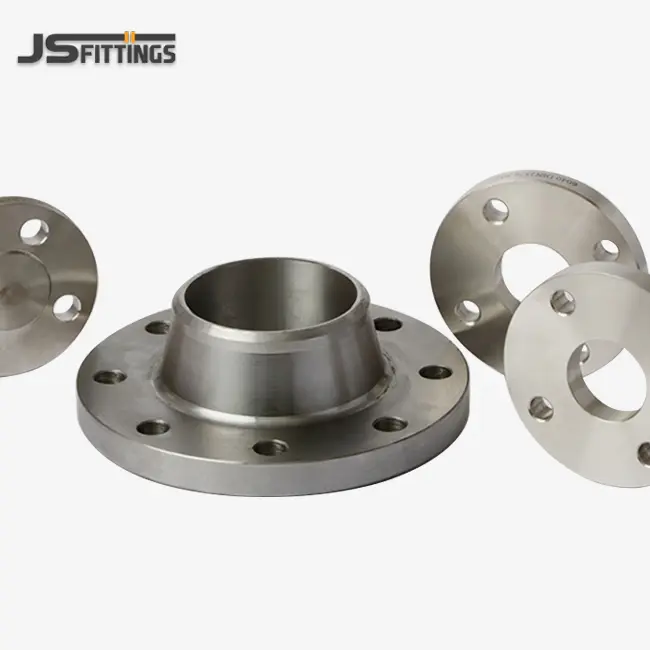
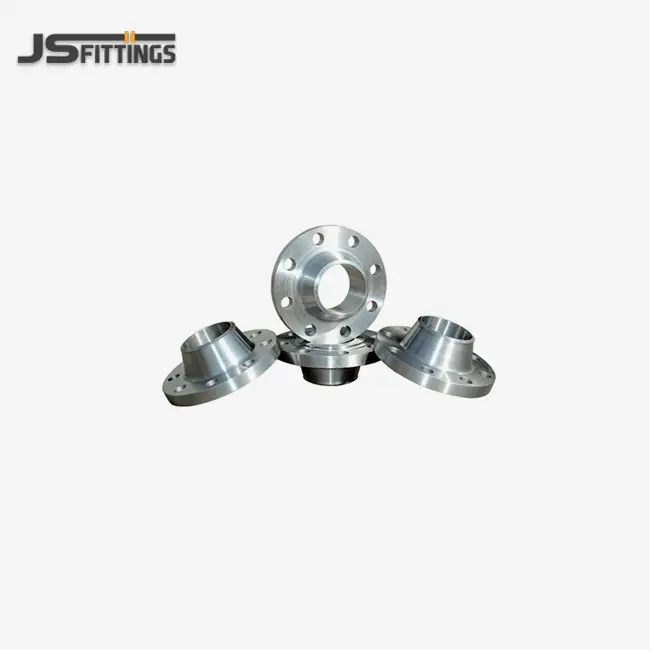
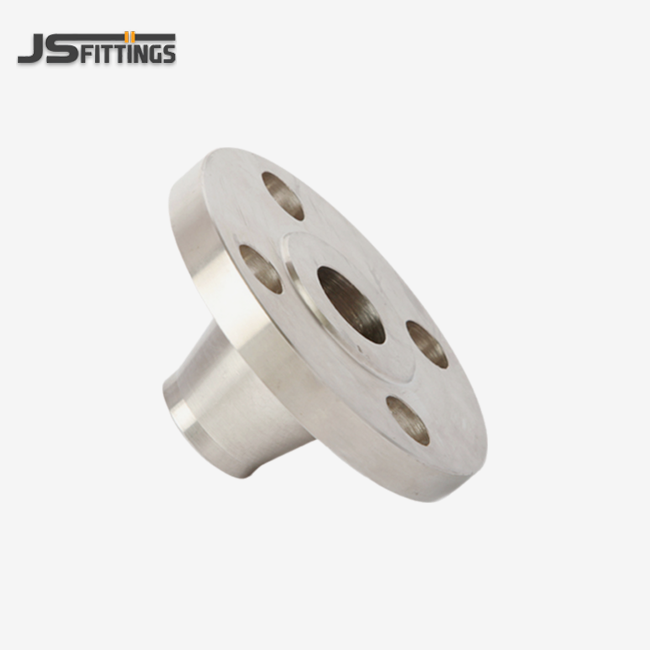
- Weld Neck (WN) Flanges: Are designed for areas with high pressure and critical service needs where structural integrity cannot be compromised. Because the tapered hub spreads stress well, these are widely used in chemical plants and refineries, especially for high-pressure and critical service applications.
- Slip-On (SO) Flanges: These make it easy to line up lower-pressure lines and are cheap to install. Maintenance teams like how easy it is to put together in the field, which cuts down on the number of hours needed for big installation jobs.
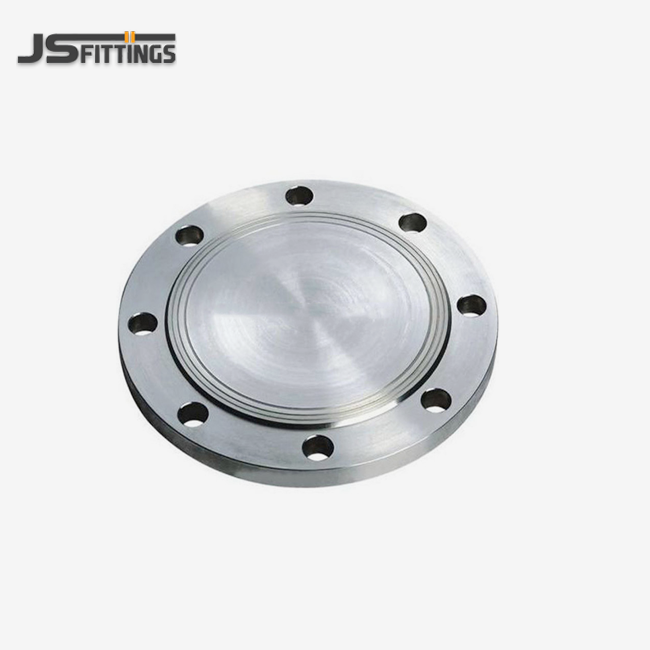
- Blind (BL) Flanges: The end of a pipe system or a vessel hole is sealed with these. They are necessary for pressure testing and separating parts of a production line for repair without having to shut down the whole system.
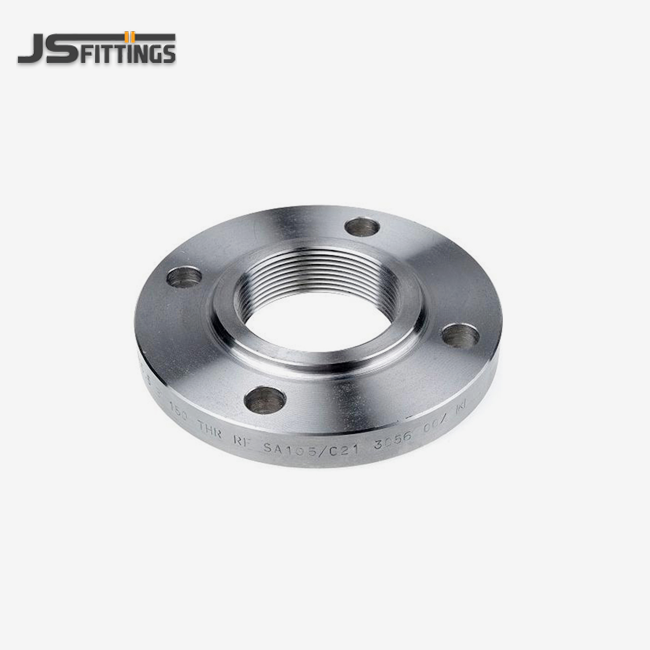
- Socket Weld (SW) and Threaded (TH) Flanges: Are made to fit small-diameter high-pressure pipes that require compact connections because of limited room. Instrumentation lines and sampling systems use this a lot.
- Lap Joint (LJ) Flanges: These are used in systems that need to be taken apart often for cleaning or checking. The loose backing ring makes it easier to line up the bolts in places where chemicals are likely to attack the stainless steel stub ends.
Material Selection and Standards Compliance
Choice of material has a direct effect on performance over time and total cost of ownership. We offer two types of carbon steel: ASTM A105 for general use and A350 LF2 for low-temperature service where impact requirements must be specified according to the applicable grade and design conditions. When corrosion resistance is critical, types of stainless steel like ASTM A182 F304 and F316 are very good at stopping pitting and crevice corrosion in places with a lot of chloride.
Different types of alloy steel (F11, F22) can handle high temperatures in steam service, and Duplex and Super Duplex grades (F51, F53) provide excellent resistance to chloride-related corrosion and stress corrosion cracking in many offshore applications. We work with a number of different international standards, including ASME/ANSI B16.5 for 1/2" to 24" sizes; ASME B16.47 Series A and B for 26" to 60" large-diameter flanges; and DIN/EN 1092-1 for European flange dimensions, pressure ratings, materials, and marking requirements.
Pressure levels range from Class 150 to 2500 and PN6 to PN64. There are different types of faces, such as raised face (RF), flat face (FF), ring-type joint (RTJ), and male & female (M&F).
Comparing Custom Steel Flange Options: Making the Right Choice
Custom Versus Standard: When Customization Pays Off
If your pipe system follows standard rules, standard connections will work great. But when there isn't enough room in compressor houses, the bolt patterns on imported equipment aren't standard, or the pressure-temperature combinations aren't standard, custom steel flange fabrication is the only way to go. The higher price at first—usually 15–30% more than standard items—is balanced out by not having to buy expensive adapters, lowering the risk of leaks, and avoiding costly downtime caused by parts that don't work together.
Forged Versus Cast: Quality That Shows Under Pressure
Forging gets rid of the internal holes and gas pockets that are common in custom steel flange cast goods. This makes the product more resistant to wear, which is important for dealing with stresses from tightening bolts and changes in internal pressure. Our CNC machining centers precisely cut or smooth the faces of flanges to make sure that gaskets fit perfectly and don't leak in high-vacuum or high-pressure environments.
We keep very close tolerances on the thickness and alignment of bolt holes. Our flanges fit exactly with similar tools, which cuts down on installation time and labor costs when your team is out in the field. Every forged flange meets the specific pressure-temperature ratings of ASME B16.5. This means that engineers can easily use our parts in important infrastructure for chemicals and refineries.
Material Trade-offs: Carbon Steel Versus Stainless Steel
As a result of its high strength and low cost, carbon steel is the material of choice for hydrocarbon processing, where coatings and cathodic protection keep corrosion rates under control. Stainless steel costs more up front, but it lasts longer in acidic or chloride environments, which means it needs less maintenance and replacement more often. Even though stainless steel costs more than carbon steel, lifecycle cost analysis often favors stainless steel for applications requiring superior corrosion resistance; it often chooses stainless steel for uses in food processing, pharmaceutical manufacturing, and marine applications
The Manufacturing Process: How Are Custom Steel Flanges Made?
From Raw Material to Precision Component
The process of making things starts with approved raw materials that can be tracked back to Mill Test Reports that meet EN 10204 3.1 or 3.2 standards. Positive Material Identification (PMI) checks the chemical composition to make sure that the correct material grade is used in production. During the forging process, billets are heated and shaped under high pressure in a controlled way. This improves the internal grain structure so that the metal has the best tensile properties.
Heat treatments such as normalizing, quenching, and tempering may be applied depending on the material grade and required mechanical and tensile properties they need to withstand thermal shock and cyclic loading. For important sealing surfaces, machining tolerances can reach ±0.05mm for precision-critical applications, which is much smaller than the normal ±1.6mm. This makes sure that there is no leaking when using dangerous media.
Design Customization and Prototyping
During the design phase, we work together closely and use finite element analysis (FEA) to find the best balance between weight and performance. This level of technical precision is very helpful whenfabricating low-profile custom flanges for machinery casings where standard hub heights present clearance issues, or when deciding on wall thicknesses for pressure classes that aren't standard.
Testing can be done on prototypes before full production. We have helped clients make samples of new process units so that they can be tested for pressure and fit before placing large orders. This lowers the risk of big capital projects where a single problem could shut down whole sites.
Comprehensive Quality Control Measures
Quality assurance includes a number of checkpoints. Ultrasonic Testing (UT, according to ASTM A388) finds holes or other irregularities inside forgings. This is especially important for heavy-wall custom flanges. Testing with Magnetic Particle (MT) or Dye Penetrant (PT) makes sure that the surface is still solid after it has been machined. Using Coordinate Measuring Machines (CMM), complicated shapes, bolt circle sizes, and gasket surface roughness (Ra values) are checked against approved CAD models.
Tensile tests, Charpy V-notch impact tests at low temperatures, and hardness checks are all types of mechanical testing for OEM carbon steel forged flanges. Testing for NACE MR0175 compliance makes sure that flanges won't break in sour service environments with hydrogen sulfide. Due to these strict rules, JS Fittings is now an approved supplier for major oil companies like the National Iranian Oil Company, the Abu Dhabi National Oil Company, and Petrobras.
Our carbon steel flanges are treated with high-quality industrial black lacquer, rust-preventive oil, or hot-dip galvanizing to keep them from rusting while they are being shipped by sea or stored in a warehouse. This makes sure that they arrive "ready-to-install."
Manufacturing Lead Times and Capacity
Knowing when things are made helps buying teams make good plans. Standard custom orders usually take between 4 and 6 weeks to ship from the time the drawings are accepted. However, our average monthly capacity of 800 tonnes of pipe fittings and 700 tonnes of flanges gives us some flexibility for immediate needs. We've made our supply chain reliable by sending out more than 90 containers every month and getting them delivered on time more than 95% of the time. Our yearly capacity is up to 30,000 tonnes, which makes us flexible for big building projects that need deliveries spaced out to match construction stages.
Procurement Best Practices: Buying Custom Steel Flanges from Manufacturers
Evaluating Supplier Credibility
Certifications are the basis for evaluating suppliers. Check for quality management systems that are certified by ISO 9001, guidelines for pressure equipment like CE marks, and approvals that are specific to the market, like GOST-R for Russian projects. Since 1983, we've been making things for 43 years, which shows practical stability that short-lived suppliers can't match.
A track record is very important. Our client complaint rate stays below 0.5%, and our repurchase rate is higher than 98%. These numbers show that our quality and service delivery are always the same. Ask for references from companies that have used similar applications in your field. Offshore drilling contractors and food preparation plants have different needs, and makers with a lot of experience know how to meet these needs.
Pricing Models and Cost Estimation
Custom steel flange prices depend on the cost of materials, how hard the job is to machine, how many are needed for tests, and the number of orders. For custom setups, the minimum order quantity is usually between 10 and 20 pieces, but we can make smaller sample amounts for testing purposes. Above 100 pieces, volume discounts start to make sense, and economies of scale get better as the number of items sold rises.
Asking for thorough quotes with itemized breakdowns can help you figure out what costs are most important. Material surcharges for rare metals, needs for high-end finishing, or faster testing methods can all change the final price. Manufacturers can suggest value-engineering alternatives that meet functional requirements at lower costs if they are clear about budget constraints.
Logistics and Supply Chain Considerations
International shipments need to be carefully planned out. For ocean freight, we package flanges with protective caps, wooden cases, and heavy-duty moisture barriers. Whether you choose full container loads or less-than-container groupage as your shipping method affects how long it takes to get to you and how much it costs. To avoid demurrage charges or storage costs, delivery schedules must match up with how ready the project site is.
Our foreign trade team handles shipping paperwork, clearing customs, and moving goods, which makes things easier for buyers. Responding to questions within an hour shows the response that keeps projects on track when lead times get short.
Building Long-Term Partnerships
Relationships that work well for buying go beyond just one deal. Throughout the lifecycle of a project, manufacturers who take the time to understand your needs, keep in touch with you regularly, and offer expert help during installation add value. True partners are flexible when requirements change, ready to speed up emergency orders, and proactive about communicating about material availability. These are all things that set true partners apart from transactional providers.
Our comprehensive quality assurance framework integrates seven key stages for large-diameter custom forged steel flanges: material supply, production management, quality control, packaging, inventory, pre-shipment inspection, and after-sales service. This all-around method makes sure that repeat orders are always the same and helps your brand with end users.
Conclusion
To find custom steel flanges, you have to find a balance between technical requirements, quality control, cost management, and the dependability of the supplier. The right manufacturing partner has engineering know-how, quality systems that have been approved, and a track record of doing well in tough situations. Custom flanges are used to solve problems that standard parts can't, like connecting pipelines under the sea, sealing pressure vessels, or making old equipment work with new ones. The information in this guide about material properties, production methods, and the best ways to buy things gives your team the confidence to choose parts that will lower project risk, meet deadlines, be safe, and work well for a long time.
FAQ
1. What factors should I prioritize when selecting a custom steel flange manufacturer?
Certifications (ISO 9001, CE, and industry-specific approvals are good examples), experience making things for similar uses, testing skills (UT, PMI, and mechanical testing), and measures for delivery performance should all be given top priority. Check the traceability of the material using mill test reports and ask for examples from clients in the same industry.
2. How can I verify the quality of custom steel flanges before shipment?
Ask a third party to check and watch the testing while it's being made; look over detailed test records that include chemical analysis and mechanical properties; and make sure you get dimensional proof reports from CMM measures. Before they are shipped, the surface finish, protective coatings, and integrity of the packaging should all be checked.
3. What are typical lead times for custom flange orders?
Standard custom steel flange configurations take 4 to 6 weeks from the time the plans are accepted. However, for complicated geometries or rare materials, the time frame may be extended to 8 to 10 weeks. For urgent needs, you can often get expedited service. Manufacturers can better use their resources when they have clear communication about project schedules during the quotation process.
Partner with JS Fittings: Your Trusted Custom Steel Flange Supplier
When it comes to making precision-engineered forged flanges for important industrial uses, JS Fittings has 43 years of experience. As a qualified provider to some of the world's biggest energy companies, we use advanced CNC machining and strict testing methods to make sure that the parts we send them meet or exceed ASME, DIN, and international standards. With the ability to ship over 90 containers and 700 tonnes of flanges every month, we can handle projects of all sizes, from small test installations to big infrastructure developments. Email our skilled staff at admin@jsfittings.com to talk about your particular needs, ask for a review of technical plans, or set up a factory check. We offer full material tracking, customisation options from DN15 to DN2000, and quick support to keep your projects moving forward in a safe and effective way. JS Fittings is the company you can trust to provide you with custom steel flanges.
References
1. American Society of Mechanical Engineers, "ASME B16.5: Pipe Flanges and Flanged Fittings," ASME Standards Committee, 2020.
2. Davis, J.R., "Metals Handbook: Properties and Selection of Irons, Steels, and High-Performance Alloys," ASM International, 2018.
3. Singh, R., "Pipeline Integrity Handbook: Risk Management and Evaluation," Gulf Professional Publishing, 2019.
4. European Committee for Standardization, "EN 1092-1: Flanges and Their Joints - Circular Flanges for Pipes, Valves, Fittings and Accessories," CEN Technical Board, 2018.
5. Nayyar, M.L., "Piping Handbook," McGraw-Hill Education, Seventh Edition, 2017.
6. American Petroleum Institute, "API 6A: Wellhead and Tree Equipment," API Standards Department, 2019.
Send Inquiry
Related Industry Knowledge
- How to Order Custom Steel Flange
- ASTM A312 vs A358: Choosing the Right Stainless Steel Pipe Standard
- Long Radius Buttweld Elbow: Ultimate Guide 2026
- Understanding the API 5L Seamless Steel Line Pipe Specification
- API 5L Seamless Steel Line Pipe for Pipelines Explained
- How to Choose a Buttweld Tee for High-Pressure Pipelines
- How to bolt to flanges with threaded holes?
- When to use threaded flanges?
- What is rtj blind flange?
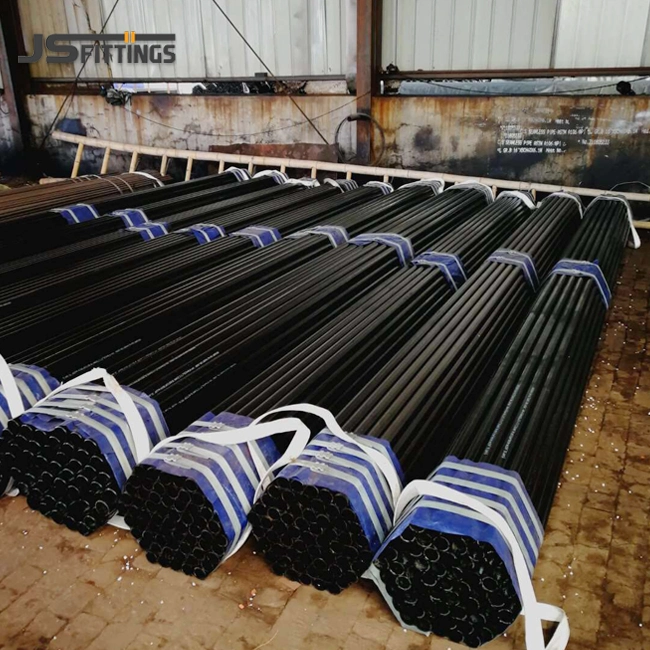
- What specification is the carbon steel black pipe?