
Metallurgically Bonded CRA Clad Pipe vs Mechanically Lined Pipe






2026-07-29 10:25:40
When selecting corrosion-resistant piping for aggressive industrial environments, the decision between metallurgically bonded clad pipes and mechanically lined alternatives directly impacts project longevity, operational safety, and total cost of ownership. CRA-clad and lined pipe solutions represent specialized engineering approaches that merge carbon steel's structural strength with the exceptional corrosion resistance of stainless steel or nickel alloys. The fundamental distinction lies in bonding methodology: clad pipes achieve a metallurgical bond between the base and corrosion-resistant layers, whereas lined pipes employ mechanical retention strategies. This comparison addresses critical procurement considerations for EPC contractors, distributors, and industrial end-users navigating specifications, certifications, and long-term performance requirements in oil and gas, chemical processing, and cryogenic applications.
Introduction
Corrosion-resistant alloy technology has changed how pipeline integrity is managed in many fields where corrosive media can affect operational reliability. Choosing between metallurgically bonded clad pipes and mechanically lined configurations is more than just a technical matter; it's also a strategic choice that will have an impact on the project's cost, safety, and upkeep requirements for decades to come.
Specialized solutions for harsh conditions are now the main topic of procurement talks. ASTM A333 Grade 6 pipes are used in cryogenic environments below -45°C. They go through strict Charpy V-notch testing to make sure they don't break easily in arctic or LNG settings. Meanwhile, composite pipe systems have carbon steel bases and cladding made of Alloy 625, 825, or 316L. These provide corrosion protection at much lower material costs than solid alloy construction. This guide gives procurement managers, engineers, and supply chain workers models based on evidence to help them weigh these technologies against the needs of specific projects, government rules, and limited budgets.
Understanding CRA-Clad and Lined Pipes: Definitions and Manufacturing Processes
What Defines CRA-Clad Pipe Technology?
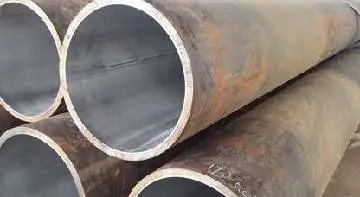
Metal-bonded clad pipes have layers of corrosion-resistant alloys firmly fused to a backing of carbon or low-alloy steel. This can be done using explosive bonding, hot roll bonding, or weld overlay methods. The composite pipe that is made keeps the structural integrity of the backing steel, which is usually a high-yield grade from API 5L X42 to X70. The CRA layer inside the pipe stops corrosion in its tracks. The bond strength requirements depend on the manufacturing method and applicable specification, with many clad systems achieving high shear strength values, which lets complicated field bending and installation procedures happen without the risk of delamination. API 5LD provides technical requirements, dimensional limits, and quality control procedures for CRA-Clad and Lined Steel Pipes used in pipeline transportation systems.
Mechanical Lining Process and Characteristics
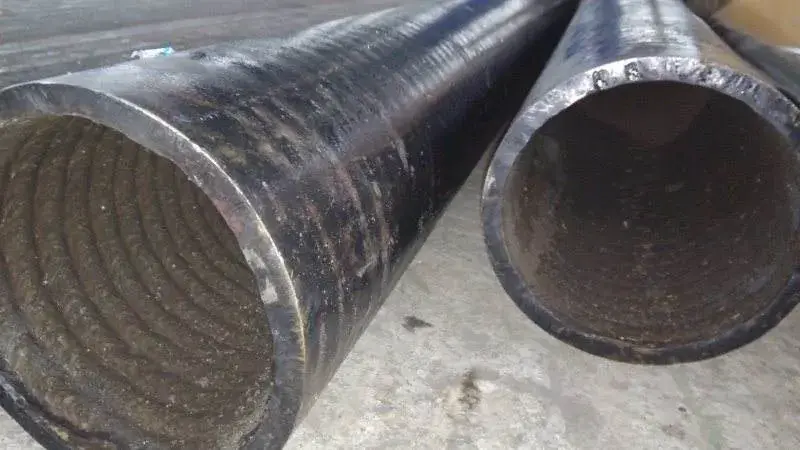
CRA plates are put inside host carbon steel pipes using hydraulic expansion, mechanical interference fits, or shrink-fitting methods in mechanically lined pipes. The bond is still physical, not metallurgical. It relies on compressive forces to keep the two different materials together. This method allows for easy customization by quickly putting together different inner materials made of austenitic stainless steel (316L, 304L), duplex stainless steel (2205), or nickel-based alloys (Inconel 625, Incoloy 825) that are suitable for different corrosive conditions. Production lead times are usually shorter than those for clad pipe construction, but mechanical retention requires different performance factors when loading and expanding and contracting repeatedly.
Manufacturing Standards and Certification Requirements
Both technologies follow strict international rules that make sure the quality is always the same. API 5LD controls the making of CRA-Clad and Lined pipe and sets rules for ultrasonic examinations, checking the strength of the bond and the maximum amount of alloy that can be diluted for weld overlay uses. As part of its low-temperature service requirements, ASTM A333 requires impact testing and controls on the material composition.The DNV-ST-F101 standard sets acceptance criteria for dimensional tolerances, hydrostatic testing, and non-destructive examination procedures for offshore pipeline applications. These standards should be clearly stated in the procurement specs, and suppliers should be required to follow them by third-party certification groups and supervised factory testing when the importance of the project calls for it.
Performance Comparison: Corrosion Resistance and Durability in Industrial Applications
Bonding Integrity Under Operational Stress
Metallurgical bonding works better in situations where temperatures change, there is mechanical stress, and the pipe bends. The molecular-level fusion of the carbon steel backing and CRA layer in CRA-Clad and Lined pipe gets rid of the ways that mechanical retention systems can delaminate when there are repeated changes in temperature or pressure. Field experience with installing subsea pipelines shows that clad pipes are strong enough to handle bending strains of more than 2% while maintaining bond integrity under qualified design conditions or creating leak paths.
Mechanical lining systems work best in straight-run situations with stable working conditions. However, they need careful engineering analysis when there are big differences in the amount of heat expansion between the liner and the host pipe. Because there is no metallurgical consistency, the dimensions must be carefully controlled during production to keep the compressive retention forces constant throughout the service area. Inspection procedures must check the quality of the initial fit-up and monitor for any gaps that might form during the launching and early operating stages.
Corrosion Resistance in Aggressive Environments
High levels of hydrogen sulphide and carbon dioxide in the air cause sour service conditions, which are the toughest conditions for corrosion in upstream oil and gas activities. Clad-pipe technology creates continuous walls with no holes in them that keep backing steel from cracking from sulphide stress while keeping its mechanical properties when loaded together. The chemical resistance of the CRA layer keeps the metal from pitting, crevice corrosion, and stress corrosion cracking in places with a lot of chloride, like seawater injection systems and offshore platforms.
Pipes used in chemical handling are exposed to strong acids, caustic liquids, and catalysts that work at high temperatures. Long-term stability depends on the choice of material, such as 316L for mild chloride exposure, 2205 duplex for better pitting protection, or Alloy 825 for sulphuric acid service. Clad pipes with a confirmed alloy makeup and little iron dilution through the CRA layer make sure that the corrosion limits in the design will stay valid for the entire expected service life. When properly defined, lined systems offer the same level of chemical protection, but weld joints need special steps to keep the continuity between liner segments.
Long-Term Durability and Life-Cycle Economics
The initial cost, the difficulty of installation, the number of inspections needed, and the possible failure effects must all be taken into account when figuring out the total cost of ownership. Clad pipes often provide significant material cost savings compared with solid alloy alternatives, depending on CRA thickness, pipe size, and alloy selection, but they still perform similarly well against corrosion. This makes them a good choice for large-diameter, long-distance pipeline projects. Because bonding is so reliable, it may reduce the frequency of certain internal inspections when combined with appropriate integrity management programs. This can reduce long-term maintenance requirements and production interruptions over extended service periods.
Mechanically lined systems may be preferred in situations where installation flexibility, specific operating conditions, or adaptability to changing process chemistry are prioritized. In changing working conditions, being able to remove and change liners without having to replace the whole pipe gives you freedom. Maintenance planning should include keeping an eye on liner wear with intelligent pigging campaigns and regular ultrasonic checks at welded joints where liner ending details put a lot of stress on the material.
Comparative Analysis: CRA Clad Pipe vs. Mechanically Lined Pipe in Procurement Decisions
Cost Structure and Budget Implications
Upfront investment factors include more than just the price of each pipe. They also include the cost of installation labor, quality control testing, and managing inventory. To make clad pipes, you need special tools and longer production cycles, especially for processes like hot rolling or explosive bonding that need to precisely control temperature and pressure. Lead times of 12 to 20 weeks mean that early commitment to procurement and planning of the project schedule are needed. However, the fixed cost is often comparable to solid alloy pipe systems when field welding difficulty and inspection needs are taken into account.
When making lined pipes, delivery times are often shorter—6 to 10 weeks, depending on the diameter and the availability of liner materials. Standardized production processes and steady throughput rates work well with the mechanical construction process. When making a budget, it's important to include installation costs in the field, since lined pipe welding needs special steps to make sure the liner stays in place and the steel joint stays strong without compromising the corrosion barrier.
Supplier Qualification and Quality Assurance
Risk reduction starts with choosing manufacturers that have shown they follow API 5LD and have applicable industry certifications. As part of the qualification process, comprehensive ultrasonic testing must confirm the integrity of all bonds, destructive shear strength testing should be able to show that specifications are met, and positive material identification procedures should stop alloy substitution. Witness testing provisions let buyer reps check that quality control is being carried out during important stages of production, especially for large orders or applications with a lot of consequences.
JS FITTINGS has a lot of different certifications, such as ISO 9001, GOST-R, and project-specific certifications from NIOC, ADNOC, and Petrobras. This shows that they can meet a wide range of international procurement standards. Our quality management system is made up of multiple interconnected quality management processes that work together to make sure that everything can be tracked from receiving the raw materials to delivering the finished product. These subsystems are material supply, production management, quality control, packing, inventory, pre-shipment inspection, and after-sales service. With more than 30,000 tonnes of production capacity yearly and more than 90 containers shipped every month, we can meet the needs of project plans that need stable, high-volume supply chains.
Customization Capabilities and Technical Support
Specific needs for a project often call for non-standard sizes, unusual alloy combinations, or end preparations that aren't available in a catalogue. As part of developing specifications, manufacturers who offer engineering consulting services are very helpful because they help choose the best materials based on working parameters and price limits. Technical support that lasts through the fabrication, installation, and commissioning phases makes sure that what was planned in the specification is actually done in the field.
Our engineering team works with sourcing experts to create unique solutions for diameters ranging from DN15 to DN2000. These solutions can meet ASME, DIN, JIS, GOST, and other standards as needed by the project. The chemical resistance of the CRA layer provides superior resistance to pitting, crevice corrosion, and stress corrosion cracking in high-chloride environments, such as seawater injection systems and offshore platforms. Sample production and the ability to accept small-batch trial orders help with qualification testing and prototype proof before committing to full-scale buying.
Conclusion
When deciding between metallurgically bonded clad pipes and mechanically lined options, the main things that matter are the working conditions, the budget, and the expected long-term performance. Clad technology provides a stronger bond, makes inspections easier, and has been shown to be reliable in tough situations with changing temperatures, installation bends, and harsh corrosion conditions. Mechanically lined systems are better for controlled working conditions because they can be customized more easily and can be bought in shorter time periods. For procurement to go well, the environment must be carefully studied, suppliers must be structuredly qualified, and the total life-cycle economics must be taken into account, not just the initial purchase price. Hiring experienced manufacturers who can provide full technical support during the design development, fabrication, and operating phases greatly lowers project risk and improves the balance between cost and performance.
FAQ
1. What advantages does metallurgically bonded CRA-clad pipe offer over mechanically lined alternatives?
Metallurgical bonding joins the backing steel with layers that are resistant to rust at the molecular level. This significantly reduces the risk of delamination caused by changes in temperature, pressure, and installation bending. When the bond strength is higher than 140 MPa, it's possible to do complex field manufacturing, like cold bending and hot forming, without losing integrity. This permanent fusion makes quality checking easier with ultrasonic examination and cuts down on the need for long-term inspections compared to mechanical retention systems that need to check the maintenance of compressive fit on a regular basis.
2. How do lead times compare between clad and lined pipe procurement?
Clad pipe fabrication usually takes 12 to 20 weeks, based on the bonding method, thickness, and alloy mix. This is because of the special tools needed for production and the checks that are done to make sure of the quality. Because they are made by putting them together, mechanically lined pipes usually arrive within 6 to 10 weeks. During purchase planning, these timeframes should be built into the project schedule. Early involvement with suppliers will allow for accurate delivery predictions and the possibility of expediting strategies when project constraints require faster schedules.
3. What quality control measures verify CRA pipe integrity?
Comprehensive inspection programs include a 100% ultrasonic examination to find broken bonds or areas where the bonds haven't fused, destructive shear strength testing to confirm the minimum bond values, hydrostatic pressure testing to confirm the structure's integrity and leak tightness, positive material identification to make sure the alloys are in the right place, dimensional verification to make sure the tolerances are met, and chemical analysis to strictly control iron dilution in the CRA layer. Third-party witnessed testing and certified material test reports provide written proof that meets project quality assurance requirements and regulatory compliance requirements.
Reliable CRA-Clad and Lined Pipe Supplier for Your Next Project
JS FITTINGS offers tested piping solutions that provide corrosion-resistant performance. They have been making high-quality products for 43 years and have a lot of international certifications and approvals, such as ISO 9001, GOST-R, PETROBRAS, NIOC, and ADNOC. Our precision-engineered CRA clad and lined piping systems are deployed globally in critical applications across the chemical processing, oil and gas, and cryogenic industries. We keep up with specifications from DN15 to DN2000 and support ASME, DIN, JIS, and GOST standards. We can also make changes to meet the needs of each project.
Our quality control procedures include a 100% ultrasonic test to make sure the bond is solid, destructive shear strength testing to make sure it meets API 5LD standards, and Charpy impact testing to make sure it can handle low temperatures for ASTM A333 Grade 6 cryogenic service. Every month, we make more than 800 tonnes of pipe fittings and 700 tonnes of flanges. Our reliable supply chain performance is shown by the fact that we deliver on time over 95% of the time and get less than 0.5% of customer complaints. You can talk to experienced application engineers about your needs for corrosion-resistant piping at admin@jsfittings.com. You can also ask for material test results and compliance documentation or get competitive quotations for your future projects.
References
1. American Petroleum Institute. API Specification 5LD: Specification for CRA Clad or Lined Steel Pipe, Fourth Edition. Washington, DC: API Publishing Services, 2021.
2. ASTM International. ASTM A333/A333M-18: Standard Specification for Seamless and Welded Steel Pipe for Low-Temperature Service. West Conshohocken, PA: ASTM International, 2018.
3. Det Norske Veritas. DNV-OS-F101: Submarine Pipeline Systems, Offshore Standard. Høvik, Norway: DNV GL, 2017.
4. Buitrago, J. and S. Zhu. "Clad and Lined Pipe for Deepwater Developments." Proceedings of the Offshore Technology Conference, Houston, TX, May 2014.
5. Garverick, L. Corrosion in the Petrochemical Industry, Second Edition. Materials Park, OH: ASM International, 2015.
6. Ueda, M. and H. Takabe. "Development of High-Performance Clad Pipe for Sour Gas Service." Journal of Pressure Vessel Technology, vol. 136, no. 4, 2014, pp. 041402-1 to 041402-8.
Send Inquiry
You may like
Related Industry Knowledge
- Class 150 Flat Face (FF) Forged Steel Flange for Water Service
- Advantages of Using ASME B16.5 Flanges in Construction and Infrastructure Projects
- Long Radius Buttweld Elbow vs Short Radius Elbows: Which One to Use?
- How Are Carbon Steel Forged Steel Flanges Heat Treated?
- What Are Slip-On Flanges?
- What ANSI Pipe Flanges Are Commonly Applied Today?
- Why Is a Seamless Buttweld Tee Preferred in Critical Service?
- A105 Carbon Steel Forged Steel Flange for Refinery Piping
- How to Choose a Buttweld Tee for High-Pressure Pipelines
- What is a plate flange?