
Heavy Wall Thickness LSAW Pipe for High-Pressure Applications






2026-07-31 11:21:15
When your infrastructure project demands absolute reliability under extreme pressure conditions, heavy-wall-thickness LSAW carbon steel pipe stands as the most dependable solution.These longitudinally welded pipes are engineered specifically for critical applications where failure is not an option—offshore oil platforms, high-pressure gas transmission systems, and petrochemical facilities all depend on the structural integrity and burst resistance that only heavy-wall LSAW technology can deliver. Understanding the technical advantages and procurement considerations of these specialised pipes helps project managers make decisions that protect both safety and budgets.
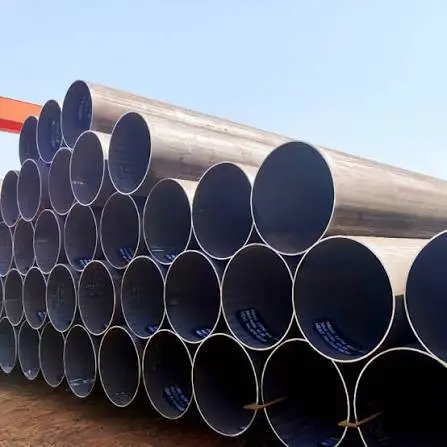
Understanding Heavy-Wall-Thickness LSAW Carbon Steel Pipes
The Manufacturing Process Behind LSAW Pipes
To make longitudinal submerged arc-welded pipes, an exact, multi-step process starts with high-quality steel plates instead of strips. We use either JCOE or UOE forming equipment to make these plates into tubes. This gives us very good control over the sizes. Next, double-sided submerged arc welding is used to join the edges. This makes weld seams that are as strong as the base metal. With this method of production, we can make pipes with wall thicknesses from 6 mm to 65 mm or more, meeting needs that can't be met by options that are seamless or have thinner walls.
After welding, the cold expansion process improves roundness and dimensional accuracy, making field fit-up and girth welding much easier. This precision lowers the risk of expensive alignment issues during construction and minimizes stress concentrations at connection points.
Material Properties and Standards Compliance
Heavy-wall LSAW carbon steel pipe is more resistant to breaking and more flexible than other types of welding pipe. Low-carbon control and micro-alloying elements like niobium, vanadium, and titanium are used in the manufacturing process to make the metal easier to weld and more resistant to hydrogen-induced cracking in sour service environments. When moving corrosive fluids or working in temperatures below zero, these properties of the material become very important.
Our pipes meet standards that are known all over the world, such as API 5L PSL2, ASTM A53, ASTM A252, and EN requirements. This makes sure that procurement teams can safely choose these lines for projects that need to follow strict rules. The API 5L PSL2 designation focuses on strict rules for chemical make-up, mechanical properties, and non-destructive testing—all of which have a direct effect on operational safety in high-pressure settings.
Dimensional Capabilities and Wall Thickness Ranges
Most LSAW pipes have a diameter between NPS 16" and 60" (406 mm to 1626 mm). This makes them perfect for large-diameter pipeline systems that need to carry a lot of fluid. Wall thickness options range from standard schedules to special heavy-wall specs that are more than 50 mm thick. This gives the structure the support it needs to resist internal pressure that would weaken thinner options.
The load-bearing ability and pressure ratings are directly affected by these dimensions. A 36-inch pipe with a 25 mm wall thickness that is made to API 5L X70 standards can safely handle very high internal pressures when designed in accordance with applicable pipeline design codes such as ASME B31.4 or ASME B31.8. This is a level of performance that standard-wall pipes can't reach. When engineers understand these specs, they can exactly match the pipe's capabilities to the needs of the system. This way, they can avoid both over-specification, which raises costs, and under-specification, which lowers safety.
Performance Benefits of Heavy Wall LSAW Pipes in High-Pressure Applications
Enhanced Mechanical Strength and Burst Resistance
The main benefit of thick walls is that they make structures much stronger and better able to handle burst pressure. As wall thickness increases from standard schedules to heavy-wall specifications, a pipe's internal pressure containment capability rises substantially, providing vital safety margins for high-pressure systems. Due to this connection, a small increase in wall thickness can provide big safety gaps in systems with high pressure.
Heavy-wall LSAW carbon steel pipes work very well in places like offshore oil risers, where the stresses from internal pressure, external hydrostatic pressure, and structural loading need the pipes to be as strong as possible. The thick walls keep catastrophic failures from happening, which could cause environmental tragedies and shut down operations that cost millions of dollars every day.
Corrosion Resistance and Longevity in Aggressive Environments
Choosing the right steel grade has a big effect on how resistant it is to corrosion, and heavy-wall pipes can use advanced alloy compositions that make them last longer. Grades like API 5L X60, X65, and X70 offer steadily higher yield strengths while still being resistant to corrosion and can be used to move crude oil, natural gas, and petrochemical products. When these pipes are protected with fusion-bonded epoxy (FBE) on the outside and linings on the inside, they can last longer than 30 years, even in chemically harsh settings.
The thicker walls also protect against rust, which extends the life of the system. If corrosion lowers the wall thickness of thinner pipes below the safe minimums, they may need to be replaced. Heavy-wall specifications, on the other hand, keep the structure's integrity longer, which lowers life-cycle costs and keeps replacement projects from being too disruptive.
Real-World Applications and Industry Case Studies
Heavy-wall LSAW pipes are used to move high-pressure steam in power plants, where temperatures can reach more than 500°C and pressures can reach 3,000 psi. When thermal stability and pressure resistance work together, they stop problems caused by growth that could shut down whole plants. During times when even small leaks can be very dangerous, petrochemical plants depend on these lines to move volatile chemicals. The stronger structure of heavy-wall building gives these important uses the safety factors they need to keep people and property safe.
Comparing LSAW Pipes with Other Types of Steel Pipes
LSAW Versus Seamless Pipes
When seamless pipes are made, there are no joined seams, so there are no weak spots that can happen with welding. But the limits of seamless production mean that they can't be used for large-diameter, heavy-wall uses because of the limited diameters and wall thicknesses that can be made. The price of seamless pipes goes up a lot as the diameter and wall thickness go up, which means they are often not affordable for big tasks.
For diameters bigger than 16 inches, LSAW pipes are just as strong but much cheaper. When done according to API standards and inspected by 100% radiographic inspection, the double-sided submerged arc welding process makes weld seams that achieve mechanical properties comparable to the base metal when manufactured and tested in accordance with API specifications. In most situations, the efficiency difference between welded and seamless lines is no longer there thanks to modern welding technology.
LSAW Versus ERW Pipes
High-frequency electric current is used to fuse the seams of coiled steel into electric resistance-welded pipes. ERW technology works well for utility lines with a small to medium diameter, between NPS 1/2" and 20", where pressures stay mild, and wall thickness needs are normal. Because it is made in a continuous process, ERW is a cost-effective choice for these uses.
Heavy-walled LSAW pipes are used by a very different group of people. Heavy-wall building needs thick steel plates, and the LSAW process can handle them. However, ERW technology has problems with walls that are thicker than 20 mm. The longitudinal seam orientation in LSAW pipes also makes them more resistant to hoop stress, which is the main way that pressurized pipelines fail, than the spiral seam orientation in SSAW pipes.
LSAW Versus SSAW (Spiral Welded) Pipes
Large-diameter water transport and low-pressure applications can optimize costs by selecting either LSAW or spiral submerged arc-welded (SSAW) carbon steel pipes, available in sizes ranging from NPS 8" to 120". For large-bore, thin-wall uses, the spiral forming process gives producers more options and lower costs by letting them make different diameters from a single width of coil stock.
The main difference is the amount of pressure that can be applied and the shape of the weld seam. Spiral welds go around the outside of the pipe at an angle, making the seams longer and the stress patterns more complicated when the pipe is under pressure inside. Because of this shape, SSAW pipes are not as good for high-pressure use. Because the longitudinal seams on LSAW pipes are straight, stress is concentrated more accurately, and the pipes can handle high-pressure situations more reliably. When projects need to meet API 5L PSL2 standards for sour service or high-pressure rates, they always choose LSAW construction over SSAW construction.
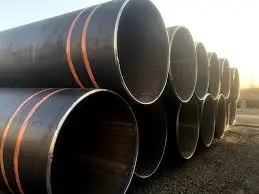
How to Select and Procure the Right Heavy Wall LSAW Carbon Steel Pipe?
Critical Specification Parameters
When making a purchase choice, you need to think about five main factors: the standard pipe size, the wall thickness, the steel grade, how the ends will be prepared, and the certification requirements. The nominal pipe size should match the flow rates planned for the system, taking into account installation limitations like the depth of the hole and the weight of the lifting tools. In order to choose the right wall thickness, a thorough stress analysis must be done, which includes the design pressure, temperature, corrosion limit, and any safety factors required by codes like ASME B31.3 or B31.4.
Picking the right steel grade means weighing the functional qualities against the cost and ease of welding. Higher-grade steels, like X70, are stronger, so walls can be thinner while still holding the same amount of pressure. However, they need stricter quality control and welding procedures. No matter if the ends are plain, bevelled for welding, or threaded, the way they are prepared must match the connection methods listed in the project designs.
Supplier Qualification and Certification Requirements
Choosing suppliers with proven certifications has a direct effect on the risk and compliance of the project. Companies that have ISO 9001 quality management certification show that they have an organized way of checking the quality of their products. Certain product certificates, like API 5L monograms, show that factories have been through thorough inspections by outside groups and are still following the rules for technical standards.
At JS FITTINGS, we keep our CE, ISO, and GOST-R certifications up to date. We are also an approved supplier for big energy companies like Petrobras, the National Iranian Oil Company, and the Abu Dhabi National Oil Company. These certifications show that you have consistently provided high-quality work and technical know-how for many years, as confirmed by outside auditors. Teams in charge of buying things should make sure that the companies they work with can give full mill test results, material certificates, and non-destructive testing records for every heat and lot they send.
Supply Chain Considerations and Lead Times
After recent problems, the resilience of the global supply chain has become more important. When pressing needs arise, suppliers with established inventory systems can react more quickly, while those who rely on make-to-order production may need 8 to 12 weeks to deliver. Procurement managers can make more accurate plans and avoid project delays by knowing how much a supplier can produce and how much material they keep on hand.
Our factory maintains a strategic inventory of common sizes and specifications, and our pipe and fitting product lines make more than 30,000 tonnes of goods every year. With this much space and our experience shipping more than 90 containers a month to more than 30 countries, we can be sure that deliveries will happen on time. We answer customer questions within an hour and deliver on time more than 95% of the time. These are measures that directly help procurement managers meet project goals.
Customization Options and Minimum Order Quantities
Standard pipe sizes are useful for many things, but when system designs need non-standard sizes or special material qualities, custom specs are needed. Custom-production manufacturers are very useful because they save you from having to over-specify dimensions or give up on design parameters. We make pipes with sizes ranging from DN15 to DN2000, and we also take on custom jobs that need different wall thicknesses or grades of material.
Minimum order quantities depend on specification complexity and manufacturing efficiency. Standard sizes typically have lower minimum thresholds, whereas custom requirements demand larger orders to offset tooling and setup costs. Procurement managers can optimize purchasing decisions by discussing minimum order quantities, pricing, and delivery schedules directly with experienced LSAW pipe manufacturers.This helps them balance the costs of keeping inventory with the unit price benefits of bigger orders.
Conclusion
For high-pressure uses that must have dependability, safety, and long-term performance, heavy-wall-thickness LSAW carbon steel pipes are the best choice. These pipes meet important needs in infrastructure for oil and gas transmission, petrochemical processing, and power generation because of how precisely they are made, what materials they are made of, and how they can be cut to size. When making choices about what to buy, it helps to know the technical differences between pipe types, standard parameters, and supplier qualifications that are needed to make sure the project runs smoothly. Tough quality control rules and correct installation methods protect the big investments these systems represent while lowering operating risks over the course of their useful lives.
FAQ
1. What advantages do heavy-wall LSAW pipes offer over seamless pipes for high-pressure applications?
For diameters larger than 16 inches, heavy-wall LSAW pipes offer the same pressure ratings and structural stability at a much lower cost. Weld seams that are as strong as the base metal are made with modern submerged arc welding and full radiographic analysis. There are limits on the diameters and wall thicknesses that can be made with seamless technology, but LSAW technology makes it easy to meet special heavy-wall requirements up to 65mm. The cold expansion process makes sure that the dimensions are accurate, often better than the tolerances of seamless pipes.
2. How can buyers verify supplier certifications effectively?
Instead of depending on claims, ask for pictures of the real certificates. Use the API Composite List database to check API monograms. Use granting body records to check the validity of an ISO certificate. Get recommendations from past clients who have used the provider for similar projects and get in touch with them to find out how well they've done in the past, how consistent their quality is, and how quickly they respond to requests for help after the sale.
3. Can LSAW pipes be customized to meet specific pressure standards and size requirements?
Manufacturers who have the right skills can change the wall thickness, diameter, length, steel grade, and end preparation to fit the needs of a particular project. Customization is possible if the specifications are detailed enough and there are enough orders to support setting up production. Talk about the needs as early as possible in the planning stages of buying to make sure they can be met technically and to get exact prices and delivery times for specific needs.
Partner with JS FITTINGS for Reliable Heavy Wall LSAW Carbon Steel Pipe Supply
JS FITTINGS has been making high-pressure pipes for more than 40 years and is a reliable LSAW carbon steel pipe supplier to important energy companies around the world. Our ISO-certified factory makes heavy-wall LSAW pipes that meet API 5L, ASTM, and other foreign standards. These pipes come with full mill test results and a full radiographic weld inspection. We keep a strategic inventory and can manufacture custom pipes from DN15 to DN2000, so we can quickly meet the needs of both standard and unique projects. Our skilled technical team can help you choose the right specifications, and our global logistics network sends more than 90 containers every month, with over 95% of them arriving on time. Please email our team at admin@jsfittings.com to talk about your high-pressure piping needs and to get competitive quotes and detailed technical specifications that are specific to your project.
References
1. American Petroleum Institute. (2018). Specification for Line Pipe: API Specification 5L, Forty-Sixth Edition. Washington, DC: API Publishing Services.
2. ASME International. (2020). Process Piping: ASME Code for Pressure Piping, B31.3. New York: American Society of Mechanical Engineers.
3. Bai, Y., & Bai, Q. (2014). Subsea Pipeline Design, Analysis, and Installation. Oxford: Gulf Professional Publishing.
4. Mohitpour, M., Golshan, H., & Murray, A. (2007). Pipeline Design and Construction: A Practical Approach, Third Edition. New York: ASME Press.
5. Palmer, A. C., & King, R. A. (2008). Subsea Pipeline Engineering, Second Edition. Tulsa: Capability validated by independent auditors.
6. Revie, R. W. (2015). Oil and Gas Pipelines: Integrity and Safety Handbook. Hoboken: John Wiley & Sons.
Send Inquiry
You may like
Related Industry Knowledge
- Carbon Steel Forged Steel Flange: ASME B16.5 vs B16.47
- Custom Stainless Steel Buttweld Elbow for Chemical Plants
- Large Diameter LSAW Welded Carbon Steel Pipe for Piling Projects
- Buttweld Tee vs Socket Weld Tee for High-Pressure Piping
- Long Radius Buttweld Elbow: Ultimate Guide 2026
- A312 stainless steel pipe – Stainless Steel Pipe Dimensions, Chemical Composition
- ANSI Pipe Flanges Dimensions and Selection Guide for 2026
- Slip-On Flanges: Types, Uses, and Installation Guide
- What is seamless carbon steel pipe used for?
- Buttweld Tee Manufacturing Guide: Seamless or Welded?