
How tight do slip on flanges fit on pipe






2026-11-17 09:51:35
A steel slip on flange should slide over the pipe freely, with a small, controlled clearance between the flange bore and the pipe outside diameter (OD). It should not need hammering, heating, or force, and it should not fit so loosely that it shifts during tack welding. The fit does not create the pressure seal. The gasket, bolts, and properly aligned flange faces form the bolted sealing joint, while the fillet welds attach the flange to the pipe and maintain the connection. No single clearance number applies to every order, so I always check the bore against the actual pipe OD, the governing standard, and the approved drawing before production or installation starts. This guide is written for purchasing managers, piping engineers, contractors, and distributors who need to verify dimensions, standards, and documents before they order.
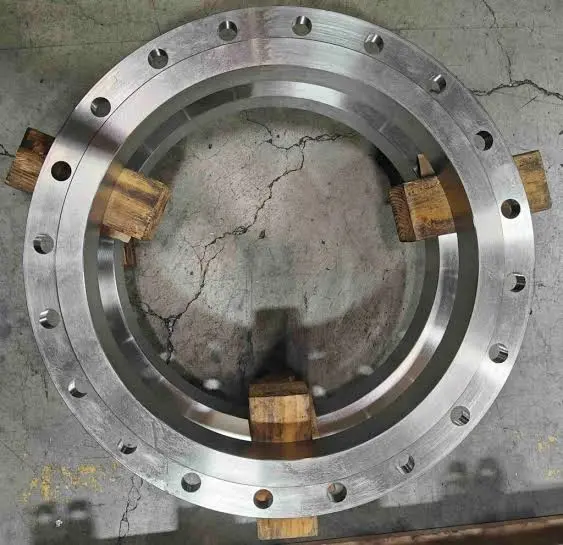
What a Steel Slip-On Flange Is and How It Sits on the Pipe
Basic Design of an SO Flange
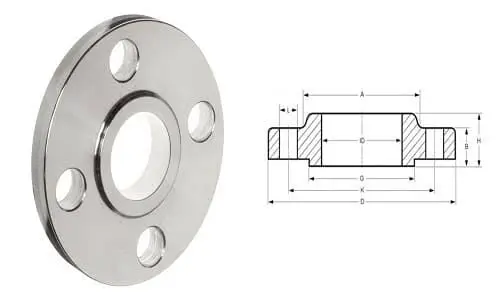
A steel slip-on flange is held in place by two fillet welds, one on the outside and one on the inside. It is also called a slip-on flange. The steel slip-on flange goes over the end of the pipe. There is a little more space inside than around the pipe, so the pipe fits into the hub and ends just behind the flange's face. The pipe end is positioned slightly behind the flange face to provide the required setback and protect the gasket seating surface from welding heat and damage. It comes in carbon steel and stainless steel grades, with designs that have a raised face or a flat face, and with ASME Class 150 and Class 300 ratings. There are also EN types from PN6 to PN40 that you can buy from JS FITTINGS.
Why the Bore Is Larger Than the Pipe
There are practical reasons why the clearance is needed. In the production range, the OD of pipes changes, and the ends of pipes are sometimes shaped like ovals. Some pipe ends may not fit into a flange bore if the bore is machined too closely to the nominal pipe diameter. The clearance also allows the fitter to adjust the flange position and align the bolt holes before welding. With a weld neck flange, the bevel ends have to match up perfectly, but with this one, it's much easier to line up the bolt holes with valves and other tools. Steel slip-on flanges do not require the same end preparation as weld neck flanges, which can simplify installation. However, their bore dimensions and other critical tolerances must still meet the applicable standard and project specifications. Unlike a mechanical press-fit connection, a slip-on flange relies on dual fillet welds to transfer piping loads and restrain axial forces. Our bores are carefully machined to fit standard pipe ODs.
Where Slip-On Flanges Work Best
When there are steady loads and low to medium loads, steel slip-on flanges work well. These pipes are often used for low-pressure oil lines, water for treating water, compressed air, industrial cooling water, and fire protection sprinkler piping systems. Their shorter hub height is helpful in small spaces where a long curved hub would get in the way of close parts. They also work well for lines that are put together and taken apart a lot. They can provide reliable service when the pressure and temperature remain within the design limits, and the flange joint is properly installed, welded, and maintained. I believe you should check to see if a weld neck flange fits the design code better if there is a lot of cycling, high pressure, or big changes in temperature.
How a Steel Slip-On Flange Should Fit
Free Sliding With Controlled Clearance
The best description for a steel slip-on flange is free sliding with controlled clearance. It's best for the fitter to put the Large Diameter Slip On Flanges for Water Treatment Projects in place by hand or with light pressure. They should then center it and tack it down with care. If there is too much room between the pieces, the weld might not be straight, and as it cools, it might warp. Setting up takes longer when there isn't enough room for clearance, and pushing the ring on can put extra stress on the weld. A joint that needs a hammer is a red flag for me. See if the pipe is round, if it has burrs, and how wide the layer is. Then, measure the pipe's outside diameter (OD) and compare it with the flange bore diameter. The acceptable range is set by the standard, the way the metal is welded, and the project drawing.
Dimensions That Control the Fit
In this case, don't start with the nominal NPS or DN size; instead, start with the pipe OD. Next, check that the wall thickness, flange bore, flange thickness, flange OD, bolt circle, bolt-hole design, face type, and hub shape are all correct. For a raised-face flange, the gasket type and dimensions must match the flange facing and service requirements. For a flat-face flange, the gasket must also be compatible with the facing dimensions and the mating flange. Pipes from different mills can be a little different within a certain range. This means that a steel slip-on flange that fits one lot easily might feel tighter on another. People who use a simple inspection report or measurement drawing don't have to make mistakes, do extra work, or miss deadlines, which saves them a lot of time and money. ASME B16.5 covers NPS 1/2 through NPS 24, while ASME B16.47 covers large-diameter steel flanges from NPS 26 through NPS 60.
Weld Setback and Gap
How far back the pipe is from the flange face is called its setback. The setback between the pipe end and the flange face must follow the applicable piping code, engineering drawing, and approved welding procedure. For example, ASME B31.9 specifies a minimum setback of 1/16 inch (1.5 mm) when a flange-face seal weld is not used. When you weld, this room keeps your face safe and the joint away from the gasket seat. In your drawing or welding process, the value may be different, and the paper that counts is what matters. There are rules about how to join two things together, such as ASME B31.3 for process piping. You must follow these rules. To fill in a hole that is too big, you should never use extra weld metal. That quick fix can hide a mistake in the flange face's size and shape.
Installing and Welding a Steel Slip-On Flange
Pre-Fit Checks and Sequence
First, I look at the writing on the steel slip-on flange, the certificate of material, the sizes, and the standard, such as ASME B16.5, ASME B16.47, or EN 1092-1. Next, I get rid of any burrs or dirt on the pipe end and flange hole by cleaning them. After that, I slide the flange onto the pipe, orient the flange face correctly, and position the pipe end at the specified setback. The flange must be rotated so that its bolt holes align with those of the mating flange or connected equipment. Once you're sure the piece is square to the pipe and in the middle, tack weld it a few times. Before you make the final welds, check the line again. It is easier to fix a tack weld than a finished one.
Double Fillet Welding and Inspection
A properly designed and installed double-welded slip-on flange joint provides a secure pipe-to-flange connection when used within its specified pressure and temperature limits. Its suitability must be verified against the applicable piping code and service conditions. There are rules that experienced welders must follow, and they must do the outside and inside fillet welds in the right sequence. Steel slip-on flange fillet welds should first undergo visual inspection and dimensional checks. Magnetic particle testing (MT) can be used to detect surface and near-surface discontinuities in ferromagnetic materials, while liquid penetrant testing (PT) can reveal surface-breaking discontinuities in suitable materials. Radiographic testing (RT) is generally more commonly applied to suitable butt-weld configurations, but the required inspection method must follow the project specification and applicable code. This test could be added if the project needs it. Check the joint to make sure the face stays flat before putting the seal on it.
Common Fit Problems and Fixes
Common steel slip-on flange fit-up problems include a bore that is too tight or too loose, improper flange alignment, bolt holes that do not line up, and leakage after assembly. The issue is usually brought on by the incorrect nominal size, the incorrect schedule, an oval pipe, burrs, thick coatings, an unstandard bore, or welding distortion. There is a model that you should use to compare the parts to before you make any changes. Flange bolts and nuts must never be used to force misaligned piping into alignment, as this introduces severe residual bending moments that accelerate joint leakage. When a joint leaks, it's important to first safely let the pressure out of the system. Then, check each part one at a time for proper alignment, quality of the weld, and pressure-temperature compatibility. ASME PCC-1 tells you how to put a bolted part together.
Choosing a Steel Slip-On Flange Over Other Flange Types
Slip-On vs. Weld Neck
A steel slip-on flange does not need to be cut to exact sizes, is cheaper, and is easy to line. Weld neck flanges are engineered for severe operating conditions involving extreme pressures, high temperatures, or continuous cyclic loading. Their integral tapered hub provides a gradual, smooth stress transition that substantially outperforms the abrupt geometry of a slip-on fillet weld. For critical lines connected to heavy rotating equipment or pulsating compressors subject to severe vibration, weld neck flanges are the mandatory engineering choice. For steady lines with modest pressure, the steel slip-on flange often has a lower fitting cost if the building code allows it. Check the full installation cost, not just the price of the flange. This includes the time it takes to prepare, weld, and check.
Socket Weld and Threaded Options
Socket weld flanges have a fillet weld on the outside and a socket that is set back. Small-bore pipes and NPS 2 are what they work with most of the time. Steel slip-on flanges have welds on both the inside and the outside, so they can handle bigger sizes. Because threaded flanges don't need to be welded, they can be used in places that don't allow hot work. However, they need threads that work with each other, and they might not work well when the line is very hot, shaking, or prone to leaking. When I help a customer decide between choices, I look at things like temperature, pressure, wear and tear, corrosion, how easy it is to weld and check, code limits, and the total cost of installation. These details help you pick one type of flange most of the time.
Material, Rating, and Face Selection
Before you place your order for a steel slip-on flange, make sure you know the governing standard, the material grade, the face type, the bore, and the pressure class or PN rating. ASTM A350 LF2 is commonly specified for carbon steel forgings intended for low-temperature service. ASTM A105 is widely used for carbon steel forged piping components in general industrial, water, utility, and oil and gas applications. For stainless steel flanges, ASTM A182 F304 or F316 grades may be selected for corrosive environments, depending on the specific corrosion conditions. Available pressure designations include PN6, PN10, PN16, PN25, and PN40 under applicable EN standards, as well as ASME Class 150, 300, 600, 900, and 1500 where permitted by the relevant flange standard and size range. Class 150 and Class 300 are commonly used in many industrial applications. The face is higher most of the time. You can get a ring-shaped joint or a flat face as well. When the temperature goes up, the pressure that can be used goes down, so check the number against how things work in your service.
Buying Steel Slip-On Flanges With Confidence
What Belongs in Your RFQ
There is less back and forth when there is a full request for quote for a steel slip-on flange. Include the quantity, NPS or DN size, pipe outside diameter (OD), pipe schedule, flange material grade, governing standard, pressure rating, facing type, bore requirements, surface treatment, inspection requirements, destination, packaging requirements, and required delivery date. Before installation, carry out a final fit-up inspection to confirm that the flange slides onto the pipe correctly, the facing is properly oriented, the bolt holes align, the insertion depth and setback meet the approved drawing, and the weld areas are accessible. For any unusually large or narrow pipes, you should ask for a measuring drawing before the pipe is made. This is more than just the unit price. You should also look at the landed cost, which includes testing, packaging, freight, and lead time.
Documents and Quality Checks
Ask each seller of a steel slip-on flange to show you their quality certifications, material test certificates, and dimensional records. If your specification says so, you should also ask for help from a third party with the inspection. The quality control method used by JS FITTINGS is ISO 9001, and they test their products with a spectral detector and equipment that finds flaws.Major international energy operators, including ADNOC and Petrobras, trust us as an approved supplier, supported by our CE, ISO 9001:2015, and GOST-R certifications. To build trust with end users, distributors need standard papers. Buyers from EPCs and the government also need them to find bids that meet their needs. Tell us what documents your project needs before we give you a quote.
What JS FITTINGS Supplies
Since 1983, JS FITTINGS has been making and selling pipe fittings and flanges. The steel slip-on flanges we make come in sizes from 1/2" to 60". Our business is more than 7,000 square meters. We can also make them in different sizes for some jobs. When we do our work, we stick to EN 1092-1/DIN, ASME/ANSI B16.5, and ASME B16.47 Series A and B. Our reported performance indicators include a customer complaint rate below 0.5%, an on-time delivery rate above 95%, and a repeat purchase rate above 98%. A distributor or installer can get samples or small test orders from us to make sure the fit is right on real pipe before committing to a bigger order. It takes us an hour to answer questions.
Conclusion
A steel slip on flange should slide freely over the pipe with a small, controlled clearance. This is because the pressure seal is formed by the gasket compressed between the bolted flange faces, while the welds secure the flange to the pipe. Based on the pipe's OD, bore, schedule, setback, and governing standard, the right clearance must be met. Check the drawings before you place your order to avoid most fit issues. For fewer leaks and repairs, make sure the parts fit together well, use approved welding methods, and test them with MT or PT. It's easier to place steel slip-on flanges, and they cost less than weld neck flanges. However, they work best for steady, low- to medium-pressure duty rather than harsh cycle duty. What kind of material, rating, and facing does the system need to be able to handle? It's safe to buy when you have a full RFQ with correct pipe data and all the paperwork you need.
FAQ
1. Should a slip-on flange be a tight or loose fit?
A steel slip-on flange should be easy to slide if there is a small, controlled gap. If the bore is undersized or the pipe is out of round, the flange may not slide on properly. If the clearance is excessive, maintaining concentricity and consistent weld dimensions may become more difficult.
2. Are both fillet welds always required?
Our standard steel slip-on flange style has both an inside and an outside fillet weld. It is clear from the design code, service conditions, and approved welding procedure what your project needs.
3. Can a slip-on flange handle cyclic or high-pressure service?
It's not always the best choice. A weld neck flange is generally a better choice for applications involving high pressure, high temperature, or significant cyclic loading, subject to the applicable design requirements. When there is a lot of pressure, heat, shaking, or spinning, you should use this one instead.
4. How do I inspect slip-on flange welds?
There are three main ways to check steel slip-on flange fillet welds: visually, with magnetic particles or liquid penetrants, and by measurement. With butt welds, X-rays work well.
Request a Steel Slip-On Flange Quote from JS FITTINGS
Looking for a company that makes steel slip on flanges and has 43 years of experience, ISO 9001 quality control, and can answer your questions in one hour? To get help, email admin@jsfittings.com with the outside diameter, standard, grade, material, and number of your pipe. Someone from our team will look over your needs. JS FITTINGS lets you order samples and make your own sizes.
References
1. ASME B16.5 Pipe Flanges and Flanged Fittings: NPS 1/2 Through NPS 24 Metric/Inch Standard, 2020
2. ASME B16.47 Large Diameter Steel Flanges: NPS 26 Through NPS 60 Metric/Inch Standard, 2020
3. ASME B31.3 Process Piping, 2022
4. EN 1092-1 Flanges and Their Joints: Circular Flanges for Pipes, Valves, Fittings and Accessories, PN Designated, Part 1: Steel Flanges, 2018
5. ASTM A105/A105M Standard Specification for Carbon Steel Forgings for Piping Applications, 2021
6. ASME PCC-1 Guidelines for Pressure Boundary Bolted Flange Joint Assembly, 2019
Send Inquiry
You may like
Related Industry Knowledge
- 90 degree buttweld elbow Installation: Best Practices
- How is the SSAW carbon steel pipe tested for quality?
- Buttweld Reducer Bevel End Preparation and Welding Guide
- Sch 40 vs Sch 80 Buttweld Tee Wall Thickness Explained
- Carbon Steel Forged Steel Flange Pressure-Temperature Ratings
- How Does a Buttweld Tee Improve Flow Distribution Systems?
- What Does ASME B16.5 Mean for Pipe Flange and Flange Fittings?
- Collaborative Art of Lap Joint Pipe Flange and Stub End
- Carbon Steel Forged Steel Flange Supply: China Factory Wholesale
- What specification is the carbon steel black pipe?