
Carbon Steel Forged Steel Flange Pressure-Temperature Ratings






2026-07-30 11:10:55
Understanding pressure-temperature ratings for carbon steel forged steel flanges is essential for safe, compliant piping system design. These ratings define the maximum allowable pressure a flange can withstand at specific operating temperatures, directly impacting system reliability and worker safety. At JS Fittings, our forged steel flanges undergo rigorous high-pressure mechanical forging, creating refined grain structures that deliver superior performance under demanding conditions compared to cast alternatives.
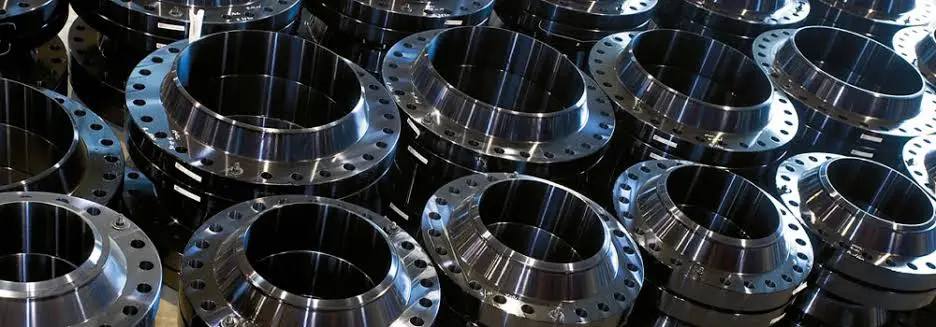
Understanding Carbon Steel-Forged Steel Flange Pressure-Temperature Ratings
Pressure-temperature ratings are the most critical factors when selecting a safe forged carbon steel flange for industrial applications. These numbers tell you the highest working pressure that can be used at different temperatures. This makes sure that flanges stay structurally sound for the whole time they are in use.
What Are Pressure-Temperature Ratings?
Standardized numbers, called pressure-temperature (P-T) grades, are found in codes such as ASME B16.5 and tell us how much pressure a flange can safely handle at different temperatures. The ratings take into account that materials lose strength as temperatures rise. At 800°F, a Class 300 carbon steel joint that can handle 740 psi at 100°F might only be able to handle 230 psi because the material's strength drops at higher temperatures.
These scores keep important facilities like refineries, chemical plants, and power plants from having catastrophic breakdowns. In these places, operational mistakes can lead to safety issues and expensive downtime. To avoid both over-specification (extra cost) and under-specification (safety risk), procurement teams must make sure that flange ratings are exactly matched to system needs.
Ratings: How ASME B16.5 and Material Properties Determine Ratings?
The ASME B16.5 standard sets the size requirements and pressure ratings for flanges with a diameter of 1/2" to 24". It covers six pressure classes: 150, 300, 600, 900, 1500, and 2500. Ratings are based on a lot of tests that show how a material reacts to stress and temperature.
JS Fittings' main material is ASTM A105 carbon steel, which has a maximum carbon content of 0.35% and controlled manganese and residual element contents in accordance with ASTM A105/A105M requirements. At room temperature, this mix has a minimum tensile strength of 70,000 psi and a minimum yield strength of 36,000 psi. The forging process we use refines the grain structure, getting rid of the internal holes and gas pockets that are common in cast products. This makes the product more resistant to fatigue and better able to hold pressure.
Allowable stress is inversely related to temperature. As the metal heats up, its yield strength and tensile strength decrease, thereby lowering its load-bearing capacity. ASME B16.5 provides pressure-temperature rating tables that reduce allowable pressure as operating temperature increases. This scientific method guards against mistakes caused by heat.
Industry Standards Beyond ASME
In North America, ASME rules are most common, but for foreign work, DIN, EN 1092-1, or JIS rules are often needed. The European EN 1092-1 standard lists PN (pressure nominal) grades, such as PN10, PN16, PN25, PN40, and PN64, with different limits for size than the ASME classes. When looking for flanges for international projects or tools made in other countries, it's important to know about these differences.
Supporting ASME, DIN, GOST, JIS, and BS standards, JS Fittings can continue to make carbon steel forged steel flange products that meet all of them. Our quality management system makes sure that every batch of flanges goes through spectral analysis and hydrostatic pressure testing, no matter what the standard is. This way, we can keep things the same in a variety of regulatory settings.
Types and Specifications of Forged Carbon Steel Flanges
Choosing the right type of carbon steel or forged steel flanges affects how easy it is to install, how well the system works, and how much it costs to maintain over time. Depending on the pressure needs, alignment needs, and maintenance frequency, different flange configurations are used for different tasks.
Common Forged Flange Types and Their Applications
- Weld Neck (WN) Flanges have a long, curved hub that gradually changes the thickness of the pipe wall to the thickness of the flange. This spreads out the stress at the joint. Because of how they are made, WN flanges are perfect for high-pressure critical service applications (Class 600 and above), where pressure surges and temperature cycling could damage less durable designs. The full-penetration butt weld makes a link that is the same thickness and strength as the parent pipe. Weld neck flanges are very important for the main process lines in refineries and petrochemical plants.
- Slip-On (SO) Flanges need two fillet welds, one on the inside and one on the outside, because they slide over the ends of pipes. They are cheaper than weld necks and are easier to match during installation. This makes them good for Class 150–300 lines with lower pressures where installation speed is important. Slip-on flanges are frequently used in distribution networks and municipal water systems because they are cost-effective and relatively easy to align in the field.
- Blind (BL) flanges are solid discs that don't have center holes. They are used to seal pipeline ends or isolate sections of piping for maintenance, inspection, or future expansion. These plates need to be thick enough to withstand full system pressure working on their whole face. Blind flanges are useful for maintenance teams because they can separate parts during turnarounds without having to cut lines. The way we make blind flanges makes sure they meet the same standards for grain structure as flow-through types.
- Socket Weld (SW) and Threaded (TH) Flanges are used for high-pressure pipes with small diameters (usually 2" or less) when butt welding isn't possible because of lack of room. With only one fillet weld, socket welds make a shoulder for inserting the pipe. Threaded flanges don't need to be welded at all, but they work best in low-temperature, non-critical situations. These small shapes are often used for instrumentation lines and gauge connections.
- Lap Joint (LJ) Flanges are used with stub ends in systems that need to be taken apart often for cleaning or changing products. The system pressure is on the stub end, and the base flange can turn easily to line up the bolts. This form is liked by food preparation and pharmaceutical plants because it is easy to clean and maintain.
Pressure Class and Facing Options
When it comes to pressure classes, JS Fittings makes flanges for 150, 300, 600, 900, 1500, and 2500, as well as their European PN counterparts. To handle higher pressures, higher classes have more bolts and thicker walls. A Class 150 6" flange has eight bolt holes and weighs about 24 pounds. A Class 900 version has twelve larger-diameter bolt holes and weighs 130 pounds.
The most common type of facing is the raised face (RF) flange, which has a raised sealing surface that is 1/16" or 1/4" high and concentrates the bolt load on the gasket area. The flat face (FF) design works best for low-pressure applications and gaskets that are easy to break. Ring Type Joint (RTJ) facings have a machined groove for metal ring gaskets, which provides better sealing in high-pressure, high-temperature hydrocarbon service where fugitive emissions must be eliminated. Male & Female (M&F) facings interlock for better alignment.
ASME B16.5 specifies that flange facing surfaces must feature proper serrated or smooth finishes. These surface finish requirements—typically an average roughness (Ra) of 125 to 250 micro-inches—ensure optimal gasket seating, which stops leaks in high-vacuum or high-pressure conditions.
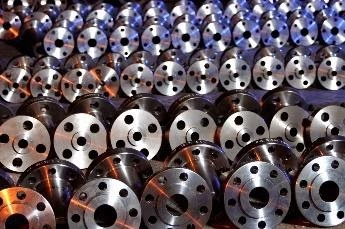
Key Advantages of Carbon-Steel-Forged Steel Flanges in High-Pressure, High-Temperature Environments
Forged carbon steel and forged steel flanges perform better than cast alternatives, especially in harsh industrial environments. The forging process changes the microstructure of the material in a way that directly affects safety, reliability, and lifecycle cost, which are all important factors in procurement decisions.
Superior Mechanical Properties Through Forging
At JS Fittings, the high-pressure mechanical forging process squeezes hot steel billets with a lot of force. This aligns the grain flow along the flange contour and gets rid of any internal flaws. The improved internal grain structure makes the flanges more resistant to fatigue, so they can handle repeated stresses from tightening bolts, thermal expansion cycles, and changes in pressure without getting microcracks.
Forged carbon steel generally provides higher impact toughness than comparable cast carbon steel of the same chemical makeup, owing to its refined grain structure and reduced internal discontinuities. This difference is very important in cold-weather installations and emergency shutdown situations where sudden changes in pressure could break brittle materials. Our normalized ASTM A105 flanges provide good toughness for many ambient and moderately low-temperature applications. Where low-temperature service is specified, impact testing should be performed in accordance with the applicable project specification.
Dimensional Accuracy Reduces Installation Costs
For all production runs, we keep tight tolerances on the thickness and alignment of the bolt holes. On standard sizes, the bolt circle diameter variation stays within ±0.03", which makes sure that the flanges fit perfectly with matching equipment. Field installation teams like how precise this is because the flanges line up on the first try, which cuts down on work hours and delays caused by changes made in the field.
The consistency of thickness is just as important. If the necessary thickness isn't met, the flange can't hold pressure; extra thickness loses material and raises shipping costs. Our quality control system uses accurate coordinate measuring machines at three steps of production to check the dimensions. With failure rates below 0.5%, this system works very well.
Protective Coatings Ensure "Ready-to-Install" Condition
When shipped by sea or stored in a building, carbon steel plates can rust. Depending on customer requirements and the anticipated shipping environment, we apply high-grade industrial black anti-rust coating, rust-preventive oil, or hot-dip galvanizing. When stored normally for 12 to 18 months, these methods create barrier layers that keep the flange sides and bolt holes safe.
Galvanized coatings provide the best protection for outdoor storage in damp conditions, but they make the surface thicker, which needs to be taken into account when choosing a gasket. Painting finishes work well for indoor storage and systems that need to make sure the layer doesn't react badly with process fluids. Oil coats cover temporarily and are easy to remove with solvent wipes before installation.
Long-Term Value Through Reduced Maintenance
Quality forged flanges are an investment that pays off over the 20–30-year lifetime of a system. Better sealing, made possible by accurate cutting and improved material properties, reduces fugitive emissions and decreases the number of times a gasket needs to be replaced. When compared to facilities with lower-grade connections, systems using high-quality forged flanges generally experience fewer unplanned maintenance interventions because of improved sealing reliability and material integrity.
The greatest economic benefit is realized by avoiding unplanned downtime. For facilities where unexpected shutdowns result in significant daily financial losses, the reliability of flange connections is absolutely critical. It is essential to select steel flanges with accurate P-T ratings and stay intact through thermal cycles to keep operations running smoothly and keep workers safe.
Conclusion
Choosing the right carbon steel forged steel flanges based on accurate pressure-temperature ratings protects system integrity, ensures regulatory compliance, and lowers lifecycle costs. Procurement teams can build successful projects by understanding ASME B16.5 ratings, matching flange types to applications, and working with certified manufacturers like JS Fittings. Our 43 years of manufacturing experience, comprehensive quality systems, and >95% on-time delivery record help contractors, distributors, and end-users manage complex industrial infrastructure. Proper installation and maintenance practices make the most of the benefits that forged flanges offer in demanding high-pressure, high-temperature service.
FAQ
1. What is the maximum temperature rating for carbon steel forged flanges?
Under ASME B16.5, ASTM A105 forged carbon steel flanges are commonly pressure-rated for temperatures up to 800°F. Above this temperature, the material's yield strength drops significantly, lowering allowable pressure ratings to unsafe levels for most high-stress applications. For systems operating at sustained temperatures above 750°F to 800°F, the applicable piping design code should be consulted, and alloy steel materials such as ASTM A182 F11 or F22 are recommended due to their superior high-temperature strength and creep resistance.
2. How do carbon steel flanges perform in corrosive environments?
For moderate corrosion resistance, carbon steel is good for hydrocarbon service, non-aggressive chemicals, and treated water systems with controlled chemistry. Protective coatings make carbon steel last longer in mildly corrosive conditions. However, for highly corrosive environments with chlorides, acids, or caustics, you need stainless steel or specialty alloy flanges, even though they are more expensive.
3. What are typical lead times for custom forged steel flanges?
Standard sizes usually ship two to three weeks after receiving an order. Custom specifications that need non-standard sizes or special material grades usually take four to six weeks. JS Fittings keeps a large stock of common ASME B16.5 sizes to meet urgent replacement needs with fast delivery options.
Partner with JS Fittings for Certified Carbon Steel Forged Steel Flange Solutions
As an approved manufacturer of forged carbon steel flanges for major global energy companies, JS Fittings has ISO 9001 quality systems and certifications from NIOC, ADNOC, and Petrobras. Our 7,000-square-meter facility produces 800 tons monthly of precision-machined flanges across ASME, DIN, and GOST standards, supporting sizes from DN15 to DN2000. With >95% on-time delivery rates and <0.5% complaint levels across 90+ monthly container shipments, we deliver the reliability EPC contractors, distributors, and facility operators require. Contact our technical team at admin@jsfittings.com to discuss your pressure-temperature requirements and receive customized flange solutions backed by comprehensive testing documentation and application engineering support.
References
1. American Society of Mechanical Engineers. (2021). ASME B16.5: Pipe Flanges and Flanged Fittings NPS 1/2 through NPS 24 Metric/Inch Standard. New York: ASME Press.
2. ASTM International. (2020). ASTM A105/A105M: Standard Specification for Carbon Steel Forgings for Piping Applications. West Conshohocken: ASTM International.
3. Becht, C. (2018). Process Piping: The Complete Guide to ASME B31.3. Fourth Edition. New York: ASME Press.
4. Rao, K.R. (2017). Companion Guide to the ASME Boiler and Pressure Vessel Code, Volume 1: Criteria and Commentary on Select Aspects of the Boiler & Pressure Vessel and Piping Codes. New York: ASME Press.
5. European Committee for Standardization. (2018). EN 1092-1: Flanges and Their Joints—Circular Flanges for Pipes, Valves, Fittings, and Accessories, PN Designated. Brussels: CEN.
6. Ellenberger, J.P. (2019). Piping and Pipeline Calculations Manual: Construction, Design, Fabrication, and Examination. Second Edition. Oxford: Butterworth-Heinemann.
Send Inquiry
You may like
Related Industry Knowledge
- Custom CRA Clad Flanges and Pipes for Corrosive Media
- Buttweld Elbow Supplier Guide for EPC and Pipeline Contractors
- Slip-on flange vs weld neck flange: What are the differences?
- What is the difference between 3LPE and FBE Coated Steel Pipe?
- What is ASME B16.5: A Guide to ASME B16.5 carbon steel flange
- How thick is the FBE Coated Steel Pipe?
- What Is The Difference Between Different Grades Of API 5L Seamless Steel Line Pipe In Performance?
- What is seamless carbon steel pipe?
- Carbon Steel Concentric Buttweld Reducer Buying Guide
- Why Is Long Radius Buttweld Elbow Preferred in Oil & Gas?