
How Does a Buttweld Tee Improve Flow Distribution Systems?






2026-07-29 10:25:42
When evaluating flow distribution in industrial piping, one component stands out as a critical element: the buttweld tee. This essential pipe fitting redirects fluid flow at 90-degree angles while maintaining system pressure and minimizing turbulence. Unlike threaded or socket-weld alternatives, a buttweld tee creates full-penetration welds that achieve tensile strength equal to or exceeding the connected pipe itself. This design prevents leakage risks in high-pressure environments, eliminates fatigue failures from vibration, and ensures smooth internal bore transitions that reduce pressure drop. For EPC contractors, distributors, and facility managers seeking reliable, long-term performance, understanding how this fitting optimizes flow distribution becomes critical to project success.
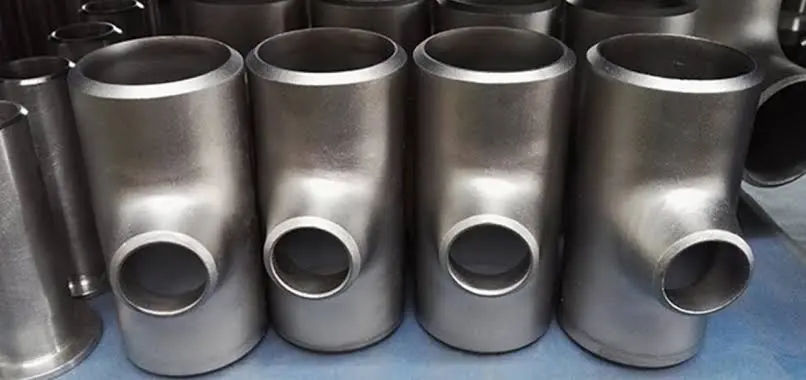
Understanding Buttweld Tees and Their Role in Flow Distribution
What Defines a Buttweld Tee?
A buttweld tee is a permanent branch connection in piping systems. It is designed with beveled ends (usually 37.5 degrees) to facilitate circumferential butt welding. This way of building is very different from socket weld fittings, which use fillet welds that can introduce stress concentrations, and threaded connections, which create leak paths when temperatures change. Welders can fully penetrate the joint because of the beveled shape, which makes the bond between the fitting and the pipe uniform.
Material Specifications and Standards
Material choice has a direct effect on how reliable a system is and how much it costs over its whole life. We make buttweld tees out of ASTM A234 WPB carbon steel and ASTM A234 WPC higher-strength carbon steel, ASTM A420 WPL6 low-temperature steel for Arctic service, ASTM A403 WP304/L and WP316/L corrosion-resistant stainless steel, and ASTM A234 WP11, WP22, and WP91 chrome-moly alloys for high-temperature power generation. Each type of material goes through strict controls on its chemical makeup. For example, the molybdenum content in 316 stainless steel improves resistance to pitting in chloride-containing environments, and the controlled carbon equivalents in WPB make sure that it can be welded easily without the need for preheating.
Our manufacturing processes strictly adhere to the standards set by ASME/ANSI B16.9, EN 10253-2, and DIN 2615.This makes sure that the sizes are correct for center-to-end lengths, wall thickness schedules (SCH 10s through XXS), and bevel shapes. Standardization is important because when the sizes of a fitting and a pipe don't match, they create turbulence zones that speed up erosion and corrosion and lower the efficiency of the system.
Types and Application Environments
There are two main versions that meet different operating needs:
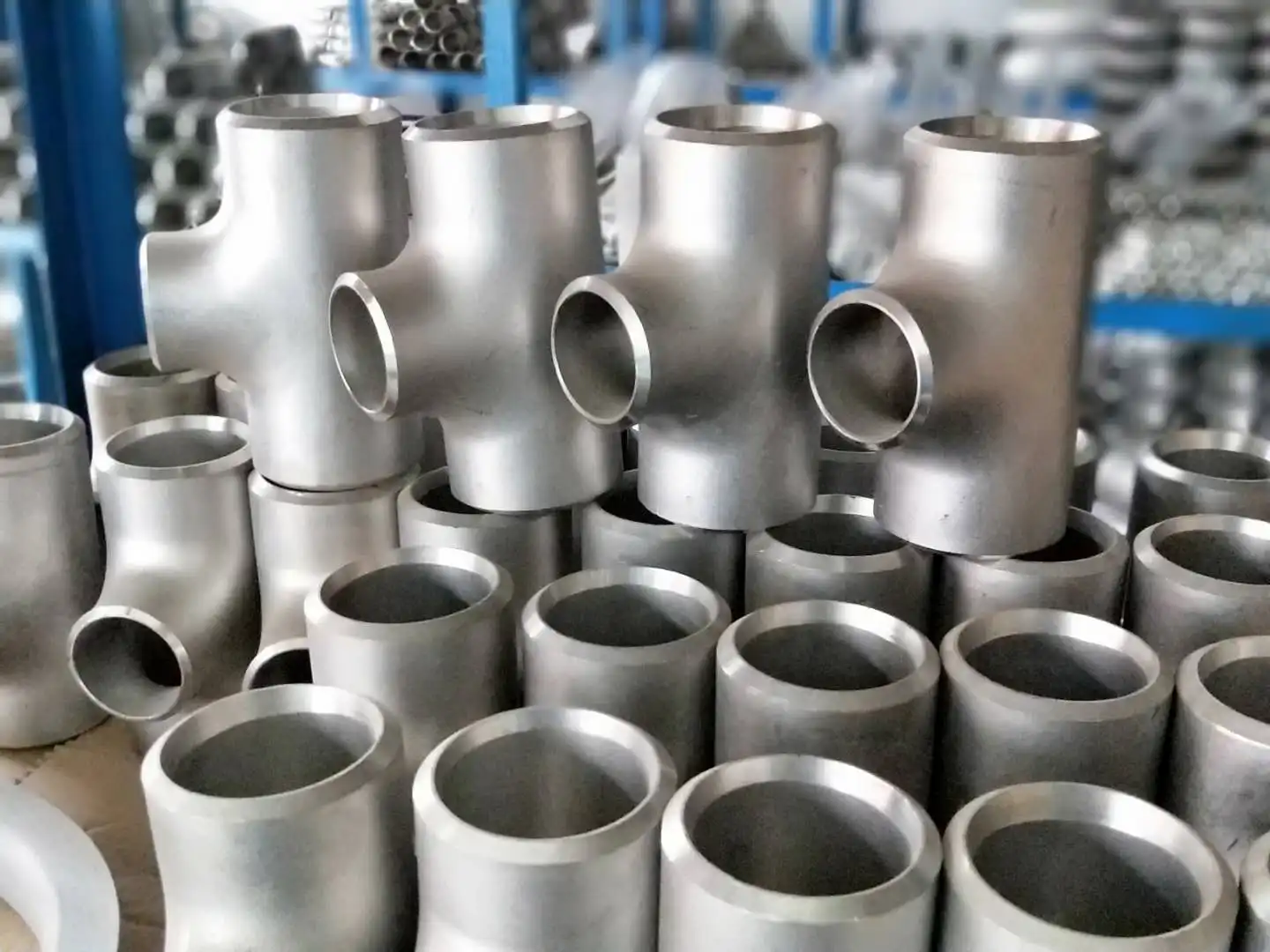
- Equal tees have three ports with the same diameter, so they can be used to split flows evenly in distribution heads or join streams with similar volumes. These are used in petrochemical plants' main process lines to keep the flow speed high so that floating particles don't settle.
- Because reducing buttweld tees have a smaller branch outlet, they can be used to connect main headers to equipment without the need for separate reducer fittings. This arrangement cuts down on installation time and possible leak points, which is very helpful when time is of the essence for building a power plant or making changes to an offshore platform.
The ways these pieces are made put them into even more categories. Seamless butt-welded tees are typically manufactured from seamless pipe using hot- or hydraulic-forming processes, have better pressure ratings, and have a more even grain structure because they don't have longitudinal weld joints. Our seamless range goes from 1/2" to 24" (DN15 to DN600), which makes it perfect for use in sour gas handling or supercritical steam systems where reliability is important. Welded buttweld tees are made from plate and come in sizes 24" to 72" (DN600 to DN1800). They are used for large-diameter transmission pipelines where the cost and availability of plates are important factors.
How Do Buttweld Tees Improve Flow Distribution Systems?
Design Principles Promoting Efficient Flow Dynamics
The internal shape of a good buttweld tee has a direct effect on how well it works hydraulically. Our manufacturing process makes a radiused branch outlet that slowly changes the flow direction, which is very different from fabricated stub-ins that make sharp 90-degree turns. Computational fluid dynamics studies show that smooth radius transitions can significantly reduce erosion and localized corrosion compared to sharp-cornered fabricated branches.This means that they last longer in rough slurry applications.
Crotch support is another important part of the buttweld tee design. When there are pressure spikes or thermal expansion cycles, the branch intersection is where the most stress builds up. We make up for the wall thinning that happens when a hydraulic bulge forms by adding extra material thickness in this area, which meets ASME B16.9 safety factors with some room to spare. Cracking at the weld toe during cycle loads is a common way for poor fits to fail early. This reinforcement stops that from happening.
Installation Guidelines for System Longevity
The benefits of these parts are amplified when they are installed correctly. We use CNC tools to precisely bevel all ends, giving them all the same 37.5-degree bevel angles and 1.6 mm root faces. Standardization makes it possible for automatic orbital welding systems to get good welds on the first try. This lowers the number of radiographic rejections and speeds up project schedules. This regularity means that EPC companies can make accurate estimates of the number of man-hours needed for each tie-in point along a refinery expansion. It also means that there are fewer requests for extensions of hot work permits.
The rules for heat treatment are just as important. After being shaped, our buttweld tees are normalized, quenched, and tempered to bring back the mechanical qualities that were changed by the cold work. This process makes sure that the fitting body is the same hardness all the way through, so there are no weak spots that could cause stress corrosion cracks in corrosive service. Before taking delivery, installers should make sure that the material test records confirm these heat treatment steps. This is a simple check that keeps things from breaking down too soon.
Real-World Performance Improvements
A chemical plant on the Gulf Coast recently wrote about how they upgraded their hydrofluoric acid alkylation unit from fabricated branch connections to precision buttweld tees. One chemical processing facility reported that there were 65% fewer fugitive emission events at branch points. This was directly due to the better sealing integrity of full-penetration butt welds compared to fillet-welded fabrications. This change got rid of problems with following the rules and kept fines from going over $200,000.
A person who runs an offshore production platform reported the same results after adding reducing butt weld tees to their system for handling produced water. The smooth-bore transitions got rid of the erosion pitting that meant that manufactured stub-ins had to be replaced every year. This meant that upkeep could be spread out over 48 months instead of 12 months. With offshore crane rates topping $15,000 per day, this change gave a quick return on investment by putting off upkeep costs.
Comparison with Alternative Fittings: Making the Right Choice
Pressure Ratings and Durability Analysis
Threaded tees are still commonly used in instrument air systems with low pressures below 150 psi because they are easy to install and don't need hot work permits. But thread attachment only allows a small contact area—usually only 6–8 threads carry the load—which makes stress lifters that start fatigue cracks when the machine shakes. We looked into problems in compressor discharge lines where threaded fittings came loose within 18 months even though thread sealant was used correctly, while adjacent buttweld tee connections worked fine for over a decade.
Socket weld tees are a middle ground that can be used for moderately used small-bore piping (under 2 inches). A finite element study shows that the fillet weld at the socket shoulder causes a stress concentration factor that is about 2.3 times higher than butt welds. This shape makes socket welds more likely to fail over time in places with a lot of shaking, like reciprocating compressor stations. After only three years of service, we've seen through-the-wall cracks at the weld toes.
Material Selection for Lifecycle Value
Carbon steel (ASTM A234 WPB) is the most commonly used material in non-corrosive settings like steam systems, compressed air distribution, and petroleum processes due to its high strength, excellent weldability, and cost-effectiveness. Backed by over 50 years of industry application, its standard inspection procedures have well-established track records in municipal and industrial projects.
Various grades of stainless steel handle highly corrosive environments in different ways. Type 304L is good for clean steam in food processing or pharmaceuticals because it doesn't rust, and 316L's molybdenum helps keep cooling water systems from staining when salt is present. We suggest chrome-moly metals (WP11, WP22) for work with sour gas that contains hydrogen sulfide because they don't crack under sulfide stress and keep their high-temperature strength.
Material price changes must be taken into account in lifecycle cost analysis. Stainless steel buttweld tees usually cost three to four times as much as carbon steel ones, but they don't need to be painted or coated, and they last longer in environments that are acidic. A refinery's maintenance manager found that moving to 316L buttweld tees in their seawater cooling system cut the total cost of ownership by 23% over 15 years, even though the starting costs were higher.
Seamless Versus Welded Performance
While seamless buttweld tees are more expensive, they have clear benefits in serious situations. Because there are no longitudinal weld seams, there is no place where a failure could start. This is especially important in applications with changing temperatures, where differences in thermal expansion can cause weld defects to become visible. Where specified, our seamless products undergo ultrasonic testing (UT) to verify uniform wall thickness and detect any laminations in the base material.
Welded buttweld tees are a cheap way to connect pipes with large diameters and low pressure. We have to use 100% radiographic testing (RT) on these that are bigger than 24 inches to make sure the weld seam consistency meets code standards. Matching the fitting's weld seam position perpendicular to the pipe's longitudinal weld during installation is the most important design factor. This keeps stress away from weld lines that are in the same place.
Procurement Considerations for Buttweld Tees in Global B2B Markets
Identifying Qualified Suppliers
Verification of certification tells the difference between trustworthy makers and shady dealers. Third-party surveillance audits help us keep up with our ISO 9001:2015 quality management systems. For European markets, we have CE marking, and for Russian projects, we have GOST-R certification. More importantly, we are a qualified supplier for major energy companies like National Iranian Oil Company (NIOC), Abu Dhabi National Oil Company (ADNOC), and Petrobras. We got these titles by passing strict factory audits and consistently delivering high-quality work.
Traceability is another condition that can't be changed. Every buttweld tee we make has a hard-stamped number that tells you its heat number, material grade, and size. With this marking, purchasing managers can track the chemical makeup of materials all the way back to the steel mill's approval. This meets the needs of project quality plans and regulatory compliance paperwork. Recent API 6A tests found no problems with our tracking systems. This makes it easier to get approvals for subsea uses.
Volume Advantages and Lead Time Management
Our 30,000-ton annual capacity lets us handle both one-time purchases and long-term project needs that are covered by framework agreements. Our ability to ship 90+ containers per month helps distributors keep local inventory on hand by making sure they have stable supply lines that protect their market position. We've set up our production schedule to meet urgent needs. For example, we recently rushed 40 tonnes of WP91 metal butt weld tees for a power plant restart with only 12 days' notice, which kept the schedule from getting behind and costing more than expected.
The way prices are set depends on how much you order and how flexible you are with delivery. When engineering firms buy full piping packages (usually 200 or more fittings of different sizes and schedules), they can get better prices that make their bids more competitive. We support staged deliveries that are timed with building stages. This cuts down on our clients' need for on-site storage and the amount of money they have to invest in inventory.
Technical Support Throughout the Whole Project
Our application engineering team helps you choose the right materials by comparing the service conditions (like temperature, pressure, and fluid chemistry) to the materials' abilities and suggesting the best grades. This consultation stops expensive design mistakes like choosing WPB carbon steel for a job that needs WPL6 low-temperature toughness, which would mean replacing the whole fitting once it was found during construction.
We keep butt-welded tee dimensional drawings and material certifications in digital format that can be accessed within an hour of a request. This makes document review faster while the project is being carried out. When installation questions come up, our expert staff (who have an average of 15+ years of experience in the field) gives advice on welding parameters, post-weld heat treatment standards, and inspection acceptance criteria. This helps field teams deal with difficult tie-ins.
Conclusion
Buttweld tees make flow distribution systems better by providing better hydraulic performance, structural integrity, and long-term dependability. Their full-penetration weld design gets rid of the leakage and wear problems that come with threaded or socket-weld options, and the radiused branch shape reduces damage from turbulence and erosion. When matched to the right working conditions, the right choice of material—carbon steel for general use, stainless steels for corrosive environments, and alloy steels for high temperatures—enhances the product's lifetime value. Partnering with certified makers who show uniform quality, keep track of materials, and offer expert help throughout project execution is key to successful procurement. As long as they are installed correctly and are regularly maintained, these fittings will work reliably for decades in the toughest industrial settings.
FAQ
1. What distinguishes equal tees from reducing tees in practical applications?
In real life, what makes equal-but-weld tees different from reducing-but-weld tees? When you split or combine equal streams, equal buttweld tees are perfect because all three ports have the same diameter. Reducing buttweld tees have a smaller branch exit that lets you connect directly to smaller pieces of equipment or pipes without having to use separate reduction fittings. This arrangement makes installation easier and lowers the risk of leaks in systems that need to change the diameter at branch points.
2. How does wall thickness schedule selection impact system performance?
The schedule (wall thickness) must match linked pipes so that there are no discrepancies in the inner diameters that cause stress concentrations and turbulence. When you join a Schedule 40 buttweld tee to a Schedule 80 pipe, you make a step in the bore width that speeds up erosion and puts more stress on the weld transition. Matching schedules makes sure that flow lines are smooth and that stress is spread evenly across welded parts.
3. When is post-weld heat treatment required after installation?
ASME B31.3 says that the PWHT requirements depend on the type of material, the thickness of the wall, and the service conditions. For carbon steel buttweld tee systems, PWHT is usually needed when the wall thickness is more than 19 mm. For chrome-moly alloys, PWHT requirements depend on the material grade, thickness, applicable code requirements, and service conditions. This process removes any remaining stresses from welding, making the metal more flexible and stopping it from cracking later on in hydrogen service or caustic conditions.
Partner with JS FITTINGS for Certified Butt Weld Tee Solutions.
JS FITTINGS has been making high-quality products for over 40 years and can help you with your important flow distribution projects. They make precision-engineered buttweld tees that meet the strict needs of the oil, chemical, power production, and marine industries. Our ASME B16.9-compliant product range includes seamless sizes from 1/2" to 24" and welded configurations up to 72". These are made from certified carbon steel, stainless steel, and alloy grades, and all of the materials can be tracked back to their source. We are a qualified supplier for NIOC, ADNOC, and Petrobras, and we hold ISO 9001, CE, and GOST-R certifications. We also offer customization from DN15 to DN2000, and you can contact us at admin@jsfittings.com for technical support. We make sure your purchasing experience is as risk-free and as valuable as possible.
References
1. American Society of Mechanical Engineers. (2020). ASME B16.9: Factory-Made Wrought Buttwelding Fittings. New York: ASME Press.
2. Boyer, H.E. & Gall, T.L. (2018). Metals Handbook: Properties and Selection of Pipe Fittings for Industrial Applications. Materials Park, OH: ASM International.
3. Ellenberger, J.P. (2019). Piping and Pipeline Calculations Manual: Construction, Design, Fabrication, and Examination. Oxford: Butterworth-Heinemann.
4. Nayyar, M.L. (2021). Piping Handbook: Eighth Edition. New York: McGraw-Hill Professional.
5. Singh, R. & Khamba, J.S. (2017). Welding Technology and Pipe Fitting Standards in Petrochemical Industries. Journal of Industrial Engineering Research, 12(3), 145-162.
6. Wilkinson, J.B. & Peters, R.A. (2019). Flow Distribution Systems: Optimization Through Advanced Fitting Design. Houston: Gulf Professional Publishing.
Send Inquiry
You may like
Related Industry Knowledge
- Carbon Steel Forged Steel Flange: ASME B16.5 vs B16.47
- What Does ASME B16.5 Mean for Pipe Flange and Flange Fittings?
- All About ASTM A105 weld neck flange
- Sourcing Custom Steel Flange: A Buyer’s Guide to Working with a Manufacturer
- ASTM A312 vs A358: Choosing the Right Stainless Steel Pipe Standard
- What Is the Difference Between LR and SR Buttweld Elbow?
- A312 stainless steel pipe – Stainless Steel Pipe Dimensions, Chemical Composition
- Induction Buttweld Bend vs Cold Bend: Pros and Cons
- How Does a Buttweld Elbow Reduce Pressure Loss in Pipelines?
- What is a threaded flange?