
How to Select the Right Lap Joint Pipe Flange for Your Process Needs






2026-11-20 10:28:11
To select the right lap joint pipe flange, start with your process fluid, pressure, temperature, and maintenance schedule. Then match the pipe size, ASME standard, pressure class, and stub end material to those conditions. A lap joint pipe flange is a loose backing ring that sits behind a butt-welded stub end. The stub end handles fluid contact and the gasket seal, while the ring carries the bolt load. This design suits lines that need frequent dismantling, easy bolt-hole alignment, or a low-cost carbon steel ring paired with a corrosion-resistant stub end.
We wrote this guide for EPC teams, distributors, local installers, public project buyers, and plant maintenance managers. JS FITTINGS has made pipe fittings and flanges since 1983, and the points below reflect the questions buyers ask us most.
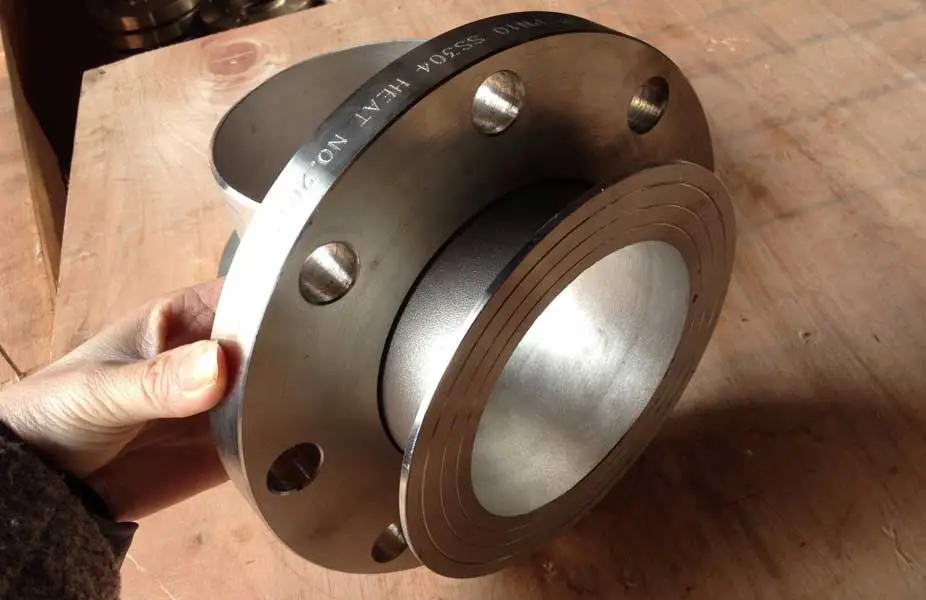
What Is a Lap Joint Pipe Flange and How Does It Work?
Before you compare options, it's helpful to know how the two fit together.
A Two-Component Assembly
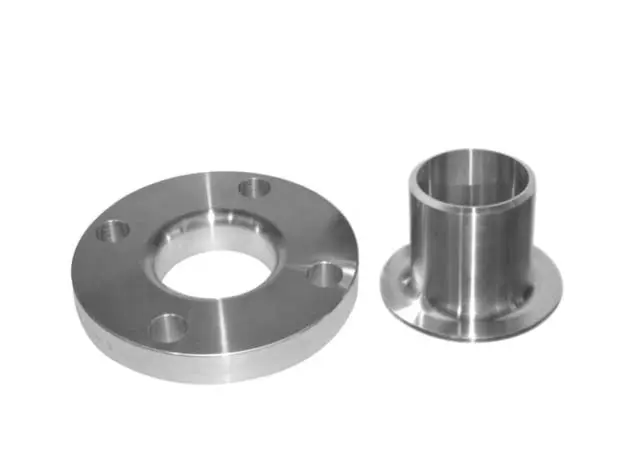
There are two parts to a carbon steel lap joint pipe flange: a loose backing flange and a matched stub end. You can buy them separately or as a set. The ring goes over the pipe and seals behind the stub end, which is joined to the pipe at the butt weld. The ring is not welded to the pipe like a weld neck or slip-on flange is. The backing ring features a flat face (FF), and its internal bore is machined with a precision corner radius to clear the fillet radius of the mating stub end. With that radius, the fillet radius of the stub end is not blocked. Most slip-on flanges don't have this radius, so they can't be used instead of a lap joint ring unless they are cut by a machine shop.
How the Joint Seals and Rotates
When the bolts are tightened, the ring presses the stub end against the seal and the flange that fits on top of it. Not the ring, but the stub end face. This is where the gasket seals. That's why the front of our rings is flat (FF). Under ASME standards, the gasket surface on the stub end is serrated and usually has 125 to 250 AARH. The ring can freely move around the pipe since it is not welded. Installers can line up bolt holes in tight or complicated layouts, even if the spool comes in a little crooked. There is no need to re-weld, so the work is done faster.
Where It Fits and Where It Does Not
Lap joint pipe flanges are widely specified across food processing, water treatment, pharmaceutical, marine, and high-nickel/duplex alloy piping systems requiring frequent inspection or routine cleaning.But they can only do so much. A loose ring doesn't have a tapered hub, so it can't bend as much as a weld neck flange can. In our product data, it says that the two-piece design can help reduce certain thermal stresses because the loose flange ring can accommodate relative movement. If there is a lot of shaking, bending, pressure, or strong temperature cycles, we suggest using a weld neck flange instead.
Match Process Conditions, Dimensions, and Ratings
Most picking mistakes happen when the data sheet isn't complete, so get these facts together first.
Define the Process Conditions
Note down the name of the process fluid, its concentration, pH, any chloride exposure, and any risk of contamination. These things decide what the stub end is made of, since it's the only part that touches the fluid. Next, write down the average, lowest, highest, and unusual pressure and temperature, such as vacuums, surges, and thermal cycles. Because the stub end and pipe supports hold the free ring in place, you should look over shaking, thermal expansion, support spacing, and bending loads. Finally, guess how often the crews will open the joint. The best reason to choose a carbon steel pipe lap joint flange design is that it is easy to clean or check on a regular basis. A weld neck flange might work better with a part that stays shut for years.
Confirm Dimensions and Standard
It's not enough to match the stated pipe size. Check the outside diameter, wall thickness, schedule, bore, stub end length, bolt circle, bolt-hole diameter, and flange thickness of the pipe. For big tanks, we make lap joint pipe flanges to ASME/ANSI B16.5 from 1/2" to 24". For sizes from 26" to 60", the applicable large-diameter lap joint flange standard or engineering specification should be confirmed separately. Different systems, like EN 1092-1, DIN, or JIS, have different bolt designs and don't always work with ASME. Check the approved drawings, the facing of the mating flange, and the type of gasket before you place your order. If you need stub ends that follow ASME B16.9, make sure you know if you need the long or short design.
Pair Pressure Class and Material
Classes 150, 300, 600, 900, 1500, and 2500 are available within the applicable size and material ranges. A class is not a set pressure limit because the pressure that is allowed drops with temperature and is different for each material group. For your specific material, look at the tables of pressure and temperature. For that matter, PN grades and ASME classes are not exactly the same thing. In utilities and general industrial service, carbon steel that has been forged to ASTM A105 is often used. ASTM A182 stainless grades can be used in environments that are corrosive, clean, or high in chloride. The ring in a lap joint pair can be made of carbon steel, and the stub end can be made of stainless steel or an alloy. Think of the ring, the stub end, the gasket, the nuts, and the welds as a single unit.
Compare Flange Types and Avoid Common Mistakes
If you pick the wrong flange type, it costs more than picking the wrong provider, so look at your choices side by side.
Lap Joint vs. Slip-On Flanges
Both rings slide over the pipe, but they act in different ways. A fillet weld holds a slip-on flange in place on the pipe after it has been welded. A lap joint pipe flange ring is not fixed, so workers can move and twist it while putting it together. A slip-on flange doesn't have the bore radius that clears the stub end fillet either, so using it instead leads to a bad fit and more stress. Lap joints are often better for cost in alloy lines. You do not buy a full alloy flange. Instead, you buy a small alloy stub end and a carbon steel ring. If the utility lines are dry and don't need to be cleaned often, a slip-on may be cheaper.
Lap Joint vs. Weld Neck, Threaded, and Blind Flanges
Weld neck flanges feature an integral tapered hub and a beveled end designed for full-penetration butt-welding to the pipe. For tough work, choose them because they can handle high pressure, high temperature, cyclic loading, and heavy bends better. When it comes to small-bore, low-risk lines, threaded flanges work, but they don't do well when the temperature or vibration changes. That's not what blind flanges do; they close the end of a pipe run or provide a removable pressure boundary, which is a different job. This is where the lap joint pipe flange comes in. It lets you choose the best balance and makes it easy to take apart for light work. It also saves you money on corrosive lines. Safety, mechanical loads, upkeep regularity, and lifetime cost should all be taken into account, not just the lowest price per piece.
Selection Mistakes to Avoid
Most problems with flanges are caused by an incomplete order, not a flaw in the way they were made. If you only order by nominal size, you might end up with a bore, schedule, or bolt pattern that doesn't match. Temperature and material effects are not taken into account when reading a pressure class as a uniform limit. If you only look at price, the stub end may rust quickly, which will cost you more in downtime. If you think that ASME, EN, DIN, and JIS flanges can be used together, the bolt holes at the interfaces of equipment will not match up. If you don't pay attention to the bore radius, the ring won't fit flat. Put the ring, the stub end, the gasket, the bolts, the welding procedure, and the mating flange on one sheet of data.
Build a Selection Process, Then Install and Maintain the Joint
A clear process cuts down on mistakes in the specifications, and a good installation keeps the seal safe.
Follow a Five-Step Selection Process
I recommend this order for all of you.First, categorize the operating service, such as chemical processing, municipal water treatment, marine seawater, pharmaceutical sanitary, oil and gas, or modular OEM skids. Second, document the size, standard, pressure class, facing, material, and temperature. Third, be clear about what kind of gaskets, bolts, testing, and certification you need. Fourth, put safety and following the rules ahead of price and arrival time. Fifth, send a request for quote that is technically complete, including all information about the interface and service. This way, EPC teams and public projects can keep a clear audit trail, and wholesalers don't have to deal with returns because the specs were wrong.
Install the Joint Correctly
Check each part before putting it together. Make sure the lap face is clean and free of scratches, and check the weld on the stub end. Also, make sure the ring bore radius fits against the stub end. Set up the open carbon steel pipe lap joint flange without pulling the pipe into line, and then put on the right seal. Tighten the bolts in a cross pattern over several passes, following the steps for torque or tension. The ASME PCC-1 standard is a well-known guide for putting together bolted joints. Leaks often happen because the tightening isn't done evenly, so teach the crews and write down the values in the job file. For oil-coated or hot-dip galvanized rings, the threads need to be clean, and the lubricant needs to be compatible with the bolting, coating, and specified assembly procedure.
Inspect and Maintain Over Time
During routine inspection, check for joint seepage, external corrosion, loose fasteners, staining, and abnormal thermal patterns. Plan your checks to happen around planned shutdowns. With the ring loose, the joint can be opened without having to cut or re-weld the main line. This works for chemical and water treatment lines that need to be cleaned often. If the gasket maker doesn't say it can be used again, replace it after each disassembly. The backing flange can often be taken off and used on new pipe pieces during retrofits. This saves money for plant workers and stockists. First, look for cracking, bore damage, and face wear on a used ring.
Source the Right Lap Joint Flange Supplier
Once the specs are clear, source checks will keep your plan and budget safe.
What to Check Before You Buy
They should do more than just have a low unit price. Check to see what sizes, pressure classes, standards, and materials it can make. Then, ask for markups, heat traceability, material test reports to EN 10204 3.1, and records of dimensional inspections. To be sure of the grade, like ASTM A105, ask for the chemistry analysis data for the backing flange. Check a sample's hole radius because it affects how it seats. It's not enough to compare price per piece; you should also compare total value, which includes inspection, freight, lead time, inventory, and lifecycle maintenance. When it comes to common sizes and pressing jobs, stock items work well, but custom quotes are needed for jobs with unique bores, bolt patterns, metals, or large diameters.
Application Examples
Chemical pipes may need a stub end made of stainless steel, duplex steel, or an alloy that is the right size for the concentration and temperature. Hot-dip galvanized carbon steel rings are useful for water treatment and utility lines that need to keep costs down, protect against rust, and look good outside. Food, drink, and medicine lines need stub ends made of clean materials and finished in a way that allows for cleaning while the line is still running. For marine and underwater work, you need to be able to handle chloride and pay attention to shaking and structural loads. People who buy desalination or acid lines often pair a pricey alloy stub end, like titanium, with a galvanized carbon steel ring to keep the cost of the lap joint pipe flange low. When it comes to OEM skids, they need consistent sizes and a steady supply.
How JS FITTINGS Supports Your Order
Since 1983, JS FITTINGS has been making pipe fittings and flanges. That's 43 years of experience. Our factory is more than 7,000 square meters, and every month we make 700 tons of flanges. We have ISO, CE, and GOST-R certifications, and our quality system is based on ISO 9001. We use spectral analyzers and other tools to find flaws. We offer sizes from DN15 to DN2000, can make custom orders, and work with ASME, DIN, JIS, and EN standards. We sustain a verified on-time delivery rate exceeding 95%, a client repeat-purchase rate above 98%, and a guaranteed one-hour technical response window.We can also help with trial sales for samples or small amounts.
Conclusion
When picking a lap joint pipe flange, the process conditions are the first thing that matters. The fluid, pressure, temperature, and how often maintenance is done determine whether a free ring and stub end are right for the line. Then, make sure that the ring, stub end, seal, and nuts all work together by checking the dimensions, ASME standards, pressure class, and material. When a carbon steel ring is paired with a corrosion-resistant stub end, the lap joint is cheaper, has bolt holes that can rotate, and is easier to take apart than slip-on, weld neck, threaded, and blind flanges. When bent, vibrated, or cycled a lot, it gives way to weld neck designs. Most problems can be avoided with proper installation, regular inspections, and a full specification. This lowers the cost over the whole life of the product.
FAQ
1. Can a slip-on flange replace a lap joint flange?
Not as a direct substitute. A standard slip-on flange does not have the same bore-radius geometry as a lap joint flange, so it may not provide the required clearance for the stub end fillet. Any alternative configuration should be verified for fit and stress before use.
2. Is a lap joint pipe flange suitable for high-pressure service?
We can make rings up to Class 2500, but a lap joint pipe flange may not be the preferred choice for heavy loads, bending, or severe cyclic service. A weld neck flange is often considered for such conditions. First, look at the tables of pressure and temperature.
3. Which materials suit a lap joint pipe flange?
Rings made of carbon steel (ASTM A105) are good for general use. When the fluid is corrosive, pair them with a stainless or alloy stub end. The choice of stub end should depend on the temperature.
4. Are ASME, DIN, EN, and JIS flanges interchangeable?
No, there are different bolt patterns, sizes, and pressure designations, so make sure that each interface matches the approved drawings.
5. What do you need for a quote?
Provide the nominal pipe size (NPS), outside diameter (OD), governing dimensional standard, pressure class, material grades (for both backing ring and stub end), process fluid conditions, quantity, and required delivery schedule. Drawings help the review go faster.
Request the Right Lap Joint Pipe Flange for Your Project
Email JS FITTINGS at admin@jsfittings.com with your pipe size, standard, pressure class, material, and process conditions. Our team will check the sizes and suggest a stub end and backing ring that fit. As a company that has been making lap joint pipe flanges for 43 years, we respond within an hour and can handle samples, small trial orders, and special requests. For more information, ask for a quote today.
References
1. ASME B16.5: Pipe Flanges and Flanged Fittings, NPS 1/2 Through NPS 24 Metric/Inch Standard, 2020
2. ASME B16.47: Large Diameter Steel Flanges, NPS 26 Through NPS 60 Metric/Inch Standard, 2020
3. ASME B16.9: Factory-Made Wrought Buttwelding Fittings, 2018
4. ASME PCC-1: Pressure Boundary Bolted Flange Joint Assembly, 2019
5. ASTM A105/A105M: Standard Specification for Carbon Steel Forgings for Piping Applications, 2021
6. EN 10204: Metallic Products, Types of Inspection Documents, 2004
Send Inquiry
You may like
Related Industry Knowledge
- What Materials Are Used for Butt Weld Fittings?
- How Are Carbon Steel Welded Pipes Tested?
- How to Select the Right Plate Flange?
- The Dance of Spiral Forming: How SSAW Steel Pipes Are Made
- Forged ASTM A105 Weld Neck Flange Manufacturer in China
- Understanding Weld Neck Flanges: Types and Applications
- What is the difference between 3LPE and FBE Coated Steel Pipe?
- Benefits of Using A312 stainless steel pipe In Various Industries
- What is A312 stainless steel pipe? Everything You Need to Know
- What is the difference between a 45 degree and 90 degree elbow?