
How to Select the Right Plate Flange?






2026-09-07 17:11:12
Selecting the right Plate flange for your piping system directly impacts project safety, cost control, and long-term operational reliability. A plate flange is a flat, circular disk with a central bore, manufactured from rolled steel plate material rather than through forging. Unlike hubbed alternatives such as weld-neck flanges, it offers a simplified, cost-effective solution for applications where its design and pressure rating are appropriate. Proper selection requires evaluating pressure ratings, material compatibility, dimensional accuracy, and compliance with international standards like ASME, DIN, or JIS. This guide walks you through the decision-making process to ensure your choice aligns with technical specifications and procurement priorities.
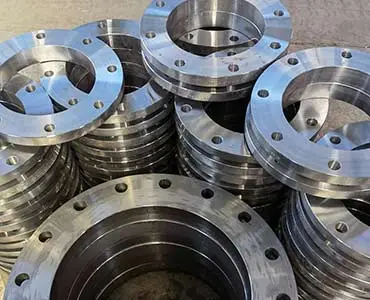
Understanding Plate Flanges: Types, Designs, and Applications
What Makes a Plate Flange Different?
Plate flanges are made from flat-rolled steel plate stock that is cut using methods such as plasma, oxy-fuel, or laser cutting. They are then drilled and machined to fit the needs of the pipe. It's not the same as forged weld-neck flanges because it doesn't have a tapered hub. This reduced design can lower material usage and production costs compared with more complex flange designs. This makes it a practical choice for projects that need to stay within a budget, like water distribution, cooling systems, and utility lines where the pressure and temperature requirements are suitable.
The plate flanges we make at JS Fittings are in line with EN 1092-1 Type 01, JIS B2220 SOP, and AS 2129. Our production process starts with high-quality hot-rolled steel plate, such as carbon steel Q235, A36, SS400, and stainless steel SS304/316L. This plate has a regular thickness and consistent material properties that support reliable machining and fabrication.
Common Variants and Their Industrial Roles
There are different plate flange configurations, and each one is best for a certain application:
- The type that is used most often is the flat plate flange. They fit over the end of the pipe and are held in place by fillet welds on both sides. This design works well for city water systems, wastewater treatment plants, and large-diameter pipes where high pressure is not the primary requirement and ease of alignment is important. The loose fit before welding lets the bolt holes be rotated, which can help solve fit-up problems that come up during field installations.
- Blind plate flanges close off pipe systems and stop the flow of fluids while they are being tested or maintained. They are often used in chemical plants and irrigation networks where parts of the system need to be separated from time to time.
- Instead of welded joints, threaded flanges have tapered threads (NPT or BSPT) on the inside. At JS Fittings, we make these for piping systems with small diameters (1/2" to 4"), where welding would be impractical or restricted. They can be useful in applications where open-flame welding is restricted, including certain oil and gas facilities. NPT (National Pipe Thread) is a type of thread used in the US, while BSPT (British Standard Pipe Taper) is commonly used in the UK and other markets that adopt British pipe-thread standards. The applicable pressure classes depend on the flange standard and design, and facing options may include Raised Face (RF), Flat Face (FF), or Ring Type Joint (RTJ), as specified by the applicable standard.
Threaded connections can avoid the welding-related PWHT requirements that may apply to welded joints, which can simplify installation in some applications. They can be assembled on-site without welding equipment and are relatively easy to remove for cleaning or making changes to the system. However, threaded connections must be evaluated carefully when used with coated, galvanized, or lined piping because installation and threading can affect protective layers or linings.
Material Selection and International Standards
The type of fluid, high temperatures, and the surroundings all affect the choice of material. For general utility services, carbon steel grades like Q235, A36, SS400, and S235JR can be cost-effective when permitted by the applicable standard and design conditions. Stainless steel grades like SS304/L and SS316/L are better at resisting corrosion in chemical processing and marine applications. Material selection should be based on the applicable pressure-temperature rating, fluid compatibility, corrosion conditions, and project specification.
ASME/ANSI B16.5, DIN/EN 1092-1, JIS B2220, and GOST are just some of the international standards that JS Fittings offers. This means that they can be supplied according to project requirements in different markets. Our products are supported by ISO, CE, and GOST-related quality or conformity documentation, where applicable.
Real-World Application Scenarios
According to JIS standards, plate flanges are widely used in shipbuilding for cooling water and ballast systems. The marine industry benefits from this compact profile in applications where applicable pressure and structural requirements are satisfied. Plate forged flange manufacturers also supply these flanges for applications where material quality and dimensional consistency are important. Plate flanges also connect large-diameter water mains in municipal infrastructure, where static loads are common and thermal cycling may be limited. Their compact profile facilitates installation in confined underground areas where hub clearance would be a problem.
Essential Criteria for Selecting the Right Plate Flange
Defining Operational Parameters
Setting three main working factors (pressure rating, temperature range, and fluid characteristics) is the first step in the decision process. Plate flanges may be specified for low- to medium-pressure situations, such as PN6, PN10, and PN16 or JIS 5K and 10K, depending on the applicable standard and design requirements. They should not be excluded from higher-pressure applications solely because they are plate flanges; suitability must be verified against the applicable flange standard, material, pressure-temperature rating, and engineering design.
Limits on temperature depend on the material. Carbon steel and stainless steel plate flanges must be evaluated according to the specific material grade, pressure rating, applicable standard, and design temperature. Depending on the pH level, particle size, and corrosiveness of the fluid, normal carbon steel may not be enough, and an improved stainless alloy may be needed.
Material Compatibility and Corrosion Resistance
It is necessary to match the flange material to the environment of the pipeline. Stainless steel grade 316L exhibits superior resistance to chlorides in seawater and acidic fluids. For slightly corrosive tasks, carbon steel with protective coatings can be used where the coating system is suitable for the service. Material compatibility should be confirmed against the actual fluid, temperature, concentration, and exposure conditions.
Every order from JS Fittings comes with a Mill Test Certificate (EN 10204 3.1) that confirms the carbon equivalent (CE) values and tensile strength, which is usually 410MPa+ for carbon steel. This paperwork supports material traceability from the source plate to the end product. Welding procedures, including any preheating or PWHT requirements, should be determined separately according to the applicable material specification and welding code.
Accurate Dimensional Measurement
Dimensional accuracy stops expensive delays in installation and leaks that could happen. Nominal diameter (DN), bolt circle diameter (BCD), and flange width are some of the most important measures. Even small changes in BCD can make bolt holes not line up correctly, which forces field changes that slow down projects.
JS Fittings' quality control team uses high-precision measuring tools to check that dimensions are within the acceptable ranges. The sealing face's flatness is inspected to ensure it remained free from thermal distortion during the cutting process, and the surface finish is controlled according to the applicable flange standard and gasket requirements to provide suitable sealing performance.
Procurement Logistics Considerations
Procurement strategy is affected by lead times and minimum order quantities (MOQ). At JS Fittings, standard plate flanges usually ship in two to three weeks, but custom configurations may take four to six weeks, depending on the availability of materials and the difficulty of the machining. JS Fittings can ship more than 90 containers every month, based on its stated production and logistics capacity.
Volume discounts typically apply to orders exceeding 50 units, and we accommodate small-batch trial orders to validate new project requirements. Our experienced foreign trade team answers questions within an hour, which helps projects that need to be decided on quickly.
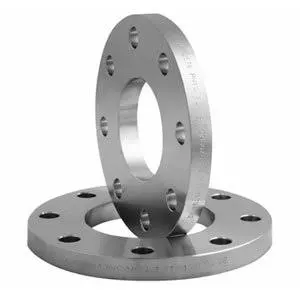
Comparing Plate Flanges: Find the Best Fit for Your Project
Plate Flanges vs. Forged Weld Neck Flanges
The primary distinction lies in their structural reinforcement mechanisms. Weld neck flanges have a hub that tapers from the pipe to the flange. This geometry can reduce local stress concentration and provide better fatigue performance in demanding applications when properly designed. Plate flanges don't have this tapered hub, so plate forged flange manufacturers must evaluate their suitability for pressure, temperature, and cyclic loading based on the applicable standard and design conditions.
Plate flanges can be more economical than forged designs because they use simpler manufacturing processes and may require less material and machining. Both require appropriate installation and welding procedures when used with welded pipe connections. Plate flanges can also simplify alignment during fit-up, depending on the piping configuration. Maintenance requirements depend on the service conditions, flange design, gasket, bolting, and installation quality.
Performance Under High Pressure
Plate flanges can be suitable for steady-load applications when the selected flange, material, pressure-temperature rating, and design meet the applicable requirements. For high-pressure steam lines, hydraulic systems, or applications with significant cyclic loading, flange type and design should be selected through the applicable piping code and engineering analysis rather than by pressure class alone.
Cost-Effectiveness in Low-Pressure Systems
Plate flanges offer the best value for money when used in applications such as municipal water distribution and irrigation networks where their pressure, temperature, material, and dimensional requirements are satisfied. Because they can have a relatively simple geometry, they may require less material and machining than more complex flange designs. However, the total project cost should also consider welding, bolting, gaskets, coatings, inspection, and installation requirements.
JS Fittings can be customized to fit specific needs, such as adding corrosion-resistant coatings or modifying dimensions and facing requirements for project-specific applications. Our engineering team works with clients to find the best balance between technical requirements and budget limits. This way, project goals are met without putting safety at risk.
Procurement Guide: How to Buy Plate Flanges Online and Choose Trusted Suppliers?
Evaluating Supplier Credentials
Project risk is directly linked to how reliable the supplier is. Quality management systems such as ISO 9001, relevant product standards, and appropriate third-party inspections can be checked to make sure that output standards are consistently met. JS Fittings has ISO, CE, and GOST-related certifications or conformity documentation, where applicable, and for three years in a row, its annual sales have been more than RMB 100 million. Our building is 7,000 square meters, and we have dozens of qualified expert workers working there.
Before placing a big order, ask for a sample to be made. We accept small-batch trial orders, which let purchasing teams check the accuracy of the dimensions, the finish on the surface, and the material properties before going big.
Understanding Price Factors
Material grade, size, pressure rating, and order volume all affect the price. Because of the higher cost of the raw materials, stainless steel Plate flanges are generally more expensive than carbon steel ones. Custom cutting for non-standard sizes can raise the base price depending on the material, machining requirements, and production volume. Discounts for buying in bulk usually start at 50 units, and prices vary as the order size changes.
Custom orders have lead times of 4 to 6 weeks, depending on how much material is available and how busy the production line is. For urgent tasks, JS Fittings can speed up production, but there are extra fees that are discussed during the quote process.
Geographic and Logistic Considerations
Being close to manufacturing hubs cuts down on shipping costs and travel time. Our location in Hebei, China, gives us easy access to major suppliers of raw materials and infrastructure for exporting. We keep our customer complaint rate below 0.5% and our repeat-order rate above 98%, which shows that we provide strong support after the sale.
As part of the after-sales support, expert advice is given, quality disputes are settled, and replacement parts are sent out. Our team that works on international trade speaks English well and works in different time zones, so that they can respond quickly to messages.
Conclusion
To choose the right plate flange, you have to find a balance between technical capability, cost, and availability. Procurement teams make sure that projects stay on track and don't go over budget by setting operating parameters, making sure that materials are right for the job, and checking the credentials of suppliers. Plate flanges from JS Fittings can work well in suitable marine systems, municipal waterworks, and light industrial processes. Our international certifications, 43 years of manufacturing experience, and full after-sales support provide a foundation for quality and reliable piping solutions.
FAQ
1. What is the difference between a plate flange and a forged flange?
Plate flanges are made from flat-rolled steel plates and don't have the tapered hub found on weld neck flanges. This can reduce material and manufacturing costs, but the allowable pressure and temperature depend on the specific flange type, material, standard, and design. Forged flanges can provide advantages in demanding applications because their manufacturing process and geometry can provide suitable mechanical properties and stress distribution when properly specified.
2. How do I measure a plate flange for replacement?
The nominal diameter (DN) should be confirmed from the pipe size and the applicable flange standard rather than determined solely from the outside diameter of the pipe. The bolt circle diameter (BCD) should be measured center-to-center across two bolt holes on opposite sides of the flange. Check the number and size of the bolt holes. Compare the measurements to ASME, DIN, or JIS standards to make sure they are compatible before you place your order.
3. Can plate flanges be used in corrosive environments?
Yes, as long as they are made from the right materials and the flange is suitable for the service conditions. Grades of stainless steel like SS316L are better at resisting chlorides and certain acidic fluids. For slightly corrosive tasks, carbon steel with protective coatings can be used when the coating system is suitable. Ask for mill test certificates to check the composition and mechanical properties of the material and evaluate corrosion resistance based on the actual service environment.
4. What are the lead times for custom plate flanges?
Standard plate flanges are sent out in two to three weeks. Lead times may go up to 4 to 6 weeks for custom configurations that need non-standard sizes or materials. JS Fittings can speed up production for jobs that need to be done quickly, and specific deadlines are agreed upon during the quote process.
Partner with JS Fittings for Reliable Plate Flange Solutions
You can trust JS Fittings to make plate flanges because they have been in business for 43 years and have international certifications and conformity documentation, including ISO, CE, and GOST-related documentation where applicable. Plate flanges from DN15 to DN2000 are available according to applicable ASME, DIN, JIS, and GOST requirements to meet the needs of a wide range of projects. Our yearly capacity is 30,000 tons, and we ship more than 90 containers every month. More than 95% of the time, we deliver on time. Our engineering team can help you find unique solutions that keep costs low without sacrificing safety. This is true whether you need carbon steel for public water systems or stainless steel for environments that are prone to corrosion. Email admin@jsfittings.com to get a quote, talk about your needs, and find out why over 98% of our customers choose to buy from us again.
References
1. American Society of Mechanical Engineers. (2019). ASME B16.5: Pipe Flanges and Flanged Fittings. New York: ASME Press.
2. American Society of Mechanical Engineers. (2019). ASME PCC-1: Guidelines for Pressure Boundary Bolted Flange Joint Assembly. New York: ASME Press.
3. European Committee for Standardization. (2021). EN 1092-1: Flanges and their Joints—Circular Flanges for Pipes, Valves, Fittings, and Accessories. Brussels: CEN.
4. Smith, J., Anderson, R., & Liu, H. (2020). Stress analysis of plate-type flanges under cyclic loading. International Journal of Pressure Vessels and Piping, 186, 104-118.
5. Japanese Industrial Standards Committee. (2017). JIS B2220: Steel Pipe Flanges. Tokyo: Japanese Standards Association.
6. German Institute for Standardization. (2018). DIN 2501: Flanges - Part 1: Metal Flanges. Berlin: DIN.
Send Inquiry
You may like
Related Industry Knowledge
- How to Select the Right Blind Flange for Your Pipeline?
- Carbon Steel Pipe: The Backbone of Industrial & Daily Applications
- API 5L X65 PSL2 LSAW Carbon Steel Pipe for Oil and Gas
- Heavy Wall Thickness LSAW Pipe for High-Pressure Applications
- ASTM A252 SSAW Carbon Steel Pipe Manufacturer for Foundation Piling
- How Is a Buttweld Bend Tested to ASME Standards?
- Buttweld Tee vs Socket Weld Tee for High-Pressure Piping
- What Are the Types of Buttweld Elbows in ASME B16.9 Systems?
- What is the difference between a 45 degree and 90 degree elbow?
- What is a plate flange?