
API 5L X65 PSL2 LSAW Carbon Steel Pipe for Oil and Gas






2026-07-31 11:21:18
API 5L X65 PSL2 LSAW carbon steel pipe represents a critical solution for high-pressure, large-diameter pipeline infrastructure in the oil and gas industry. Manufactured through longitudinal submerged arc welding, this LSAW carbon steel pipe combines superior mechanical properties with exceptional weld integrity, making it the preferred choice for transporting hydrocarbons across challenging environments. The PSL2 specification ensures enhanced quality requirements, including stringent chemical composition controls and mandatory Charpy V-notch impact testing, addressing the safety and compliance demands of modern energy projects.
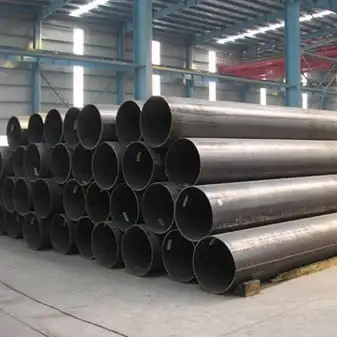
Understanding API 5L X65 PSL2 LSAW Carbon Steel Pipe
Manufacturing Process and Core Specifications
API 5L X65 PSL2 pipes are made by using JCOE or UOE forming technology to shape separate steel plates into a tubular shape. Two-sided submerged arc welding is used on this LSAW carbon steel pipe to make a single longitudinal seam. Plate-based production, on the other hand, lets you precisely control the wall thickness and the accuracy of the dimensions. After welding, the cold-expansion process improves roundness and dimensional accuracy in accordance with API 5L dimensional tolerances. This makes fitting and girth welding much easier to do in the field. Standard sizes range from NPS 16" to 60" (406 mm to 1626 mm), and wall thicknesses can reach 65 mm or more to meet the needs of high-pressure gas transmission systems that need thick walls.
Key Technical Properties
The designation "Grade X65" indicates a specified minimum yield strength of 65,000 psi (448 MPa), which means that the structure can handle tough situations. For the PSL2 qualification, you have to go through more tests than for the PSL1 qualification. For example, Charpy V-notch impact testing at specified temperatures is required to ensure the material is tough enough to resist brittle fracture in cold environments. Chemical composition requirements rely on low-carbon content and micro-alloying elements like niobium, vanadium, and titanium, which improve weldability and help reduce cracking susceptibility. Sour service applications require additional compliance with the applicable sour service specifications. These metal properties make sure that the pipe stays flexible and strong throughout its service life. This lowers the risk of upkeep problems and keeps costly downtime from happening.
Industry Standards and Certifications
Following the API 5L standards makes sure that pipes meet the strict requirements set by the American Petroleum Institute. Depending on project requirements, these pipes may also be manufactured and certified to comply with ASTM A53 for general piping applications or ASTM A252 for structural piling applications. All of the weld seams in our factory are tested with radiography (X-rays), which ensures that weld discontinuities are detected and verified in accordance with applicable acceptance criteria. This level of quality assurance meets the main needs of EPC companies and government building projects that want to lower project risk and make sure safety rules are followed for the whole asset's life.
Comparing LSAW Carbon Steel Pipe with Other Pipe Types
Manufacturing Differences and Performance Implications
When procurement managers know the differences between welding technologies, they can choose the best ones for each job. Electric Resistance Welded (ERW) pipes are used for small- to medium-sized-diameter utility lines from NPS 1/2" to 20". They are a cost-effective option when the pressure needs to be moderate. When it comes to big-diameter applications, SSAW pipes (Spiral Submerged Arc Welded) can handle NPS 8" up to 120". They are cost-effective options for water transport and low-pressure distribution networks. But LSAW carbon steel pipe works best in the important middle-to-large-diameter range, where high-pressure integrity can't be compromised. It can be used in situations where ERW's capacity isn't enough, and SSAW pipes may not be preferred for certain high-pressure transmission applications where project specifications require longitudinal weld seams.
Strength, Reliability, and Cost Considerations
The straight longitudinal seam in LSAW construction results in a different residual stress distribution compared to spiral-welded pipes. This makes it less likely that the metal will break in high-pressure deep-sea or arctic conditions. Although seamless pipes should be better because they are stronger all the way through, they can't be made in all sizes and are much more expensive to make. Our automatic submerged arc welding method and thorough non-destructive tests make sure that every piece of pipe meets the highest standards. Industrial end-users benefit from the superior roundness achieved through cold expansion, which simplifies field assembly and significantly reduces labor costs.Distributors and stockists can make good profits because API 5L-qualified products are widely accepted in the market. They can also build trust with end users by getting recognised quality certifications.
Application Suitability Analysis
LSAW carbon steel pipe is the best choice for medium and small engineering companies that are in charge of local installation jobs because it offers the best balance of performance and cost control. The ability to withstand high pressure meets strict bidding requirements for government infrastructure projects, and the low cost compared to seamless alternatives keeps the overall project costs within reach. Heavy-wall integrity is an important feature of LSAW, making for high-pressure gas mains that run through cities, where safety can't be sacrificed. Offshore platform construction and subsea pipeline installations require specifications that ensure high fracture toughness together with appropriate corrosion protection systems. These specifications also lower life-cycle costs by allowing longer maintenance intervals and fewer maintenance interventions.
Applications of API 5L X65 PSL2 LSAW Pipes in Oil & Gas
Primary Pipeline Transportation Roles
API 5L X65 PSL2 pipes are utilized throughout the oil and gas industry to transport crude oil, natural gas, and produced water across long distances.Onshore trunk lines that connect production fields to processing plants depend on how well these pipes can handle high pressure and how stable their structure is. Offshore uses include underwater pipes that connect platform facilities to ports on land. In these cases, the ability to fight corrosion and be strong mechanically is essential. These pipes are used in high-pressure transmission parts by natural gas delivery networks that serve cities. This makes sure that there is a steady supply while also meeting strict safety standards. Our manufacturing process ensures precise measurements, which makes building pipelines faster and easier. This helps EPC contractors meet project deadlines and keep costs down by controlling the cost of labour and equipment.
Structural and Industrial Applications
These strong pipes are used for more than just moving fluids; they are also used for structural purposes in heavy industrial settings. The material properties listed in ASTM A252 are good for foundation piling for offshore platforms and coastal infrastructure projects. Chemical and industrial plants utilize these pipes in critical process piping systems where dependability directly impacts plant uptime and operational availability. Large-diameter LSAW carbon steel pipes are used to bring in raw water and distribute cleaned water in water treatment plants and city building projects. Because API 5L certification is so flexible, a single product specification can meet the needs of many different applications. This makes it easier for distributors and trading companies to keep regional stock levels and makes the procurement process simpler.
Testing Protocols and Installation Best Practices
The first step in quality assurance is to check the material using optical emission spectroscopy (OES) to make sure that its chemical makeup meets the standards of API 5L. Hydrostatic testing confirms the integrity under pressure, and ultrasonic thickness measurements make sure that the walls are the same thickness all the way through each part of the pipe. As part of our quality control method, we check the outer diameter, wall thickness, and length tolerances before sending the goods out. To facilitate field welding, installation procedures emphasize precise beveling and alignment protocols. Cathodic protection systems work with coated pipe sections to make them last longer in soil that is corrosive. Using in-line inspection tools and following regular inspection routines helps workers keep an eye on the state of pipelines and spot possible problems before they become safety issues or operational failures.
Procurement Guide for LSAW Carbon Steel Pipes
Supplier Selection Criteria
The first step in a successful procurement process is to look at the manufacturing skills and quality control systems. Getting certifications like ISO 9001 shows that you are committed to consistent process controls. Approvals specific to your business, like GOST-R, CE, and supplier qualifications from national oil companies, add to your trustworthiness. Manufacturing knowledge covering several decades shows technical maturity and problem-solving skills honed through working on a variety of projects. Metrics of production capacity, such as monthly output volumes and the number of times containers are shipped, show that the company can handle large projects without affecting delivery schedules. Our factory can make more than 30,000 tonnes of goods every year, thanks to high-tech testing tools like spectral analysers and radiographic inspection systems.
Pricing Factors and Order Planning
Material prices change with the global steel market, so it's important to be clear about prices when negotiating a contract. The price of a unit is affected by its wall thickness, diameter, PSL grade level, and the licences and testing records that are needed. Minimum order amounts are usually set to optimise container loads, but established providers will take smaller trial orders to help build relationships. Delivery times are based on current production plans and need to be coordinated with shipping schedules. This is especially true for foreign orders that go through more than one country. Our helpful customer service team responds quickly to questions and sends quotes within an hour. This lets procurement managers make quick decisions during bidding processes.
Contract Essentials and Risk Mitigation
To ensure clarity during delivery inspections, purchase agreements for LSAW carbon steel pipes should clearly specify the material grade, dimensional tolerances, the tests that need to be done, and the standards for acceptance. Third-party review clauses let buyers check the quality before shipping, which gives buyers more peace of mind for expensive orders. Payment terms that protect both the buyer and the supplier financially usually include deposits and documentary credit instruments. The Incoterms delivery terms make it clear where responsibility shifts and how much it costs. Our comprehensive documentation package for LSAW carbon steel pipes includes mill test reports, material certifications, and dimensional inspection records. It meets the tender paperwork needs for government infrastructure projects and helps with asset integrity management throughout the lifespan of the pipeline.
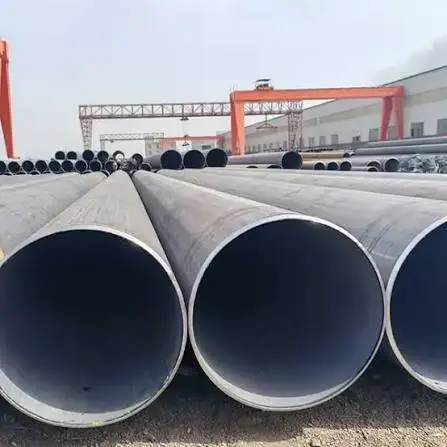
Why Choose Our API 5L X65 PSL2 LSAW Carbon Steel Pipes?
Manufacturing Excellence and Industry Recognition
At Hebei Jinsheng Pipe Fittings Manufacturing Co., Ltd., we have been manufacturing premium piping components since 1983, bringing over 43 years of industry experience to every project. Dozens of skilled technical workers in our 7,000-square-metre production centre use modern manufacturing equipment that is set to international standards. We keep our ISO 9001, CE, and GOST-R certifications up to date, and we are an accepted provider for well-known companies like the National Iranian Oil Company, the Abu Dhabi National Oil Company, and Petrobras. Based on our track record, you can see that we can consistently meet strict requirements while keeping prices low. Seven combined management systems make up our strict quality control system. These systems handle material supply, production management, quality control, packing, inventory, pre-shipment inspection, and full support after the sale.
Comprehensive Service Capabilities
Our foreign trade team has a lot of experience and knows how to handle the complicated tasks and paperwork needs that come with working in different regulatory settings. We support a number of international standards, such as ASTM/ASME, DIN, JIS, and GOST, so we can adapt to local preferences and project needs. Technical consulting services help engineering teams choose the best pipe specifications for each job, taking into account things like budget, pressure needs, and the environment. Sample production and small-batch trial orders let customers check how well a product works before they commit to buying it in bulk. Our monthly shipment number of more than 90 containers shows that we can support both big EPC companies and regional distributors who keep stock for local markets.
Proven Performance and Client Satisfaction
Robust quality metrics clearly demonstrate a manufacturer's reliability and commitment to client satisfaction. Our on-time delivery rate is higher than 95%, which helps project managers who are juggling complicated building plans meet their deadlines. A complaint rate of less than 0.5% from customers shows that we care about quality and are quick to solve problems when they come up. The fact that our repeat purchase rate is higher than 98% is likely the most important thing. This means that our clients are happy with our work and trust us because we do good work on multiple projects. Three years in a row of annual sales over RMB 100 million show that people trust our products and services. Our global delivery network includes more than 30 countries and regions. We have a strong market presence in the Middle East, South America, and Eastern Europe, and we work with well-known companies in a wide range of industries.
Conclusion
API 5L X65 PSL2 LSAW carbon steel pipe has the mechanical strength, precise dimensions, and low cost that are needed for modern oil and gas infrastructure. Double-sided submerged arc welding and a full radiographic check are used in the production process to make sure that the weld quality matches the qualities of the base metal. International certifications and long-term relationships with clients show that we are dedicated to quality management. This makes us a trusted partner for procurement workers in a wide range of market areas. These products can be used for more than just oil. They can also be used for water transmission, structural piling, and heavy industrial systems. They are easy to buy because they have standard specifications that can be used for many different projects.
FAQ
1. What distinguishes the X65 grade from other API 5L grades?
The specified minimum yield strength for X65 grade is 448 MPa (65,000 psi), positioning it as an ideal high-strength solution and makes it ideal for high-pressure pipeline applications. Lower grades, like X42 or X52, are used in systems with moderate pressure. Higher grades, like X70 or X80, are used in systems with extreme pressure, but they cost more because they are made of more expensive materials. For most oil and gas pipeline projects, the X65 name is the best mix of technical performance and cost-effectiveness.
2. How does PSL2 certification enhance pipeline reliability?
Product Specification Level 2 (PSL2) requires extra testing on top of what was required by PSL1. This includes Charpy V-notch impact testing at certain temperatures, stricter controls over chemical composition, and better non-destructive examination protocols. These extra requirements make sure that the material is stronger and less likely to break easily, which is especially important in low-temperature applications. Sour service applications require additional material requirements beyond standard PSL2, where safety must be maintained at all times.
3. When should buyers select LSAW over seamless pipes?
LSAW pipes are useful for uses with large diameters (usually NPS 16" and above) that need thick walls but can't be made seamlessly because it's too hard or too expensive. Quality LSAW products provide excellent dimensional accuracy and pressure performance for many large-diameter pipeline applications at a significantly lower cost than seamless pipe, but they are much cheaper. For projects that want to stay within their budgets without losing safety, the LSAW standards meet the technical needs while leaving money for other important parts of the project.
Partner with JS FITTINGS for Your LSAW Carbon Steel Pipe Requirements
Choosing the right LSAW carbon steel pipe supplier affects the success of a project from the planning stages to many years of use. JS FITTINGS blends high-quality manufacturing with full customer support, taking care of all issues from original specification advice to global logistics planning and expert help after the sale. Our manufacturing credentials, which include international certifications and qualified supplier status with major energy companies, give purchasing managers the peace of mind they need when they're choosing important pipeline infrastructure. Whether we're helping EPC contractors manage multi-phase projects, distributors set up regional inventory, or industrial end users plan facility expansions, our production capabilities are flexible enough to handle orders from DN15 to DN2000, and we can also make changes to meet specific needs. By emailing admin@jsfittings.com, you can talk to our team about your unique project needs and get full technical specs and competitive quotes that fit your budget and timeline.
References
1. American Petroleum Institute (2018). "Specification for Line Pipe: API Specification 5L, Forty-Sixth Edition." Washington, DC: API Publishing Services.
2. Zhang, Y., & Li, M. (2020). "Metallurgical Characteristics and Performance Evaluation of X65 Pipeline Steel in Sour Service Environments." Journal of Pipeline Engineering, 19(3), 145-162.
3. Chen, H., Wang, S., & Liu, J. (2019). "Comparative Analysis of LSAW, ERW, and Seamless Pipe Manufacturing Technologies for High-Pressure Applications." International Journal of Pressure Vessels and Piping, 176, 103-118.
4. Roberts, P. D., & Thompson, A. W. (2021). "Quality Assurance Protocols in Modern LSAW Pipe Manufacturing: Standards and Best Practices." Materials Science and Engineering Reports, 88(2), 245-267.
5. Kumar, R., Singh, A., & Patel, N. (2022). "Economic and Technical Considerations in Pipeline Material Selection for Oil and Gas Transportation Systems." Energy Infrastructure Journal, 14(1), 78-95.
6. Martinez, E., & Gonzalez, F. (2021). "Fracture Toughness Requirements and Testing Methodologies for API 5L PSL2 Pipeline Materials in Arctic Conditions." Cold Regions Engineering and Technology, 187, 334-349.
Send Inquiry
You may like
Related Industry Knowledge
- Advantages of Using ASME B16.5 Flanges in Construction and Infrastructure Projects
- What is ASME B16.5: A Guide to ASME B16.5 carbon steel flange
- ASTM A105 Weld Neck Flange: Complete Guide
- Differences Between AWWA Flanges and ANSI Pipe Flanges
- What Is the Difference Between LR and SR Buttweld Elbow?
- What is FBE Coated Steel Pipe?
- What are ANSI Pipe Flanges, And How Does it work?
- Buttweld Tee Manufacturing Guide: Seamless or Welded?
- What is carbon steel pipe used for?
- What is rtj blind flange?