
Understanding Weld Neck Flanges: Types and Applications






2026-07-22 11:02:59
When industrial projects demand absolute reliability under extreme conditions, the choice of piping components becomes mission-critical. The ASTM A105 weld neck flange stands as the industry's premier solution for high-pressure and high-temperature applications, engineered with a distinctive long-tapered hub that fundamentally transforms how stress transfers through piping systems. This forged carbon steel component delivers unmatched joint integrity by redistributing mechanical loads from the flange body directly into the pipe wall, effectively eliminating the weak points that plague alternative designs. For procurement managers balancing safety compliance, project timelines, and cost control, understanding these flanges represents not just technical knowledge but strategic advantage in ensuring operational continuity across oil and gas, petrochemical, power generation, and infrastructure projects.
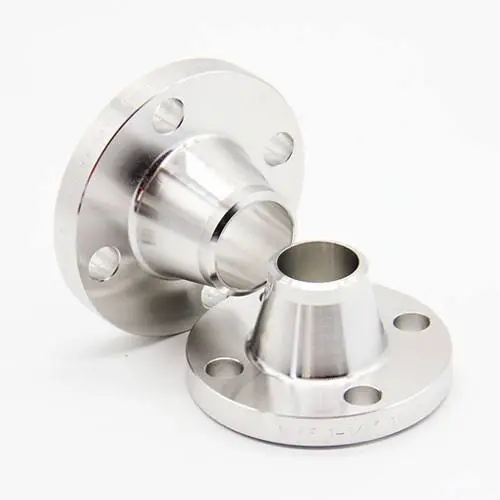
What Are ASTM A105 Weld Neck Flanges? A Complete Overview
Material Specification and Chemical Composition
The material description is what these flanges are built on. ASTM A105 specifies forgings made of killed carbon steel that are specifically made for use at room temperature and higher temperatures in pressure-containing applications. The standard sets strict limits on the chemical make-up: the manganese level must be between 0.60% and 1.05%, the phosphorus must be less than 0.035%, and the sulphur must be less than 0.040%. This careful balance makes sure that the part is very easy to machine while it is being made and very easy to weld when it is being installed. The term "killed" steel means that the material has been deoxidised during production, which eliminates internal gas porosity that could weaken the structure when pressure is applied and removed.
Mechanical Properties and Performance Characteristics
The mechanical qualities directly meet the performance needs of industry. The minimum tensile strength for these forgings is 70,000 psi (485 MPa), and the minimum yield strength is 36,000 psi (250 MPa). The maximum hardness is controlled at 187 HBW. Forging aligns the grain flow of the steel with the shape of the plate, providing directional grain flow and improved mechanical strength that is better than cast options. When normalised (designated A105N), the heat treatment smooths out the grain structure, making the metal tougher and more resistant to impact. This is especially useful in places where the temperature changes or there is vibration.
Dimensional Standards and Pressure Classes
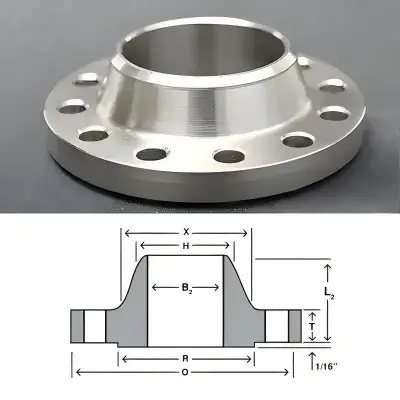
ASME B16.5 sets the rules for dimensions, which makes sure that products can be used anywhere in the world. There are different pressure classes that can be used, ranging from 150# to 2500#. These classes accommodate system pressures ranging from low-pressure utility networks to severe-service supercritical steam lines. There are standard size ranges from ½-inch to 24-inch nominal pipe size, and unique sizes can be made for specific uses. The bore diameter is carefully machined to match certain pipe schedules, like Schedule 40, 80, 160, or XXS. This gets rid of internal diameter mismatches that cause flow problems and erosion-prone breaks.
There are several quality control stops along the way of making. Spectroscopic analysis is used to check the chemical makeup of raw materials against the limits set by the standard. Ultrasonic testing finds internal flaws before they are machined. The heat treatment method uses controlled temperature profiles, and records of the oven are kept so that the process can be tracked. For bolt hole spacing, flange diameter, and hub taper angles, the final dimensional check shows that the parts meet the ASME B16.5 tolerances. These quality controls make sure that every flange that leaves the factory meets the strict needs of energy and infrastructure projects around the world.
Comparison of ASTM A105 Weld Neck Flanges with Other Flange Types
Material Alternatives and Selection Criteria
Choosing the right materials has a big effect on both function and cost. ASTM A350 LF2 flanges are intended for low-temperature service and are qualified through impact testing in accordance with the applicable specification and design code, while ASTM A105 is commonly used for moderate-temperature service, while applications at low temperatures should be evaluated according to the applicable design code and impact-testing requirements. Stainless steel types like ASTM A182 F316 are better at corrosion resistance in acidic or chloride-rich settings, but they cost a lot more. ASTM A105 carbon steel has the best strength-to-cost ratio for normal petroleum service within temperature limits. When comparing original budgets for purchase to the choice matrix, the fluid composition, working temperature ranges, and lifetime cost estimates are taken into account.
Structural Design Advantages
The ASTM A105 weld neck flange form is very different from the slip-on, socket-weld, and threaded options. The long, tapered hub makes a smooth change from the flange ring to the pipe wall thickness, which spreads the twisting loads over a larger area. When compared to slip-on designs, where sudden changes in thickness create failure initiation points, this geometry significantly reduces stress concentration by providing a smoother transition between the flange and the pipe wall. Radiographs can show the whole joint with the full-penetration butt weld, which is not possible with fillet-welded options. This ability to check is very important when it comes to pressure vessel codes that need non-destructive testing for critical service classifications.
Standards Compatibility and Engineering Integration
In addition to ASME B16.5 standards, these flanges work with a number of other international standards. In Europe, systems must be compatible with EN 1092-1, and in Russia, they must be compliant with GOST 12821. Japanese buildings follow the JIS B2220 guidelines. Reliable makers keep certification grids that show how dimensions can be swapped between standards. This makes buying things around the world easier. When engineers choose flanges for international projects, they need to make sure that the seller has an ISO/IEC 17025-certified testing centre. This makes sure that the measurements are accurate enough to meet international standards.
Corrosion Resistance and Durability of ASTM A105 Weld Neck Flanges
Inherent Corrosion Characteristics
It is easy to predict how carbon steel will rust in different settings. When the air is dry, surface rusting develops gradually under dry atmospheric conditions, although the corrosion products do not provide long-term protection like those formed on weathering steels. General corrosion speeds up in water, and the rates depend on the pH, the amount of dissolved oxygen, and the concentration of chloride. When hydrogen sulphide is present in sour gas applications, it can contribute to sulphide stress cracking when hardness, stress level, and service conditions meet the conditions defined by NACE MR0175/ISO 15156, which needs to be carefully controlled during heat treatment and material selection. By understanding these basic behaviours, engineers can come up with the right safety measures instead of selecting materials that aren't up to the task.
Protective Coating Systems
A number of tried-and-true coating systems make things last longer in harsh environments. Hot-dip galvanising is generally intended for atmospheric- or moderate-temperature service and is not suitable for elevated-temperature applications. Fusion-bonded epoxy coatings, which usually have a layer of 12 to 16 mils, protect against chemicals in process settings. For pipeline applications, three-layer polythene systems protect against corrosion and damage from mechanical forces. When choosing a coating, the process weighs the costs of application and the amount of surface preparation that needs to be done against the working temperatures, abrasion exposure, and service life that is needed.
Real-World Performance Data
Field experience from oil and gas sites shows that corrosion control works. A crude oil pipeline project in the Middle East that uses epoxy-coated ASTM A105 flanges has been running for 18 years with no corrosion-related problems, even though the temperature outside has been over 120°F and there is a small amount of H₂S in the air. A natural gas facility in North America uses galvanised flanges for atmospheric utility service in atmospheric service. After 12 years, inspection records show that the zinc has only worn off on the surface. These case studies show that choosing the right materials and protection systems is the key to long-term performance that is reliable. These systems should be matched to the actual service conditions, not to overly strict specifications.
Comprehensive maintenance programs, including routine visual inspections, significantly extend flange service life. These protocols identify coating degradation before it starts to attack the base metal. Ultrasonic thickness readings find general patterns of rust, which lets you plan maintenance ahead of time. Checking the torque of the bolts stops the seal from relaxing, which speeds up joint rust through seepage. Regular maintenance, usually once a year for key services, lets you catch problems as they're starting to show up during planned downtimes instead of when they happen without warning, which can lead to higher fix costs and lost production.
Procurement Guide: Buying ASTM A105 Weld Neck Flanges for Global B2B Clients
Quality Verification and Certification Requirements
Authentic product paperwork keeps low-quality materials from getting into important systems. For traceability, each flange must have solid marks that say the material grade, pressure class, maker name, and heat number. Material Test Reports (MTRs) record the results of chemical analyses and mechanical tests done at a certain production heat. Third-party inspection papers from companies like Lloyd's Register or Bureau Veritas show that the manufacturing process is following the rules. These papers should be clearly required by the procurement specs, and the contract terms should allow for material rejection based on missing or inconsistent certification packages.
Supplier Evaluation Criteria
Choosing dependable sources greatly lowers the risks of a project. JS FITTINGS has all the traits that make a top seller stand out: they have been manufacturing critical piping components since 1983, with an annual production capacity exceeding 30,000 tonnes of products every year, and they are an approved vendor for national oil companies like NIOC and ADNOC. The business uses advanced testing tools like spectral analysers for chemical verification and ultrasonic flaw detection systems to keep up with ISO9001 quality management systems. Shipping more than 90 containers per month demonstrates the logistics capability required by the logistics skills needed to meet project delivery deadlines. The fact that the repurchase rate is above 98% shows that the quality is consistent, which leads to long-term buying relationships.
Pricing Dynamics and Cost Optimisation
The price of flanges is affected by more than just the cost of raw materials. The pressure class has a big effect on the price; for example, Class 2500 flanges need a lot more material and work to make them than Class 150 equivalents. Size doesn't have a straight-line effect on unit costs; forgings with big diameters cost more because they need special tools to make them. Order numbers allow for economies of scale, and savings for buying in bulk usually start at 100-piece lots. Lead times range from a few days for stock items to eight to twelve weeks for custom forgings. Strategic procurement weighs the costs of keeping inventory against the benefits of buying in bulk. To get the best buying power, requirements are often consolidated across project phases.
Logistics planning keeps purchase savings from going down the drain because of inefficient shipping. Optimising containers lowers the cost of freight per unit, and experienced providers like JS FITTINGS can help with load planning. Export paperwork, clearing customs, and inland transportation all need to be carefully coordinated for international shipping. Reliable providers have established transportation networks that offer reliable delivery schedules. For example, JS FITTINGS has an on-time delivery rate of over 95%, which is very important for keeping construction schedules on track when ASTM A105 RTJ Weld Neck Flange for High Pressure Pipelines delays can have expensive effects on the schedule.
Conclusion
ASTM A105 weld neck flanges are very advanced technically, and they solve one of the biggest problems that procurement professionals face: keeping costs down while minimising risk in mission-critical applications. The tapered hub design, precise bore matching, and inspectable weld joints all improve the structure, which leads to operating dependability that can be measured in years of nonstop service. Material requirements based on ASTM standards ensure uniformity around the world, and different pressure class options can be used in a range of situations, from distribution networks to upstream oil systems. Strategic source selection, which includes giving manufacturing experience, quality certifications, and transportation skills the most weight, changes buying from a one-time transaction to risk management that protects project schedules and practical uptime throughout the lifecycle of an asset.
FAQ
1. What differentiates ASTM A105 from A105N weld neck flanges?
The ending 'N' stands for normalised heat treatment, a controlled process of heating and cooling with air that improves the grain structure better. Normalization enhances the material's toughness and impact resistance, especially at lower temperatures that are still within its working range. A105N is often chosen by end users as the standard to make sure that the metallurgical qualities are the same across production lots, even when the conditions of use don't exactly call for it.
2. Can these flanges be used in cryogenic applications?
Low temperatures make ASTM A105 carbon steel brittle, and -20°F (-29°C) is the coldest it can be used. For cryogenic uses, you need materials that are made to be tough at low temperatures. One example is ASTM A350 LF2 forgings, which maintain adequate toughness down to -50°F by controlling the amount of nickel they contain and heating them.
3. Why does pipe schedule matter when ordering weld neck flanges?
To keep the flow smooth, the flange hole must match the inside diameter of the pipe. When schedules don't match up, internal steps are made where the speed of the fluid changes quickly, which causes turbulence, erosion, and stress concentration. By giving details about the pipe schedule, you make sure that the manufacturer machines the bore to the right diameter so that the flow can change smoothly.
4. What welding requirements apply during installation?
For full-penetration butt welds, the end must be prepared with an angle, usually at 37.5 degrees. ASME B31.1 or B31.3 codes say how to weld and what the preheat requirements are based on the thickness of the material and the temperature of the air around it. For wall thicknesses that are too thick, a post-weld heat treatment may be needed to ease any remaining stresses.
Partner with Proven Expertise for Your Critical Piping Requirements
JS FITTINGS has been making high-quality products for over 40 years and is the best choice for business projects that need unwavering quality and dependability. We know how important it is for you to make the right buying choices because we are a certified ASTM A105 weld neck flange maker that is approved by NIOC, ADNOC, and Petrobras. Our 7,000-square-metre factory makes more than 800 tonnes of pipe fittings every month. We use ISO9001-certified quality systems and high-tech testing tools to make sure the materials are correct and the sizes are correct. We keep a ready supply of materials in pressure classes from 150# to 2500#, so we can quickly meet the needs of projects and also do custom cutting for unique needs. Our skilled international trade team can be reached at admin@jsfittings.com to talk about your specific application needs and receive detailed technical specifications that are tailored to your operating conditions. These will come with full material certifications and competitive pricing that reflect our position as a trusted ASTM A105 weld neck flange supplier to global energy infrastructure projects.
References
1. ASME B16.5-2020, Pipe Flanges and Flanged Fittings: NPS 1/2 through NPS 24 Metric/Inch Standard, American Society of Mechanical Engineers, New York.
2. ASTM A105/A105M-21, Standard Specification for Carbon Steel Forgings for Piping Applications, ASTM International, West Conshohocken, Pennsylvania.
3. Harvey, J.F., Theory and Design of Pressure Vessels, Van Nostrand Reinhold Company, New York, 1985.
4. Bickford, J.H., Gaskets and Gasketed Joints, Second Edition, CRC Press, Boca Raton, Florida, 2008.
5. Nayyar, M.L., Piping Handbook, Seventh Edition, McGraw-Hill, New York, 2000.
6. Singh, R. and Khamba, J.S., "Systematic Review of Flange Joint Integrity in Pressure Systems," International Journal of Pressure Vessels and Piping, Volume 172, 2019.
Send Inquiry
You may like
Related Industry Knowledge
- Understanding Weld Neck Flanges: Types and Applications
- Custom Stainless Steel Buttweld Elbow for Chemical Plants
- Buttweld Elbow Dimensions Guide for ASTM A234 WPB Fittings
- Differences Between AWWA Flanges and ANSI Pipe Flanges
- What are ANSI Pipe Flanges, And How Does it work?
- Slip-On Flanges: Types, Uses, and Installation Guide
- Buttweld Elbow vs Socket Weld Elbow: Key Differences Explained
- Industrial Buttweld Reducer Selection for Refinery Projects
- How to bolt to flanges with threaded holes?
- What causes porosity in carbon steel pipe welding?