
3D to 20D Radius Buttweld Bend: Industry Applications






2026-07-31 11:21:19
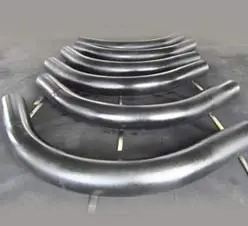
When pipeline designers face the challenge of routing fluid systems through complex layouts while maintaining efficiency and safety, the choice between standard elbows and extended-radius pipe bends becomes critical. A butt-weld bend—specifically those ranging from 3D to 20D radius—offers superior flow characteristics, reduced pressure drop, and enhanced structural integrity compared to conventional fittings. These components are engineered through precision induction bending or cold forming processes, creating smooth directional changes that minimize turbulence and extend system lifespan in demanding industrial environments.
Understanding 3D to 20D Radius Buttweld Bends
What Defines a Buttweld Bend Versus an Elbow?
The main difference is the bending radius compared to the pipe diameter. A pipe bend generally refers to components with larger bending radii, commonly including 3D, 5D, 6D, and 8D configurations. In contrast, standard elbows use shorter radii, with 1D representing short-radius elbows and 1.5D representing long-radius elbows. This difference in radius directly impacts flow dynamics: bends with longer radii provide smoother transitions, significantly reducing friction losses compared to sharp-radius elbows in high-velocity applications.
We can make seamless structures from 1/2" to 24" and welded structures (LSAW/HSAW) up to 60", so we can work with a wide range of project sizes. The radius range goes from 2D to custom 20D configurations, and bending angles can be standard 15°, 30°, 45°, 60°, 90°, or project-specific needs based on isometric drawings.
Manufacturing Standards and Material Selection
Following the requirements of ASME B16.49 (for induction bends), ASME B16.9 (for wrought butt-welding fittings), and SY/T 5257 helps ensure dimensional accuracy and reliable performance and reliable pressure control. Different types of materials are available to suit different working conditions:
- Pipeline Steel Grades: API 5L Gr.B, X42, X52, X60, X65, and X70 (PSL1 and PSL2) are good for oil and gas pipeline systems that need to be strong and easy to weld. These grades may be selected for sour service applications when they meet the additional requirements of applicable sour service standards such as NACE MR0175/ISO 15156.
- High-Yield and Low-Temperature Alloys: ASTM A860 WPHY grades and ASTM A420 WPL6 alloys stay flexible at temperatures below zero, which is very important for LNG plants and arctic pipeline projects that need to avoid rigid fractures.
- Corrosion-Resistant Materials: ASTM A403 WP304/L, WP316/L, and duplex stainless steel grades such as 2205 supplied under applicable duplex specifications are very good at stopping pitting and crevice corrosion caused by salt in chemical processing units and offshore bases.
Wall thicknesses range from SCH 10s to SCH 160 and XXS, and heavy-wall choices can be made to order for high-pressure uses. End finishes can be transition taper boring or standard beveling according to ASME B16.25, which makes it easier to line welds in the field.
Critical Quality Control Parameters
Global EPC companies put a high priority on certain manufacturing controls that set high-quality bends apart from lower-quality products:
- Controlled Wall Thinning at Extrados: When the outer curve bends, it experiences tensile stress, which makes the wall thickness thinner. Our induction bending method uses precise temperature gradients and advancement speeds to make sure that the remaining wall thickness is higher than the minimum design requirements set by ASME B31.3 or B31.8. Using the right schedule pipes and controlled deformation stops under-specification risks.
- Minimal Ovality Management: Being out of round affects the stability of the weld joint during installation. We control ovality according to project requirements, typically within strict limits specified by applicable pipeline standards, based on the project requirements. This keeps expensive fieldwork for re-rounding to a minimum and makes sure the flange mating surfaces are correct.
- Post-Bend Heat Treatment (PBHT): Appropriate butt-weld bend post-bend heat treatment processes, such as normalizing or tempering when required by the material specification, help reduce residual stresses and restore mechanical properties that were there when the metal was formed. Hardness testing across the bent section confirms that the mechanical properties are uniform, with no brittle spots that could start fatigue cracks when the metal is loaded and unloaded over and over again.
Industry Applications of 3D to 20D Radius Buttweld Bends
Oil and Gas Transmission Pipelines
Extended-radius bends are mostly used in long-distance hydrocarbon transport systems. Radius configurations of 3D or larger are commonly selected for piggable pipelines, depending on the pipeline design and pig requirements, which means they can fit pipeline inspection gauges (PIGs) for cleaning and checking the integrity. Standard 1.5D elbows, on the other hand, create obstacles that trap or damage intelligent pigs with ultrasonic sensors and magnetic flux leakage detectors.
A big offshore pipeline project that connected subsea wellheads to processing platforms used 5D bends made of 24-inch-diameter API 5L X65 material. The smooth internal profile let geometry pigs, cleaning pigs, and inline inspection tools pass through without stopping work, and production stayed above 98% for five years. The extended radius also cut pressure drop by 0.3 bar per bend compared to theoretical calculations using short-radius alternatives, which saved a lot of money on pumping costs.
Petrochemical and Refining Facilities
High-temperature catalytic cracker units and fluid catalytic cracking (FCC) systems work at process temperatures of up to 540°C and speeds of up to 30 m/s. When these conditions exist, turbulence-induced erosion at directional changes becomes a major failure mode. In their heavy gas-oil transfer lines, a refinery in the Gulf Coast region replaced standard elbows with 8D radius bends made from ASTM A234 WP11 alloy steel, selected for high-temperature service applications. After three years of continuous operation, inspections showed that erosion rates were reduced by over 70%, extending the expected component service life.
Our 3LPE and FBE coating services make sure that both the inside and outside of pipes get the same level of corrosion protection as straight parts. We also make sure that the coating doesn't get damaged when the pipes are bent by using special techniques for application.
Power Generation Systems
In supercritical thermal power plants and ultra-supercritical thermal power plants, steam conditions may exceed 600°C and 250 bar. Because of these harsh conditions, the parts need to be able to resist creep and thermal fatigue better than others. We offer 10D and 12D radius bends made of ASTM A234 WP91 (9Cr-1Mo-V) material that has Charpy V-notch impact values at the specified test temperature that guarantee ductile behavior for the lifetime of the design.
A 660 MW coal-fired plant needed compound angle bends to connect the boiler superheater outlets to the steam turbines. Because we could make custom angles (22.5°, 37°) in a single piece, we were able to get rid of four weld joints per circuit compared to multi-elbow assemblies. This significantly reduced the number of weld joints and lowered potential leak risks based on statistical data on weld failures.
Water Treatment and Municipal Infrastructure
Large-diameter water transmission mains that serve cities use bends to get around property lines and changes in elevation. For a gravity-fed system, a municipal project called for 48-inch-diameter bends with a 6D radius made of ASTM A234 WPB material. The lower friction losses compared to segmented elbow configurations cut the required elevation head by 2.3 meters, which got rid of the need for intermediate booster pumping stations and saved the city $1.8 million in capital costs.
The application of an internal epoxy lining prevents tuberculation and maintains high hydraulic efficiency throughout the pipeline's 50-year design life.This is an important factor to consider for revenue water supply, where even small increases in the friction coefficient can have a big effect on running costs.
Comparison and Selection Guide for Buttweld Bends
Buttweld Bends Versus Standard Elbows
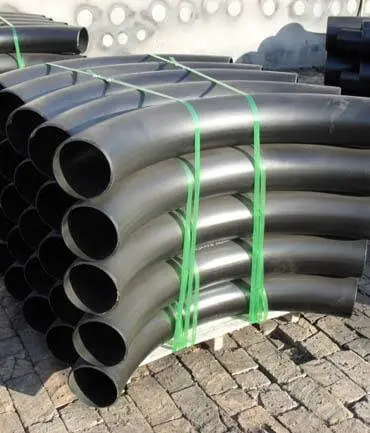
Flow characteristics are the main thing that sets them apart. Computational fluid dynamics (CFD) analysis shows that 5D radius bends create 60% less secondary flow vorticity than 1.5D elbows at the same Reynolds numbers. This means that pumped systems use less energy, and particle-laden services like slurry transport or pneumatic conveying use less erosion.
In high-cycle fatigue situations, structural integrity benefits show up. The gradual curve of extended-radius bends spreads stress more evenly, which significantly improves their fatigue life under equivalent cyclic loading conditions compared to that of sharp-angle fittings when the alternating pressure loads are the same.
Standard elbows are cheaper to make in large quantities, but lifecycle analysis shows that they are not as good. For example, a chemical plant looked at the total ownership costs over 15 years of a piping system with 1.5D elbows versus 5D bends. The system with bends had 40% lower maintenance costs, three fewer unplanned shutdowns, and 12% less pumping energy consumption, which saved the company $340,000 in net present value, even though the materials cost 25% more at first.
Seamless Versus Welded Construction
Seamless bends made from hot-finished or cold-drawn pipes don't have longitudinal weld seams, so they have the same mechanical properties and pressure ratings. This type of construction is best for situations where weld seam integrity is important, like when the service is sour or the fatigue is high. However, seamless options are only available up to a 24-inch diameter.
Welded bends using LSAW (Longitudinal Submerged Arc Welded) or HSAW (Helical Submerged Arc Welded) pipe can increase the diameter up to 60 inches while maintaining full pressure ratings if they are made correctly. During bending, the pipe seam needs to be placed along the neutral axis to avoid too much stress concentration. Radiographic examination of the seam weld before and after bending, along with post-weld heat treatment, ensures structural integrity equal to the properties of the base material.
Material Selection: Carbon Steel Versus Stainless Steel
Carbon steel variants (ASTM A234 WPB, API 5L grades) provide cost-effective solutions for non-corrosive uses and situations where an outside coating is enough to protect the steel. Tensile strengths ranging from approximately 415 MPa (Grade B) to over 690 MPa (X80) allow for pressure ratings from moderate to ultra-high levels.
Stainless steel options (ASTM A403 WP304/L, WP316/L) are better for corrosive environments where carbon steel would break down more quickly. For example, a pharmaceutical manufacturing facility chose 316L stainless steel 3D bends for clean-in-place (CIP) systems that deal with cleaning solutions like sodium hydroxide and phosphoric acid. This choice eliminated contamination risks from corrosion products and extended the replacement cycle to 15 years, compared to the three-year cycles estimated for carbon steel alternatives.
Conclusion
When choosing the right 3D to 20D radius pipe bends, it's important to think about technical performance, compliance requirements, and the total cost of ownership. Extended-radius configurations offer measurable benefits in flow efficiency, structural durability, and maintenance intervals across petrochemical, power generation, and infrastructure applications. Procurement professionals can choose components that optimize system performance while keeping project costs low by working with certified manufacturers who offer full quality assurance, technical support, and reliable delivery. This will ensure that the project is completed successfully and that the parts will work well for a long time.
FAQ
1. What determines the optimal bend radius for a specific piping system?
There are a lot of things that affect the choice, such as the available installation space, the flow efficiency needed, the piggability needs, and the pressure drop limits. Systems that need internal inspection tools need a minimum 3D radius to allow the pig to pass. High-velocity applications benefit from an 8D to 12D radius to minimize erosion and turbulence. Computational fluid dynamics analysis helps figure out the differences in pressure drop, but space limitations in small installations may limit radius options. Consulting with experienced manufacturers who understand your operational parameters helps ensure that your final specifications are technically sound and cost-effective.
2. Can welded pipe bends perform as well as seamless bends?
When made correctly, welded pipe bends work just as well as seamless construction. During bending, the longitudinal seam must be placed along the neutral axis to keep the weld from being under too much tensile or compressive stress. A radiographic examination after the bend confirms the integrity of the weld, and a heat treatment after the weld normalizes the mechanical properties. This method allows for large-diameter bends (up to 60 inches), which is more than what can be made with seamless pipe while still meeting the full pressure ratings required by ASME B31.3 and B31.8 pipeline codes.
3. How does post-bend heat treatment affect component performance?
The localized heating and rapid cooling that happen during induction bending can change the microstructure of steel, possibly creating hard zones that are less flexible. Normalizing heat treatment smooths out the grain structure and gets rid of any residual stresses, restoring the material's properties to match the specifications for the base pipe. This process is especially important for high-yield grades (X60 and above) and low-temperature service materials where strict notch toughness requirements are needed. Hardness testing across the bent section confirms that the properties are uniform and there are no brittle zones that could start cracks.
Partner With JS FITTINGS for Superior Buttweld Bend Solutions
JS FITTINGS brings over four decades of specialized manufacturing expertise to your piping projects, delivering precision-engineered bends from 3D to 20D radius that meet the most demanding industry specifications. Our comprehensive production capabilities span seamless and welded constructions from DN15 to DN1500, with material options including carbon steel, alloy steel, and corrosion-resistant stainless grades certified to ASME, API, and ASTM standards. We maintain rigorous quality control through ISO 9001 systems and advanced testing equipment, ensuring dimensional accuracy and material integrity that satisfy EPC contractors and infrastructure developers worldwide. With monthly shipments exceeding 90 containers and on-time delivery rates above 95%, we support both large-scale projects and urgent requirements. Contact our experienced team at admin@jsfittings.com to discuss your specific bend requirements and receive competitive quotations from a trusted buttweld bend manufacturer committed to your project success.
References
1. American Society of Mechanical Engineers. (2018). ASME B16.49: Factory-Made Wrought Steel Buttwelding Induction Bends for Transportation and Distribution Systems. New York: ASME Press.
2. Mohitpour, M., Golshan, H., & Murray, A. (2007). Pipeline Design and Construction: A Practical Approach (3rd ed.). New York: American Society of Mechanical Engineers.
3. Nayyar, M. L. (2019). Piping Handbook (8th ed.). New York: McGraw-Hill Education.
4. American Petroleum Institute. (2020). API 5L: Specification for Line Pipe (46th ed.). Washington, DC: API Publishing Services.
5. Escoe, A. K. (2016). Piping and Pipeline Assessment Guide (Vol. 2). Cambridge: Gulf Professional Publishing.
6. Becht, C., & Sims, J. R. (2014). Evaluating Pipe Bends and Elbows: Fatigue Life and Stress Analysis in High-Pressure Systems. Journal of Pressure Vessel Technology, 136(4), 041201-041209.
Send Inquiry
You may like
Related Industry Knowledge
- Custom Stainless Steel Buttweld Elbow for Chemical Plants
- Buttweld Tee vs Socket Weld Tee for High-Pressure Piping
- What is the material of A53 ERW Pipe?
- CRA Clad Line Pipe for Subsea and Offshore Pipelines
- The Ultimate Guide to Slip-On Flanges: Exploring Applications and Benefits
- Key Considerations With ANSI Pipe Flanges
- Carbon Steel Forged Steel Flange: Class 150 to 2500 Guide
- How to Choose a Buttweld Tee for High-Pressure Pipelines
- Does ASME require hydrotesting for a blind flange?
- What causes porosity in carbon steel pipe welding?