
90 degree buttweld elbow Standards: ASME B16.9 Explained






2026-11-05 11:31:06
A 90 degree buttweld elbow meets ASME B16.9 when its shape, end diameters, center-to-end dimensions, tolerances, and markings match the standard for factory-made wrought butt-welding fittings. That match lets elbows from different qualified makers fit the same pipe. ASME B16.9 does not set a pressure rating, though. The material specification, such as ASTM A234, and the governing piping code, such as ASME B31.3, decide that. I wrote this guide for EPC teams, distributors, installers, project owners, and plant buyers who want to specify these fittings correctly the first time.
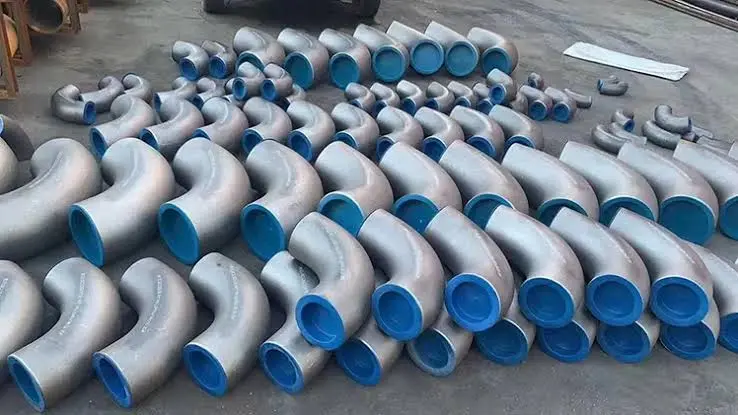
What Is a 90 Degree Buttweld Elbow?
How a Butt Weld Connection Works
A butt weld elbow is a part made of steel that is forged or hot pressed. The curved ends make it easy to connect straight to the pipe. The pipe and joint are now connected by a long run. Because it turns the flow at a right angle, it is often simply called a 90-degree elbow. These are the angles that pipeline systems use most of the time. The weld has a smooth bore and not many places where water can leak out. That's why engineers use butt welding when threaded or socket-weld elbows can't handle the heat and pressure of the job.
Long Radius and Short Radius Elbows
The radius tells you how tight the turn is. There is a 1.5D radius in the middle of a long radius (LR) elbow that is 1.5 times the size of the pipe. The radius (SR) of a 1.0D elbow is not very long. The long turn makes the flow easier and cuts down on friction loss. This means that it can be used on most lines, including those that connect to pumps and valves. When there isn't much room, installers choose the small turn. In exchange, you get more pressure drop. You should ask about the radius before you order if it's not shown in the picture. You cannot interchange Long Radius and Short Radius elbows without modifying the piping isometric drawing, as their center-to-end dimensions differ significantly.
90 Degree vs. 45 Degree Fittings and Typical Uses
A 45-degree elbow makes the line bend softly, so there are fewer waves. When the arm is at a 90-degree angle, the full right-angle turn takes the least time. When you put two 45s together, you can make a slow offset. A 90 is used when the route needs to turn. A lot of people use it for OEM equipment, water treatment, power generation, sanitary processing, oil and gas lines, and making fabricated piping skids. For frames and racks made of steel building and structural pipes, the right angle works well. The other kind is a 180-degree return bend elbow.
ASME B16.9 Explained: What the Standard Covers
Scope of ASME B16.9
It is covered by ASME B16.9 for parts that are worked and butt-welded in a workshop. Caps, elbows, tees, and reducers are all in this group. For a 90-degree butt-welded elbow, it shows the overall sizes, end diameters, tolerances, and markings. It also tells companies what to do while they are making things, like heating and shaping. The sizes are set, so an LR butt weld 90 degree elbow made by one company can be used with a spool made around an elbow made by another. Due to this, EPC teams can switch sources without having to make new isometrics. This helps wholesalers keep their stock.
What ASME B16.9 Does Not Do
In ASME B16.9, there isn't just one pressure class for each elbow. The code isn't for full pressure. The type of material, the width of the wall, the design temperature, the quality of the weld, and the project's code all affect whether or not the pressure is right. ASME B31.3 sets the rules for process pipes, and ASME B31.1 sets the rules for power pipes. People who want to buy something should read B16.9 to get an idea of the size and quality. Thereafter, procurement teams should review the governing piping design code (e.g., ASME B31.3) and the piping design engineer's wall thickness calculations. A lot of the time, people skip that second step when they specify something.
How It Differs From Related Standards
In ASME B16.5, it talks about flanges and flanged fittings, which are places where a line bolts to itself. Because butt weld ends typically require a 37.5-degree bevel, ASME B16.25 specifies the end preparation for buttwelding. For parts made of carbon and stainless steel, ASTM A234 tells us what kinds of materials we need. The same goes for fittings made of wrought austenitic stainless steel that follow ASTM A403. Test or paper rules might be in the project requirements. That is, a full purchase order lists all standards that apply, not just ASME B16.9.
90 Degree Buttweld Elbow Dimensions, Materials, and Pressure
Dimensions and Size Chart
The listed size does not always mean it will fit. Check the outside diameter (NPS or DN), wall thickness, distance from center to end, radius, and angle. To avoid high and low points at the weld, the wall and the pipe it fits should be the same size. Below are some key ASME B16.9 dimensions. Compare them to the edition specified in your contract.
| NPS (DN) | Outside diameter, mm | LR center-to-end, mm | SR center-to-end, mm |
|---|---|---|---|
| 2 (50) | 60.3 | 76 | 51 |
| 4 (100) | 114.3 | 152 | 102 |
| 6 (150) | 168.3 | 229 | 152 |
| 8 (200) | 219.1 | 305 | 203 |
We have sizes from 1/2 inch to 48 inches in SCH 10, SCH 40, and SCH 80.
Material Grades
ASTM A234 WPB is mostly used for work that needs to be done at low to high temperatures. ASTM A403 WP304 and WP316 talk about austenitic stainless steel that doesn't rust. When joined, low-carbon types like 304L and 316L work well. Some kinds of alloy steel can handle being heated up. You can pick the grade that meets your needs for heat, damage, fluids, impacts, and any hydrogen or sour service. When specifying nominal wall thickness, engineers must incorporate an adequate corrosion allowance.When you connect two pieces of pipe, the elbow grade should always match.
Pressure Considerations
You can't tell how much pressure something can hold by looking at a sticker. What thickness is needed for the design pressure and temperature based on the project code? A thicker schedule gives you more wall, but the designer still has to figure that out. Forming integrity is equally vital. During elbow push-forming, tensile forces induce wall thinning along the extrados (outer curve). We utilize a hot-mandrel push-forming process to ensure that extrados thinning remains strictly within ASME B16.9 tolerances while preserving a smooth internal contour. Smooth flow paths reduce turbulence and friction loss even in systems that are moving fast.
How to Choose and Compare
A Step-by-Step Selection Method
I do five things when I help a buyer choose a fitting:
- Check the NPS or DN again, as well as the real outside diameter and wall thickness.
- Pick the radius that gives you the most flow, space, cleaning, and pressure drop.
- Pick the right kind of metal for the pipe, the temperature, and the situations where it will rust.
- Choose the schedule based on the calculations used in the design, not on how it looks or a pressure class that you think it will be.
- Make a list of the papers you need, such as material, conformance, NDE, and PMI papers. You can find things with the help of a heat number.
When you do things this way, most mistakes are found before they happen in the field.
Comparing Connection Types and Options
This method is best for making strong, long-lasting lines because it leaves a smooth hole and doesn't let as many leaks happen. Threaded and socket-weld elbows can be used for smaller jobs that don't need as much force. A long-radius but weld 90-degree elbow reduces pressure loss, but a short-radius elbow takes up less space. There are differences in size, specs, levels of checking, and cost between pipe bends that have and don't have a lengthwise weld. There is less flow area in Schedule 80 than in Schedule 40 because its walls are thicker. It also weighs more and costs more.
Common Procurement Risks
A lot of mistakes cause delays and disagreements. When people buy things, they only look at the nominal size and don't use ASME B16.9 as a pressure number or pay attention to the center-to-end measurements. Sometimes they let you use materials that haven't been approved or don't explain how to weld and inspect them. The fix comes with a full buy specification that lists the size, radius, timeline, grade, standards, documents, and NDE. Think about the total value as well. This includes being able to keep track of it, making sure the quality stays the same, the wait time, and being able to place another order. If you need to fix one spool, a low unit price might not save you money.
Working With a Supplier: Support, Checklist, and Recommendations
Supplier Support for Buyers
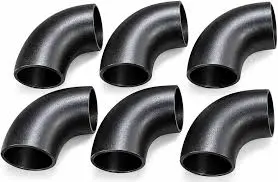
A capable 90 degree buttweld elbow manufacturer should show their product range, dimensional control, traceability, certifications, and export experience. They have had a factory that is more than 7,000 square meters since 1983. Clients worldwide rely on our high-integrity piping components. As part of our ISO 9001 quality control system, we hunt for flaws with spectral monitors and other tools. We maintain certified quality management systems including ISO 9001, CE, and GOST-R, alongside approved vendor qualifications for leading global energy corporations like PETROBRAS and ADNOC. More than 98% of customers buy from us again, and less than 0.5% of customers complain. This discipline ensures that we maintain an on-time delivery rate exceeding 95%.When someone places an OEM or custom order, our team goes over the specs, signs off on the plans, builds the product, checks it, files the paperwork, and ships it. Quotes spell out Incoterms, how to pay, and how long the deal is good for.
Purchase Order Specification Checklist
If you choose a good buy order, the steps you need to take are clear. Not only do you need to say the outside diameter, the schedule, the center-to-end dimension, ASME B16.9 compliance, the bevel, and the tolerances, but you also need to say if the shape is 90 degrees, LR or SR, NPS or DN. How much pressure and temperature should the design be for, what is the fluid, what is the pipe code, what is the heat treatment, and what are the impact requirements? It's possible to talk about quality and delivery when you write down things like mill certificates, conformity documents, inspection reports, NDE, PMI, heat-number traceability, marking, packaging, quantity, schedule, destination, and commercial terms. The other things we can do for you are metal coats, black paint, varnish, and epoxy.
Final Recommendations by Application
One elbow doesn't fit all situations. For industrial plumbing in general, an ASME B16.9 long radius elbow made of the right material and following the right schedule is often a good choice. When engineers design systems that have to deal with a lot of heat or pressure, they have to check the material, wall thickness, design conditions, welds, and that the system meets all the rules. It's possible that service that is acidic or clean will need low-carbon types, controlled finishing, or stainless steel. If distributors and OEM buyers want to find a long-term partner, they should think about things like batch consistency, traceability, capacity, delivery performance, and the ability to handle repeat orders.
Conclusion
A 90 degree buttweld elbow creates a strong, low-leakage turn when the buyer defines it completely. ASME B16.9 sets rules for marks, measures, and clearances. This means that elbows made by approved companies can be used with each other, but it doesn't say how much pressure can be put on them. What makes something right? These include the governing piping code, design temperature, wall schedule, and certified material grade (such as ASTM A234 WPB for carbon steel or ASTM A403 WP304/WP316 for stainless steel). A long radius keeps the pressure drop low, while a short radius saves space. It's not always better to use Schedule 80 or Schedule 40, but butt welding doesn't let as many leaks through as loop or socket welding. People have the most trouble buying when they only order by nominal size or aren't clear about what the materials, inspections, and papers are.
FAQ
1. Does a 90-degree butt-weld elbow fall under ASME B16.9?
Yes. There are limits, measurements, and markings in the standard for both long and short radius 90-degree elbows.
2. How do long radius and short radius elbows differ?
The pressure drop is less for a long radius when a 1.5D central radius is used. 1.0D is used for a short radius because it takes up less space.
3. Does ASME B16.9 provide one pressure class?
Things that work rely on the pipe code, the material, the schedule, the weather, and the quality of the welds.
4. Is Schedule 80 always better than Schedule 40?
Schedule 80 has a thicker wall than Schedule 40, which means it costs more, weighs more, and has less flow area.
5. What do you need for a quotation?
Send NPS or DN, along with the location, the due date, the plan, the grade and standard of the material, the amount, the need for inspection, and the radius.
Request a 90-degree butt-weld elbow quotation
Tell JS FITTINGS the size, number, radius, material grade, plan, location, need for review, and due date of the job. We check the measurements, suggest good materials, confirm the lead time, and make a clear proposal as an expert 90 degree buttweld elbow manufacturer. It takes us an hour to answer questions. Email admin@jsfittings.com to learn more about our ASME B16.9 elbows for projects, sales, OEM, and marketing.
References
1. ASME B16.9, Factory-Made Wrought Buttwelding Fittings, 2018
2. ASME B16.25, Buttwelding Ends, 2017
3. ASME B31.3, Process Piping, 2022
4. ASME B31.1, Power Piping, 2022
5. ASTM A234/A234M, Standard Specification for Piping Fittings of Wrought Carbon Steel and Alloy Steel for Moderate and High Temperature Service, 2019
6. ASME B16.5, Pipe Flanges and Flanged Fittings, 2020
Send Inquiry
You may like
Related Industry Knowledge
- Buttweld Tee Weight Chart and Thickness Standards Guide
- What is stainless steel pipe used for?
- How do ERW and EFW carbon steel welded pipes differ?
- Plate Flange vs Slip On Flange: What Is the Difference?
- What Is a Buttweld Bend? Types, Radius & Standards
- What ANSI Pipe Flanges Are Commonly Applied Today?
- Understanding Long Radius Buttweld Elbow: Essential Components for Your Construction Projects
- API 5L Seamless Steel Line Pipe for Pipelines Explained
- What Are the Types of Buttweld Elbows in ASME B16.9 Systems?
- When to use threaded flanges?