
API 5L X52 PSL2 Carbon Steel Line Pipe for Oil and Gas






2026-08-04 09:41:07
API 5L X52 PSL2 carbon steel line pipe stands as a cornerstone in modern oil and gas pipeline infrastructure. This industry carbon steel pipe delivers exceptional mechanical strength, full compliance with rigorous API specifications, and cost-effective lifecycle performance. Procurement teams across North America rely on this grade because it balances durability under extreme pressure and temperature conditions with optimized material costs. Understanding its technical profile, manufacturing standards, and quality inspection protocols empowers decision-makers to secure reliable pipeline solutions that meet both safety regulations and budgetary constraints for large-scale energy projects.
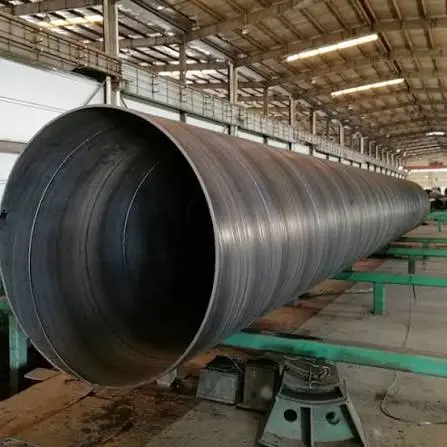
Understanding API 5L X52 PSL2 Carbon Steel Line Pipes
What Makes API 5L X52 PSL2 Unique?
API 5L X52 PSL2 is a high-quality carbon steel pipe made for oil and gas transportation that is very tough. The number "X52" means that the minimum yield strength is 52,000 psi. The number "PSL2" means that the product has to go through more tests and tighter quality controls than PSL1. This industry carbon steel pipe is manufactured to the chemical composition limits specified in API 5L PSL2. The exact carbon, manganese, phosphorus, and sulfur contents vary according to the manufacturing process and product specification while meeting the API 5L requirements for strength, toughness, and weldability.
Mechanical Properties and Performance Specifications
The tensile strength of X52 PSL2 pipe is between 66,000 and 110,000 psi, and it exhibits excellent ductility, enabling it to absorb the shock loads and pressure spikes typical in pipeline operations. Charpy V-notch impact testing, which is required by PSL2 standards, makes sure that the material is tough even when it's cold outside. Concerns about brittle fracture in cold areas are taken care of by this testing procedure. This makes the material suitable for pipelines operating in cold climates, including Arctic regions and offshore environments.
PSL2 Classification Advantages
This pipe is different because it has to go through a non-destructive examination, better chemical analysis, and documented impact testing in order to get the PSL2 classification. Ultrasonic or other specified non-destructive examination (NDE) methods are strictly utilized to detect internal imperfections, while welded pipes may also undergo radiographic or ultrasonic inspection of the weld seams according to the applicable manufacturing specification. These quality measures lower project risk by making sure that performance is uniform across big procurement numbers. This is very important for EPC contractors who are in charge of multimillion-dollar building projects.
Comparison of Carbon Steel Pipes: API 5L X52 PSL2 vs. Alternatives
API 5L X52 PSL2 vs. Lower-Grade Carbon Steel
It is easy to see the difference in strength between X52 PSL2 and smaller grades like API 5L Grade B. Grade B has a minimum yield strength of about 35,000 psi and is widely used for moderate-pressure pipeline applications. X52 PSL2 provides higher strength for applications requiring greater pressure capacity or reduced wall thickness. X52 PSL2 has a 48% higher yield strength, which means that the wall thickness can be thinner for the same pressure grade. This makes it easier to build large-diameter pipes and saves money on materials.
Seamless vs. Welded Construction
Both seamless and welded versions of industry carbon steel pipe are used for different things. ASTM A106 Grade B seamless pipes have uniform metallurgy and don't have any weld seams, so they are perfect for places with a lot of vibration or for important service applications. Longitudinal Submerged Arc Welding (LSAW) or Spiral Submerged Arc Welding (SSAW) can be used to manufacture welded carbon steel pipes. These processes are commonly applied for larger-diameter industry carbon steel pipes where cost efficiency and structural reliability are important considerations. Our automatic submerged arc welding method at JS FITTINGS makes sure that the weld lines are 100% radiographic tested, which means that the strength of the weld zones matches the strength of the base metal. The cold-expansion process we use for LSAW pipes ensures precise outer diameter dimensions, which makes field alignment easier during installation.
Stainless Steel and Alloy Alternatives
Pipes made of stainless steel don't rust as easily as pipes made of carbon steel, but they cost three to five times more. When combined with appropriate coating systems and cathodic protection, X52 PSL2 provides reliable corrosion protection for many oil and gas pipeline applications while requiring significantly lower capital investment. Protective coatings like 3-layer polyethylene (3PE), fusion-bonded epoxy (FBE), or zinc coating make the service life last longer than 30 years. This makes carbon steel the most cost-effective choice for pipes that carry media that doesn't corrode or only slightly corrodes.
Procurement Guide: Selecting and Buying API 5L X52 PSL2 Carbon Steel Line Pipes
Critical Selection Criteria
Before issuing a purchase order, procurement teams must verify several critical technical parameters. Mill test certificates according to EN 10204 3.1 should be included in compliance paperwork. These should confirm the chemical composition, mechanical properties, and heat treatment records. The effectiveness of installation is directly affected by the tolerances for outer diameters, the uniformity of wall thickness, and the straightness factors. Pipes with wall thicknesses ranging from Schedule 10 to Schedule 160 (2 mm to 45 mm) and outer diameters ranging from 1/2" to 60" can be used for a variety of projects.
Understanding Pricing Dynamics
The price of API 5L X52 PSL2 pipe depends on the cost of the raw materials, the way of production, the size of the order, and the delivery terms. Because they are harder to make, seamless pipes usually cost 15 to 30 percent more than welded products of the same quality. Volume savings of 5–12% are common for sales of more than 100 tonnes. Choosing a regional provider affects the cost of logistics. Buying from companies that already sell lowers lead times and freight costs. JS FITTINGS keeps track of its supplies using systems that let them complete orders right away for standard sizes and can also accommodate custom sizes from DN15 to DN2000.
Supplier Verification and Certification
Suppliers who are qualified keep their ISO 9001 quality management certification up to date and have product approvals from major energy companies. JS FITTINGS has ISO, CE, and GOST-R certifications, and it is a qualified supplier for the National Iranian Oil Company, the Abu Dhabi National Oil Company, and Petrobras. These references show that the company can make things and that the standard is the same in all foreign markets. By using third-party testing services from SGS, Bureau Veritas, or TÜV, you can get independent confirmation that the product meets the requirements before it is shipped.
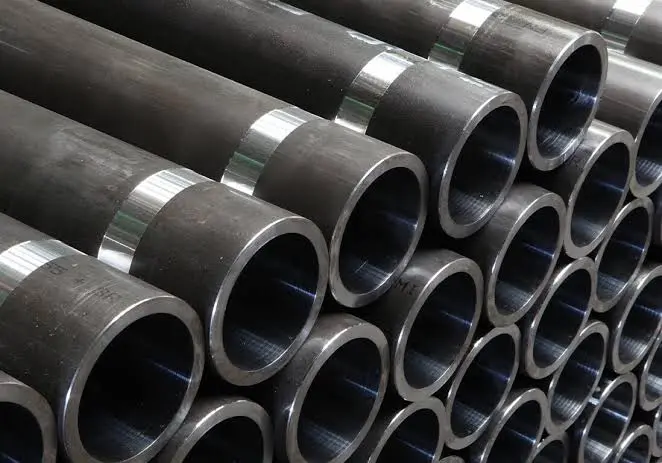
Quality Assurance and Inspection of API 5L X52 PSL2 Pipes
Manufacturing Process Controls
Quality starts with choosing the right raw materials and stays high at every stage of production. Controlled rolling and heat treatment processes, such as normalizing or quench-and-temper cycles, refine the grain structure to get the right mechanical properties. Automatic welding equipment keeps the heat input and penetration the same for pipes that have been joined. Where specified by the manufacturing process or project requirements, post-weld heat treatment is performed to reduce residual stresses, restoring the weld zone's ductility and impact toughness to closely match the base metal.
Comprehensive Inspection Protocols
Every seamless carbon steel pipe is hydrostatically tested in accordance with the requirements of API 5L unless otherwise specified. This makes sure that the structure is sound and that there are no leaks. Some types of non-destructive testing are ultrasonic testing to check the thickness of the wall and find internal flaws, radiographic testing to find weld discontinuities like porosity or slag inclusions, and eddy current testing to find surface cracks. Laser measurement devices are used for dimensional checking, which proves that ovality is within ±1% and wall thickness tolerance is usually kept at ±12.5%. Tensile tests, Charpy V-notch impact tests at certain temperatures, and flattening tests that confirm ductility are all types of mechanical tests that destroy sample sections.
These quality control steps are in line with JS FITTINGS's full QC system, which uses high-tech testing tools like optical emission spectrometers (OES) to make sure that the chemical composition is correct. Every month, we make more than 800 tonnes of pipe fittings and 700 tonnes of flanges. Even though we make a lot of them, the quality stays the same.
Corrosion Protection and Maintenance
The main defense against rust is external coats that are put on according to the client's instructions. For cathodic protection systems, a three-layer polyethylene coating protects against mechanical damage and keeps electricity from flowing. Fusion-bonded epoxy makes a thin, tough shield that can be used around underground pipes. Coatings or linings on the inside keep media from corroding the structure. For underground or underwater pipes, cathodic protection systems with sacrificial anodes or impressed current supplement coating systems work best. Intelligent pipeline inspection tools (smart pigs) are used for regular inspections to find internal corrosion, geometric deformations, or coating disbondment before they become problems.
Why API 5L X52 PSL2 Carbon Steel Pipe Is the Preferred Choice for Oil & Gas Pipelines?
Superior Strength-to-Weight Ratio
The X52 PSL2 pipe has a high yield strength without being too heavy, so it requires less structural support. This trait is useful for remote bases where design choices are limited by weight limits. The material's reliable stress-strain behavior lets engineers do accurate calculations, which helps them come up with designs that use the least amount of material while still leaving room for error.
Proven Industry Reliability
Decades of field performance data show that the X52 PSL2 is reliable in a wide range of working situations. Large pipeline networks that stretch for thousands of miles show that the material is strong against wear and tear, changes in temperature, and environmental loads. This operational history gives buyers confidence when making decisions about long-term investments in infrastructure.
Lifecycle Cost Advantages
The initial costs of materials are only a small part of the total costs of ownership. The long life of the X52 PSL2 means that it needs less upkeep and replacements over time, which lowers its lifecycle costs compared to lower-grade options that need more frequent attention. The material can be recycled over and over again, which is in line with sustainable business practices. It still has value at the end of its useful life and helps companies meet their environmental duty goals.
Compliance with Regulatory Standards
API 5L X52 PSL2 large-diameter seamless steel pipe is approved by foreign organizations, such as ISO 3183, so it can be used in pipeline projects that go across borders. The specification's compatibility with safety and environmental rules makes the approval and permit processes easier. Following the measurements in ASME B36.10M makes sure that fittings, valves, and other parts from different suppliers can be used interchangeably.
Conclusion
For oil and gas pipeline systems, API 5L X52 PSL2 carbon steel line pipe is the best combination of mechanical performance, quality guarantee, and cost-effectiveness. Its high yield strength, the fact that it has to go through required PSL2 testing, and the fact that it has been used in the field for a long time all make it a reliable choice. Knowing the technical requirements, how the product will be made, and the inspection requirements helps you choose a provider and write the specs. This material can last for decades in the toughest pipeline applications around the world if it is coated properly and maintained regularly.
FAQ
1. What distinguishes PSL2 from PSL1 specifications?
PSL2 requires more thorough testing, such as Charpy V-notch impact testing, tighter chemical makeup limits, and non-destructive examination. These standards make the mechanical qualities more consistent and give the products better low-temperature toughness than PSL1 products.
2. Can the API 5L X52 PSL2 pipe handle corrosive environments?
For corrosive work, X52 PSL2 carbon steel needs coats to protect it. When used with cathodic protection systems, external coats like 3PE or FBE work well to stop rust. Coatings or linings on the inside protect against corrosive media being transported. During material selection, engineers must evaluate anticipated corrosion rates and mandate an appropriate corrosion allowance when calculating the required wall thickness.
3. How do I figure out what size pipe I need?
The flow rate needed, the allowable pressure drop, and the design pressure all affect the size of the pipe. Standards in engineering, such as ASME B31.4 for liquid petroleum or B31.8 for gas transmission and distribution pipelines. When choosing a wall thickness, you need to think about the pressure inside, the loads from the outside, the corrosion limit, and the production tolerances.
Partner with JS FITTINGS for Reliable Industry Carbon Steel Pipe Solutions.
If you need an approved API 5L X52 PSL2 carbon steel line pipe, JS FITTINGS has been making high-quality products for 43 years. As an industry carbon steel pipe supplier that keeps its qualified vendor status with major global energy companies, we know how important it is to meet specifications and make sure deliveries are on time. Our ISO-certified factories handle more than 30,000 tonnes of material every year, and they deliver 95% of the time, which helps us meet project deadlines. For technical details, reasonable quotes, and samples, email our expert foreign trade team at admin@jsfittings.com. We offer full mill test certificates, coordination of third-party inspections, and all the paperwork you need to meet your buying needs, from developing specifications to commissioning.
References
1. American Petroleum Institute (2018). "Specification for Line Pipe: API Specification 5L, Forty-Sixth Edition." API Publishing Services, Washington, D.C.
2. ASME International (2020). "Process Piping: ASME Code for Pressure Piping, B31. "American Society of Mechanical Engineers, New York.
3. Kiefner, J.F., and Vieth, P.H. (1989). "A Modified Criterion for Evaluating the Remaining Strength of Corroded Pipe." Pipeline Research Council International, Catalog No. L51749.
4. National Association of Corrosion Engineers (2015). "Petroleum and Natural Gas Industries—Materials for Use in H₂S-Containing Environments in Oil and Gas Production: NACE MR0175/ISO 15156. "NACE International, Houston.
5. Mohitpour, M., Golshan, H., and Murray, A. (2007). "Pipeline Design & Construction: A Practical Approach, Third Edition." American Society of Mechanical Engineers, New York.
6. Det Norske Veritas (2017). "Submarine Pipeline Systems: DNV-OS-F101. "DNV GL, Oslo, Norway.
Send Inquiry
You may like
Related Industry Knowledge
- API 5L X65 PSL2 LSAW Carbon Steel Pipe for Oil and Gas
- SSAW Pipe vs LSAW Pipe: Advantages in Water Transmission
- Guide to ANSI B16.5 Class 150 slip-on flange dimensions
- Buttweld Tee vs Socket Weld Tee for High-Pressure Piping
- ASTM A312 vs ASTM A213 Steel Pipe: What Are the Key Differences?
- What ANSI Pipe Flanges Are Commonly Applied Today?
- How to Select a Buttweld Reducer for Process Piping?
- What are Lap Joint Pipe Flanges & how do they work?
- Best Buttweld Elbow Materials for Corrosive Industrial Pipelines
- What causes porosity in carbon steel pipe welding?