
SSAW Pipe vs LSAW Pipe: Advantages in Water Transmission






2026-07-23 11:01:09
When planning water transmission infrastructure, choosing between SSAW carbon steel pipe and LSAW pipe directly impacts project cost, timeline, and operational reliability. SSAW (Spiral Submerged Arc Welded) pipes excel in large-diameter applications from NPS 8" to 120", offering cost-effective solutions without compromising structural safety. LSAW (Longitudinal Submerged Arc Welded) pipes, spanning NPS 16" to 60", deliver heavy-wall integrity for high-pressure sections. Understanding these differences helps procurement teams select the right pipe for municipal water systems, industrial supply lines, and long-distance transmission projects, ensuring compliance with API 5L and applicable water transmission standards while maximizing return on investment.
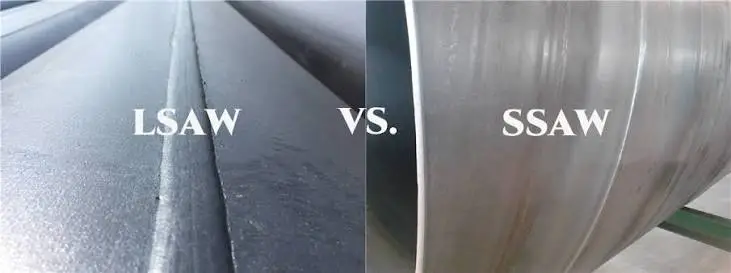
Understanding SSAW and LSAW Pipes: Definitions and Manufacturing Processes
What Defines SSAW Pipes?
SSAW carbon steel pipe is made by rolling hot-rolled steel strips into a tube form at a particular helix angle and then welding the spiral seam with submerged arc welding. This continuous production method allows manufacturers to produce large-diameter pipes from thinner steel coils, reducing material waste and production costs. The spiral welding design spreads stress more evenly across the pipe wall, which makes it perfect for long-distance water transfer where the ground moves and temperatures change. We use automatic submerged arc welding and 100% X-ray inspection to make sure the strength of the weld matches the strength of the base metal. This meets the requirements of API 5L for water infrastructure projects.
How Are LSAW Pipes Manufactured?
Steel plates are used to make LSAW pipes. The plates are then rolled into cylinders and welded along a single longitudinal seam. Post-weld processing utilizes cold expansion, which improves dimensional accuracy and reduces residual stress. The cold-expansion process makes sure that the outer diameters are exact, which makes it easier to line up the ends of large pipes when they are being installed at key junctions. Because they are stronger in high-pressure situations and have a straight seam, LSAW pipes are chosen for places like pumping stations and high transmission sections where pressure spikes happen.
Manufacturing Process Comparison
The pipe manufacturing method directly influences the final performance characteristics of the product. Continuous production is a major advantage of SSAW pipes because it allows custom diameters to be fabricated without requiring expensive tooling or molds. This versatility is highly beneficial when water transmission projects require non-standard dimensions. Because they are formed in stricter ways, LSAW pipes have tighter tolerances and higher yield strength ratings. When used for structural piling in water intake facilities and pump house foundations, both ways of making things meet ASTM A252 standards.
Key Performance Differences Between SSAW and LSAW Pipes in Water Transmission
Mechanical Strength and Pressure Tolerance
Due to having a single longitudinal weld seam and undergoing cold expansion, LSAW pipes offer superior resistance to burst pressure. Consequently, they are highly suitable for water transmission sections operating up to 1,000 psi, such as booster pump discharge lines and high-elevation delivery networks. SSAW pipes perform well in many medium- and high-pressure water transmission systems when properly designed and manufactured, which is enough for most low-pressure and gravity-fed public water networks. The spiral weld shape in SSAW pipes actually makes them more resistant to temperature expansion and cyclic loads, which means that fatigue cracking is less likely to happen in systems with changing flow rates.
Dimensional Specifications and Tolerances
LSAW pipes offer tighter dimensional tolerances, with ovality typically restricted to less than 0.5% of the nominal outer diameter.This level of accuracy makes installation easier in tight spaces and cuts down on the need for field adjustments during tie-ins. SSAW pipes keep their ovality within 1.0% by using lasers to measure them while they are being made. This is fine for underground water transport pipelines where roundness is not as important. Wall thickness consistency affects the ability to withstand corrosion and the service life of the pipe. Both types of pipe are tested using ultrasonic waves to make sure that the wall thickness is the same along the whole length, which guarantees steady performance for 50 years.
Corrosion Resistance and Service Life
The quality of the weld seam has a direct effect on how likely it is to corrode. We cover both SAW carbon steel pipe and LSAW pipes with 3LPE coatings on the outside and cement mortar lining (CML) on the inside. This gives them strong protection against chemical erosion in underground settings. The circular weld pattern in SSAW pipes gives coatings a little more surface area to stick to, while the single seam in LSAW pipes makes it easier to check the coating. In municipal water systems, properly coated pipes of either type can last more than 50 years. Regular monitoring of the cathodic protection extends the useful life even more.
Installation and Maintenance Considerations
SSAW pipes come on-site in longer standard lengths (up to 12 meters), which means fewer field joints are needed and less money is spent on labor. When compared to similar LSAW pipes, they are lighter per meter, which makes them easier to handle on jobs where crane access is limited. Because LSAW pipes are more round, they need fewer alignment corrections during welding. This speeds up the installation process for projects that need to be done quickly. LSAW pipes make it easier to do maintenance in high-risk places because they only have one weld seam. This facilitates ultrasonic inspection and integrity monitoring throughout the pipeline's useful life.
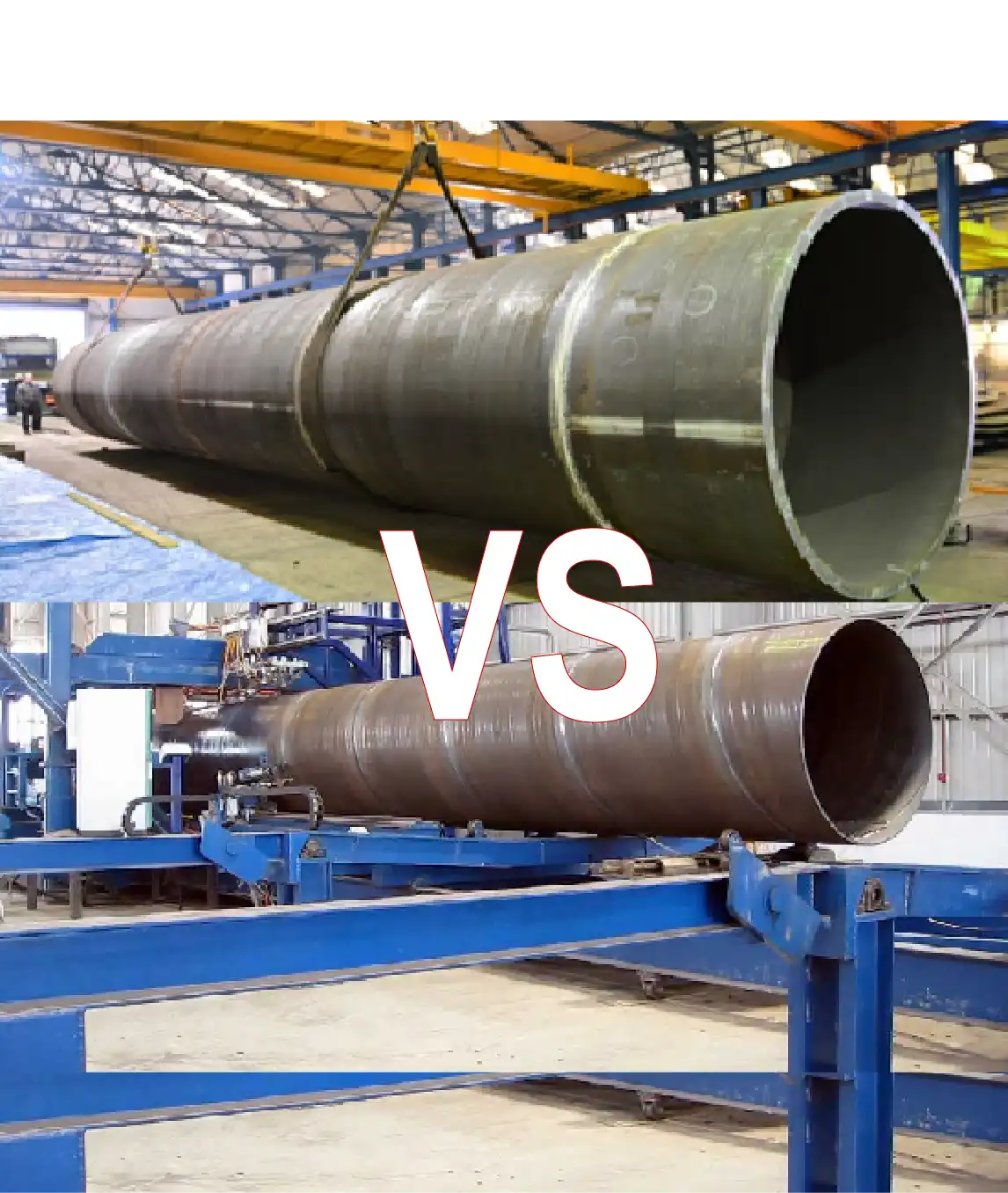
Comparing SSAW vs. LSAW Pipes: Advantages and Use Cases in Water Transmission Projects
Advantages of SSAW Pipes
For water transmission infrastructure, the spiral welding method has a number of useful advantages. The main advantages include:
- Cost-Effective for Large Diameters: For water transmission pipelines with diameters from NPS 20" to 120", SSAW is the best choice. The cost of production stays low because makers don't use expensive wide plates but narrower steel coil stock. This saves money that goes straight to project funds. A 48-inch-diameter SSAW pipe is often significantly more economical per meter than a comparable LSAW pipe, particularly in large-diameter municipal water projects. This can save a lot of money on projects that need tens of kilometers of pipeline.
- Flexible Diameter Customization: Because continuous production is used, SSAW manufacturers can make diameters that aren't standard without having to buy new tools. If your water transmission project needs 42-inch or 54-inch pipes to match certain hydraulic calculations, SSAW production can easily meet these needs. This allows for optimal flow properties and avoids costly design sacrifices.
- Longer Service Life in Changeable Conditions: The spiral weld pattern spreads stress over a longer weld path, lowering the number of stress concentration points that crack systems when temperatures change or the ground settles. This stress distribution helps water transmission lines that go through areas with unstable soil or earthquake zones stay strong where rigid pipe configurations might break.
These advantages make SSAW pipes the main part of water supply systems and district heating networks around the world, where cost control and large-volume supply are critical to project success.
Advantages of LSAW Pipes
LSAW pipes have certain advantages that make them necessary for important parts of water infrastructure:
- Better Strength for High-Pressure Uses: The cold-expansion and single longitudinal weld process make pipes with higher yield strength values, providing excellent structural performance for high-pressure applications because of their manufacturing process and dimensional consistency of the same size. This extra strength is needed to keep water transport systems with steep elevation changes or high-head pumping stations from breaking during pressure spikes or water hammer events.
- Better Dimensional Accuracy: Accurate outer sizes make installing mechanical couplings easier and lower the risk of gasket binding problems at pipeline links. LSAW's tight tolerances make sure that all thousands of joints work reliably and without leaks, which is good for projects that use constrained joint systems.
- Proven Reliability in Critical Sections: Headers for water treatment plant output, river bridges, and supply lines to emergency services all need to be as reliable as possible. The strict testing protocols and single-seam configuration of LSAW give procurement teams the confidence they need when a failure in infrastructure would have serious economic or public health effects.
Engineers choose cheaper SSAW pipes for normal transmission parts, but LSAW pipes are only used in high-impact areas, which call for about 20 to 30 percent of water transmission projects.
Real-World Application Examples
A recent municipal water project in the southwestern United States shows how to choose pipes in a smart way. For 45 kilometers of flat ground, the 60-kilometer gearbox main used 36-inch SSAW pipes and API-5L SSAW-welded carbon steel pipe, which saved a lot of money. For the last 15 kilometers, which had four river bridges and three parts with steep slopes, LSAW pipes were used because they could handle higher design pressures. Compared to an all-LSAW specification, this hybrid approach cut the total cost of the project by 12% while still meeting safety standards.
Procurement Considerations: How to Choose Between SSAW and LSAW Pipes for Your Project?
Evaluating Project-Specific Requirements
The selection method is based on a number of things. Baseline strength requirements are set by the operating pressure. Systems below 600 psi usually meet SSAW standards, while pressures above 800 psi call for an LSAW evaluation. Cost differentials depend primarily on the diameter of the pipeline. For example, SSAW has huge benefits above 36-inch diameters, where plate supply limits LSAW production. Conditions of the soil are important. Corrosive situations or unstable ground may benefit from SSAW's ability to distribute stress, while stable sites benefit from LSAW's ability to accurately dimensionalize.
Due to limited funds, a thorough analysis is needed. For diameters over 30 inches, SSAW pipes have 12–18% lower material costs, but installation costs depend on how much labor costs in your area and what tools are available. SSAW's longer standard lengths make projects with tight deadlines easier because they cut down on the need for field welding and speed up the building process. In remote areas, delivery operations can be hard. SSAW's lighter weight per meter lowers shipping costs for projects that are hard to get to.
Technical Specifications and Standards
Both types of pipe meet the requirements set by API 5L for line pipe, which includes grades from B to X70. Most projects that move water choose API 5L Grade B or X42, which balances the need for strength with the ability to weld and the cost. ASTM A252 sets the rules for how structural piling can be used at pump stations and intake facilities, while ASTM A53 gives different requirements for standard pipe uses. When figuring out wall thickness, use ASME B31.4 or AWWA M11 as a guide, making sure to include safety factors for water service conditions.
As part of the procurement requirements, all weld lines should be tested with ultrasonic testing (UT) to find any problems inside, and radiographic testing (RT) may also be performed to check the ends of pipes where field welds happen. Hydrostatic testing at 90% of the minimum yield strength gives the final confirmation of the pressure containment capability. Chemical makeup analysis checks that the carbon equivalent values stay within the limits that can be welded. This keeps the welds from becoming brittle, which would lower their long-term dependability.
Supplier Selection Criteria
Manufacturers with a good reputation use ISO 9001 quality management systems and have approval from important energy companies as well as standards like CE and GOST-R. We've been approved suppliers for national oil companies and infrastructure projects in 30 countries, showing that our quality is steady and our delivery times are reliable. Manufacturing capacity is important. Suppliers that make 800 tonnes of pipe every month and ship 90 or more containers every month make sure that there is enough supply even when demand rises across the industry.
When projects need non-standard specifications, the ability to customize is very important. As designs change, suppliers who offer Carbon SSAW steel spiral-welded pipe sizes from DN15 to DN2000 and take special orders give designers more options. Delivery times affect project schedules. To avoid costly building delays, makers should respond to inquiries within one hour and keep on-time delivery rates above 95%. Risk is lower when there is technical support during the purchase and installation steps. International trade teams with experience who are familiar with ASME, DIN, and JIS standards can help you figure out how to meet the requirements.
Conclusion
For water transmission projects, choosing between SSAW carbon steel pipe and LSAW pipe means combining scientific needs, budget limits, and standards for long-term performance. SSAW pipes are a cheap way to handle large-diameter tasks up to 120 inches, and they work reliably and with a lot of flexibility in standard gearbox sections. LSAW pipes are stronger and more precise in size and shape, making them ideal for places with a lot of pressure and consequences where high reliability is worth the extra cost. Both types of pipes are usually used in smart ways in successful projects to get the best total value while still meeting safety standards. Working with experienced makers who have foreign certifications and a history of on-time delivery guarantees that the buying process will go smoothly and that operations will run smoothly.
FAQ
1. What are the structural differences between SSAW and LSAW pipes?
SSAW pipes have spiral weld lines made by rolling steel coils at helix angles, while LSAW pipes have a single longitudinal weld made from steel plates that have been shaped. The spiral shape spreads stress over many lines, and the longitudinal seam makes it more resistant to burst pressure. Both use submerged arc welding and 100% X-ray inspection to make sure the strength of the weld matches the strength of the base metal.
2. Can SSAW pipes handle high-pressure water transmission?
SSAW pipes can safely handle pressures of up to 800 psi, making them ideal for most city water systems and gearbox lines that are fed by gravity. LSAW pipes are usually needed for pressures higher than 1,000 psi because their manufacturing process provides excellent dimensional accuracy and structural integrity. Proper wall thickness design and hydrostatic testing are both part of the planning process.
3. How do I choose appropriate pipe grades for my project?
API 5L Grade B is good for normal water transmission tasks that need moderate pressure. Grade X42 gives sites that have to deal with pressure spikes or rough terrain extra strength. Check out the AWWA M11 standards and work with experienced suppliers who can give you advice on the right specs based on your working conditions, the type of soil you have, and the rules that need to be followed.
Partner with JS FITTINGS for Reliable SSAW Carbon Steel Pipe Supply
Since 1983, our factory has been making spiral-welded and longitudinal-welded pipes, giving us 43 years of experience in building water transmission infrastructure. As a certified SSAW carbon steel pipe maker, we ship more than 90 containers every month to EPC companies, government projects, and industry end-users all over North America. We have an on-time delivery rate of over 95%. Our production capacity of 800 tonnes of pipe fittings per year and 700 tonnes per month guarantees a steady supply for big water transmission projects. We can meet the needs of API 5L, ASTM A53, and ASTM A252 standards from NPS 8" to 120" for SSAW uses and from NPS 16" to 60" for LSAW needs. You can email our team at admin@jsfittings.com to get technical advice, cheap quotes, and unique solutions that fit your project's needs and budget.
References
1. American Water Works Association, "Steel Pipe Design and Installation Manual M11," Fourth Edition, Denver, Colorado, 2017.
2. American Petroleum Institute, "Specification for Line Pipe API 5L," Forty-Sixth Edition, Washington D.C., 2018.
3. Det Norske Veritas, "Submarine Pipeline Systems DNV-OS-F101," October 2021 Edition, Høvik, Norway.
4. National Association of Pipe Coating Applicators, "Field Applied Coatings for Pipelines Technical Manual," Houston, Texas, 2019.
5. Pipeline Research Council International, "Comparative Performance Study of Spiral-Welded and Longitudinal-Welded Large-Diameter Line Pipe," Final Report, Arlington, Virginia, 2016.
6. United States Bureau of Reclamation, "Welded Steel Penstocks Design Standards No. 3," Technical Service Center, Denver, Colorado, 2014.
Send Inquiry
You may like
Related Industry Knowledge
- Custom Stainless Steel Buttweld Elbow for Chemical Plants
- What is the difference between 3LPE and FBE Coated Steel Pipe?
- Sourcing Custom Steel Flange: A Buyer’s Guide to Working with a Manufacturer
- ASTM A234 WPB Buttweld Tee Material Properties Overview
- How long does FBE Coated Steel Pipe last?
- Internal Burr Removed ASTM A53 ERW Pipe for Precision Applications
- Why Is a Seamless Buttweld Tee Preferred in Critical Service?
- Carbon Steel Buttweld Reducer for High-Pressure Pipelines
- What is seamless carbon steel pipe?
- How to weld carbon steel pipe?