
AWWA C200 SSAW Carbon Steel Pipe with Epoxy Coating for Water Supply






2026-08-05 10:28:45
When municipal water projects demand durability without compromising budget, AWWA C200 SSAW carbon steel pipe with epoxy coating emerges as the strategic solution. Manufactured through spiral submerged arc welding, these large-diameter pipes combine structural reliability with corrosion resistance, addressing the critical concerns of EPC contractors, government agencies, and industrial end-users. The epoxy coating serves as a protective barrier against water-borne corrosion while maintaining hydraulic efficiency over decades of service life, making these pipes indispensable for modern water infrastructure across the United States.
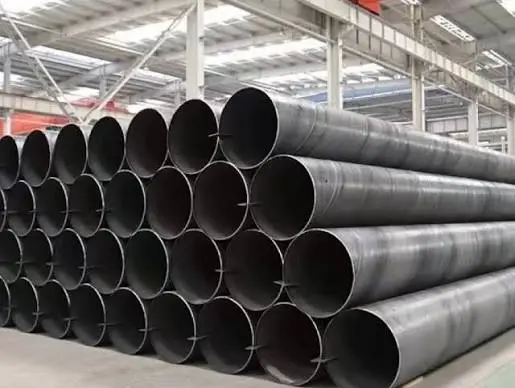
Understanding AWWA C200 SSAW Carbon Steel Pipes with Epoxy Coating
The Manufacturing Excellence Behind Spiral-Welded Pipes
To make spiral submerged arc-welded pipes, hot-rolled steel coils are bent into a tube shape at a precise helix angle. The seam is then fused under a blanket of flux. When compared to longitudinally welded options, this method is clearly superior because it lets makers make pipes from NPS 8" up to 120" without having to retool expensive moulds. We use automatic submerged arc welding at JS FITTINGS and inspect every seam by radiographic testing (RT) to make sure the weld integrity is the same as the strength of the base metal. This advanced manufacturing process effectively addresses cost issues while also providing structural integrity for water transfer over long distances.
When compared to longitudinal welds, spiral welding spreads stress more evenly across the pipe body. When combined with low-carbon steel strips that meet API 5L standards, these SSAW carbon steel pipes are very easy to weld and provide good impact toughness. Because they can be produced continuously, lead times for large-diameter orders are shorter, which is very important for meeting tight project deadlines for water expansions or irrigation networks in cities.
Epoxy Coating: Your Shield Against Corrosion
When used with electrostatic spray or fusion-bonding, the epoxy coating creates a barrier that is completely smooth and typically between 300 and 500 microns thick, depending on the coating specification. This layer of protection keeps water from coming into direct contact with the steel base, which greatly increases its useful life in harsh conditions. As required by AWWA C210 or AWWA C213, testing includes holiday detection, adhesion testing, and impact resistance evaluation to ensure that the coated surface strictly complies with all specified quality standards before shipment.
Because the coating is dielectric, it also slows down the electrochemical processes that lead to pitting and galvanic corrosion. Field studies from water companies in Texas and California have shown that coatings can last for more than 30 years in underground sites with almost no upkeep needed. This means that the total cost of ownership goes down, which is important for government infrastructure projects that use lifecycle budget models.
Technical Specifications and Standards Compliance
AWWA C200 sets out detailed rules for the sizes of steel water pipes, how they should be welded, and how they should be coated. Pipes manufactured to AWWA C200 are commonly produced from steel grades that meet project requirements, including API 5L or other applicable structural steel specifications. Depending on the grade chosen, the yield strength can be anywhere from 35,000 to 65,000 psi. The internal design pressure, safety factors, and external load conditions are used to figure out the wall thickness. For diameters between 24" and 96", the usual range is from 0.25" to 1.5".
For large-diameter applications, spiral-welded solutions are more cost-effective than seamless pipes. Seamless pipes are generally selected for high-pressure or critical service applications where their manufacturing characteristics provide advantages. But when the pressure is between 150 and 300 psi, which is what most water supply lines are used for, SSAW pipes are strong enough and cost 30 to 40 per cent less. ERW (electric resistance welded) pipes are best for diameters less than 20 inches. Spiral-welded pipes are more common in the large-diameter market because ERW manufacturing is generally limited to smaller diameters.
Benefits and Applications of SSAW Carbon Steel Pipes with Epoxy Coating
Performance Advantages That Protect Your Investment
Combining spiral welding and epoxy coating has many useful effects. The most important is better resistance to corrosion—epoxy coatings lower corrosion rates to less than 0.001 inches per year in potable water service, compared to 0.005-0.01 inches per year for uncoated steel. This fivefold improvement means that a properly coated pipe can last fifty years or more, compared to fifteen years or less for bare steel in the same conditions.
The smooth interior coating surface improves hydraulic efficiency by lowering friction coefficients to about 0.011, compared to 0.015–0.020 for cement-lined pipes. Lower friction means lower pumping energy costs over the life of the system. A 48-inch-diameter pipeline that runs for 10 miles can save 8–12% in energy use each year, which can save water districts thousands of dollars in operational costs.
The coating also stops tuberculation, which is the buildup of rust nodules that block flow and harbour bacteria. Keeping the inside surfaces clean helps cities follow the rules of the EPA Safe Drinking Water Act, which lowers their risk of being sued. These performance traits directly address the strategic goals of procurement managers who want to keep costs low over time while still following the rules. SSAW carbon steel pipes provide a sustainable advantage for long-term infrastructure.
Real-World Applications Across Water Infrastructure
As the main use, municipal water transmission pipes move treated water from treatment plants to distribution networks. Phoenix and Las Vegas, two cities that are growing quickly, have installed thousands of feet of epoxy-coated spiral welded pipe because it is strong, doesn't rust, and doesn't cost a lot of money.
Large-diameter SSAW pipes are used in agricultural irrigation projects because they are cheaper and can carry water over long distances. For example, the Imperial Irrigation District in California replaced open channels with pressurised pipelines that reduce water loss through evaporation and improve delivery efficiency. The spiral-welded construction allows for ground movement from soil settling without breaking, which is very important in areas that are prone to earthquakes.
Industrial buildings like power plants, refineries, and manufacturing complexes use these pipes for fire protection and cooling water intake. For example, a combined-cycle power plant in Pennsylvania used 96-inch epoxy-coated SSAW pipe for its cooling water circuit because it was 40% cheaper than LSAW alternatives and delivered 95% of the time, which kept the project on schedule. These kinds of case studies show real value in a wide range of B2B procurement situations.
How Are SSAW Carbon Steel Pipes Manufactured and Quality Ensured?
From Steel Coil to Finished Pipeline
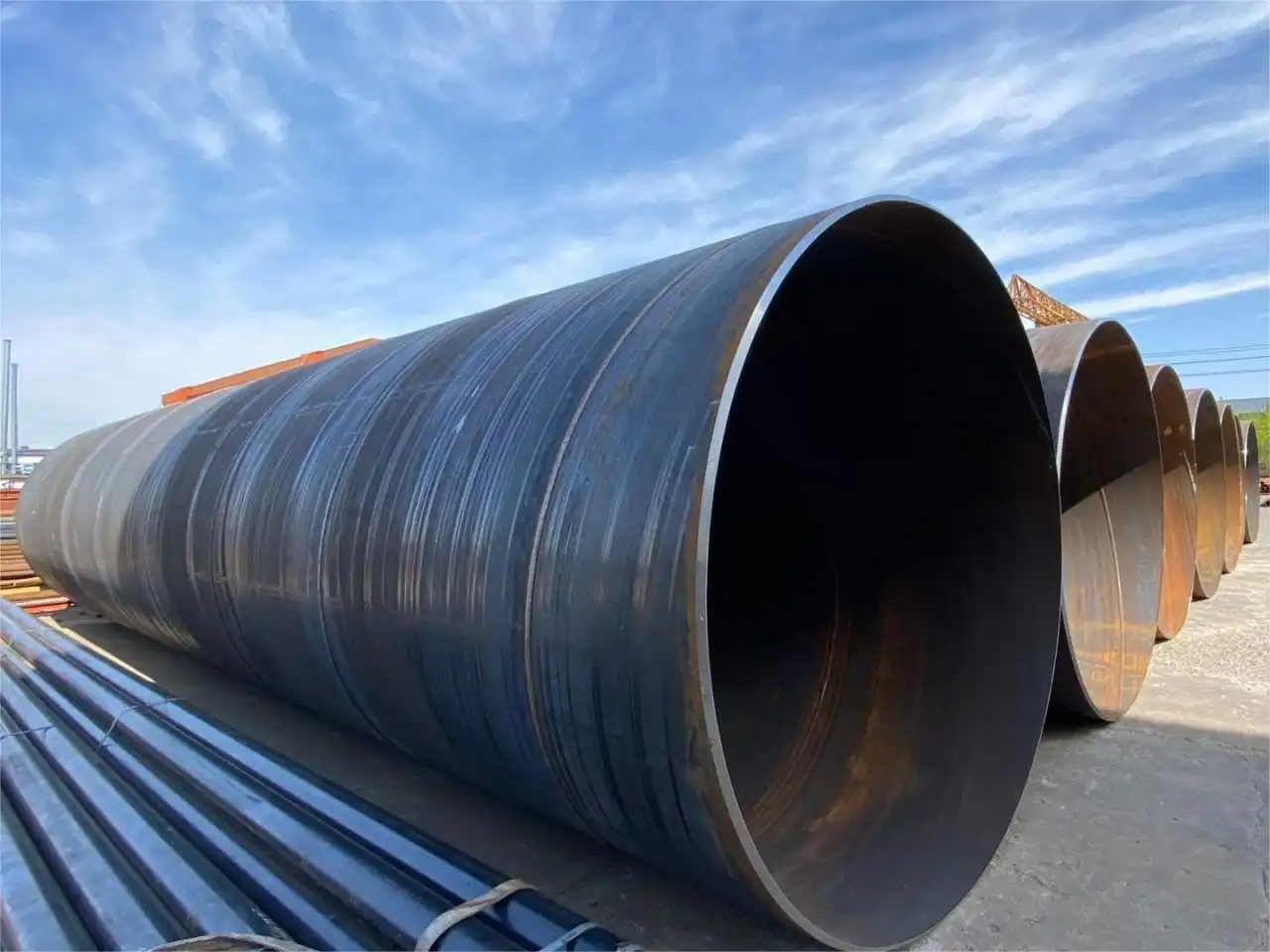
The making process starts with hot-rolled steel coils that meet the chemical composition standards set by API 5L or ASTM. The coils are then uncoiled, levelled, and edge-trimmed to get rid of mill scale and other flaws. The ready strip is then fed into forming rollers, which slowly bend it into a cylinder shape while moving it forward at a set helix angle, which is usually between 55 and 75 degrees depending on the width and diameter of the strip.
As the spiral forms, submerged arc welding heads inside and outside fuse the overlapping edges at the same time under a layer of granular flux. The current, voltage, and travel speed are all controlled by a computer to keep the penetration and bead geometry consistent. The flux blanket protects the molten metal from airborne contaminants, making clean welds with mechanical properties that are the same as or better than the base material.
After welding, the outside and inside of the joints are bead-ground to make them smooth. Next, the whole length of the seam is ultrasonically tested to find any flaws below the surface. Finally, the SSAW carbon steel pipes are put through hydrostatic testing at the specified test pressure in accordance with the applicable project or product standard. They are held under this pressure for 10 to 15 seconds while inspectors check that there are no leaks. This strict testing process verifies structural integrity before the coating is applied.
Quality Control Measures That Build Confidence
At JS FITTINGS, our quality assurance system includes several checkpoints that are in line with ISO 9001 standards. For example, optical emission spectroscopy (OES) analysis checks the chemical makeup of incoming steel to make sure that the carbon equivalent values stay within the weldable range to avoid cold cracking. Dimensional audits using laser measurement systems make sure that ovality tolerances of 1% and wall thickness uniformity within 10% of nominal are met, which are important parameters for the efficiency of field installations.
Magnetic particle inspection for surface defects and guided bend testing can be used for non-destructive testing that goes beyond weld seams. Charpy V-notch impact testing at temperatures as low as -20°F confirms toughness for cold-climate installations. These mechanical property checks show that pipes will work safely under certain service conditions.
Epoxy coating quality is checked by measuring its thickness in several places and checking for holiday detection at the test voltage specified by the applicable coating standard, adhesion pull-off tests exceeding 1,500 psi minimum, and impact resistance. These tests make sure that the coating is applied uniformly. Third-party certifications from organisations like NSF International and UL show that it meets AWWA C200 and NSF/ANSI 61 drinking water contact standards. This gives purchasing managers independent proof that the supplier is trustworthy.
Procurement Guide: How to Choose and Buy SSAW Carbon Steel Pipes with Epoxy Coating?
Selection Criteria for Project Success
To choose a diameter, hydraulic calculations must first be done, which include flow rate, velocity limits (usually between 5 and 8 feet per second for water), and allowable head loss. Standard diameters range from 8" to 120", and wall thickness is based on internal pressure, external loads such as soil cover and traffic loads, and corrosion allowance. AWWA C200 specifications make sure that SSAW carbon steel pipes meet the minimum strength requirements for municipal water service.
When judging the quality of a coating, make sure that the epoxy system from a large-diameter SSAW steel pipe manufacturer meets NSF/ANSI 61 standards for potable water contact and has a minimum dry film thickness of 14 mils (350 microns). Ask the coating manufacturer for proof of its adhesion strength, resistance to cathodic disbondment, and resistance to chemicals like chlorine and chloramines used in water treatment. These factors have a direct effect on the system's reliability and maintenance costs over its design life.
Choose the right material grade by weighing the need for strength requirements against cost and ease of welding. API 5L Grade B (35,000 psi yield strength) is good for most municipal water applications working below 250 psi, while Grade X42 or X52 may be needed for higher pressures or especially difficult installations. Make sure the carbon equivalent formula keeps values below 0.45% to ensure field welding without the need for preheating during pipeline construction.
Evaluating Suppliers and Managing Risk
A production capacity assessment shows if a manufacturer can meet the volume and schedule needs of a project. For example, JS FITTINGS consistently ships more than 90 containers of pipe products every month, which helps large-scale infrastructure projects go smoothly. Manufacturers with single-pipe production lines may have trouble handling order volumes above 500 tonnes, which can cause schedule risks.
When projects need non-standard diameters, special coating systems, or unique testing protocols, customisation is important. Our facility can handle custom specifications from DN15 to DN2000 with flexible minimum order quantities, so you don't have to make the costly trade-offs that come with using standard products in situations that need custom solutions. Ask for sample production and testing documentation to make sure the supplier's technical abilities match the project requirements.
Post-sales service infrastructure, such as warranty terms, technical support availability, and claim resolution processes, has a direct effect on project risk. Suppliers with less than 0.5% complaint rates and 98%+ repurchase rates show operational excellence and customer satisfaction. Make sure the warranty covers both material defects and coating integrity, and that the terms last at least 12 to 24 months from delivery to protect against manufacturing problems found during installation.
Leading Brands and Trusted SSAW Carbon Steel Pipe Manufacturers
What Defines a Reliable Supplier?
Established companies have a lot of certifications, like ISO 9001 for quality management, the API 5L monogram for pipe production, and an AWWA membership that shows they are involved in the industry. For example, JS FITTINGS holds CE and GOST-R certifications and is a qualified supplier for major energy companies like NIOC, ADNOC, and Petrobras, demonstrating our ability to consistently deliver high-quality products under demanding project conditions.
Assuring on-time delivery to project sites across the United States through global distribution is made possible by manufacturers with established logistics networks and customs clearance expertise. Our monthly shipment volume of more than 90 containers shows that we are good at logistics, and our 95%+ on-time delivery rate shows that we are reliable, which keeps construction schedules on track. SSAW carbon steel pipe procurement remains efficient through our robust supply chain.
As a result of their technical knowledge, suppliers offer engineering support services such as hydraulic calculations, coating system recommendations, and installation guidance. With more than 30 years of experience in manufacturing, suppliers have come across a wide range of application problems and come up with solutions that avoid expensive problems in the field. Client testimonials from EPC contractors, municipal utilities, and industrial facilities show that suppliers live up to their marketing promises.
Building Long-Term Partnership Value
The water infrastructure industry needs suppliers that can help with projects from the beginning, all the way through their decades-long operational life. Manufacturers that invest in advanced testing equipment like spectral analysers, ultrasonic flaw detectors, and coating inspection tools show a dedication to quality that protects the reputation of your project. Our quality management system includes seven integrated protocols that cover everything from sourcing materials to providing service after the sale, making sure that every order is handled the same way.
Flexibility in business terms, such as payment plans, partial shipments for phased construction, and emergency expediting,adds substantial value beyond basic product specifications. Small and medium-sized engineering firms benefit the most from suppliers who are willing to support trial orders and sample testing without prohibitive minimum quantities. This kind of partnership approach aligns supplier capabilities with buyer realities across different customer segments.
Conclusion
Choosing SSAW carbon steel pipe with an epoxy coating is a smart way to buy things for water infrastructure projects because it balances performance, cost, and dependability. The spiral welding process makes large-diameter solutions affordable, and the epoxy coating protects against corrosion for a 50-year service life. Strict quality control measures, such as 100% weld inspection, hydrostatic testing, and third-party certifications, make sure that the structure is sound and meets all regulations. Buyers should focus on suppliers who can show they have the manufacturing capacity, technical expertise, and service commitment needed to complete the project successfully and reliably in the long term.
FAQ
1. What advantages does epoxy coating provide over bare steel?
Epoxy coating lowers the rate of rust by 80–90%, which increases the service life from 15–20 years to 50 years or more in water service. The coating also stops tuberculation, keeps hydraulic efficiency high, and makes sure that NSF/ANSI 61 drinking water standards are met.
2. How does SSAW compare to LSAW for water applications?
LSAW offers better dimensional control and is used for high-pressure gas transmission above 1,000 psi. SSAW carbon steel pipe, on the other hand, saves 30 to 40 per cent on costs for large-diameter water pipes working at 150 to 300 psi, making it the cheaper option without sacrificing safety.
3. What quality certifications should buyers look for?
Check that the product meets AWWA C200 standards, NSF/ANSI 61 standards for contact with potable water, ISO 9001 standards for quality management, and API 5L standards, if needed. Ask for mill test reports that list the chemical composition, mechanical properties, and coating test results.
Partner with JS FITTINGS for Your Water Infrastructure Projects
We at JS FITTINGS have been making high-quality water supply pipes for over 40 years. We can supply certified SSAW carbon steel pipe with an epoxy coating that meets the strict needs of municipal, industrial and agricultural applications. We can handle orders ranging from small installations to large-diameter water transmission mains that span thousands of feet, and we offer full quality assurance through comprehensive 100% weld inspection and rigorous nondestructive testing methods. Email our experienced team at admin@jsfittings.com to discuss your specifications, request technical documentation, or obtain competitive quotations.
References
1. American Water Works Association. (2020). AWWA C200: Steel Water Pipe, 6 In. and Larger. Denver, CO: AWWA Publications.
2. National Association of Corrosion Engineers. (2019). Corrosion Control in Potable Water Systems: Coatings and Linings Performance Data. Houston, TX: NACE International.
3. American Petroleum Institute. (2021). API Specification 5L: Specification for Line Pipe, 46th Edition. Washington, DC: API Publishing Services.
4. U.S. Environmental Protection Agency. (2018). Safe Drinking Water Act Compliance and Implementation: Materials in Contact with Drinking Water. Washington, DC: EPA Office of Water.
5. Steel Tank Institute. (2020). Fusion-Bonded Epoxy Coatings for Steel Water Pipe: Application and Performance Guidelines. Lake Zurich, IL: STI/SPFA Publications.
6. Water Research Foundation. (2019). Life-Cycle Cost Analysis of Water Distribution Pipe Materials: A Comparative Study of Steel, Ductile Iron, and PVC. Denver, CO: WRF Technical Reports.
Send Inquiry
You may like
Related Industry Knowledge
- Buttweld Reducer Pressure Ratings for Critical Service Lines
- How to Inspect Buttweld Elbow Quality Before Installation?
- ASTM A234 WPB Buttweld Tee Material Properties Overview
- Carbon Steel Buttweld Reducer Material Standards Explained
- ASTM A263/A264 Standard for Corrosion-Resistant CRA Clad Pipe
- Understanding the API 5L Seamless Steel Line Pipe Specification
- Collaborative Art of Lap Joint Pipe Flange and Stub End
- Lap Joint Pipe Flanges: Everything You Need to Know
- How to Select the Right Buttweld Bend Radius (3D–20D)
- What specification is the carbon steel black pipe?