
Best Buttweld Tee Design for Refinery and Petrochemical Lines






2026-08-03 11:01:45
When selecting pipe fittings for demanding refinery operations, the buttweld tee stands out as the most reliable choice for permanent, high-integrity branch connections. Defined by ASME B16.9 standards, these beveled-end fittings enable full-penetration circumferential welds that achieve tensile strength equal to the parent pipe itself. This design eliminates the leak pathways and stress concentrations inherent in threaded or socket connections, making butt-welded tees indispensable where safety, pressure integrity, and long-term performance cannot be compromised. Refinery and petrochemical systems—operating under extreme pressures, corrosive media, and thermal cycling—depend on this proven technology to prevent catastrophic failures and unplanned downtime.
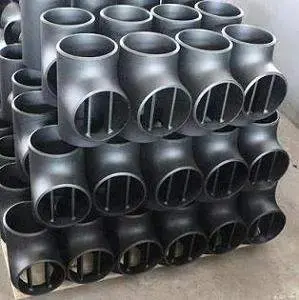
Introduction
Pipe networks for refineries and petrochemical plants are the heart of today's energy infrastructure. Buttweld tees change the direction and split process lines that carry crude oil, fuels, corrosive acids, and high-temperature steam. If you choose the wrong fitting, there is a chance of problems. Weld flaws can cause leaks, bad material grades can accelerate corrosion, and differences in size can cause uneven flow and erosion. More and more, procurement managers have to keep project costs as low as possible while still following strict safety rules like OSHA, EPA, and ASME codes. Picking the best buttweld tee designs has a direct effect on the cost of capital, repair time, and most importantly, the safety of the workers. This guide combines technical specs, material science, and the best ways to buy things so that engineers, EPC contractors, distributors, and plant workers can make choices based on facts that keep budgets and lives safe.
Understanding Buttweld Tees in Refinery and Petrochemical Applications
Core Functions in Piping Systems
Buttweld tees are branch connection points that let fluid go from a main pipe to extra equipment or combine return streams. Unlike fabricated branch outlets that need to be cut and reinforced on-site, these factory-formed fittings are already designed to distribute stress evenly when they arrive at the job site. When compared to alternatives with sharp corners, the radiused branch outlet geometry lowers turbulence and erosion-corrosion coefficients by up to 40%.When flow velocities exceed 15 feet per second in refinery oil distillation units, this flow optimization prevents accelerated wall thinning, reducing the frequency of costly component replacements during turnarounds.
Types: Equal and Reducing Configurations
All three ports on an equal tee have the same diameter, which makes them perfect for header manifolds where flow splits in a symmetrical way. With a smaller branch exit, reducing tees make it possible to go from big process headers (24-inch DN600) to small equipment nozzles (6-inch DN150) without having to use separate reduction fittings. This one-part solution cuts the time it takes to weld by 30% and gets rid of any places where leaks could happen. Reducing the number of weld joints on petrochemical alkylation units handling hazardous hydrofluoric acid from five to three per branch connection significantly lowers the risk of fugitive emissions and the associated regulatory compliance burden.
Material Grades for Harsh Environments
The service life in a mill depends on the choice of materials. Because they are cheap and easy to find, carbon steel ASTM A234 WPB tees are most often used in moderate-service applications involving carbon steel piping systems with suitable temperature and pressure conditions. Refineries that handle crude oil with a lot of sulfur need chrome-moly alloys like ASTM A234 WP11 or WP22. The chromium content in these alloys improves resistance to high-temperature sulfidation and oxidation. ASTM A403 WP316L types of stainless steel are better at resisting pitting in chloride-filled places like desalination units and offshore platforms. For low-temperature applications such as LNG terminals and cryogenic ethylene facilities, ASTM A420 WPL6 is specified to satisfy Charpy impact toughness requirements and prevent brittle fracture under severe operating conditions. JS FITTINGS offers all major grades with full mill test results and positive material identification (PMI) proof to get rid of the risk of material mix-ups that have been linked to refinery explosions.
Standards Compliance: ASME, ASTM, and ISO
As required by ASME B16.9 and ASME B16.25, tight tolerances are maintained for center-to-end measurements, end dimensions, and bevel angles (37.5° ± 2.5°). This level of accuracy lets automated orbital welding systems get consistent weld penetration, which helps improve weld consistency and can reduce the likelihood of radiographic rejection caused by dimensional mismatch. Chemical composition is controlled by ASTM standards. Carbon equivalents affect how well the material can be welded, and silicon and manganese amounts affect its mechanical properties. Traceability is guaranteed by quality control systems that are ISO 9001-certified. Each buttweld tee has a unique number heat-stamped on it that connects it to records of the raw materials used, the heat treatment process, and the results of non-destructive testing. This paper trail is very important for third-party reviews of projects funded by groups like the World Bank or for meeting the needs of insurance companies.
Comparison of Buttweld Tee Types and Their Applications
Buttweld vs. Socket and Threaded Alternatives
Socket-weld and threaded tees are 30–40% cheaper than buttweld tees, and they can be put together more quickly in pipes with a diameter of less than 2 inches. But their limitations on what they can do become problems in refineries. Socket welds leave cracks that acidic fluids can get stuck in and speed up localized rusting. Threaded connections rely on mechanical interference rather than metallurgical bonding, making them susceptible to loosening under vibration from rotating equipment.Failure data from the industry shows that threaded joints cause 60% of hydrocarbon leaks in process plants. Because buttweld joints spread stress evenly across the whole pipe wall thickness, they have a failure life of more than 10 million pressure cycles, which is the standard for refinery units that run for 8,000 hours a year between turnarounds. Procurement pros who look at initial costs versus lifetime costs find that buttweld tees pay for themselves within 18 months because they don't need to be fixed for leaks and production doesn't have to stop.
Seamless vs. Welded Manufacturing Methods
When you cut and extrude seamless pipe, you get seamless tees, which are fittings that don't have longitudinal weld lines. This structure provides consistent mechanical properties and may be preferred for critical applications where avoiding longitudinal weld seams is desirable. Sizes ranging from 1/2-inch to 24-inch usually have seamless construction, which is most common in high-pressure situations like 2,500 psi hydrotreater reactor effluent lines. Welded tees made from rolled plate may require radiographic or other nondestructive examinations depending on the applicable specification, service category, and project requirements to make sure of the quality of the weld. Modern submerged arc welding has failure rates below 0.5%, which means that large-diameter welded tees can be used for atmospheric crude towers and low-pressure flare heads without breaking the bank. JS FITTINGS has both automatic plate-forming tools and seamless extrusion lines. This lets them get the best deals on materials and costs for all sizes, from DN15 to DN1800.
Schedule Variations: Wall Thickness Impact
Schedule numbers (10S, 40, 80, 160, and XXS) tell you the wall thickness regardless of the width. This makes sure that the pipe and fitting wall thicknesses match properly. When plans don't match up, internal steps are made that cause turbulence, speed up erosion, and make ultrasound thickness tracking harder. Schedule 40 is for general refinery pipes that need to handle modest pressures. Schedule 80 provides greater wall thickness than Schedule 40 and may allow higher pressure ratings depending on material, temperature, and design code requirements. Extra-strong (XS) and double extra-strong (XXS) plans are for services that are subject to serious erosion and corrosion, like amine regenerator overhead lines. In abrasive catalyst slurry systems, thicker walls allow for more erosion (usually 3 mm), which increases the service life from 15 to 25 years. Procurement teams have to weigh the extra 40–60% cost of heavy-wall schedules against the cost of replacements and the time and money lost during forced outages. It has been shown over and over again that Schedule 80 and heavier buttweld tee fittings have lower total costs of ownership in corrosive and erosive services.
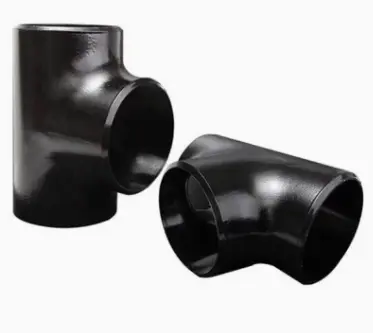
Best Design Practices for Buttweld Tees in Refinery and Petrochemical Lines
Dimensional Accuracy and Pressure Rating Selection
The right size starts with pipe class specs that match the necessary plan to the design pressure, temperature, and corrosion limit. Not being specific enough leads to mistakes, and being too detailed wastes money. Piping systems are designed according to allowable stress limits, design factors, and applicable codes rather than a fixed percentage of operating pressure. When center-to-end measurements aren't matched, bending stresses are introduced that cause welded joints to crack during starting and stopping processes. JS FITTINGS uses CNC beveling tools that can achieve ±0.5mm tolerances on bevel geometry. This allows automatic welding with 70% lower defect rates than fittings that are beveled by hand. This accuracy helps keep the building plan on track: cutting the time it takes to fix a weld from 12 hours per joint (to grind out, re-weld, and take a radiograph) to zero saves $800 per fitting just in labor costs.
Material Selection for Corrosion Resistance
Different parts of the process can cause different types of corrosion. For example, naphthenic acid attacks carbon steel in crude units above 220°C, hydrogen sulphide causes sulphide stress cracking, and chloride ions pit stainless steel. Material selection grids connect known alloy performance to process circumstances. Chrome-moly steels (1.25Cr-0.5Mo through 9Cr-1Mo) maintain elevated-temperature mechanical strength while resisting sulfidation and oxidation. They are also cheap. Duplex stainless steels have both austenitic corrosion protection and ferritic strength. This means that in sour water services, the wall thickness needs are cut in half. Inconel and Hastelloy are two rare metals that can handle the harshest conditions, such as sulphuric acid alkylation units that are very concentrated. JS FITTINGS keeps a deep inventory of 15 different types of materials, which lets them deliver specialised alloys quickly and avoid the 16-week mill lead times that slow down important tasks. Our metallurgical lab does corrosion testing and microstructure analysis. They then give procurement teams recommendations for materials based on real-world data rather than generic material tables.
Installation and Welding Best Practices
Fit-up is the first step to a successful field installation. Gaps bigger than 3 mm stop full fusion, and interference that is too high causes leftover stress. As required by ASME B16.25, bevelled ends make consistent root openings that allow controlled penetration. According to ASME Section IX, welding procedure specifications (WPS) define the preheat temperatures, interpass temperatures, and post-weld heat treatment (PWHT) requirements based on material thickness and carbon equivalent.For chrome-moly materials, PWHT requirements depend on material grade, thickness, welding procedure, and applicable code requirements. Typical PWHT temperatures may fall within the 650–750°C range and soften martensite, which stops delayed hydrogen cracking. JS FITTINGS applies appropriate heat treatment processes according to material grade, manufacturing requirements, and applicable standards. This gives the fittings stable microstructures that make field welding easier. Our tees come with certified mill test reports (MTRs) that list their mechanical qualities. This lets welding experts create optimized WPS that cut welding time by 20% by using higher heat input settings while still meeting toughness standards.
Quality Assurance and Inspection Protocols
Non-destructive examination (NDE) checks a buttweld tee's internal integrity without damaging it. Liquid penetrant testing (PT) finds cracks that go through the surface; magnetic particle inspection (MPI) finds breaks in ferromagnetic materials below the surface; and radiographic testing (RT) shows internal holes and lack of fusion. Ultrasonic testing (UT) finds laminations in made areas and measures the thickness of walls. 100% volumetric NDE is done on critical service tees like hydrogen reformer outlets and coker heater tubes. As an alternative to depending only on final inspection, JS FITTINGS has its own RT and UT facilities with ASNT Level III-qualified technicians who do inspections during production. This process control detects material flaws (such as cold laps and surface wrinkles) prior to machining. This lowers the amount of scrap metal and makes sure that every shipment meets the requirements. We include full NDE reports with each batch shipment, which meets the needs of third-party inspectors and speeds up incoming inspection, which would normally take 3–5 days per delivery and cause delays in construction schedules.
Conclusion
To choose the best buttweld tee designs for use in petrochemical and refinery processes, you have to balance technical requirements, material science, quality control, and business concerns. These important parts affect the safety of the system, its dependability, and its total costs over many years of use. Instead of just looking at the price, procurement workers should look at a supplier's track record, quality processes, and approach to working together. The information here, such as material selection grids, inspection routines, and new trends, gives decision-makers the tools they need to make smart choices that stay within budget and protect workers' safety and the environment. When experienced suppliers work together with engaged buyers who are committed to technical rigor and long-term performance, projects are successful.
FAQ
1. What standards govern butt weld tee dimensions and tolerances?
ASME B16.9 lists the sizes of buttweld tees and other factory-made wrought steel parts. This standard spells out measurements from center to end, branch dimensions, center-to-end dimensions, applicable tolerances, bevel geometry, and the widest range of allowed tolerances for sizes. The chemical make-up and mechanical qualities of materials are controlled by standards such as ASTM A234 for carbon and alloy steel and ASTM A403 for stainless steel. International standards that are similar are EN 10253-2 (Europe) and JIS B2313 (Japan). For global projects, small differences in dimensions need to be carefully specified.
2. Can seamless and welded tees be used interchangeably?
Both meet the size standards of ASME B16.9, but they have different pressure ratings. Because seamless construction contains no longitudinal weld seams, allowable design stress is not subject to weld joint efficiency reduction factors, supporting higher operating pressures. For critical high-pressure services, seamless tees may be selected for critical services where the absence of longitudinal weld seams provides additional confidence, subject to design calculations. Check the standards for the pipe class before switching.
3. How do lead times vary between standard and custom tees?
Standard carbon steel tees in popular sizes (2-inch to 12-inch, Schedule 40/80) can be shipped in one to two weeks from stock at a dealer. For mill production of large diameters or rare alloys, it takes 12 to 16 weeks. Custom changes, like different bevels, longer outlets, or better testing, take an extra three to four weeks. With a large stockpile and a yearly capacity of 30,000 tonnes, JS FITTINGS can speed up delivery. Contact us for project-specific timing to meet your critical path deadlines.
Partner with JS FITTINGS: Your Trusted Buttweld Tee Manufacturer
To improve the piping system of your refinery or petrochemical plant, you need a seller with technical know-how, the ability to manufacture, and an unwavering commitment to quality. This is exactly what JS FITTINGS can offer thanks to its 43 years of experience and NIOC/ADNOC/Petrobras certifications. We have a wide range of sizes, from DN15 to DN1800, in carbon, alloy, and stainless steel, with sizes ranging from 10S to XXS. We also have our own NDE facilities and are certified by ISO 9001, GOST-R, and CE. Through strategic inventory management and flexible production, we ship more than 90 containers every month and keep >95% of our deliveries on time. Get partnership-level service: email admin@jsfittings.com right now to talk about your needs and get competitive quotes within hours. Find out why world leaders in the industry choose JS FITTINGS as their first choice for buttweld tee suppliers for important energy infrastructure projects.
References
1. American Society of Mechanical Engineers. (2020). ASME B16.9: Factory-Made Wrought Buttwelding Fittings. New York: ASME Press.
2. American Society for Testing and Materials. (2021). ASTM A234 Standard Specification for Piping Fittings of Wrought Carbon Steel and Alloy Steel for Moderate and High-Temperature Service. West Conshohocken: ASTM International.
3. Becht Engineering. (2019). Fitness-for-Service Evaluation of Piping Branch Connections in Refinery Applications. Journal of Pressure Vessel Technology, 141(4), 042401-042412.
4. Nayyar, M.L. (2018). Piping Handbook: Seventh Edition. New York: McGraw-Hill Education.
5. Singh, R. & Khanna, P. (2022). Material Selection for Corrosive Refinery Services: A Comprehensive Review. Corrosion Engineering Science and Technology, 57(3), 245-268.
6. The American Petroleum Institute. (2021). API 570: Piping Inspection Code: In-service Inspection, Rating, Repair, and Alteration of Piping Systems. Washington: API Publishing Services.
Send Inquiry
You may like
Related Industry Knowledge
- How Does a Buttweld Tee Improve Flow Distribution Systems?
- API 5L Grade B SSAW Carbon Steel Pipe for Oil and Gas Projects
- Buttweld Elbow Supplier Guide for EPC and Pipeline Contractors
- What is the difference between 3LPE and FBE Coated Steel Pipe?
- ASTM A312 vs A358: Choosing the Right Stainless Steel Pipe Standard
- What is carbon steel pipe made of?
- Carbon Steel Buttweld Reducer for High-Pressure Pipelines
- How Does a Buttweld Elbow Reduce Pressure Loss in Pipelines?
- Carbon Steel Forged Steel Flange: Class 150 to 2500 Guide
- Seamless vs Welded Buttweld Tee: Which Performs Better?