
Buttweld Bend for High-Pressure & High-Temperature Service






2026-07-29 10:25:37
When your pipeline system faces extreme operating conditions—pressures exceeding 2500 psi and temperatures surpassing 600°C—choosing the right directional fitting becomes mission-critical. A buttweld bend engineered for high-pressure and high-temperature service provides the structural integrity, flow efficiency, and long-term reliability that standard elbows simply cannot deliver. Unlike conventional short-radius elbows rated at 1D or 1.5D, these precision-engineered components feature extended radii (3D, 5D, 8D, or custom configurations) that minimize turbulence, reduce erosion, and enable safe passage of inspection tools through your pipeline infrastructure. Whether you're managing a refinery expansion, offshore platform retrofit, or thermal power plant upgrade, understanding the technical distinctions and procurement considerations for these specialized fittings can significantly impact project safety, timeline adherence, and total ownership costs.
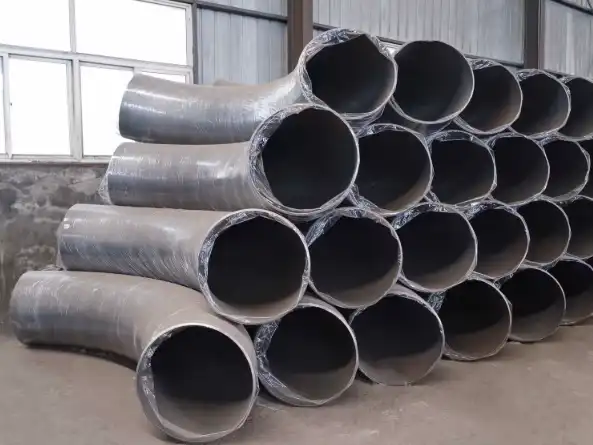
Understanding Buttweld Bends for High-Pressure & High-Temperature Applications
Industrial pipes that carry superheated steam, high-pressure fuels, or chemicals that break down easily need parts that don't break down even when they're under a lot of stress. Pipe turns made for these conditions are made using special methods that are very different from how elbows are usually made.
Manufacturing Methods: Induction Bending vs. Cold Forming
Using electromagnetic coils to heat a localized section of straight pipe to the appropriate forming temperature for the material grade is how induction bending works. The hot pipe is then bent mechanically to the desired radius. This method keeps the material's qualities and lets you make curves from 3D to 20D with little distortion. Our building keeps up-to-date measuring equipment that checks for temperature differences in real time. This prevents overheating, which could damage the structure of the metal. Cold-rolling, on the other hand, bends pipe at room temperature, but the starting material needs to be thicker to account for the effects of work-hardening.
Material Selection for Extreme Conditions
For oil and gas pipeline systems that work at normal temperatures, carbon steel types like API 5L X65 and X70 offer great value for money when it comes to strength. Alloy steels like ASTM A234 WP11 (1.25Cr-0.5Mo) or WP22 (2.25Cr-1Mo) are better at resisting creep when acidic materials or temperatures above 500°C are present. Stainless steel types, like ASTM A403 WP316L for chloride-rich settings or Duplex 2205 for saltwater exposure at sea, provide superior localized corrosion resistance compared to carbon steel in these harsh environments.
We keep material test reports for every heat batch at JS FITTINGS. These reports show complete material traceability, from mill certificates to final inspection. Before the bending process starts, our optical emission spectrometers (OES) check the chemical composition to make sure that the parts meet all of the requirements of the application.
Dimensional Standards and Radius Classification
Geometry is what makes elbows and pipe bends different from each other. ASME B16.9 says that elbows are fittings with bent radii of either 1D (short radius) or 1.5D (long radius). Induction bends manufactured with radii greater than standard elbows are commonly produced in accordance with ASME B16.49, while other long-radius bends may be manufactured to project specifications or other applicable standards, whether it's 2.5D, 3D, 5D, 6D, or 8D. This extended radius significantly reduces flow resistance and pressure loss compared to short-radius elbows.This saves money on pumping costs and erosion damage over the life of the pipeline.
We can make bends with wall schedules from SCH 10S to XXS and sizes from DN15 (1/2") to DN1500 (60"). Custom angles of 15°, 22.5°, 37°, 60°, or any other degree your isometric plans call for are made with a manufacturing tolerance of ±0.5°, so there are no problems with field adjustments during installation.
Performance Comparison: Butt-Weld Bend vs. Other Pipeline Fittings
To choose between a standard elbow and an induction bend, you need to know how geometry affects the performance of the system. The choice will not only affect the starting cost but also the operating economy for decades to come.
Mechanical Strength Under Pressure Cycling
Standard elbows put most of the stress on the inner radius, which is where the material gets thicker during shaping, especially in a buttweld bend. When the pressure changes over and over, as it does in steam systems or pumped pipelines, these stress points cause fatigue cracks to form. According to ASME B31.3 pressure design estimates, long-radius turns, including a buttweld bend, make the stress spread out more evenly across the curve, which increases the fatigue life by three to five times. When your plant is open 24 hours a day, seven days a week with few breaks, this durability means fewer emergency repairs and lower insurance costs.
Thermal Expansion Accommodation
When heating from 20°C to 450°C, a 100-meter run of carbon steel pipe grows by 130 mm. This is because it is used at high temperatures. Sharp-radius fittings make anchor points that focus expansion forces, which could cause flanges to come loose or welds to crack. Gentle-curve bends flex a little, taking in thermal movement without creating stresses that damage the material. By normalizing at 900°C for alloy steels, post-bend heat treatment (such as normalizing where required) relieves residual stresses that were locked in during making. This makes sure that the bend moves consistently as the temperature changes.
Seamless vs. Welded Construction
Seamless pipe bends made from solid billets have a uniform grain structure and no longitudinal weld seam. They are best for critical high-pressure applications up to 24" diameter, but welded pipe is more cost-effective after that. During bending, we position the longitudinal seam along the neutral axis, which is perpendicular to the maximum stress vectors, and use radiographic or other specified nondestructive testing as required by the project specification to confirm seam integrity. Both construction methods meet design pressures when done correctly; the choice depends on size, availability, and project budget.
Material Performance: Carbon Steel vs. Stainless Steel
Carbon steel pipe bends are 30–40% cheaper than stainless steel equivalents and work well in non-corrosive environments up to 400°C. Above this temperature, oxidation speeds up, and creep deformation becomes noticeable without alloy additions. Austenitic stainless steel grades retain good strength and oxidation resistance at elevated temperatures appropriate to their grade and design code limits and don't oxidize, chloride-plate, or stress-cause cracks. The higher initial investment in stainless materials usually pays for itself within 5–7 years through less maintenance and longer service life in harsh chemical plants or offshore platforms.
How to Choose the Right Buttweld Bend for Your Pipeline System?
Buying important parts for pipes needs careful consideration of technical, financial, and practical aspects. A systematic evaluation framework breaks down this complexity into manageable stages.
Operational Parameters: Pressure, Temperature, and Media
Start by writing down your system's design pressure (including surge allowances), highest operating temperature, and fluid properties. For example, a petrochemical plant's delayed coker unit that handles 800 psi steam at 540°C needs different specs than an LNG facility's cryogenic ethylene line at -104°C. Match your conditions to the material's abilities: ASTM A420 WPL6 for toughness at low temperatures below -45°C, or ASTM A860 WPHY 65 for high-yield strength in deepwater pipelines.
Chemical compatibility is very important. For example, hydrogen-rich refinery streams can cause steels to crack easily. For sour service with H₂S concentrations above 50 ppm, it requires materials that meet NACE MR0175 standards. Our technical team looks at your process conditions and suggests the right material grades based on corrosion rate data.
Quality Metrics That Predict Reliability
Precision-engineered bends are different from regular fittings in three ways that can be measured. Wall thickness uniformity stops weak spots; we guarantee that the extrados (outer curve) stays at least the minimum design thickness calculated according to ASME B31.3 after bending thinning is taken into account. Ovality, which is the difference between the maximum and minimum diameter, must stay within 3% for seamless field welding; our cold-sizing process fixes any distortion before shipment.
Hardness testing verifies the effectiveness of the post-bend heat treatment. Brinell values above 250 HB show a microstructure that is brittle and likely to crack; we aim for 180–220 HB through controlled normalizing cycles. Every buttweld bend is supplied with a dimensional inspection report, a material test certificate, and NDT documentation that can be linked to the original pipe heat number.
Supplier Evaluation Framework
Lead time reliability is what sets reactive suppliers apart from strategic partners. We keep common sizes in API 5L X52 and ASTM A234 WPB in stock for 7–10-day delivery, while custom exotic alloys take 4-6 weeks with clear milestone updates. Manufacturing capacity is important for big projects, and our monthly output of 800 tonnes of pipe fittings makes sure we can increase production without lowering quality.
Certification that is real keeps you safe from counterfeit products. JS FITTINGS has ISO 9001:2015, CE marking, and GOST-R compliance, all of which have been independently verified. As an approved supplier to Petrobras, NIOC, and ADNOC, we keep documentation standards that meet the strictest procurement frameworks. We find ways to optimize wall schedules or substitute equivalent materials that meet specifications at a lower cost through value engineering.
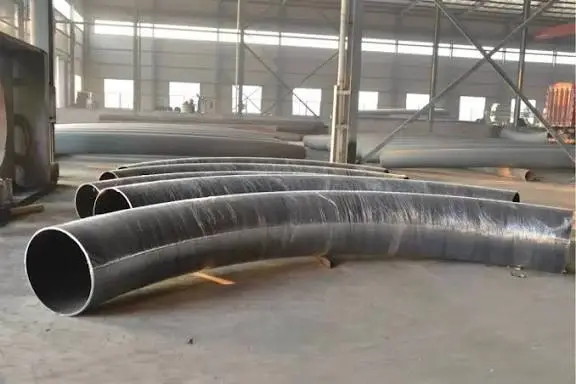
Installation Best Practices and Maintenance Tips for Buttweld Bends
When placed poorly, even the best pipe bend fails before its 20–30-year design life is up. How the component is welded and put into service determines how long it lasts.
Pre-Installation Preparation
Check the delivered bends for shipping damage, make sure the markings match the purchase specifications, and make sure the protective end caps are still on. Measure the ovality and tangent lengths; any deviation beyond the tolerance means the bends were handled incorrectly and the supplier needs to be notified. Store the bends on padded racks instead of directly on concrete, and keep carbon steel from touching the stainless steel because it causes galvanic corrosion.
Preparing the bevel for welding is very important. Our standard beveling according to ASME B16.25 (37.5° angle, 1.6 mm root face) is the same as most pipe preparation. Clean the bevel surfaces with acetone or an approved solvent to get rid of mill scale, oil, and moisture that can cause weld porosity. Stainless steel should only be worked on with stainless wire brushes and never with carbon steel brushes, which can embed iron particles that start rust.
Alignment and Fit-Up Procedures
Position the bend using external clamps, making sure that the tangent sections are properly supported without deforming the curved section. Check the alignment with a laser transit; misalignment greater than 1.6 mm creates stress concentrations and makes X-ray inspection hard. Use four feeler gauges to keep the gap uniform around the circumference, which is usually 2- 3 mm depending on the welding procedure.
For alloy steels, preheat to 150–200°C and keep the interpass temperature below 315°C to avoid hardness spikes. Tack welds should be put in by the same qualified welder who does the final pass, using the same filler metal and preheat. Tacks that aren't done right will crack during root welding, contaminating the weld pool.
Common Installation Pitfalls
In thick-wall alloy bends, rushing the preheating process causes hydrogen cracking; make sure there is enough soak time for the whole cross-section to reach the target temperature. Using too much heat during welding creates large areas with reduced toughness; follow qualified welding procedures that specify the maximum heat input in kJ/mm. Not doing post-weld heat treatment on materials that need it, like P5 or P11 alloys, leaves residual stresses that start service cracks.
Maintenance and Inspection Protocols
Ultrasonic thickness measurements should be done every two to three years in erosive or corrosive service to measure the remaining wall thickness at the extrados and intrados. Trending data shows whether the corrosion allowance gives enough remaining life or if replacement should be planned. During turnarounds, visual inspections should be done to look for external corrosion under the insulation, coating breakdown, or leaking gaskets at adjacent flanges.
Intelligent pigging, which involves running instrumented devices through the pipeline, finds metal loss, dents, and cracks without digging. Our long-radius bends feature controlled ovality, ensuring that inspection pigs can pass through without getting stuck; we've supplied bends to major pipelines that have been pigged successfully for 15 years or more. Coating systems, such as 3-layer polyethylene, fusion-bonded epoxy, or liquid epoxy linings, extend service life in buried or submerged applications where external corrosion speeds up failures.
Conclusion
When choosing pipe bends for high-pressure and high-temperature applications, you have to balance technical performance, cost, and the realities of the supply chain. Knowing the differences between elbows and long-radius bends, how material choice affects lifecycle costs, and using structured procurement criteria can help you make decisions that are less risky for the project. Following the right installation procedures and regular maintenance will protect your investment and ensure years of safe, reliable use. Working with an experienced manufacturer who offers technical expertise, quality systems, and quick service can turn pipe bends from engineered components into strategic parts that help your facility run smoothly.
FAQ
1. What distinguishes a buttweld bend from a standard elbow?
The main difference is the bending radius and how they are made. Elbows have 1D or 1.5D radii and are mass-produced as catalogue items. Pipe bends have radii greater than 2D (commonly 3D, 5D, or 8D) and are usually made to order by induction heating or cold forming to match specific project isometric drawings. The larger radius reduces flow turbulence by 40–60% and lets pipeline inspection tools pass that would get stuck in short-radius elbows. This makes bends necessary for long-distance transmission pipelines and high-velocity process systems.
2. Why does wall thickness vary around a pipe bend?
The outer curve (extrados) stretches while the inner curve (intrados) compresses. This makes the extrados thinner and the intrados thicker. To make sure the pipe is safe, responsible manufacturers start with a heavier-schedule pipe than the final design calls for. They make sure the thinnest point still exceeds the minimum pressure rating calculations per ASME B31.3. Before shipping, our process controls and ultrasonic testing verify that the remaining wall thickness at the extrados meets the minimum design requirements specified by the applicable code.
3. Is post-bend heat treatment always necessary?
For example, carbon steel bends in ASTM A234 WPB with a wall thickness of less than 19 mm usually don't need PBHT for pressure service. However, alloy steels like P11 or P22, as well as any bend with a wall thickness of more than 25 mm, usually need normalizing or tempering to relieve residual stresses and restore ductility. High-yield pipeline grades like X70 may need PBHT to keep them from breaking. Always check ASME B31.3 or the relevant code requirements and specify PBHT in your purchase order when mandated.
Partner With JS FITTINGS for Reliable Buttweld Bend Solutions
Our buttweld bend inventory includes carbon, alloy, and stainless steel grades ranging from DN15 to DN1500. We have certifications from Petrobras, NIOC, and ADNOC that back up our quality systems. With monthly shipments exceeding 90 containers and on-time delivery above 95%, we provide the supply stability that distributors and EPC contractors depend on. Our technical team responds within one business hour to specification enquiries and offers value engineering that saves money without sacrificing safety. As a qualified buttweld bend supplier that follows ISO 9001, CE, and GOST-R guidelines, we provide full material traceability from mill certificates to final inspection reports. Contact our experienced export team at admin@jsfittings.com to talk about your project needs and find out how our manufacturing capabilities can help you meet your deadlines and stay within your budget.
References
1. American Society of Mechanical Engineers. (2020). ASME B16.49: Factory-Made Wrought Steel Buttwelding Induction Bends for Transportation and Distribution Systems. New York: ASME Press.
2. American Petroleum Institute. (2018). API Specification 5L: Specification for Line Pipe, 46th Edition. Washington, DC: API Publishing Services.
3. Manufacturers Standardization Society. (2019). MSS SP-75: Specification for High-Test-Wrought-Welding Fittings. Vienna, VA: MSS Technical Committee.
4. American Society of Mechanical Engineers. (2022). ASME B31.3: Process Piping Design and Construction Code. New York: ASME Standards Technology.
5. Becht, C., & Roberts, M. (2017). Fatigue Life Assessment of Piping Components Under Cyclic Loading Conditions. Journal of Pressure Vessel Technology, 139(4), 041401.
6. Zhang, L., & Kumar, S. (2021). Comparative Study of Corrosion Resistance in Carbon Steel and Stainless Steel Pipeline Components for Oil and Gas Applications. Materials Performance and Characterization, 10(2), 234-251.
Send Inquiry
You may like
Related Industry Knowledge
- Buttweld Bend for High-Pressure & High-Temperature Service
- OEM Buttweld Elbow Manufacturer for Oil and Gas Projects
- Types of ASTM A105 weld neck flange
- FBE vs 3LPE vs CWC for Underground and Subsea Applications
- Getting to Know ASTM A53 ERW Pipe: Characteristics & Uses
- How long does FBE Coated Steel Pipe last?
- Collaborative Art of Lap Joint Pipe Flange and Stub End
- What is carbon steel pipe made of?
- Buttweld Bend vs Elbow: Key Differences Explained
- Do flanges with threaded holes take stud bolts?