
OEM Buttweld Elbow Manufacturer for Oil and Gas Projects






2026-07-22 11:02:53
When oil and gas projects demand precision and reliability, choosing the right pipe fittings becomes non-negotiable. A butt-welded elbow is a critical component manufactured to ASME B16.9 standards, designed to change flow direction—typically by 90° or 45°—while preserving structural integrity under extreme pressure and temperature. Unlike threaded or socket-weld alternatives, these fittings feature beveled ends that enable full-penetration welds, creating permanent, leak-proof joints. For EPC contractors, distributors, and industrial end users, partnering with an experienced OEM manufacturer ensures consistent quality, compliance, and timely delivery across demanding upstream and downstream applications.
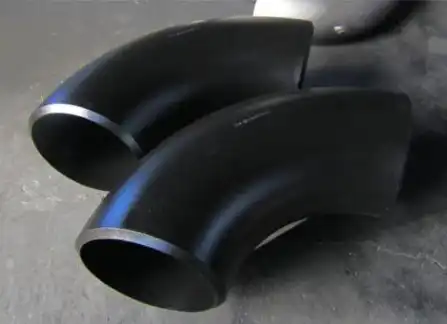
Understanding Buttweld Elbows for Oil and Gas Applications
What Defines a Buttweld Elbow?
In mission-critical piping systems where absolute reliability is paramount, buttweld elbows are specified as directional joints. With these fittings, pipelines can go around obstacles, change elevation, or change the flow direction without slowing down the system. The beveled ends meet the requirements of ANSI B16.25, which lets welders make uniform joint penetration that becomes part of the structure of the continuous pipe. This design gets rid of cracks where corrosion or leaks could happen, which is a major problem in oil platforms, refineries, and process pipelines.
The first step in manufacturing these critical components is sourcing high-quality steel from Tier-1 mills like Baosteel or Tsingshan. Hot forming or forging is used to shape the metal into precise geometries, and then CNC machining is used to machine the bevels accurately. This careful attention to detail makes sure that the work fits in with the schedule for the pipes and cuts down on the time needed for welding on-site, which is very helpful when project deadlines are tight.
Material Selection and Industry Standards
Material choice has a direct effect on how long something lasts and how safe it is to use. When strength and cost-effectiveness are most important, carbon steel elbows made to ASTM A234 WPB standards are the most common choice. Stainless steel types, like ASTM A403 WP316L, are better at resisting rust in places with sour gas or underwater installations. Some types of alloy steel, like WP91, can handle high temperatures in steam systems or catalytic cracking units.
Every grade of material is supplied with an EN 10204 Type 3.1 Mill Test Certificate that shows the full chemical and mechanical history of the material. This paperwork is very important for project audits and regulatory inspections because it shows that the standards set by ASTM, ASME, DIN, and EN are being met. The license lists the material's tensile strength, impact toughness, and chemical composition, so you don't have to guess when choosing a material.
Types: Long Radius vs. Short Radius Elbows
The choice of radius affects both the hydraulic function and the ease of fitting. Long radius elbows (1.5 times the standard pipe size) make bends that are smoother, which is important in high-flow pipelines. Options with a short radius (1.0 times NPS) can be used in tight spaces, like skid-mounted processing units or compressor stations, where the cost of real estate makes up for the loss of flow efficiency.
There are 45°, 90°, and 180° degree variations, and custom angles can be made for specific routing needs. Two 90-degree elbows create more pressure loss than a 45-degree elbow, so it is better for gas-gathering systems that need to keep the flow rate high so that liquid doesn't build up. On the other hand, heat exchanger banks and condensate return loops can't work without 180-degree return turns.
Seamless elbows come in sizes ranging from 1/2" to 24" and are formed on a hot mandrel, which gets rid of the need for lengthwise welds and makes the strength even in all directions. Welded options (ERW or EFW) increase size ranges up to 72", which helps with large pipeline projects. Each way of making it balances cost, lead time, and performance needs, so engineers can make the best specifications based on pressure class and service conditions.
How to Choose the Right Buttweld Elbow for Your Oil and Gas Project?
Evaluating Pressure, Temperature, and Diameter Requirements
Setting operating parameters is the first step in choosing a material. API 5L pipelines usually work between 600 and 1,500 psi, which requires Schedule 40 or 80 wall thickness. High-pressure injection wells may need Schedule 160 or XXS fittings, where wall thickness is much higher than standard pipe. Temperature ratings also affect the choice of material. Carbon steel is commonly used for moderate-temperature service, while alloy steel grades are selected for higher-temperature applications. Alloy grades can handle environments with steam reforming up to 1,100°F.
Diameter matching stops expensive changes in the field. For example, a 6-inch pipeline needs NPS 6 buttweld elbows with the same schedule designations to keep the wall thickness the same at weld joints. Mismatches cause stress risers that speed up fatigue failure under cyclic loading, which is a common problem in compressor discharge lines that are vibrating and expanding and contracting.
Material Impact on Corrosion Resistance and Mechanical Performance
Sour service environments with H₂S need materials that are NACE MR0175-compliant, in accordance with the applicable hardness limits specified in NACE MR0175/ISO 15156, to stop sulphide stress cracking. Stainless steel 316L is resistant to chloride for use in the ocean where it will be exposed to seawater spray, and low-temperature carbon steel (ASTM A420 WPL6) stays flexible in Arctic operations where standard grades become brittle below -20°F.
Charpy V-notch impact values should be listed on material certificates. These values should be tested at the lowest possible temperatures to make sure the material is tough in the worst possible situations. This is especially important for emergency shutdown valves and blow-down systems, where sudden depressurization can drop metal temperatures by 100°F in seconds.
Comparing Buttweld, Socket Weld, and Threaded Options
In small-bore instrumentation lines (2 inches and below), socket weld fittings make assembly faster, but they can corrode in crevices when they come into contact with chloride-rich fluids. Threaded connections don't need to be welded, but they can become loose from vibrations and can only handle a certain amount of pressure. Buttweld elbows work great in primary process piping, where weld radiography and pressure testing make sure the joint is solid before it's put into service.
Variations in installation complexity significantly influence project planning. For thick-wall applications, buttweld fittings may require post-weld heat treatment depending on the material, wall thickness, and applicable code requirements, which adds to the work hours but makes the joints permanent and maintenance-free. Threaded fittings, on the other hand, take less time to install but need to be retorqued and replaced over time as the threads wear out, which raises the lifecycle costs.
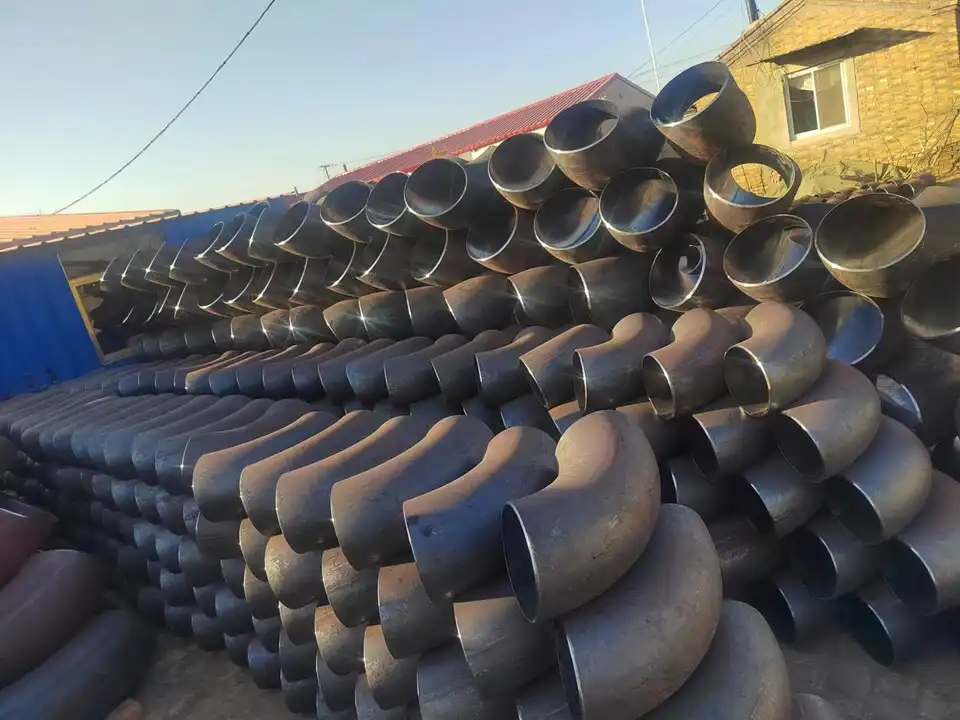
Installation and Quality Assurance of Buttweld Elbows in Oil and Gas Pipelines
Step-by-Step Installation Protocol
Checking that the heat numbers on the pipe and fittings match is the first step in a proper installation. This makes sure that the pipe and fitting will be compatible during welding. Grinding the bevels removes mill scale, revealing clean metal for the arc to penetrate. Alignment tools keep the metals concentric, stopping high-low mismatches that cause erosion zones and stress concentrations.
When welding, qualified WPS (Welding Procedure Specifications) approved by ASME Section IX are used. Preheating temperatures, interpass temperatures, and cooling rates are closely watched to keep the microstructure and hardness in check. A post-weld heat treatment relieves residual stresses in materials with walls thicker than 19 mm, making them less likely to crack during service due to stress corrosion.
Pressure testing at 1.5 times design pressure verifies joint integrity before hydrocarbons enter the system. The hydrostatic test duration—for the duration specified by the applicable project specification or governing code—allows time for leak detection at flanged connections and weld seams. Test charts with pressure and temperature curves are included in the documentation, which serves as permanent quality records.
Non-Destructive Testing and Inspection Methods
Visual inspection finds flaws on the surface like undercuts, porosity, and incomplete fusion. Magnetic particle inspection finds cracks close to the surface in carbon steel welds, especially at arc strikes and weld tie-ins. Buttweld elbows undergo rigorous ultrasonic testing (UT), which penetrates the whole wall and finds flaws or slag inclusions that can't be seen on the surface.
Radiographic examination creates permanent film records, which are needed for critical service piping according to ASME B31.3. Acceptance criteria follow API 1104 for pipeline construction or ASME B31.3 for process piping, while pressure vessel fabrication adheres to ASME Section VIII, dictating the maximum allowable defects that are allowed based on stress levels and the material's toughness. Third-party inspection agencies often watch tests on international projects, adding extra layers of assurance that provide additional assurance for project owners, insurers, and regulatory authorities.
Maintenance Strategies and Real-World Case Applications
Monitoring corrosion with ultrasonic thickness measurements shows how much metal is being lost and tells you when to replace the wall before it falls below the minimum design values. For buried pipelines, cathodic protection systems stop corrosion from happening on the outside, and corrosion inhibitors stop corrosion from happening on the inside from acidic condensates or CO₂.
In the Gulf of Mexico, an offshore platform expansion project used 316L stainless steel 90-degree long-radius elbows that remained in reliable service during the monitoring period, even though H₂S levels were above 1,000 parts per million. The precision beveling from the manufacturer cut on-site fit-up time by 30%, which helped contractors finish the tie-in during a small window of time between hurricane seasons.
Procurement Strategies for Buttweld Elbows: Finding the Right Supplier
Achieving Cost Efficiencies Through Bulk Purchasing
Tiered pricing can be unlocked by buying in bulk, especially for standard items like 90-degree Schedule 40 carbon steel buttweld elbows in common sizes (2", 4", 6", and 8"). Stockists who keep inventory for regional distributors negotiate annual supply agreements to keep prices stable, even when the steel market changes. Minimum order quantities usually start at one tonne, which is about 200 pieces in smaller diameters, which makes it cost-effective to combine orders for multiple projects.
Freight costs are lower for container-load (20- or 40-foot) shipments than for less-than-container-load shipments when properly packaged in seaworthy plywood cases with desiccants. This stops corrosion during ocean transit and saves money on costly rework when the goods arrive. Clear heat-number markings on each bundle make warehouse management easier by letting stockists rotate inventory and keep track of it without having to open every package.
Evaluating Local vs. International Suppliers
When a project is behind schedule and needs to be delivered quickly, domestic suppliers with shorter lead times and easier logistics can be helpful. However, international manufacturers that specialize in pipe fittings often have more technical knowledge and a wider range of sizes, which means they can support custom specifications that niche local suppliers can't afford to stock.
When coordinating with fabrication schedules, lead time management is very important. Standard items ship within three weeks, but non-standard sizes or materials take eight to twelve weeks from mill order to delivery. Reliable suppliers give realistic schedules based on production capacity data, which helps procurement teams organize orders and avoid having to pay extra fees at the last minute that cut into budget margins.
Verifying Supplier Credentials and Technical Documentation
Manufacturers that can be trusted have ISO 9001 certification, which shows that they manage quality in a planned way, as well as industry-specific certifications like PED (Pressure Equipment Directive) for European projects or GOST-R for Russian markets. Qualification by major energy companies like NIOC (National Iranian Oil Company), ADNOC (Abu Dhabi National Oil Company), or Petrobras shows that they can meet strict technical and delivery standards.
As per ASME B16.9, product catalogues should have dimensional drawings, material specifications with chemical composition ranges, and applicable pressure ratings determined by the piping design code and associated flange specifications where relevant. Client testimonials are more credible when they list specific project names, locations, and quantities delivered, so potential customers can check claims through industry networks.
With the capacity to produce 800 tonnes of piping components monthly, JS FITTINGS meets urgent project needs quickly while keeping prices low by making production more efficient. The company's on-time delivery rate for more than 90 monthly container orders is over 95%.
Conclusion
In oil and gas applications, where safety, compliance, and operational continuity are very important, choosing the right buttweld elbow manufacturer is very important. Specialist OEM partners are distinguished from commodity suppliers by their technical expertise, proven quality systems, and reliable supply chains. Fittings work reliably even in the harshest conditions thanks to material traceability, precision manufacturing, and thorough testing protocols. By aligning procurement strategies with certified manufacturers offering customization, technical support, and competitive delivery schedules, decision-makers minimize risk while optimizing total cost of ownership across complex, high-value infrastructure projects.
FAQ
1. What are the main advantages of using buttweld elbows in oil and gas pipelines?
Buttweld elbows make permanent, leak-proof joints by achieving full-penetration welds and creating a structurally continuous joint with it. This gets rid of the risks of threaded connections leaking and socket weld crevice corrosion. Smooth internal transitions reduce turbulence and erosion, which increases the system's service life. Because they can handle extreme pressure and temperature cycling, they are the best choice for critical hydrocarbon service where joint failure could have disastrous safety or environmental effects.
2. How do I determine the correct wall thickness schedule for my application?
You can choose the wall thickness based on the design pressure, temperature, and allowable stress values from ASME B31.3 by using the formula t = (P×D)/(2×S×E×W), where P is the design pressure, D is the outside diameter, S is the allowable stress, E is the weld joint efficiency, and W is the weld strength reduction factor. To get the nominal schedule, add the corrosion allowance (usually 1/16" to 1/8") and the manufacturing tolerance (12.5%). Check with your elbow supplier to make sure that the schedules are compatible.
3. What documentation should I expect from a qualified buttweld elbow manufacturer?
Companies that you can trust will give you Mill Test Certificates (3.1 per EN 10204), which list the chemical composition, mechanical properties, heat treatment records, and how the steel was heated. They will also give you dimensional inspection reports that confirm ASME B16.9 tolerances, non-destructive testing records (UT or radiography), surface finish measurements, and material certificates that prove the steel meets ASTM grade requirements. For international projects, you can expect certifications like CE marking, GOST-R approval, or client-specific qualifications from big energy companies.
Partner with JS FITTINGS for Reliable Buttweld Elbow Supply
JS FITTINGS has delivered premium pipe fittings to oil and gas projects worldwide since 1983, combining 40+ years of manufacturing expertise with modern quality systems. Our buttweld elbows undergo rigorous testing—including ultrasonic inspection and magnetic particle examination—to detect defects before shipment. We maintain inventory across sizes from 1/2" to 72", supporting both urgent requirements and planned turnarounds with 95% on-time delivery rates. Whether you need carbon steel elbows for onshore gathering systems or corrosion-resistant alloy fittings for subsea applications, our engineering team provides technical guidance from specification through commissioning. As a certified buttweld elbow manufacturer holding ISO, CE, and GOST-R qualifications, we serve EPC contractors, stockists, and end users requiring dependable quality and responsive service. Contact our team at admin@jsfittings.com to discuss your project requirements and receive detailed product specifications tailored to your operating conditions.
References
1. American Society of Mechanical Engineers. (2020). ASME B16.9: Factory-Made Wrought Buttwelding Fittings. ASME Standards Committee.
2. American Petroleum Institute. (2018). API Standard 5L: Specification for Line Pipe, 46th Edition. API Publishing Services.
3. ASTM International. (2019). ASTM A234/A234M: Standard Specification for Piping Fittings of Wrought Carbon Steel and Alloy Steel for Moderate and High Temperature Service. ASTM Committee A01.
4. British Standards Institution. (2017). EN 10253-2: Butt-welding Pipe Fittings – Part 2: Non-alloy and Ferritic Alloy Steels with Specific Inspection Requirements. BSI Standards Publication.
5. National Association of Corrosion Engineers. (2015). NACE MR0175/ISO 15156: Petroleum and Natural Gas Industries – Materials for Use in H₂S-Containing Environments in Oil and Gas Production. NACE International.
6. Deutsches Institut für Normung. (2016). DIN 2605-1: Pipe Bends – Part 1: Wrought Carbon Steels. DIN Standards Committee for Iron and Steel.
Send Inquiry
You may like
Related Industry Knowledge
- Understanding Weld Neck Flanges: Types and Applications
- Hot Dipped Galvanized Carbon Steel Pipe for Water Supply System
- Which Standard Governs Carbon Steel Forged Steel Flange Size?
- Custom Stainless Steel Buttweld Elbow for Chemical Plants
- Large Diameter LSAW Welded Carbon Steel Pipe for Piling Projects
- How long does A53 ERW Pipe last?
- Understanding Long Radius Buttweld Elbow: Essential Components for Your Construction Projects
- How to Select the Right Buttweld Bend Radius (3D–20D)
- Seamless vs Welded Buttweld Tee: Which Performs Better?
- Industrial Buttweld Reducer Selection for Refinery Projects