
Carbon Steel Pipe High-Quality Welding: 5 Key Points






2026-11-18 14:34:11
High-quality welding of Carbon Steel Pipe rests on five key points: choosing the right grade and a qualified welding procedure, controlling joint preparation and welding parameters, managing preheat, interpass temperature, and heat treatment, preventing defects, and verifying every weld through inspection and records. When I review projects with buyers, the same pattern appears. Teams that control all five points face fewer leaks, less rework, and fewer schedule delays. This guide explains each point in plain language and shows how JS FITTINGS supports US buyers with certified pipe and clear documentation.
Why Welding Quality Determines Carbon Steel Pipe Performance
Where Carbon Steel Pipe Is Used
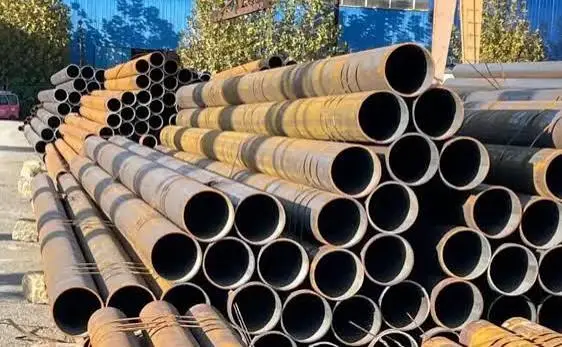
Carbon steel pipe is used to transport water, steam, natural gas, and crude oil. It is also used in pile foundations and structural applications where it carries mechanical loads. Buyers choose it because of its strength, availability, and relatively competitive cost compared with many alternative materials. ASTM A53 Grade A has a minimum tensile strength of 48 ksi, while ASTM A53 Grade B and ASTM A106 Grade B have a minimum tensile strength of 60 ksi. Common manufacturing types include SMLS (seamless), ERW, LSAW, and SSAW. They can be black or hot-dip galvanized. Still, all of those things need joints, and the weld is often what makes the system last for decades.
What Goes Wrong When Welds Fail
Welds with defects such as lack of fusion, porosity, cracks, undercut, and excessive distortion can compromise joint integrity and cause leaks. Hydrogen-induced cracking may develop hours or even days after welding, so a weld that looks acceptable on the surface may still contain defects. A gas or steam line with just one bad joint can shut down the whole unit. Beyond repair costs, the pipeline may need to be isolated, inspected, and retested before returning to service. For EPC contractors, this can delay project milestones, reduce operating efficiency, increase safety risks, and undermine the end user's confidence in the project.
Standards That Support Compliant Procurement
Applicable material, dimensional, welding, and construction standards establish consistent requirements for pipe manufacturing, welding qualification, inspection, and acceptance. ASTM A53 and ASTM A106 specify requirements for carbon steel pipe, while API 5L and ISO 3183 cover steel line pipe for pipeline transportation systems. ASME B36.10M specifies dimensions for welded and seamless wrought steel pipe. ASME BPVC Section IX establishes qualification requirements for welding procedures and welding personnel. ASME B31.3 tells you how to build, check, and test process pipes. The purchase order should clearly identify the applicable standards, material grades, inspection scope, and acceptance criteria. Instead of fighting at delivery, this habit makes sure that everyone gets the papers they need to review bids. If an offer is to be accepted, the paperwork must usually match the specification word for word. It is particularly important for government-funded, infrastructure, and EPC projects.
Five Key Points for High-Quality Welding of Carbon Steel Pipe
These five controls provide a practical framework for managing welding quality, from material selection and joint preparation to final inspection and documentation.
Key Point 1: Select the Correct Material and Welding Procedure
First, check that the grade is right for the environment, pressure, temperature, fluid, and mechanical load. Low-carbon grades such as ASTM A53 Grade B and ASTM A106 Grade B are generally weldable, but the required welding controls depend on factors such as carbon equivalent, wall thickness, joint restraint, and service conditions. You can compare welded pipe and SMLS pipe based on how much they cost, how big they are, how hot or cold they are, and where you can get them. You should ask for ASTM A333 with impact tests for cold service. The accepted Welding Procedure Specification should include the joint design, the filler metal, the parameters, the preheat, the interpass temperature, and the PWHT. These should all be written down before the start of production. The WPS must be supported by the applicable Procedure Qualification Record (PQR), and welders must hold the qualifications required by the governing code.
Key Point 2: Control Joint Preparation, Fit-Up, and Welding Parameters
Proper joint preparation is essential for achieving the required penetration and consistent weld quality. The bevel angle, root face, and root opening should follow the approved joint design and applicable requirements, rather than relying on one standard angle for every pipe thickness. ASME B16.25 specifies different butt-welding end preparations according to wall thickness and welding conditions. Before welding, check root alignment, hi-lo, ovality, bevel condition, and root gap. Also, remove any oil, rust, water, or scale. Pick the best method for the job. GTAW (TIG) is commonly used for controlled root passes, while SMAW, GMAW, FCAW, and SAW may be selected for different field or shop applications. When welding galvanized pipe, follow an approved procedure for zinc removal or preparation and provide effective ventilation because zinc-containing welding fumes can be hazardous. Consistent joint preparation and controlled welding parameters help reduce variations between weld passes and improve overall weld quality.
Key Point 3: Control Preheat, Interpass Temperature, and Heat Treatment
Proper temperature control helps reduce the risk of hydrogen-induced cracking, excessive weld-zone hardness, and heat-related distortion. Hydrogen cracking is generally associated with the combined effects of diffusible hydrogen, a susceptible hard microstructure, and tensile stress. How much a joint needs to be heated up depends on how thick its walls are, how cold it is outside, and how it is controlled. The risk goes up when the carbon equivalent goes up. Welders should use calibrated temperature-measuring instruments to verify that the specified minimum preheat and maximum interpass temperatures are maintained. In a multi-pass joint, clean and check each layer before moving on to the next one. Post-weld heat treatment may be required to reduce residual stresses or meet hardness and code requirements, depending on the material, thickness, service conditions, and governing construction code.
Key Point 4: Prevent and Detect Common Welding Defects
Common welding defects include porosity, cracks, slag inclusions, lack of fusion, incomplete penetration, undercut, excessive weld reinforcement, burn-through, and distortion. If something goes wrong, it's usually because of a bad fit, dirty surfaces, bad shielding, wet electrodes, low preheat, fast travel speed, or operators who aren't trained. Low-hydrogen electrodes such as E7018 should be stored, handled, and reconditioned according to the manufacturer's instructions and the applicable welding procedure. Effective quality control requires approved WPS and PQR documentation, qualified welders, controlled storage and handling of welding consumables, incoming material inspections, in-process checks, and complete traceability records. It costs less not to have a flaw than to find one during tests and have to cut out the joint.
Key Point 5: Verify Weld Quality Through Inspection and Testing
Weld quality should be verified through visual examination, dimensional checks, nondestructive examination (NDE), pressure testing where required, and documented quality records. Visual and dimensional inspectors evaluate weld bead profile, cracks, undercut, arc strikes, excessive weld reinforcement, ovality, straightness, and nominal wall thickness. Magnetic particle testing (MT) is used to detect surface and near-surface discontinuities in ferromagnetic materials, while liquid penetrant testing (PT) detects surface-breaking defects in suitable nonporous materials. Radiographic testing (RT) and ultrasonic testing (UT) are used to examine internal weld discontinuities, subject to the applicable procedure and acceptance criteria. Under ASME B31.3, the hydrostatic test pressure for metallic piping is generally not less than 1.5 times the design pressure, subject to the code's applicable provisions and stress limitations. Match the number of checks to the job and the rules that govern it. Get certificates of approval, WPS and PQR papers, heat tracking certificates, and papers from mill tests. Missing or incomplete documentation can prevent final acceptance even when the pipe and welds appear satisfactory.
Carbon Steel Pipe Sizes, Wall Thickness, and Pressure Selection
Nominal Size Versus Outside Diameter
The phrase "nominal pipe size" is not a measurement; it is just a name.For instance, an NPS 2 pipe has a standardized outside diameter (OD) of 2.375 inches (60.3 mm), while an NPS 6 pipe measures 6.625 inches (168.3 mm) OD. The nominal size and the outside diameter are the same from NPS 14 on up. It can be hard for flanges and fittings to fit if you mix them up. Our Carbon Steel Pipe range has wall thicknesses from Sch 10 to Sch 160, or 2 mm to 45 mm, and outside diameters from 1/2 inch to 60 inches. Make sure you include both NPS and actual OD in your question so that the price fits your plans and the parts you want to weld on.
Schedule and Wall Thickness
Pipe schedules in ASME B36.10M relate nominal pipe size to specified wall thickness. The NPS 6 Schedule 40 wall is 0.280 inches (7.11 mm) thick, and the Schedule 80 wall is 0.432 inches (10.97 mm) thick. A lot of different utility and general industry processes use Schedule 40. Schedule 80 pipe has a thicker wall than Schedule 40 pipe of the same nominal size. This can provide greater pressure-containing capacity under suitable design conditions, although the allowable pressure must be calculated based on the material, dimensions, temperature, and applicable design code. When the wall is thicker, the way the weld is done changes too. It needs more passes, maybe more preheating, and maybe heat treatment after the weld, as required by code. Do not compare the plan to what you normally do. Instead, compare it to the design pressure that you calculated.
Weight and Cost Calculation
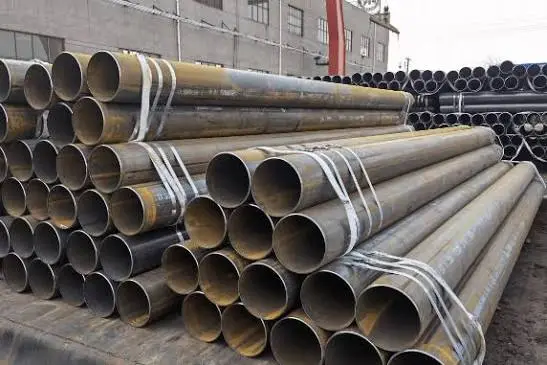
Pipe weight and procurement cost are important factors in project budgeting. Weight can be estimated from the pipe's outside diameter and wall thickness, while the final price also depends on material grade, manufacturing method, inspection, coating, and delivery requirements. The theoretical weight of plain-end carbon steel pipe is calculated using the standard formula: W (kg/m) = (OD − WT) × WT × 0.02466, where outside diameter (OD) and wall thickness (WT) are expressed in millimeters.That gives us (168.3 - 7.11) × 7.11 × 0.02466, which is about 28.26 kg/m for NPS 6 Schedule 40. The price then changes based on the grade, length, tests, packing, finish, and destination of the goods. You shouldn't compare general bids per ton because these things change from project to project. Instead, you should use your exact specifications to figure out weight and cost. To compare prices, it is also helpful to have different lines for freight, material, tests, and coating.
How to Choose Carbon Steel Pipe for Different Applications
Service conditions should drive the choice, not price alone.
Oil, Gas, and Pipeline Service
To do their jobs, most of the time, people need API 5L or ISO 3183 line pipe. Grade names like X52 and X70 show the minimum yield strength in ksi. In this case, X70 means 70 ksi. We have API 5L Gr. B to X70 pipe in forms like SMLS, ERW, LSAW, and SSAW. Our oil and gas Carbon Steel Pipes are CSA Z245.1 pipe as well. On these jobs, there will be strict requirements for NDT, traceability, and how tough the parts are. So that buried lines don't rust, our clients ask us to coat them with things like 3PE or FBE. Tight outside diameter (OD) and roundness tolerances are maintained through our mechanical cold-expansion process for LSAW pipe.This makes it easy for workers to line up the ends of long pipes.
Steam, Boiler, and Low-Temperature Service
ASTM A106 Gr. A is often used in high-temperature steam lines. It is made as SMLS pipe and is made for high-temperature work. In ASTM A192, you can find SMLS boiler tubes for high pressure. ASTM A179 governs seamless cold-drawn low-carbon steel heat exchanger and condenser tubes. For low-temperature service, ASTM A333 specifies seamless and welded carbon and alloy steel pipe grades with applicable impact-testing requirements. The required material grade and Charpy V-notch testing temperature should be selected according to the minimum design metal temperature and governing project specification. For example, ASTM A333 Grade 6 is commonly associated with a specified impact-test temperature of −50°F (approximately −45.6°C), subject to the applicable standard requirements. We have grades 1 through 6 of A333 in both SMLS and welded forms. Talk to your partner about the temperature, pressure, wall thickness, PWHT, and code standards before you place an order.
Water, Fire Protection, and Structural Use
ASTM A53 Grade A and Grade B pipes are used in general mechanical and pressure applications, including some water and fire-protection systems. ASTM A53 covers seamless and welded pipe, with the permitted grade and manufacturing type depending on the specified product requirements. Based on how much rust it will be exposed to and the rules in your area, choose black or galvanized. ASTM A135 has ERW pipe, ASTM A134 has bigger electric-fusion-welded pipe, and ASTM A252 has pipe piles. NBR 8261 talks about how to use cold-formed welding to build things out of round, square, and rectangular tubes. For zinc-coated tubes, DIN 2444 is used, and for medium-weight tubes that can be combined with threads, DIN 2440 is used. SSAW pipe is a good choice for moving water with a large diameter that doesn't put the safety of the structure at risk.
Choosing a Carbon Steel Pipe Manufacturer or Supplier
Verify Capability and Documents
A qualified carbon steel pipe supplier should demonstrate manufacturing capability, quality control procedures, material traceability, export experience, and the ability to provide complete technical documentation. What kinds of pipes does the company make? Find out if they can handle large diameters, custom sizes, and orders that come in over and over again. After that, compare the heat numbers on your package to those on the certificates, tracking records, and inspection reports from a third party. JS FITTINGS is certified by CE, ISO, and GOST-R and uses a spectral analyzer and other tools to test for flaws. It also has an ISO 9001 quality management system. Furthermore, JS FITTINGS is an approved piping supplier for major international energy corporations including ADNOC and Petrobras.
Weld Seam Integrity You Can Check
We inspect the longitudinal and helical weld seams of LSAW and SSAW pipes with 100% radiographic testing (RT) to ensure weld integrity matches parent metal strength. Factory-applied external coatings include 3LPE (three-layer polyethylene), 3LPP, fusion-bonded epoxy (FBE), or liquid epoxy lining depending on burial and immersion requirements. You can also buy solid CRA steel, covered steel, or lined steel. If an RT report is required, state the inspection scope and acceptance criteria in the purchase order so that the supplier can arrange the appropriate inspection and documentation.
Delivery, Support, and Trade Terms
The more than 7,000-square-meter plant where we make and ship goods has been open since 1983. We can make samples, do small-batch trial sales, do OEM/ODM work, and get back to you within an hour if you have a question. Tests, coatings, packaging, Incoterms, lead time, warranty, and claims process should all be written down every time you talk about a price. Distributors can also discuss customized commercial support for recurring orders and long-term supply arrangements.
Conclusion
Reliable welding of Carbon Steel Pipe depends on consistent control of material selection, joint preparation, welding parameters, temperature management, and inspection. The base is made with the right grade of material and a trained process. The joints are carefully prepared and made to the same standards to get full penetration. Preheating, setting limits on the number of passes, and heat treatment can help stop hydrogen cracking and residual stress. Consistent process monitoring and qualified welding procedures help reduce the occurrence of common weld defects. To make sure it meets the rule, each joint is checked and written down. RT, UT, MT, PT, and hydrostatic tests are all part of this, along with mill licenses and process records. ASTM A53, ASTM A106, ASTM A333, and API 5L cover different pipe applications and material requirements, including general service, high-temperature service, low-temperature service, and pipeline transportation. Pipe size, schedule, and application must also be considered. Fewer leaks, fewer repairs, and a lower cost over the whole life of the product are what it really does, not just a low unit price.
FAQ
1. Is preheating always required?
No. The amount needed depends on how much carbon there is, how thick the wall is, how hot it is outside, and how the joints are held together. Thick sections, highly restrained joints, and materials with a higher risk of hydrogen cracking may require more stringent preheat controls. Always follow the approved WPS and the requirements of the governing code.
2. How do I verify weld quality before accepting pipe?
Ask for heat numbers, mill test certificates, WPS and PQR records, welding standards, NDT reports, and hydraulic test results. Then, look at the shapes on the pipe and see how they match up.
3. What separates SMLS pipe from welded pipe?
SMLS pipe is manufactured without a welded seam, while ERW, LSAW, and SSAW pipes are produced by forming and welding steel strip or plate. Seamless pipe is commonly specified for applications such as ASTM A106 high-temperature service, while welded pipe is often considered for larger diameters and projects where its manufacturing method and inspection requirements meet the design specification.
4. How do I calculate pipe weight?
To estimate the theoretical pipe weight in kilograms per meter, use the formula: kg/m = (OD − WT) × WT × 0.02466, where OD and WT are measured in millimeters.
Request a Carbon Steel Pipe Welding and Supply Solution from JS FITTINGS
JS FITTINGS has been making Carbon Steel Pipes since 1983 and has ISO 9001 quality control and a one-hour response time. Send an email to admin@jsfittings.com with your grade, standard, size, wall thickness, number, inspection level, and the address where you'd like the goods delivered. We'll then send you a quote and make plans for how to deliver them. We can also make samples and sell small amounts as test runs.
References
1. ASTM International, ASTM A53/A53M Standard Specification, 2022
2. ASTM International, ASTM A106/A106M Standard Specification, 2019
3. American Petroleum Institute, API Specification 5L, Line Pipe, 46th Edition, 2018
4. American Society of Mechanical Engineers, ASME Boiler and Pressure Vessel Code Section IX, 2023
5. American Society of Mechanical Engineers, ASME B31.3 Process Piping, 2022
6. American Society of Mechanical Engineers, ASME B36.10M, 2018
Send Inquiry
You may like
Related Industry Knowledge
- What Applications Are Best for Threaded Flanges?
- What Is a 90 degree buttweld elbow Used For?
- What Are the Main Blind Flange Pressure Classes?
- Best Buttweld Tee Design for Refinery and Petrochemical Lines
- Carbon Steel Forged Steel Flange: Forged vs Plate Compared
- What Are Slip-On Flanges?
- Slip-On Flange Uses and Applications
- What is the difference between seamless and welded pipe?
- What is the temperature to weld carbon steel pipe?
- How to weld carbon steel pipe?