
Custom Angle Buttweld Bend: 30°, 45°, 60°, 90° Options






2026-08-06 10:42:45
Custom angle buttweld bends serve as critical directional-change components in industrial piping systems, offering greater flexibility than standard fittings. These engineered pipe bends—available in 30°, 45°, 60°, and 90° configurations—enable designers to route pipelines through complex piping layouts while maintaining structural integrity and flow efficiency. Unlike standard elbows with fixed 1D or 1.5D radii, custom angle bends typically feature long-radius designs (3D, 5D, 8D) that reduce turbulence and facilitate pipeline inspection tools. When sourced from experienced manufacturers, these bends meet stringent standards like ASME B16.49, ensuring safety compliance and extended service life across demanding applications.
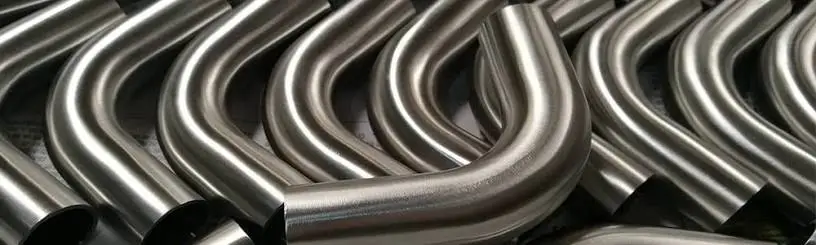
Understanding Custom Angle Buttweld Bends: Types, Sizes & Materials
Defining Custom Angle Bends and Their Core Function
One key difference between an elbow and a bend is the radius-to-diameter ratio. Standard elbows are factory-made fittings defined by standards such as ASME B16.9, while pipe bends are typically formed by bending straight pipe, often with larger radii such as 3D, 5D, or 8D, in accordance with standards such as ASME B16.49. There is less pressure drop and erosion in high-velocity systems because the directional changes are smoother with this bigger radius. Transmission lines for oil and gas that go for thousands of miles use 3D, 5D, and 8D bends to handle changes in terrain without affecting the flow rate. Standard elbow radii—1D for short-radius and 1.5D for long-radius—cannot give pigging processes the smooth curve they need. This is the reason why special buttweld bends are needed for pipeline upkeep and inspections.
Common Angle Options and Industrial Applications
A 30°, 45°, 60°, or 90° angle can be used by any business that needs to change flow direction. A 90° bend is used in chemical processing plants to handle sharp changes in flow direction at manifold connections. Because they are in the middle, 45° and 60° bends are used on offshore platforms to cut down on the number of joints. This set-up with 30° turns is useful in power plants where slow direction changes keep lines that are too hot from wearing away from steam. Custom angles that go beyond these standards are often needed for rebuilding jobs where non-standard shapes are needed because of the way the building is set up. When manufacturers use induction bending technology, they can manufacture bends at a wide range of angles, typically between 15° and 180°, depending on project requirements and manufacturing capability. This lets them make shapes that fit different isometric models without changing the material's properties.
Standard Size Ranges and Dimensional Considerations
Custom angle buttweld bends can be made in many sizes to meet different needs. Seamless production methods are commonly used for bends up to approximately 24 inches, depending on material availability and manufacturing capability. These bends can be used on process lines in pharmaceutical plants and factories. Longitudinal submerged arc welding (LSAW) or helical submerged arc welding (HSAW) can be used to weld up to a 60" diameter, which is big enough for oil and gas trunk pipelines. Wall thicknesses range from SCH 10s to SCH 160 and extra-extra strong (XXS), so engineers can match pressure ratings from low-pressure drainage systems to supercritical steam lines that work at 4,500 psi. When procurement teams specify dimensions, they must make sure that the bend radius and tangent length accommodate site welding constraints while maintaining code-compliant wall thickness after bending-induced thinning at the extrados.
Material Selection for Pressure, Temperature, and Corrosion Resistance
For example, API 5L Grade B and the X-series (X42 through X80) are good choices for pipelines because they have a good balance of strength, weldability, and cost. The PSL1 and PSL2 specifications describe the chemical composition and mechanical property requirements. PSL2 provides enhanced mechanical properties, and testing requirements may be specified for H₂S environments in accordance with API 5L and ISO 15156/NACE MR0175. Alloy steel grades like ASTM A234 WP11 and WP22 work well at high temperatures in boiler systems, while ASTM A234 WP91 is used in ultra-supercritical power plants that go above 600°C. For corrosion-resistant applications, you should use stainless steel (ASTM A403 WP304/304L, WP316/316L) or duplex grades like 2205, which have better pitting resistance and high yield strength. For low-temperature service in LNG facilities, you should use impact-tested materials like ASTM A420 WPL6, which maintain adequate toughness at cryogenic temperatures.
Compliance with ASME, ASTM, and ISO Standards
When all projects around the world follow the same rules, everyone can work together safely. For example, ASME B16.49 specifies the sizes, tolerances, material properties, and markings for factory-made wrought-steel butt-weld bends, induction bends, and buttweld bends. ASME B16.9 covers factory-made wrought steel buttwelding fittings such as elbows, while ASME B16.49 specifically covers induction bends used in pipeline systems that meet certain size and pressure classifications. Material standards include ASTM A234 for carbon and alloy steel and ASTM A403 for stainless steel.
Comparison of Custom Angle Buttweld Bends: Choosing the Right Angle and Type
How Bend Angle Affects Flow Characteristics?
If you need to change the direction of flow quickly, a 90° configuration is best. It causes the most turbulence and pressure drop compared to gentler angles, but it is fine for low-velocity applications or when you do not have enough room for longer routes. The 45° bend reduces turbulence and takes up less linear space than two 30° bends in series, which makes it popular in crowded plant areas. The 60° option fills the gap when layout geometry demands an angle between 45° and 90°, optimising both flow and footprint.
Buttweld Bends Versus Elbows and Socket Weld Fittings
Standard elbows have 1D or 1.5D radii and fixed 45° or 90° angles. They are good for general-purpose uses where flow restriction is acceptable. Buttweld bends, on the other hand, are commonly available with radii from 3D to 20D, which means they can be piggable and have less pressure drop. Socket weld fittings, which have a recessed socket for pipe insertion, can only handle smaller diameters (usually under 2") and lower-pressure uses, while buttweld bends can handle larger diameters and higher pressures. This is because they do not have any internal shoulders, which means there are no turbulence or entrapment zones where corrosive deposits can build up. This makes them better for services like slurry and sour gas, where cleanliness can affect how well they work.
Seamless Versus Welded-Bend Construction
Seamless buttweld pipe bends generally cost more than welded bends but provide more uniform material properties. Seamless turns can be made with hot-extruded pipe because the microstructure is even and there are no lengthwise welds. They are ideal for critical gas and high-pressure steam service because of this. Because they are harder to make, they can only come in diameters up to about 24 inches, which is why they cost more. Welded buttweld pipe bends, on the other hand, are cost-effective and available in diameters up to 60 inches. They are manufactured from seam-welded steel plates prior to bending. As the metal is bent with induction, the lengthwise weld seam must be placed along the neutral axis to keep the stress from building up. A full radiographic check and heat treatment of the seam after welding make sure that the bond is strong and matches the features of the base material. As LSAW technology has gotten better recently, the performance gap has closed. This means that welded bends are becoming more acceptable in high-stakes situations as long as they are made to strict quality standards.
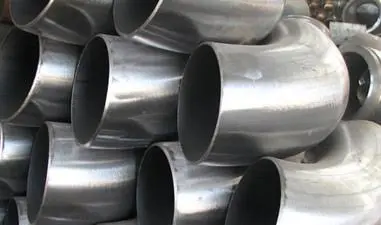
Installation & Measurement Best Practices for Custom Angle Buttweld Bends
Critical Dimensional Parameters for Ordering
Correct design keeps changes in the field from costing a lot of money. The nominal diameter must match the diameter of the pipe next to it, and the centre-to-end measurement shows the butt-weld bend shape to make sure the plan is right. The choice of bend radius strikes a balance between the need for hydraulics and the troubles that come with pigging. Intelligent pig manufacturers set the smallest radius (usually 3D or 5D) that a pig can pass through. The outside wall (extrados) becomes thinner as the material is stretched during the bending process. In this case, the wall thickness needs to be carefully calculated. It is possible to be sure that the post-bend thickness meets the code requirements if you choose a larger starting schedule. It is important that the tangent length, which is the straight part at each end, has enough space for welding tools and heat-affected zone control. End bevelling according to ASME B16.25 makes it easier to prepare the joint, and when the parts are bought, they should specify if they need any transition cutting to match changes in wall thickness.
Tools and Techniques for Field Measurement
If you check before installation, you can avoid alignment issues during tie-in. To verify ovality, use a pi tape or diameter tape to accurately measure the outside diameter several times along the bend. The measurement should not be more than what the code allows, which is within the allowable tolerances specified by the applicable project specification or governing standard. Ultrasonic thickness gauges check the wall thickness at the extrados, intrados, and neutral axis to make sure that any thinning that happens when the metal is bent does not go too far. The angle of the bend is checked with a digital protractor or angle finder. Especially when there are a lot of bends in a curve, this is very important. Using a straight edge and a feeler gauge to check the ends makes sure they are flat and straight. This keeps them from being out of line at an angle while welding. For big turns, laser alignment tools project reference planes to make sure the parts are in the right place before they are tacked together. This makes forced fit-up less likely, which can lead to residual stress that lasts.
Welding Preparation and Quality Assurance Steps
If you prepare the joint correctly, you can be sure that the welds will be full penetration and meet code standards. Make sure that the ends that are bevelled are smooth and at the right angle. Any mill scale or other dirt that is present should be ground off. To follow the rules for welding, the root opening should conform to the applicable welding procedure specification (WPS). Tack welds should go deep enough to resist shrinkage forces without creating flaws. Qualified welders should do root, fill, and cap passes, keeping an eye on the temperature between passes to avoid adding too much heat that could change the buttweld bend metallurgy. Visual inspection finds flaws on the surface, while radiographic or ultrasonic testing finds breaks inside the material. For alloy steels and thick-wall carbon steel, heat treatment after welding may be needed to relieve residual stress and make the heat-affected area tough again.
Addressing Common Installation Challenges
Welding-induced thermal distortion is common, especially when joining large-diameter, thin-walled buttweld pipe bends.To keep the joint from warping, use balanced welding sequences that switch sides and move forward in small steps. This approach helps keep the joint in place until it cools. Dimensional tolerance stack-up causes pipe sections next to each other to be out of alignment. However, cold springing (intentional misalignment compensated by piping flexibility analysis) can handle moderate differences without overstretching. Documenting all dimensional deviations and corrective actions maintains quality traceability, which is essential for regulatory inspections and future maintenance planning.
Conclusion
To improve system hydraulics, installation efficiency, and long-term dependability, pick the right custom angle configuration (30°, 45°, 60°, or 90°). It is important to know the difference between buttweld bends and elbows, think about the service conditions of different materials, and work with qualified manufacturers to make sure that the decisions you make about procurement support project success. Paying close attention to welding procedures, quality documentation, and verifying dimensions lowers installation risks that could delay commissioning or compromise safety. The performance advantages and proven applications across oil and gas, chemical processing, and power generation demonstrate why engineered bends represent a preferred solution for demanding piping systems.
FAQ
1. What distinguishes a custom angle bend from a standard elbow?
The radius-to-diameter ratio defines this distinction. Custom buttweld bends can have extended radii (3D, 5D, or 8D) and any angle from 15° to 180°. Standard elbows have fixed 45° or 90° angles and 1D or 1.5D radii, while transmission lines need bends because the longer radius lowers pressure drop and allows pipeline inspection pigs to pass through. Bends are also made in different ways. Elbows are made by pressing or extruding, while custom bends are made by induction heating or cold forming to get exact geometries matching project isometric drawings.
2. How does wall thinning during bending affect pressure ratings?
There is a 10% to 25% loss in thickness on the outside when you bend something, depending on the material and the radius. To make up for this, manufacturers use heavier-schedule pipe and make sure the post-bend thickness is higher than the code minimum. An ultrasonic inspection confirms the actual thickness, and calculations based on ASME B31.3 make sure there are enough safety factors. If the bending is done correctly, it maintains its design pressure rating without breaking, as long as manufacturing controls and heat treatment restore the material properties.
3. Can bends be manufactured from welded pipe for high-pressure service?
With today's advanced LSAW technology, welded pipe can be bent for high-pressure uses. The longitudinal seam weld is placed along the neutral axis to reduce stress concentration, and post-weld heat treatment makes sure that the weld properties match the base material. Radiographic inspection checks the weld integrity throughout the buttweld bend. For ultra-high pressures, seamless construction is still preferred, but welded bends that have been properly qualified work well for most transmission and process applications cost-effectively.
4. What testing validates bend quality before shipment?
Tests that do not damage the material are used to check the diameter, wall thickness, angle, and ovality. Ultrasonic testing checks the wall thickness, and radiographic or ultrasonic testing detects internal discontinuities, while mechanical test samples are used for tensile strength, hardness, and impact toughness verification. Hydrostatic testing checks that the pressure is contained, and positive material identification verifies chemical composition. Documentation packages, including mill test reports and compliance certificates, accompany each shipment.
Partner with JS FITTINGS for Reliable Buttweld Bend Solutions
JS FITTINGS brings over 30 years of manufacturing excellence to serve EPC contractors, distributors, and industrial end users across North America. Our comprehensive range includes custom angle buttweld bends from 30° to 90° in radii spanning 3D to 20D, manufactured to ASME B16.49 standards using API 5L and ASTM-compliant materials. With production capacity exceeding 30,000 tonnes annually and monthly shipments surpassing 90 containers, we maintain the inventory depth and responsiveness your projects demand. ISO 9001 certification and qualifications from major energy companies validate our quality systems, while on-time delivery rates above 95% support your scheduling commitments. Contact our experienced team at admin@jsfittings.com to discuss your specifications and receive a detailed quotation from a trusted buttweld bend manufacturer.
References
1. American Society of Mechanical Engineers, "ASME B16.49: Factory-Made Wrought Steel Buttwelding Induction Bends for Transportation and Distribution Systems," ASME International, New York, 2021.
2. American Petroleum Institute, "API Specification 5L: Specification for Line Pipe", Forty-Sixth Edition, API Publishing Services, Washington, D.C., 2018.
3. ASTM International, "ASTM A234/A234M: Standard Specification for Piping Fittings of Wrought Carbon Steel and Alloy Steel for Moderate and High Temperature Service," ASTM International, West Conshohocken, 2019.
4. Mohitpour, M., Golshan, H., and Murray, A., "Pipeline Design & Construction: A Practical Approach," Third Edition, ASME Press, New York, 2007.
5. Nayyar, M.L., "Piping Handbook," Seventh Edition, McGraw-Hill Professional, New York, 2000.
6. Escoe, A.K., "Piping and Pipeline Assessment Guide," Gulf Professional Publishing, Houston, 2006.
Send Inquiry
You may like
Related Industry Knowledge
- API 5L X65 with Inconel 625 Clad Line Pipe for Sour Service
- Industrial Steel Carbon Pipe Guide for High Performance Engineering
- SSAW Pipe vs LSAW Pipe: Advantages in Water Transmission
- Hot Dipped Galvanized Carbon Steel Pipe for Water Supply System
- ASTM A312 vs A358: Choosing the Right Stainless Steel Pipe Standard
- ASME B16.9 Buttweld Reducer Dimensions and Weight Guide
- How long does A53 ERW Pipe last?
- A105 Carbon Steel Forged Steel Flange for Refinery Piping
- When to use threaded flanges?
- What specification is the carbon steel black pipe?