
EN 10219 S355J2H LSAW Steel Pipe for Structural Support






2026-08-04 09:41:05
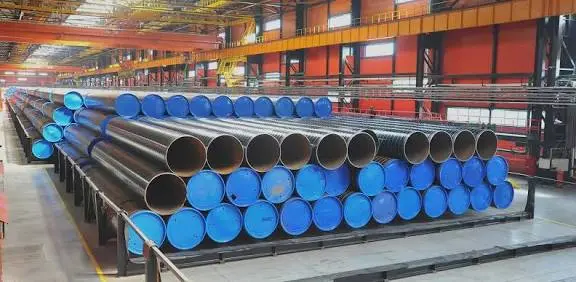
When structural engineers and procurement managers evaluate piping solutions for demanding infrastructure projects, EN 10219 S355J2H LSAW Steel Pipe stands out as a dependable choice. This LSAW carbon steel pipe, manufactured to European standard EN 10219, delivers the high yield strength and impact toughness needed in structural applications ranging from building frameworks to offshore platforms. The S355J2H grade designation indicates a minimum yield strength of 355 MPa alongside enhanced low-temperature toughness, making it suitable for environments where both mechanical stress and temperature fluctuations are concerns.
Understanding EN 10219 S355J2H LSAW Steel Pipe – Specifications and Manufacturing Process
What Defines EN 10219 S355J2H Grade?
EN 10219 describes structural hollow sections made of non-alloy and fine-grain steels that are cold-formed and welded. This grade, S355J2H, provides a good balance of strength, impact toughness, and weldability, making it suitable for demanding structural applications. "S355" means that the minimum yield strength is 355 MPa, "J2" means that the minimum Charpy V-notch impact energy is 27 Joules at -20°C, and "H" indicates that the steel grade is designated for hollow sections. This standard makes sure that the material can handle both static loads and the dynamic forces that come up in building frames.
The chemical makeup usually limits carbon content (≤0.20%), includes manganese for strength improvement, and may contain micro-alloying elements such as niobium or vanadium to improve the grain structure. Silicon and phosphorus levels must stay low to keep the metal weldable and avoid breaking. With these compositional controls, fabricators can usually weld in the field without heating the metal first.
LSAW Manufacturing Process Explained
Longitudinal Submerged Arc Welding (LSAW) starts with choosing high-quality steel plates based on the grade and width needed. Precision grinding is used to make the sides of the plates smooth and clean so that they fuse properly during welding. These days, makers use either JCOE or UOE forming to slowly shape flat plates into cylinder shapes without adding too much leftover stress.
Because of the JCOE process, the plate goes through a set of dies that make a "J" shape, then a "C" shape, and finally an "O" shape. A U-press, O-press, and growth pattern are used in the UOE method. During the forming process, both methods maintain precise control over pipe dimensions. After forming, double-sided submerged arc welding (DSAW) joins the edges along the longitudinal seam. The weld area is covered with flux powder, and the electric arc melts both the base metal and the filler wire. This makes a uniform weld bead with little dust and even penetration.
We use 100% X-ray (RT) checking of the seams along with automatic submerged arc welding to make sure the weld is as strong as the base metal. Before the pipes leave our plant, this non-destructive testing finds any internal flaws like porosity, slag inclusions, or lack of fusion. Our cold-expansion method for LSAW pipes makes sure that the outside diameters are controlled within specified tolerances, which makes it easy to line up the ends of big pipes during installation. This mechanical expansion also gets rid of any remaining stresses and improves the roundness to within ±3mm.
LSAW Compared to Other Pipe Types
Knowing the differences between welded pipe options helps procurement teams find the right goods for the job. If the pressure grade stays low, ERW (Electric Resistance Welded) pipes are good for small- to medium-sized utility lines with NPS 1/2" to 20". When using high-frequency welding, the heat-affected zones are small, but wall thickness options aren't as good as with LSAW.
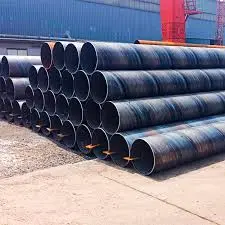
LSAW technology is commonly used for large-diameter, heavy-wall LSAW carbon steel pipe sections, typically ranging from several hundred millimeters to over 1500 mm in diameter, making heavy-wall integrity possible for gas mains under high pressure and structural piling. The straight lengthwise seam makes it easier to check the quality of the product and gives it better mechanical features in thick-wall configurations. As NPS 8" up to 120", SSAW (Spiral Submerged Arc Welded) pipes are a cheap way to send large amounts of water at low pressure. The spiral seam shape evenly spreads stress. SSAW is cheaper for larger widths because it uses a continuous forming process. However, LSAW is generally preferred for structural applications requiring high seam reliability and consistent mechanical performance.
Advantages and Typical Applications of EN 10219 S355J2H LSAW Steel Pipe
Key Performance Benefits for Structural Projects
EN 10219 S355J2H LSAW pipes have a number of benefits that directly address concerns about safety, cost, and project timeliness when buying them. EN 10219 S355J2H LSAW pipes have a number of benefits that directly address concerns about safety, cost, and project timeliness when buying them. This saves money on materials while keeping the strength. Improved impact toughness at -20°C provides dependability in cold places and at sea, where the risk of brittle fracture rises.
Accurate measurements made possible by controlled forming and cold expansion make assembly easy in the field. Tight roundness tolerances cut down on the need for expensive alignment fixes during welding, which speeds up the installation process. Radiographic testing to make sure the integrity of the weld seam lowers the risk of failures happening in service, which protects project schedules from having to pay for expensive repairs.
Protective coats that are made for the smooth outside of the pipe can make it even more resistant to corrosion. LSAW pipes give engineers more options when it comes to wall thickness and width combinations than seamless pipes, which are limited by how they can be made. This means that engineers can make the best designs for different load situations without having to worry about what is already on the market.
Common Structural Applications
As main load-bearing piers and beams in commercial and industrial construction, EN 10219 S355J2H LSAW pipes are used in building frames. This material can be used to manufacture rectangular and square hollow sections that provide excellent resistance to compression and bending while allowing easier integration with internal reinforcement systems. The strength-to-weight ratio lowers foundation loads without lowering the structure's strength, which is good for tall buildings.
These pipes are used in infrastructure projects like bridges, sidewalk overpasses, and transit stations for both looks and function. LSAW manufacturing gives you the surface quality and consistent dimensions that you need for exposed structural elements. Precision-formed hollow sections allow for clean lines that architects like, and engineers like that they can be relied on for their expected mechanical qualities, which are confirmed by mill test reports.
EN 10219 S355J2H LSAW pipes are used in factories for supporting equipment, conveyor systems, and structural pipe racks. The material can handle the thermal expansion and vibration loads that are common in factories. The impact toughness of the grade is good for offshore platforms and marine buildings because it keeps the structure's integrity when waves cause fatigue stress. For piling applications meeting ASTM A252 requirements, LSAW pipes may be used as driven piles in challenging soil or seabed environments to provide reliable foundation support.
Comparing Performance Against Alternative Solutions
There are a number of things that procurement teams consider when deciding between seamless and LSAW options. Seamless lines work great in hydraulic systems with very high pressure because they don't have any weld seams, which could be weak spots. However, smooth production methods limit the widths and wall thicknesses that can be used, and the costs go up a lot for larger sizes. LSAW pipes made to API 5L PSL2 or EN 10219 standards can provide reliable performance for their intended applications, although EN 10219 is primarily a structural standard rather than a pressure piping specification for structural uses, but they come in a wider range of sizes and cost less per tonne.
With ERW pipes, smaller diameters are used for utility distribution in projects that need to stay within a budget. ERW processes have competitive prices because they can make things quickly, but they aren't good for critical structural loads because they have limits on wall thickness and lower toughness grades. SSAW pipes are the most cost-effective way to build big water transport pipelines without lowering their safety. However, The spiral seam orientation in SSAW makes stress analysis more complex than the straight seam of an LSAW pipe, making LSAW the preferred choice for critical axial loading.
How to Select the Right EN 10219 S355J2H LSAW Steel Pipe for Your Project?
Critical Specification Parameters
Pipe selection is based on the mechanical quality needs. EN 10219 S355J2H says that the minimum yield strength is 355 MPa and the minimum tensile strength is between 470 and 630 MPa. This gives structural designers a safety cushion when they do their calculations. At -20°C, the impact energy of 27 joules is enough for most applications in both mild and cold climates. For projects in very cold places, you might need grades with higher impact toughness requirements, such as K2 grades, depending on the required service temperature.
The choice of wall thickness has to do with balancing the load needs with the weight and cost concerns. LSAW pipes can typically be manufactured with wall thicknesses from about 6 mm up to 65 mm or even thicker, so they can be used for both light-duty and heavy-duty industrial buildings. A range of diameters, from 16 inches to 60 inches, meets all of your structural hollow section needs. Checking for standards compliance should confirm that EN 10219-1 is followed for technical delivery conditions, and EN 10219-2 is followed for tolerances, dimensions, and sectional properties.
The type of exposure determines the coating and surface finish that are needed. Mill-finish pipes are good for use inside or on surfaces that will be coated in the field. Hot-dip galvanizing is a cheap way to protect outdoor buildings from corrosion. For underground or underwater systems, fusion-bonded epoxy or polyethylene coatings work better. The quality of the surface preparation affects how well the coating sticks and how long it lasts.
Cost Optimization Strategies
The price per tonne changes based on the markets for raw materials, but the amount bought has a big effect on unit costs. By combining purchases made at different stages of a job, you can get quantity savings and keep your inventory moving. Standardizing on popular sizes cuts down on waste during production and makes transportation easier. When you involve suppliers early on in the design process, you can have value engineering talks that might help you find different specs that give you the same performance for less money.
Planned lead times keep processing fees from going up, which would otherwise add to the cost of buying. Shipping times for standard sizes are usually four to six weeks, but for custom configurations that need specific chemical compositions or mechanical properties, it could take eight to twelve weeks. Predicting what will be needed and making orders ahead of time locks in prices and makes sure that the availability of materials matches the plan for building.
The total cost of ownership is more than just the purchase price. Better-quality materials that are tougher and hold welds together better reduce the need for maintenance and increase the service life. Field remodeling work is cut down by accurate measurements. Full-mill paperwork and traceability keep disagreements about material compliance during project checks from getting expensive.
Supplier Evaluation Checklist
The first step in verifying certification is making sure that the company has a legal ISO 9001 quality management registration. Product-specific certifications or markings, such as the CE marking for European markets, the GOST-R mark for Russian markets, or the Petrobras approval mark for Brazilian projects, show that the product meets the rules in that area. When projects use more than one standard, API 5L or ASTM A252 dual certification makes more uses possible.
The monthly production volume, available diameter and thickness ranges, and forming technology used should all be part of a manufacturing capacity assessment. Suppliers with more than one production line give you more schedule options and lessen the risk of machine breakdowns. Third-party audits or site visits confirm the claimed abilities and quality control infrastructure. This includes spectral analyzers for checking the chemical composition and ultrasonic or radiographic testing equipment for checking the welds.
Service after the sale is what sets trustworthy partners apart from transactional vendors. Quick expert support helps with choosing the right material, asking questions about dimensions, and getting advice on coatings. Misunderstandings that slow down packages can be avoided by having clear lines of contact and account managers who speak English. If a seller is willing to give samples for pre-qualification testing and is flexible with payment terms, it means they want to build long-term relationships with you instead of just one-time transactional deals.
Conclusion
EN 10219 S355J2H LSAW Steel Pipe gives challenging building projects the strength and dependability they need. Controlled manufacturing processes give procurement teams confidence in the suitability of materials because they give them high yield strength, low-temperature toughness, and weld integrity. Knowing the requirements, how the product will be made, how it will be used, and the criteria used to judge suppliers lets you make smart buying choices that lower project risk and raise cost.
Choosing a manufacturing partner with a track record of success, full certifications, and a dedication to customer satisfaction can turn procurement from a necessary task into a strategic advantage. The right supplier relationship gives you more than just compliant materials. It also gives you expert help, flexible transportation, and quick service that cuts down on project timelines and improves results.
FAQ
1. What makes EN 10219 S355J2H LSAW pipes superior to standard carbon steel grades?
Compared with standard structural grades that typically offer around 235 MPa yield strength, S355J2H provides a minimum yield strength of 355 MPa. This means that the wall thickness can be reduced and the weight can be lower while still holding the same amount of weight. Better impact toughness at -20°C stops brittle fracture in cold places where regular grades would fail. Controlling the chemical composition makes it easier to weld, which cuts down on the need for preheating and the cost of field fabrication.
2. What are typical lead times for bulk orders of EN 10219 S355J2H LSAW pipes?
Standard sizes usually take four to six weeks from the time the order is confirmed until the goods are ready to be shipped. This time includes getting the materials, planning the production schedule, making the goods, checking them, and preparing the paperwork. Custom specifications that include non-standard sizes or more testing may make the lead time eight to twelve weeks. By placing advance orders based on project schedules, you can avoid having to pay extra for faster shipping and make sure that the supply of materials matches up with building milestones.
3. Which certifications should buyers verify when evaluating LSAW pipe suppliers?
Getting ISO 9001 quality management certification shows that you can control processes in a planned way. Certifications for individual products, like CE or API 5L, or regional approvals, like GOST-R, show that they meet the technical standards that apply. Qualification by big end-users, such as national oil companies, proves that the product can meet strict requirements. Accredited laboratory test results give third-party confirmation of chemical and mechanical properties that go beyond what the maker says.
Contact JS FITTINGS—Your Trusted LSAW Carbon Steel Pipe Manufacturer
If you need EN 10219 S355J2H LSAW pipes manufactured to strict standards, JS FITTINGS is ready to meet your structural piping and foundation needs. We are a trusted long-term partner backed by 40 years of manufacturing expertise, a comprehensive range of certifications and focus on customer satisfaction. For large orders, we have affordable prices, and we can also accommodate special requests and faster shipping times. Email our technical team at admin@jsfittings.com to talk about the needs of your project and get detailed quotes. Whether you need help choosing materials, having your certification paperwork looked over, or coordinating details for international shipments, our experienced professionals are here to help you every step of the way during the procurement process. We are a qualified provider of LSAW carbon steel pipes to customers all over the world. Our quality, dependability, and service help keep projects on plan and on budget.
References
1. British Standards Institution. (2019). EN 10219-1: Cold-Formed Welded Structural Hollow Sections of Non-Alloy and Fine-Grain Steels—Technical Delivery Conditions. BSI Standards Publication.
2. American Petroleum Institute. (2018). API Specification 5L: Specification for Line Pipe, 46th Edition. API Publishing Services, Washington, DC.
3. ASTM International. (2020). ASTM A252: Standard Specification for Welded and Seamless Steel Pipe Piles. West Conshohocken, PA.
4. European Committee for Standardization. (2019). EN 10219-2: Cold-Formed Welded Structural Hollow Sections—Tolerances, Dimensions, and Sectional Properties. CEN Central Secretariat, Brussels.
5. International Organization for Standardization. (2017). ISO 9001:2015 Quality Management Systems - Requirements. ISO Central Secretariat, Geneva.
6. Zhao, M. & Cheng, G. (2021). "Mechanical Properties and Fracture Toughness of High-Strength Structural Steel Hollow Sections." Journal of Constructional Steel Research, 178, 106-119.
Send Inquiry
You may like
Related Industry Knowledge
- API 5L X65 PSL2 LSAW Carbon Steel Pipe for Oil and Gas
- OEM Buttweld Elbow Manufacturer for Oil and Gas Projects
- Custom Steel Flange: all the information worth knowing
- Sourcing Custom Steel Flange: A Buyer’s Guide to Working with a Manufacturer
- What is FBE Coated Steel Pipe?
- ASTM A312 vs ASTM A213 Steel Pipe: What Are the Key Differences?
- Induction Buttweld Bend vs Cold Bend: Pros and Cons
- How to Select a Buttweld Reducer for Process Piping?
- Seamless vs Welded Buttweld Tee: Which Performs Better?
- What specification is the carbon steel black pipe?