
How Does a Buttweld Reducer Improve Flow Efficiency?






2026-07-27 10:38:45
A buttweld reducer improves flow efficiency by creating a smooth, gradual transition between pipes of different diameters, eliminating the turbulence and pressure drops caused by abrupt size changes. The conical design allows fluids to accelerate or decelerate evenly, reducing energy losses and preventing cavitation. Unlike threaded or socket connections, the permanently welded joint ensures a seamless internal surface, minimizing friction and maintaining consistent flow velocity. This design prevents dead zones where debris can accumulate and reduces noise in high-velocity systems.
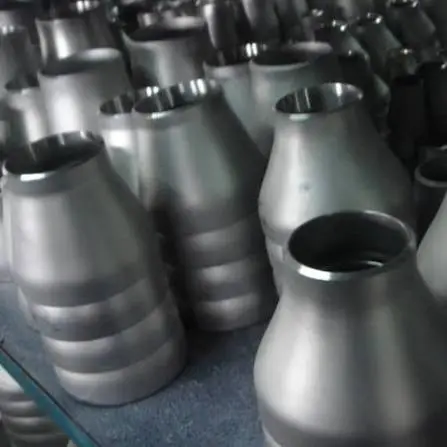
Understanding Buttweld Reducers and Their Role in Flow Efficiency
The way you connect pipes of different sizes has a direct effect on how well the system works. A buttweld reducer is designed to handle the problems that come up when the diameter of pipes in an industrial network changes.
What Makes Buttweld Reducers Essential for Flow Control?
These fittings are very important for keeping hydraulic performance even when pipe sizes change. The main idea behind the design is to make a path that gets narrower as it goes along so that fluid can move along it without making harmful eddies or vortices. By making the flow pattern predictable, these parts keep equipment further downstream from wearing out too quickly or becoming unstable.
Concentric vs. Eccentric Configurations
There are two main versions that meet different operating needs. Concentric reducers keep the centerlines of the pipes they join in line, which means they can be used for vertical runs and situations where even flow distribution is important. The balanced design makes high-speed equipment less likely to vibrate.
Eccentric reducers have one flat side and an uneven shape. This setup stops air pockets from forming in horizontal pump flow lines, which is a very important thing to keep in mind to keep impeller blades from getting damaged by cavitation. When installed flat-side-up, the fitting lets trapped gases escape naturally, which keeps pumps from getting vapor-locked, which can lead to catastrophic failure.
Material Selection and Performance
How long something lasts and how well it works with process fluids are directly affected by what it's made of. Different types of carbon steel (ASTM A234 WPB) have high mechanical strength and resistance to pressure, making them perfect for common industrial uses. In steam systems, these types can handle pressures higher than 250 bar.
Options made of stainless steel (ASTM A403 WP304/316/321) don't rust, which is important for chemical processes and food-grade uses. The chromium makes an oxide layer that is inactive and guards against aggressive media. Alloy steel types (ASTM A234 WP11/WP22/WP91) can handle high temperatures in power plants and keep their structure strong even when thermal stress changes.
Reducers made by JS Fittings meet the standards set by ASME B16.9, EN 10253, and DIN 2616. Our product line includes seamless options from 1/2" x 1/4" up to 24" x 20" and welded options up to 80" x 72". There are different wall thickness plans, from SCH 10S to XXS, to fit different pressure values.
Common Flow Challenges in Piping Systems and How Buttweld Reducers Solve Them
Industrial piping networks often experience operational issues that compromise safety and efficiency. Specifying the correct transition fittings, such as buttweld reducers, is critical for mitigating these challenges.
Turbulence and Pressure Drop Issues
When the diameter changes quickly, it creates turbulence zones where the flow speed changes quickly. This turbulence causes pressure losses that raise the cost of pumping and lower the system's capacity. Studies in fluid dynamics demonstrate that abrupt cross-sectional changes result in significant localized pressure losses, increasing pumping energy consumption and reducing overall system efficiency.
A properly sized buttweld reducer provides a gradual transition that minimizes flow separation and reduces energy losses through the transition zone by gradually tapering, which lets laminar flow properties stay the same through the transition zone. This gradual change in speed reduces the loss of energy, which leads to measurable cost savings over the lifecycle of the system.
Cavitation Prevention in Pump Systems
Cavitation happens when the pressure in the area drops below the vapor pressure of the pumped fluid. This causes bubbles to form that smash into metal surfaces very hard. This happens and wears down impellers and casings, which costs a lot to fix and causes unplanned downtime.
When placed on horizontal pump suction lines, eccentric reducers get rid of the shape that traps air pockets. The flat-side-up position makes sure that any gases that get sucked in don't build up, which helps maintain adequate Net Positive Suction Head Available (NPSHA), reducing the risk of cavitation. In oil and gas facilities, where pump reliability has a direct effect on production rates, this setup has become standard.
Comparison with Threaded Alternatives
Threaded reducers have bumps inside them that change the flow patterns and create stress collection points. The mechanical joint uses seals that break down when heated and cooled, which can lead to leaks in high-pressure services. Over time, vibration can make threaded connections loose, so they need to be maintained often.
Buttweld connections get rid of these weak spots. When base metals fuse together, they make a structure that is continuous and doesn't have any internal protrusions. Radiographic testing confirms the quality of the weld penetration, making sure that the joint strength meets or beats the parent pipe's requirements. This permanent joint provides high structural integrity and excellent long-term reliability when properly designed and welded, even if the temperature rises or the pressure drops.
Types of Buttweld Reducers and Their Impact on Flow Efficiency
To choose the right gear setup, you need to know how each design variation affects the hydraulics and structural performance of the system. Selecting appropriate buttweld reducers requires understanding how each configuration influences system performance.
Concentric Reducers for Balanced Flow
Around the pipe's axis, these fittings keep their symmetrical shape, so changes in fluid motion are spread out evenly across the cross-section. Because of this, they work great for vertical pipes where gravity helps the flow and getting rid of air is not a problem.
In high-speed gas systems, concentrated patterns reduce the amount of noise that is made. Uneven turbulence, which causes sound waves to vibrate in process lines, is stopped by balanced expansion or contraction. This noise reduction makes the workplace safer, and tools last longer in steam systems that run above 100 psi.
Eccentric Reducers for Specialized Applications
The offset shape meets certain needs in engineering. The flat-side-up installation method for horizontal liquid lines keeps vapor lock from happening. Instead, putting the system flat-side-down makes it easier for all of the water to drain, which is important for systems that need to be cleaned often or stored for the winter.
In the process industry, Buttweld pipe reducer eccentric reducers are used in pump discharge lines to keep the bottom of the pipe at a steady level so that sediment doesn't build up. In the handling of slurries, where particle settling can stop the flow and hurt equipment, this application is very important.
Seamless vs. Welded Construction
You can use hot or cold forming to make seamless reducers out of metal pipe. This way of making things gets rid of longitudinal weld seams, which makes the strength uniform and the resistance to fatigue much better.Where weld seam integrity is a concern, seamless reducers are typically specified for demanding high-pressure and critical service applications.
Formed plates are used to make welded reducers, which are good for larger diameters where making them without seams would be too expensive. Modern methods of manufacturing make seam welds that are effective and meet the standards of ASME Section IX. Radiographic analysis confirms that the inside is sound, which means that the performance is the same as with seamless versions.
JS Fittings uses CNC-machined tools to keep the concentricity of their products within a 1 mm range. This level of accuracy helps reduce flow-induced vibration in systems moving faster than 15 feet per second. Our ultrasonic testing confirms that the wall thickness is stable at key stress points, which fixes the problem of thin walls that often happen with low-quality products.
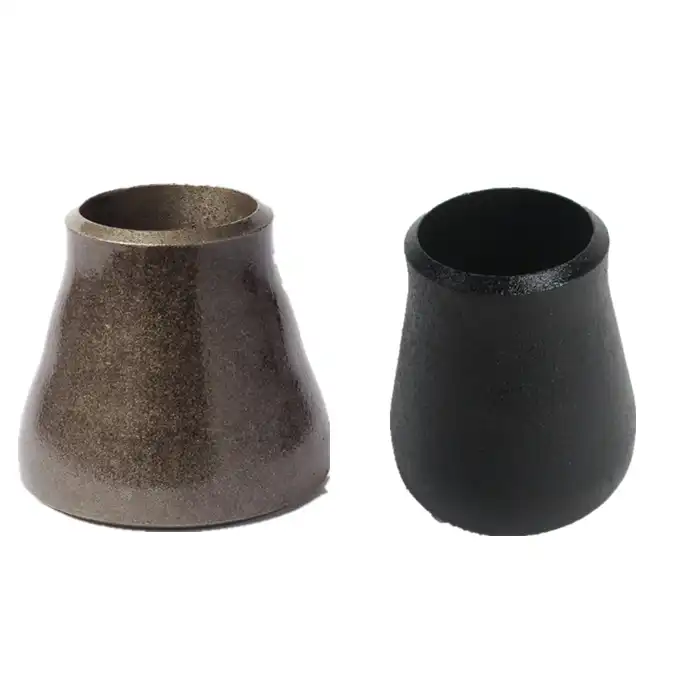
Practical Installation Tips to Maximize Flow Efficiency with Buttweld Reducers
Whether the fitting works the way it's supposed to depends directly on how well it was installed. When fitting methods damage the geometry or metallurgy of precision-engineered components, they don't work as well as they should. Proper installation of buttweld reducers ensures the system achieves its designed performance.
Alignment and Fit-Up Procedures
Accurate pipe cutting is the essential first step to achieving proper alignment during installation.To make sure there are even gaps between the tubes, the ends must be square within 1/16 inch per foot of the pipe diameter. For important jobs, we suggest using calibrated cutting tools instead of hand tools.
It is important that the gap size matches the electrode width and the welding process. For Gas Tungsten Arc Welding (GTAW), the standards are tighter than for Shielded Metal Arc Welding (SMAW), which calls for 1/8-inch gaps. Too many gaps mean that the weld has to be done more than once, which increases the heat input and risk of distortion.
Welding Best Practices
Preheating needs depend on the nature of the material and the temperature of the area. When the base metal temperature drops below 50°F, preheating requirements depend on the material grade, wall thickness, ambient temperature, and the applicable Welding Procedure Specification (WPS) and need to be heated to at least 250°F. This thermal conditioning slows down cooling rates that could make microstructures break easily.
Welders who are qualified must follow the Welding Procedure Specifications (WPS), which set limits for power, travel speed, and temperature between passes. Before applying fill passes, root passes need to be fully penetrated and confirmed visually. The last cap should fit snugly onto the parent pipe, with no sharp edges that would cause stress to build up.
JS Fittings makes bevels that are precisely machined and meet the requirements of ASME B16.25. Our preparation without burrs cuts down on the time needed for grinding on-site and ensures even root entry. This ready-to-weld quality speeds up the installation process while still meeting radiographic quality standards.
Post-Installation Inspection
Non-destructive testing checks the quality of the weld without hurting the joint. Radiographic examination shows internal breaks like holes, slag inclusions, or a lack of fusion. The code requirements spell out the criteria for acceptance based on the number and types of defects.
Hydrostatic testing verifies the pressure containment capability of the welded reducer. For a certain amount of time, systems are typically hydrostatically tested in accordance with the applicable piping code, often at approximately 1.5 times the design pressure after temperature correction where required. It shows where leaks are happening and needs to be fixed before the system can be put into service.
Maintenance Considerations
Inspections done on a regular basis find early signs of wear and tear. Ultrasonic thickness readings can find wall loss caused by rust or erosion. Trend research can tell you how long something is still useful, so you can replace it before it breaks.
When used in corrosive settings, surface coatings need to be checked for damage or separation. Our hot-dip galvanizing and epoxy finishes provide enhanced corrosion resistance, with coating performance commonly evaluated using ASTM B117 salt spray testing.
Procurement Insights: Selecting and Buying the Best Buttweld Reducers for Your Business
Strategic buying strikes a mix between technology needs and business concerns. The outline below helps buyers make choices that are best for both performance and price when sourcing a buttweld reducer.
Evaluating Supplier Credentials
Certification paperwork is objective proof of the ability to make something. Getting ISO 9001 certification shows that you manage quality in a planned way, while getting API 6A certification or compliance with applicable ASME codes shows that you can meet strict technical standards. To verify certificate validity, buyers should check certificates directly with the organizations that issued them.
As per EN 10204 3.1, Mill Test Certificates (MTC) confirm the chemical composition and mechanical properties of the supplied material. The tensile strength, yield strength, and elongation numbers in these papers come from real tests. JS Fittings performs chemical analysis on every heat number, ensuring complete and seamless material traceability.
Qualification by Major End Users
Suppliers that are accepted by companies like Petrobras, ADNOC, or NIOC have been through strict audits that show they consistently provide high-quality goods. For these credentials, the plant has to be inspected, production trials have to be done, and success has to be tracked all the time. By using third-party validation, these credentials lower the risk of procurement.
With over 40 years of manufacturing experience, JS Fittings is an approved vendor for several national oil companies (NOCs). Every month, our 7,000-square-meter warehouse sends more than 90 crates to customers in over 30 countries.
Balancing Cost and Lead Time
While expedited delivery carries a premium, buyers can plan around standard production schedules by forecasting demand. Maintaining a strategic safety stock of critical fittings helps prevent costly unplanned downtime when unexpected failures occur.
Our inventory method lets us send quotes the same day, within an hour of receiving a request. Standard sizes are shipped in two weeks, and custom configurations take between four and six weeks to finish, depending on how complicated they are. Customers can meet tight project deadlines without losing quality because of how quickly the company responds.
Technical Support Capabilities
Buttweld pipe reducer exporter suppliers who offer technical help add value beyond just delivering goods. Flow modelling, help with choosing materials, and failure analysis all help improve system design and figure out what's wrong with operations. This knowledge is especially useful for complicated tasks that involve rare alloys or harsh operating conditions.
Conclusion
In conclusion, managing changes in piping diameter is a key factor in optimizing industrial flow efficiency. Buttweld reducers are designed to solve problems like turbulence, pressure loss, and cavitation that make systems less effective. Choosing between concentric and eccentric configurations, along with choosing the right materials and installing them correctly, decides whether these parts work as well as they should. Strategic buying from qualified buttweld reducer manufacturers makes sure that you can get certified goods that come with expert help and paperwork. When designed and fitted correctly, these fittings protect machinery, lower energy use, and increase the service life of the system, giving measurable returns throughout the lifecycle of the project.
FAQ
1. What is the primary difference between concentric and eccentric reducers?
Concentric reducers line up the middles of both pipe ends, making flow patterns that are symmetrical and good for vertical runs. With one flat side, eccentric reducers move the centerlines away from each other. This keeps air from building up in the horizontal lines and makes drainage easier. For pump suction uses where preventing vapor lock is important, the eccentric design is a must.
2. How do the types of materials affect how well a reducer works?
Grades of carbon steel like ASTM A234 WPB are very strong and don't bend under pressure, but they need to be protected from rust. ASTM A403 WP316 types of stainless steel are resistant to chemical attack in corrosive environments. Alloy types (WP11, WP22, and WP91) keep their mechanical qualities at temperatures above 900°F, which is important for power generation.
3. What wall thickness schedule should I specify?
Which wall thickness to use depends on the design pressure and the amount of rust that needs to be allowed. Schedule 40 is good for uses with modest pressure up to 150 psi in normal use. Higher schedules (80 or more) deal with high pressures or corrosive media that need more material. Engineers should look at ASME B31.3 to learn how to do calculations.
4. Can reducers be used in high-pressure steam systems?
When properly defined, alloy steel reducers can handle situations with supercritical steam. When picking a material, you need to think about how resistant it is to creep at the working temperature. To keep the microstructure intact during welding, strict heat treatment controls are needed. With post-weld heat treatment (PWHT), leftover stresses that could lead to failure under repeated loading are removed.
Get Reliable Buttweld Reducer Solutions from JS FITTINGS
Pipe reducers made by JS FITTINGS are precisely engineered and meet foreign standards such as ASME B16.9, EN 10253, and DIN 2616. Our CNC-machined parts keep their concentricity tolerances within 1 mm, which means they can work without vibrations in tough situations. We offer all kinds of materials, including carbon steel, stainless steel, and alloys, with wall thicknesses ranging from SCH 10S to XXS and sizes up to 80". All of our products come with EN 10204 3.1 Mill Test Certificates and are ultrasonically checked for thickness at key stress points. We are committed to reliability, as shown by our 95% on-time delivery record and 98% customer repurchase rate. Email our engineering team at admin@jsfittings.com to talk about your project requirements and get expert advice from a trusted buttweld reducer supplier with over 40 years of manufacturing excellence.
References
1. American Society of Mechanical Engineers. (2020). ASME B16.9: Factory-Made Wrought Buttwelding Fittings. New York: ASME Press.
2. Crane Company. (2018). Flow of Fluids Through Valves, Fittings, and Pipe (Technical Paper No. 410). Stamford: Crane Co.
3. Mohitpour, M., Golshan, H., & Murray, A. (2007). Pipeline Design & Construction: A Practical Approach (3rd ed.). New York: ASME Press.
4. Nayyar, M. L. (2019). Piping Handbook (8th ed.). New York: McGraw-Hill Education.
5. Perry, R. H., & Green, D. W. (2008). Perry's Chemical Engineers' Handbook (8th ed.). New York: McGraw-Hill.
6. Wylie, E. B., & Streeter, V. L. (1993). Fluid Transients in Systems. Englewood Cliffs: Prentice Hall.
Send Inquiry
You may like
Related Industry Knowledge
- ASTM A105 Weld Neck Flange: Complete Guide
- Buttweld Elbow Dimensions Guide for ASTM A234 WPB Fittings
- Long Radius Buttweld Elbow For Erosion-Corrosion Environment
- What is A312 stainless steel pipe? Everything You Need to Know
- A105 Carbon Steel Forged Steel Flange for Refinery Piping
- What Are the Types of Buttweld Elbows in ASME B16.9 Systems?
- Best Buttweld Elbow Materials for Corrosive Industrial Pipelines
- How to bolt to flanges with threaded holes?
- When to use threaded flanges?
- What is a plate flange?