
How to cut stainless steel pipe






2026-11-12 15:38:56
To cut stainless steel pipe, confirm the grade and wall thickness, mark the length with kerf allowance, and clamp the pipe without crushing it. Then cut with a band saw or cold saw at a steady feed. Use stainless-only blades and brushes, then deburr, clean, and passivate the end if needed. This method protects A312 stainless steel pipe from work hardening, heat tint, and iron contamination. I also recommend checking length, squareness, and heat-number marks before the pipe goes to welding. A careful cut saves rework, protects corrosion resistance, and keeps project schedules on track.
At JS FITTINGS, we hear the same question from EPC teams, distributors, installers, and plant maintenance crews: how do we cut without damaging the pipe? ASTM A312 sets material and manufacturing rules for austenitic stainless pipe, but it does not list size charts. ASME B36.19M and your project specification supply dimensions and schedules. Keep that split in mind, because a good cut respects both.
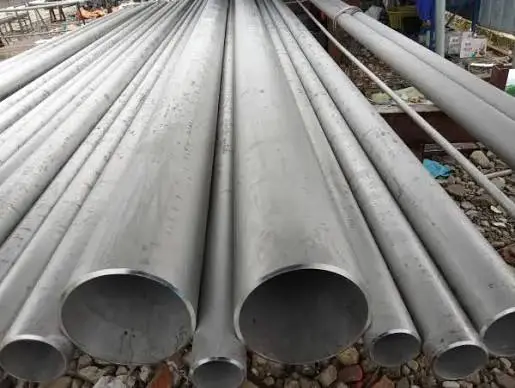
Define the Cutting Requirements Before Selecting a Method
Confirm Grade and Construction
Check the documentation before selecting the cutting equipment. Find the ASTM A312 grade on the mill test report. It may be TP304, TP304L, TP316, or TP316L. Then, confirm whether the pipe is seamless or welded, as the manufacturing process may affect the pipe's characteristics and cutting requirements. Austenitic stainless steel grades work-harden rapidly during machining. A blade that rubs against the surface instead of cutting efficiently can increase friction, generate heat, and make subsequent cutting more difficult. Duplex 2205 has higher strength than common austenitic grades and may require more robust cutting equipment and carefully adjusted parameters. Knowing the grade helps you select the appropriate blade, cutting speed, feed rate, and coolant.
Check Size, Schedule, and Tolerance
The next step is to check the pipe dimensions. ASME B36.19M covers stainless steel pipe schedules, including 5S, 10S, 40S, and 80S. At NPS 4, the outside diameter is 4.500 inches. Schedule 10S has a nominal wall thickness of 0.120 inches, while Schedule 40S has a wall thickness of 0.237 inches, almost twice as thick. The thicker pipe requires equipment with sufficient cutting capacity and appropriate feed settings. Thin-wall pipe, on the other hand, can deform if clamped too tightly. Don't forget to record the required cut length, dimensional tolerance, and end condition, including whether the cut should be square or beveled. A clear cutting plan prevents measurement errors and unnecessary rework.
Match the Method to Project Conditions
The project factors also play a role in the choice. A sharp tool or band saw might need to be brought to the field for a one-time fix. A cold saw or a set band saw that cuts the same length every time is better for a shop that needs to cut a lot of pieces every week. When you cut locally, you can be flexible if your sizes change a lot. It can save time and work to ask the supplier for set lengths if the cut list doesn't change from order to order. Each of these groups cares about these things in their own unique ways, but the first thing that all of them do is the same: they figure out what they need and then pick out the right tool.
Choose the Best Method for Cutting Stainless Steel Pipe
Band Saws and Cold Saws
The best tools for cutting A312 stainless steel pipe are band saws and cold saws. A band saw's narrow blade is suitable for cutting hollow sections such as pipes, while a cold saw uses a circular blade to produce clean, square ends with controlled heat generation. For stainless steel, choose a suitable bi-metal or carbide-tipped blade. Maintain a steady feed rate and select the cutting speed according to the pipe grade and wall thickness. Cutting fluid helps cool the blade, reduce friction, and remove chips. Abrasive cut-off wheels are portable and fast, making them useful for field work. However, excessive pressure can generate heat and damage the cutting edge, while insufficient pressure can cause rubbing and work hardening. Use wheels specifically rated for stainless steel and free of iron contamination. Wheels previously used on carbon steel may transfer iron particles to the stainless steel surface, increasing the need for additional cleaning and surface treatment.
Abrasive Wheels, Plasma, and Laser
Plasma and laser systems can cut through thick materials and make cuts in strange forms, like miters and saddle cuts. Due to localized heat input during thermal cutting, the cut edge must be ground down to bare, unoxidized metal before circumferential welding. Heat tint consists of surface oxide scale and is often accompanied by a chromium-depleted layer underneath. Both should be properly removed when required by the project specification to restore the surface's corrosion resistance. Make sure you give yourself enough time to finish, no matter which thermal method you pick.
Manual Cutters and When to Avoid Them
Manual cutters fit thin-walled stainless steel tubing, like small tubes made to ASTM A269 standards. Rolling tools can be used to cut it by hand. They cut cleanly but produce an internal constriction ridge inside the tube bore that requires thorough deburring and reaming. Manual roller cutters are generally unsuitable for heavy-wall pipe (SCH 40S and 80S), as excessive radial pressure can work-harden the cut zone and cause severe ovality. For these heavier schedules, a properly set-up band saw or cold saw is essential to produce a clean, square end without wall deformation.
Follow a Safe and Repeatable Cutting Procedure
Prepare, Mark, and Support the Pipe
Check the pipe grade, heat number, and cutting list before starting work. Transfer the heat number to each cut section to maintain material traceability, as the original identification mark may remain on only one piece after cutting. Use a suitable scribe or a low-chloride marker to mark the required length. Never use tools that have previously contacted carbon steel. Remember to account for the blade's kerf when calculating the final cut position. Secure the pipe with soft jaws or a V-block to prevent slipping or deformation. Support any long sections extending beyond the cutting area. Wear safety glasses, appropriate hearing protection, and protective gloves, and make sure all machine guards are in place.
Cut with Steady Control
Start the blade before it contacts the pipe, then apply a steady and controlled feed. Avoid sudden changes in pressure or feed rate. For a smoother surface, do not stop halfway through the cut and restart at the same position unless necessary. On a band saw, select a tooth pitch that keeps at least three teeth engaged with the pipe wall at the same time. Thin-wall pipe generally requires a finer tooth pitch to prevent the blade from catching or damaging the wall. Apply cutting fluid continuously where the equipment allows. For Schedule 40S and 80S pipe, adjust the blade speed and feed rate according to the thicker wall and material grade. If the chips turn blue or the blade starts squealing, stop and inspect the cutting conditions and blade condition.
Inspect the Fresh Cut
Take a quick look at the cut; fixing it won't cost much. Compare the length to the list of cuts. Use a square to make sure the end is straight across from the pipe's center. Look at the end for rough spots, dents, and strange shapes. Also, check the hole for any chips or other items that could get in the way. Put any part that doesn't work away from the bay and mark it. Each batch's first piece is quickly checked for blade drift. This stops the stack from being full of pipes that are too short or crooked.
Finish, Clean, and Verify the Cut End
Deburr and Bevel with Care
Use dedicated stainless steel tools, files, and flap discs to remove external and internal burrs. Never use grinding tools or brushes contaminated with carbon steel, as they can transfer free iron to the A312 stainless steel pipe. Remove only enough material to eliminate burrs and sharp edges. Excessive grinding can reduce the wall thickness and create fit-up gaps at the weld joint. ASME B16.25 specifies standard butt-welding end preparations, including a common 37.5° ± 2.5° bevel angle for applicable joint configurations. Follow the approved welding procedure to achieve the correct bevel angle and root face.
Clean and Restore Corrosion Resistance
Remove cutting oil, metal chips, and grinding dust using a clean cloth and an appropriate stainless steel cleaner. Residual contaminants can compromise product purity in food, pharmaceutical, and high-purity chemical processing lines, making this step particularly important. Stainless steel resists corrosion because of its thin, chromium-rich passive oxide film. However, this protective film can be compromised in areas affected by grinding, heat tint, or free-iron contamination. ASTM A380 provides guidance on cleaning, descaling, and passivation of stainless steel components and systems. Where heat tint or oxide scale is present, pickling or mechanical cleaning may be required before passivation, depending on the surface condition and project specification. Fit clean end caps before storage or transportation to protect the finished pipe ends.
Verify Dimensions and Keep Traceability
Record the final inspection results for each cut section. Measure the cut length, outside diameter, wall thickness, squareness, and bevel angle using calibrated instruments. Inspect the cut surface for burrs, cracks, dents, excessive heat tint, deep grinding marks, and contamination. Transfer the original heat number to every cut section to maintain traceability to the mill test certificate. Depending on the purchase agreement, buyers may also request positive material identification (PMI) reports, dimensional inspection records, certificates of conformity, or passivation records. These documents may be required for project approval and quality audits, so keep all inspection and traceability records properly organized.
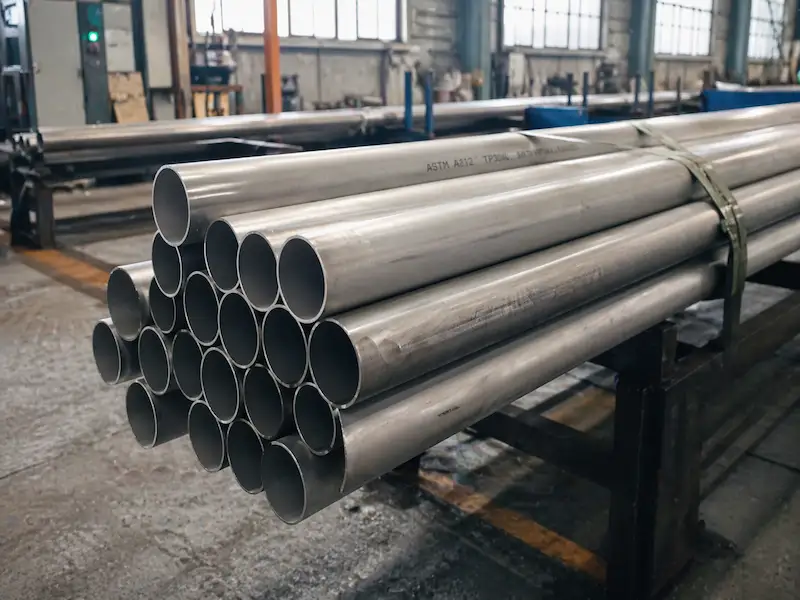
Compare Applications, Avoid Errors, and Choose a Supplier
Match Cutting Care to the Grade and Schedule
Band saws and cold saws can both cut TP304 and TP304L well. TP316 and TP316L are widely used in marine, saltwater, and chemical environments because their molybdenum content improves resistance to pitting corrosion compared with TP304 and TP304L. However, free-iron contamination can compromise the corrosion resistance of any stainless steel grade. Dedicated tools, clean handling, and appropriate surface treatment are therefore essential. TP304L and TP316L strictly limit carbon content to a maximum of 0.030% per ASTM A312, preventing chromium carbide precipitation (sensitization) and intergranular corrosion in the heat-affected zone. Most of the steel we sell is approved as both 304/304L and 316/316L. You should be careful with grades TP321 and TP347, just like you would with other austenitic grades when they are cold. Pipe in Schedule 10S can be clamped and bent, but pipe in Schedule 40S and 80S needs harder tools and runs more slowly.
Avoid Common Cutting Errors
You'll have to redo the work if you use carbon-steel tools or wire brushes, apply excessive pressure, forget the kerf allowance, leave internal burrs, or lose heat-number markings. Rust can form on the pipe surface if free iron is transferred from contaminated tools, even when the pipe complies with ASTM A312 requirements. Incorrect cutting speeds and feed rates can also cause work hardening, vibration, blade damage, and excessive heat tint. A clear cutting plan helps prevent these problems. Record the required cut length, kerf allowance, internal cleanliness requirements, edge condition, and marking requirements. Use dedicated stainless steel tools and clearly label them to prevent cross-contamination.
Choose a Supplier That Controls Quality Before the Cut
A clean cut won't make a pipe better. JS FITTINGS has been manufacturing and exporting high-integrity piping components since 1983, operating under a rigorous ISO 9001:2015 certified quality management system.Steel pipes from our stock are made to ASTM A312, A213, and A269 standards. Our stainless steel pipe inventory includes ASTM A312 grades such as TP304/304L, TP316/316L, TP321, and TP347, as well as Duplex 2205 pipe manufactured to the applicable ASTM A790/A790M requirements. Available schedules include 5S, 10S, 40S, and 80S, subject to grade and size availability. Our stainless steel pipes are supplied in the heat-treated condition required by the applicable material standard. Proper solution heat treatment helps maintain the intended microstructure and corrosion resistance, while appropriate welding procedures and post-weld cleaning are also essential for protecting the finished joints. It's important to keep the inside of lines that are used for food, medicine, and very pure things free of carbon and scale. In your RFQ, tell us what cut lengths you need, and our team will let you know what we can do.
Conclusion
If you want to cut A312 stainless steel pipe well, you need to plan ahead, cut, and check your work afterward. What kind of work needs to be done, the plan, the flexibility, and the grade should all guide the choice of tool. With a band saw or a cold saw, you can make clean cuts with little heat. Abrasive cut-off wheels offer portability for emergency field repairs, while thermal cutting processes (plasma/laser) require secondary edge grinding to remove heat tint and dross prior to welding. And tools that you use by hand can only cut thin-wall tubes. To keep A312 stainless steel pipe from rusting, it's important to use steady feed, the right clamps, only stainless steel tools, and to clean, passivate, deburr, and smooth the pipe. Thanks to timed checks and heat-number tracking, every piece is the same as the order. Extra care is required when selecting cutting speeds for high-alloy TP316/316L grades and clamping thin-wall schedules (SCH 5S/10S).A clean pipe that has been solution-annealed is a good place to begin the cut. This way cuts down on waste, extra work, and welding issues.
FAQ
1. Can I use an angle grinder to cut A312 stainless steel pipe?
It can be fixed on the job site if the wheel was made for A312 stainless steel pipe and has never been used on carbon steel. You should plan to clean, deburr, and passivate the end because there will be more heat tint and burrs.
2. Which tool works best on Schedule 40S pipe?
Cold saws or band saws with bi-metal or carbide blades are the best saws. Move more slowly, feed more slowly, and use cutting fluid. Cutting tools that you hold in your hand should not be used because they can bend the wall.
3. Does cutting change the grade of the pipe?
No. Cutting does not change the grade of the base material. However, the surface condition at the cut edge can affect corrosion resistance. Heat tint, embedded iron particles, and rough edges may increase the risk of localized corrosion if they are not properly treated.
4. What should I include in a quotation request?
Your RFQ should include the pipe grade, nominal pipe size (NPS), schedule, quantity, required cut lengths, dimensional tolerances, certification requirements, and delivery date. For international orders, also specify the destination country, applicable Incoterms, and required packaging method.
Request a Quote for A312 Stainless Steel Pipe from JS FITTINGS
Want to buy A312 stainless steel pipe from a supplier that can provide cutting, cleaning, and marking services? JS FITTINGS has been manufacturing and exporting pipe fittings since 1983. The company maintains an ISO 9001 quality management system and offers products with applicable CE and GOST-R documentation where required. You can email admin@jsfittings.com with your required grade, pipe size, schedule, quantity, and cut lengths to learn more. Our team will check product availability, confirm the processing requirements, and provide a quotation.
References
1. ASTM International, ASTM A312/A312M Standard Specification for Austenitic Stainless Steel Pipes, 2022
2. American Society of Mechanical Engineers, ASME B36.19M Stainless Steel Pipe, 2018
3. ASTM International, ASTM A380/A380M Standard Practice for Cleaning, Descaling, and Passivation of Stainless Steel Parts, Equipment, and Systems, 2017
4. Outokumpu, Handbook of Stainless Steel, 2013
5. International Molybdenum Association, Practical Guidelines for the Fabrication of Duplex Stainless Steels, 2014
6. ASM International, ASM Handbook Volume 16: Machining, 1989
Send Inquiry
You may like
Related Industry Knowledge
- RTJ Blind Flange Dimensions, Ratings, and Material Guide
- 45 degree buttweld elbow Buying Guide for Industrial Piping
- Custom Angle Buttweld Bend: 30°, 45°, 60°, 90° Options
- API 5L X65 PSL2 LSAW Carbon Steel Pipe for Oil and Gas
- ASTM A252 SSAW Carbon Steel Pipe Manufacturer for Foundation Piling
- ASTM A312 vs A358: Choosing the Right Stainless Steel Pipe Standard
- Cold Drawn vs Hot Rolled ASTM A312 Seamless Pipe: Key Differences
- CRA Clad Line Pipe for Subsea and Offshore Pipelines
- What are ANSI Pipe Flanges, And How Does it work?
- Lap Joint Pipe Flanges: Everything You Need to Know