
Lap Joint Pipe Flange vs Weld Neck: Which Option Cuts Costs Safely?






2026-11-23 11:00:02
A lap joint pipe flange cuts costs safely when the pipe needs a corrosion-resistant alloy only at the wetted surface, when bolt holes are hard to align, or when crews dismantle the line often. In those cases, an alloy stub end paired with a carbon steel backing flange lowers material spend and installation hours. A weld neck flange remains the safer choice for high pressure, severe thermal cycling, strong vibration, or heavy bending loads, where a leak costs far more than the flange. I will show you how to tell the two situations apart before you place any order. This guide is for EPC contractors, distributors, installers, public project owners, and plant buyers. At JS FITTINGS, we have made pipe fittings and flanges since 1983.
What Is a Lap Joint Pipe Flange and How Does It Work?
Two Parts, One Joint
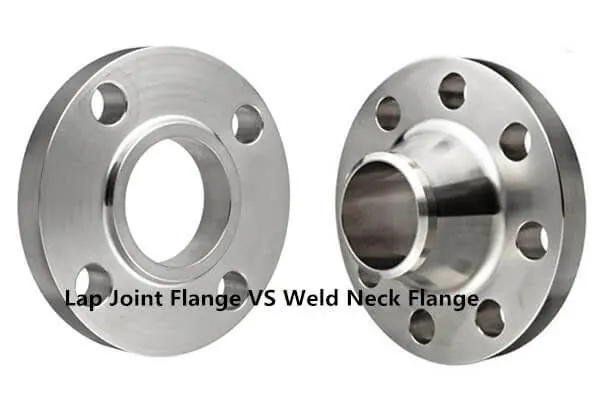
A Lap joint pipe flange is made up of two separate parts. You butt-weld the stub end to the line. It is a short piece of pipe with a flared end. The second part is the loose backing plate, which goes over the pipe and rests behind the short end. The stub end is exposed to the process fluid, and its face contacts the gasket. The support plate, on the other hand, only provides bolt load. The backing flange is typically flat-faced and is not welded to the pipe. The two parts can be bought separately, or as a set, so I always make sure they fit.
Why the Backing Flange Rotates
Installers can line up the bolt holes on the backing flange with the holes on the mating flange without having to cut or re-weld. With this, you can work with tight plans, big lines, and spools where a set flange would sit a little off. Fit-up takes less time for crews, and the same freedom lets them quickly take things apart for cleaning or inspection. We make lap joint pipe flanges at JS FITTINGS that can fully rotate around the pipe. The bore has a certain radius where it meets the flange face. This lets the ring go around the stub end fillet and sit flat.
How a Weld Neck Flange Differs
A weld neck flange goes in a different direction. The flange and pipe form a continuous structural joint when you butt-weld the long, tapered hub to the pipe. The hub provides a gradual transition from the thicker flange to the pipe wall, helping reduce local stress concentration at the flange-to-pipe connection under bending and other applied loads. In exchange, there is rigidity. The whole pipe spool has to be rotated to line up with the bolt holes, and the right metal has to be used throughout the whole shaping process. Each design moves the load in a different way because the hub adds weight and costs more to forge. These costs rise with size and pressure class.
Lap Joint Flange vs Weld Neck Flange: Technical Comparison
How Each Design Carries Load
When you put together a Class 150 lap joint flange assembly, the bolt force is transferred through the backing flange, stub end, gasket, and mating flange. The short end is joined to the pipe with a butt joint. In a weld neck flange, the force moves through the butt weld and the internal hub as a single piece. That hub makes the stress transfer in the weld neck stiffer and smoother. I think of the lap joint pipe flange as a whole system that holds pressure instead of a bunch of separate parts because the stub end, loose flange, gasket, and bolting all need to work together.
Fatigue, Vibration, and Thermal Cycling
Weld neck designs tend to be better at resisting bending, vibration, thermal cycling, and fatigue, which is why they are used so much in critical and high-pressure applications. When operating stresses are kept moderate, lap joint pipe flange assemblies work well. Our product data says that the two-piece design can handle small changes in temperature and vibration in systems where the temperature doesn't change too much. This is because the backing flange doesn't lock tightly to the pipe. That answer changes if there is a lot of cycling, pulsation, or high bending loads. Before you fix the design, I suggest that you use the weld neck flange and do a stress review according to ASME B31.3 in that case. A leak costs more than any money saved on buying something.
Sealing Requirements Both Designs Share
It's not possible for either design to seal well without sound foundations. Both need the right kind of gasket, clean flange faces, controlled bolt tightening, a good way to join, and a check that is written down. The gasket on a lap joint pipe flange seals against the gasket-contact face of the stub end, not the backing flange. For common flange facings, ASME B16.5 specifies a serrated surface finish of 125 to 250 microinches Ra; other facing types, such as ring-joint and tongue-and-groove, have different finish requirements. Weeping joints are often caused by uneven bolt loads, so use a measured torque tool and a cross-pattern tightening procedure on both styles.
Cost Analysis: When Does a Lap Joint Flange Reduce Total Project Cost?
Material Savings with Alloy Stub Ends
The biggest savings happen in corrosive service. The stub end is the only part that needs to match the pipe's internal requirements. The backing flange never touches the fluid. You don't have to forge a full alloy when you use a durable carbon steel backing flange with a stainless or high-alloy stub end. For a lap joint assembly, material cost savings scale dramatically with larger pipe diameters and higher pressure classes, as backing flanges consume substantial metal volume. Make sure the bolts, gaskets, stub end, and backing flange are right for the job. The carbon steel ring can be protected against atmospheric corrosion with a suitable coating, such as hot-dip galvanizing or rust-preventive oil.
Where Installation and Maintenance Savings Come From
Here are three things I look at on every quote that aren't the price of the materials.
- Alignment work: If the bolt holes don't match, rotating the backing flange gets rid of the need to cut, re-weld, or force the pipe into place. Because crews can finish fit-up faster in tight racks, on skid modules, and in retrofit areas, supervision hours are cut. This saves the schedule and keeps closing windows under control.
- Maintenance access: Lines that need to be cleaned or inspected often, like those used to treat water and process chemicals, can be opened quickly because the joint can be taken apart without cutting the main pipeline. The rotating ring lets the crews line up the bolt holes when putting the joint back together without having to move the pipe.
- Parts that can be used again: In many cases, the backing flange can be removed and reused on new pipe sections during repairs or retrofits, provided that it remains in good condition and matches the new joint's size, material, and pressure rating. Only the damaged stub end may need to be replaced. This is good for both plant workers and stockists because the heavy forging can be used for more than one change in pipes in the future.
Because of these installation and maintenance advantages, two-piece lap joint flange assemblies frequently achieve a lower total cost of ownership in corrosive piping systems, even if initial procurement costs are slightly higher than standard flanges.
When Weld Neck Costs Less Over Time
Project costs don't always decrease when the purchase price of a flange goes down. Compared to lap joint assemblies, a weld neck flange offers superior long-term value in severe-duty applications where joint leakage, fatigue cracking, or unexpected downtime poses unacceptable financial and safety risks.Its tapered hub provides a gradual transition between the flange and the pipe, helping reduce stress concentration under bending loads and cyclic operating conditions. In suitable carbon steel applications, a weld neck flange also eliminates the need for a separate backing flange and stub end, reducing the number of components that must be purchased, matched, and tracked. Government and infrastructure buyers should compare both options based on installation costs, maintenance requirements, and the potential cost of failure.
Application-Based Decision Guide: Which Flange Should You Choose?
Where Lap Joint Flanges Fit Best
For large-diameter lines, low- to medium-pressure systems that require frequent maintenance, and pipes lined with stainless steel or other corrosion-resistant materials, I suggest considering a lap joint pipe flange, provided that the design conditions and applicable codes permit its use. This type of line is often found in water treatment, chemical processing, desalination, food processing, and pulp and paper industries because crews have to open joints a lot or the fluid needs an expensive alloy. The spinning ring can match existing bolt patterns, which a fixed flange can't do for retrofits with limited welding space. You can choose the stub end, backing flange, gasket, bolts, and pipe all together as a single unit. If any two of them don't match, the savings you planned will be lost.
Where Weld Neck Flanges Are the Safer Call
For services involving high pressure, high temperature, steam, power generation, cyclic loading, vibration, pulsation, or heavy loads, consider a weld neck flange. When it comes to Class 600 and higher uses, dangerous media, cryogenic systems, remote sites, or seismic situations, don't just look at price. A review by an engineer is needed in these situations to look at code requirements, stress analysis, corrosion allowance, and project specifications. ASME B16.5 includes pressure classes from 150 to 2500, but availability and suitability depend on the flange size, material, and design requirements. The design engineer decides if the duty allows a lapped joint, and I back up that choice with measurements and paperwork.
A Practical Selection Check by Buyer Type
The choice is important to different buyers in different ways, so I use a short check for each. EPC companies weigh the risk to the plan against the cost of installation. Distributors and stockists need standard sizes that sell over and over again. To support steady local turnover, backing flanges in common classes are used. A quick fit-up with fewer calls for rework is important to small engineering companies and workers. For government projects, tender standards and life-cycle cost rules need to be met with documentation. Buyers in factories care about downtime and the total cost of ownership. To begin, list the fluid, pressure class, temperature range, and load type for each group. Next, compare the two flanges based on the cost to install and the risk that comes with it.
Standards, Dimensions, and Pressure Ratings to Verify
Standards and Size Ranges
Make sure you know the standard, minimum pipe size, pressure class, material grade, bore, flange thickness, bolt circle diameter, and hole count before you buy. For standard lap joint flange dimensions, ASME B16.5 covers NPS 1/2 through NPS 24. ASME B16.47 covers large-diameter flanges from NPS 26 through NPS 60; confirm that the selected flange type is covered by the applicable standard. ASME B16.5 includes pressure classes 150, 300, 400, 600, 900, 1500, and 2500. ASME B16.47 covers classes 75, 150, 300, 400, 600, and 900. Some projects may also need EN 1092-1, DIN, or JIS measurements, which do not always match up with ASME patterns. JS FITTINGS works with ASTM/ASME, DIN, JIS, and GOST standards. Please tell us the main code right away.
Facing, Bore, and Finish Details
Our backing flanges have a flat face, while the gasket seals against the gasket-contact face of the stub end. The bore has a radius where it meets the flange face, which lets the ring go over the stub end fillet.Because a standard slip-on flange lacks this specific machined bore radius, it cannot be substituted; it prevents the flange from seating flush against the back of the stub end, creating dangerous bending stresses. For extra protection from the weather, you can choose a surface finish like black paint, rust-preventative oil, or hot-dip galvanizing. It's important to check the facing on both sides of the joint because raised face and ring-type joint configurations change the gasket choice and bolt loading on the mating flange.
Documentation and Supplier Qualification
You can trust a supplier to show quality on paper and in the box. In line with EN 10204 3.1, ask for records of measurement inspections and material test results. Forged carbon steel flanges should match ASTM A105, and alloy grades should match ASTM A182. For sour-service applications, check material compliance with NACE MR0175/ISO 15156 and verify the applicable hardness requirements. We follow an ISO 9001 quality system here at JS FITTINGS and can provide the applicable ISO documentation and CE marking information for relevant products. We maintain an on-time delivery rate exceeding 95% and hold approved supplier status with major global energy operators including ADNOC and Petrobras.You can also order samples or small batches to make sure they fit before placing a full order.
Conclusion
The cheaper choice will depend on the duty. A lap joint pipe flange and a weld neck flange are different in how they work. A lap joint flange saves money when a metal stub end can cover the wetted surface, when the rotating backing flange speeds up alignment, and when the line is opened frequently. The weld neck flange keeps funds safe in high-pressure, high-temperature, cyclic, vibrating, or dangerous work. Its built-in hub spreads the load more evenly and lowers the risk of a leak. Matching standards, pressure class, facing, seals, bolting, and material documents are important for both designs. ASME B16.5 and B16.47 set the sizes for normal and large-diameter sizes. When making a cost choice, it's best to look at fixed cost, maintenance access, and failure risk all at once, rather than just unit price.
FAQ
1. Can I use a slip-on flange as a lap joint flange?
Most of the time, no. A standard slip-on flange may not have the bore radius required to clear the stub end fillet, so it may not seat correctly and can create an improper fit. Always ask for a real backing flange with the right bore radius for a lap joint pipe flange.
2. Does the backing flange or the stub end seal the gasket?
The gasket seals directly against the precision-machined face of the stub end.Around the joint, the backing flange only applies bolt load. This means that the gasket contact finish is on the stub end, and the ring doesn't need a raised face.
3. Is a lap joint suitable for severe cyclic loading?
Not as a first choice. A weld neck flange is generally better suited to applications involving severe thermal cycling, strong vibration, or high bending stress because of its more gradual hub transition. However, applications involving moderate cyclic loading should also be evaluated by an engineer to confirm the suitability of the flange design.
4. How does price compare with a weld neck flange?
In carbon steel systems, the two-piece assembly may cost slightly more than a single weld neck flange. However, in stainless or high-nickel alloy piping, using a carbon steel backing ring with an alloy stub end yields massive upfront material savings. Less metal is used, alignment is faster, upkeep is easy, and the backing flange can be used again, all of which save money.
Request a Lap Joint Pipe Flange Quote from JS FITTINGS
Email your drawing, pressure class, and size list to JS FITTINGS at admin@jsfittings.com, and someone from our team will get back to you within an hour. We've been making flanges since 1983, follow ISO 9001, and can do both sample production and small-batch trial orders. To find a company that sells lap joint pipe flange products along with matched stub ends and weld neck flanges, email us right now.
References
1. ASME B16.5 Pipe Flanges and Flanged Fittings: NPS 1/2 Through NPS 24 Metric/Inch Standard, 2020
2. SME B16.47 Large Diameter Steel Flanges: NPS 26 Through NPS 60 Metric/Inch Standard, 2020
3. ASME B16.9 Factory-Made Wrought Butt-Welding Fittings, 2018
4. ASME B31.3 Process Piping, 2022
5. MSS SP-43 Wrought and Fabricated Butt-Welding Fittings for Low Pressure, Corrosion Resistant Applications, 2019
6. EN 10204 Metallic Products: Types of Inspection Documents, 2004
Send Inquiry
You may like
Related Industry Knowledge
- How Do You Inspect Butt Weld Fittings Before Installation?
- How to Check Blind Flange Quality Before Installation?
- Understanding LSAW Carbon Steel Pipes Through Material Grades
- Carbon Steel Buttweld Tee vs Stainless Steel Performance
- What is Carbon Steel Pipe and Its Applications in Industry?
- All About ASTM A105 weld neck flange
- What is the material of A53 ERW Pipe?
- FBE Coated Steel Pipe: The Ultimate Guide (Process & Specs)
- Carbon Steel Concentric Buttweld Reducer Buying Guide
- How to bolt to flanges with threaded holes?