
Lap Joint vs Slip On Flange: The Critical Cost & Flexibility Showdown






2026-11-25 09:00:08
A slip-on flange usually costs less per piece and goes on quickly, so it suits general-purpose lines that stay closed. A lap joint pipe flange costs more upfront because it needs a stub end. Over time, it can cost less when crews open the joint often, need easy bolt-hole alignment, or want to pair a carbon steel backing flange with an alloy stub end. This article compares the two designs in terms of purchase cost, installation labor, maintenance flexibility, applicable standards, and operating risks to help buyers select the appropriate flange for their projects.
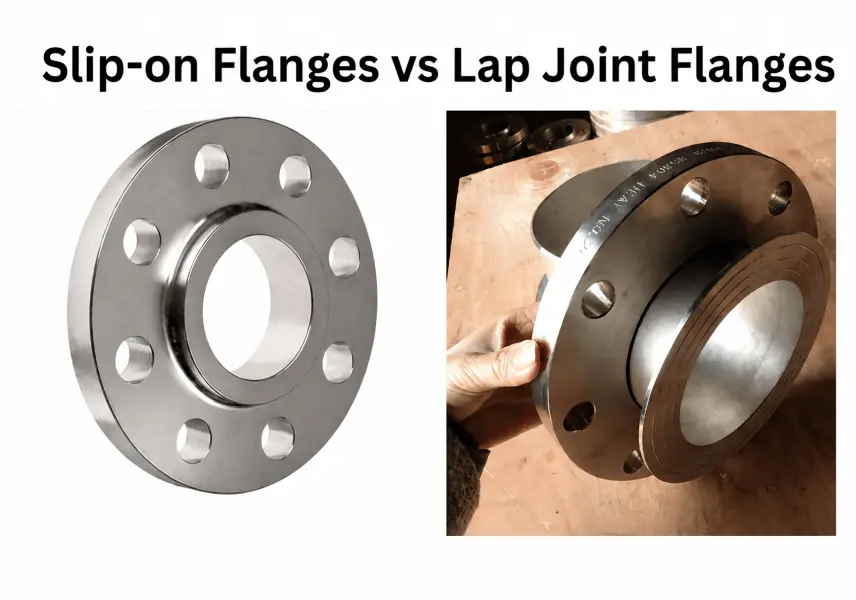
What a Lap Joint Pipe Flange Is and How It Differs From a Slip-On
A Two-Piece Assembly With a Loose Backing Flange
This is a lap joint pipe flange. It has two parts: a loose backing flange and a stub end. If you butt-weld the stub end to the pipe, the sealing face is on that end. This means the gasket doesn't seal against the flange, but against the stub end. It fits over the pipe, rests on the lap of the stub end, and is easy to turn around. Since the flange doesn't weld to the pipe, you can turn it until the holes in the bolts line up with the holes in the other flange. The backing flange bore and inside radius must provide sufficient clearance for the stub end lap and its fillet radius. These dimensions should be checked against the specified stub end geometry to ensure proper fit-up. You can buy each part by itself or with the other.
How the Slip-On Design Works
Slip-on flanges go over the pipe end and back away from it a bit. After that, there are two fillet welds, one on the outside and one on the inside.Once fillet welding is completed, the flange is permanently fixed, requiring the entire pipe spool to be rotated to align bolt holes with the mating flange. You don't need a curved pipe end to butt weld it together, and it's easy to put together. Because of this, many shops use it for low-pressure lines that can do many things. Slip-on flanges don't close on other short ends; they close on their own face. The nuts on both types still need to be tightened, and the right gasket needs to be used. They also need to be checked to make sure they meet the code, pressure, and temperature standards.
JS FITTINGS Carbon Steel Lap Joint Flange Specifications
Steel lap joint pipe flanges that can go all the way around the pipe are what we make. The ASME B16.5 size range covers NPS 1/2 to NPS 24, while ASME B16.47 covers large-diameter flanges from NPS 26 to NPS 60. ASME B16.5 covers Classes 150, 300, 400, 600, 900, and 1500 for NPS 1/2 through NPS 24, and Class 2500 for NPS 1/2 through NPS 12. ASME B16.47 covers large-diameter flanges from NPS 26 through NPS 60, with specified pressure classes and Series A and Series B dimensions. The sealing surface is on the stub end, while the backing flange provides the bolting connection. We can paint it black, hot-dip galvanize it, or cover it with oil that doesn't rust. JS FITTINGS has been selling pipe fittings and flanges since 1983. ISO, CE, and GOST-R have all given us their stamps of approval. Before finalizing your order, please contact our team to confirm the availability of the required size and pressure class.
Cost Showdown: Which Flange Is More Economical?
Unit Price Versus Complete Assembly Price
When bought as a single piece, a slip-on plate is often cheaper. However, the unit price alone does not reflect the total cost of the complete flange assembly. Compare the backing flange, stub end, gasket, associated fittings, and welding costs as a complete assembly to obtain an accurate cost estimate. That's because you have to pay more for two forged or machined parts instead of one if you want to buy a plain carbon steel line. For each pipe size, material grade, and pressure class, the gap is different. Get prices from each supplier for the whole setup, then look at each line item by item to see how they compare. Comparing the complete assembly cost in advance helps buyers avoid unexpected expenses during procurement and installation.
Labor, Inspection, and Downtime
How many welds the crew makes and how hard it is to line up the joint determine how much the work costs. Each stub end of a lap joint needs one butt weld to work. If the code says so, X-rays can check that weld. A slip-on needs two fillet welds, and the inside fillets are harder to check. When it comes to alignment, a lap joint flange can save installation time because installers can rotate the backing flange to align the bolt holes without repositioning the pipe spool. The joint can be taken off without cutting or rewelding the main line when crews open systems to clean them or check them out. In maintenance-intensive applications, reducing the time required for disassembly and reassembly can lower overall downtime costs.
Alloy Savings and Reusable Parts
A lap joint pipe flange works best in corrosive environments. The process fluid only contacts the stub end and the gasket. This allows the wetted stub end to be fabricated from costly stainless or nickel alloy, while the un-wetted backing flange can be produced from economical forged carbon steel (ASTM A105).You won't have to pay for a metal base ring that will never touch the process if you choose that option. A slip-on flange would generally need to be made from a suitable corrosion-resistant material throughout the flange body if the application requires that material on all wetted surfaces. It saves money to reuse parts. During a service or repair, teams can usually take off the backing flange and use it on a new piece of pipe. People who run plants and people who sell materials both benefit from saving money on materials over time.
Flexibility Showdown: Why Lap Joint Flanges Support Easier Maintenance
Fast Bolt-Hole Alignment
The main flexibility advantage of a lap joint flange is that its backing flange can rotate around the stub end before bolting. Before bolting the joint together, installers can rotate the backing flange to align its bolt holes with those of the mating flange. The pipe spool and the equipment connection don't need to be turned. There are times when even small mistakes in angles can take hours to fix, like when working on modular skids, upgrades, or lines with a large diameter. This helps the most in these situations. On most slip-on joints, you have to take it apart and put it back together again if you mess up. Crews can also switch to a tight geometry bolt pattern that is already in place thanks to a flange that can turn. One example is work that is done offshore to fix things up that doesn't have much room for welding.
Easier Cleaning, Inspection, and Component Swaps
Every so often, systems like heat exchangers, pumps, filters, valves, and inspection points need to be opened up. Some well-known examples are lines that make chemicals and clean water. With a lap joint assembly, crews can disconnect the bolted joint for cleaning or inspection without cutting or rewelding the stub end-to-pipe connection. During reassembly, crews install a new gasket when required, reposition the backing flange, and tighten the bolts in the specified sequence. The rotating backing flange can simplify bolt-hole alignment when reinstalling a spool or equipment connection after maintenance. Not having to cut and weld over and over again saves repair teams time and cuts down on planned stops.
Where Flexibility Has Limits
Although the rotating backing flange simplifies alignment, lap joint flanges are not suitable for every loading condition. It's not always a good idea to use a lap joint pipe flange for cyclic high-pressure service, heavy vibration, or high external bending loads. This flange will wear out faster than a weld neck flange. The short end is held up better by a tapered hub than by a loose backing lip. For those jobs, a weld neck flange spreads the stress better. To stop a line or tank, it's best to use a blind flange. Before giving the all-clear, engineers should check the stiffness, weight, weather, and code limits. A proper engineering review helps confirm that the selected flange meets the project's pressure, temperature, loading, and safety requirements.
Pressure Ratings, Dimensions, and Quality Checks
Standards and Pressure Classes
When people buy things in the US, they usually ask for ASME B16.5 for NPS 24 sizes and ASME B16.47 for 26 to 60 sizes. The applicable material, dimensions, pressure-temperature ratings, and flange type must all comply with the relevant standard. ASME B16.5 covers Classes 150, 300, 400, 600, 900, 1500, and 2500, while ASME B16.47 covers its specified large-diameter pressure classes and Series A/B dimensions. The pipe schedule must precisely match the wall thickness of the stub end welding bevel, while the pressure class is governed by the backing flange rating. For stub ends, ASME B16.9 governs factory-made wrought butt-welding fittings. For forged carbon steel backing flanges, ASTM A105 is the industry standard specification. The project piping code, which for process piping might be ASME B31.3, says what the rules are. We also follow DIN, JIS, GOST, and other rules when the project calls for it.
The Bore Radius and Fit-Up Details
The most important part of a backing flange is the bore radius. If the radius is too small, the flange won't be able to go around the short end fillet. Also, it won't sit flat, which could make the joint load differently when it's stressed. This is the reason a regular slip-on flange can't be used as a lap joint pipe flange. When you force a slip-on to fit, the stress builds up because it doesn't have the machined radius. Buyers should also check the nominal size, bolt-circle diameter, hole pattern, flange thickness, and stub end length. The gasket contacts the stub end face rather than the backing flange. Therefore, the required surface finish should be specified for the stub end gasket seating surface according to the applicable flange standard and gasket manufacturer's requirements.
Documentation and Testing
The material grade and heat number should be traceable through an EN 10204 Type 3.1 inspection certificate, which records the relevant chemical composition and mechanical test results for the supplied material. Material identification, such as ASTM A105/A105M for carbon steel forged backing flanges or ASTM A182 for alloy and stainless steel forged components where applicable, can be used to verify the specified material grade. If the surface has been machined, check for burrs and make sure the bolt circle fits the standard. NACE MR0175/ISO 15156 establishes strict metallurgical hardness and material restrictions for H2S-containing sour service environments.There is a quality system at JS FITTINGS that is based on ISO 9001 and uses spectral analysis and tools to find problems. Quality control includes everything from getting the materials to inspecting them before they are shipped.We maintain an on-time delivery rate exceeding 95% and hold approved vendor qualifications from major international energy operators like ADNOC and Petrobras. Customers only complain about us 0.5% of the time.
How to Choose and Buy the Right Flange
A Simple Decision Matrix
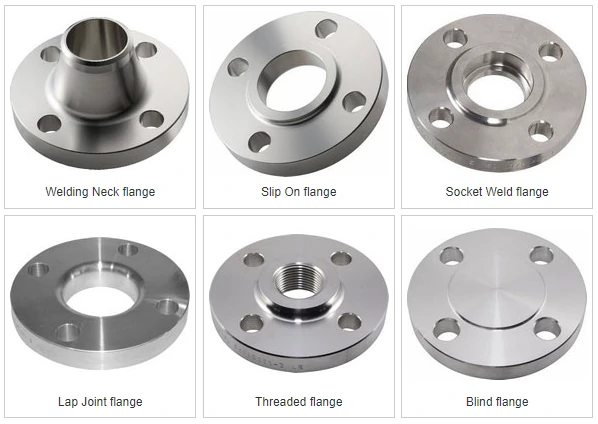
The flange type should be selected according to the piping system's operating conditions and design requirements. Choose a lap joint pipe flange if you have to take things apart a lot, are working with expensive metals, big sizes, flexible equipment, or lines that won't rust. A slip-on flange is best for low- to medium-pressure systems that stay closed for long periods of time and cost less to buy at first. A weld neck flange may be more suitable for applications involving high external loads, severe cyclic conditions, or demanding pressure and temperature requirements, subject to engineering evaluation. To close off the end of a flanged piping line, use a blind flange. The final selection should consider operating conditions, maintenance frequency, material compatibility, and total lifecycle cost rather than purchase price alone. You should also look at the full design of the pipes, the plan for maintenance, and the cost over their whole life.
What to Put in Your RFQ
A detailed RFQ helps reduce clarification requests and speeds up the quotation process. Write down the nominal pipe size, wall thickness, pressure class, standard, facing, material grade, stub end details, quantity, service conditions, inspection needs, packaging, delivery location, and Incoterms. When you compare prices, you should think about how long the wait is, how much the paperwork is, how the product is tested, how long the guarantee lasts, and how the company handles problems that don't meet standards. You might need to have work done just for you if you need odd bores, special alloys, stub end lengths that aren't standard, or OEM drawings. From DN15 to DN2000, we have them all. We can also make samples or small amounts for test sales. That way, small companies and local sellers can test a product before they buy a lot of it.
Installation Steps That Protect the Joint
Proper installation helps maintain gasket sealing performance and weld integrity. Crews should verify the dimensions and compatibility of all lap joint assembly components before installation. Then, they follow a set process to join the short end, turn the base flange so that the holes line up, put on a new gasket, and tighten the bolts in a tight cross pattern. It is important for a slip-on that the pipe is put in correctly, the flange is square and in the middle, and both fillet welds are finished. Mistakes like using the wrong gaskets, broken bolts, mismatching the class, uneven tightening, and missing the weld check are very common. For the last assembly, the project's rules for force and testing should be followed.
Conclusion
When choosing between a lap joint pipe flange and a slip-on flange, consider the operating conditions, maintenance requirements, installation costs, and total lifecycle cost. Slip-on flanges are easy to install and don't cost much, so they are good for flat lines that don't need much pressure and stay closed. It costs more to buy a lap joint assembly, but the spinning backing flange speeds up the process of placing the bolt holes. It enables non-destructive line disassembly and allows a cost-effective carbon steel backing flange to be paired with an expensive corrosion-resistant alloy stub end. It is better to use a weld neck flange when there is a lot of shaking, bending loads, or repeated service. As long as the right standards, pressure classes, bore radius, material records, and assembly steps are used, both options are safe. Comparing the complete assembly cost and verifying the technical requirements helps buyers make more informed procurement decisions.
FAQ
1. Can I use a slip-on flange as a lap joint flange?
Not at all. The stub end fillet can't fit in a slip-on flange because it doesn't have the machined bore radius that does. The lap joint pipe flange is stressed when the fit is forced, so it doesn't sit flat.
2. Which part seals against the gasket?
The gasket is sealed by a short end face on the stub. The 125 to 250 RMS angled finish should be on the short end since the bolt load is the only thing on the backing plate.
3. Is a lap joint flange cheaper than a slip-on flange?
When you buy lines made of plain carbon steel, you have to buy two pieces, so no. The lifecycle cost can go down if the joint is opened more often, if an alloy stub end is used instead of a full alloy flange, or if the time it takes to shut down is important.
4. Can it handle severe cyclic loading?
No, weld neck flanges are better for heavy cycles, high bending stress, and work that wears out quickly. Rotation helps things line up, but it doesn't make them more fixed. An engineer should look at the loads, weather effects, and code limits before giving the go-ahead.
Request a Lap Joint Pipe Flange Quote From JS FITTINGS
Looking for a reliable supplier of lap joint pipe flanges? To order, email admin@jsfittings.com with your size, class, material, and number. We'll get back to you in an hour. JS FITTINGS has been making pipe fittings and flanges since 1983. JS FITTINGS maintains an ISO 9001-based quality management system and can provide applicable product conformity documentation. Available sizes range from DN15 to DN2000, depending on product specifications and customization requirements. Contact our engineering sales team to request full technical documentation, Mill Test Certificates, or to submit your piping isometric drawings for an immediate quotation.
References
1. SME B16.5: Pipe Flanges and Flanged Fittings, 2020
2. ASME B16.47: Large Diameter Steel Flanges, 2020
3. ASME B31.3: Process Piping, 2022
4. ASME B16.9: Factory-Made Wrought Buttwelding Fittings, 2018
5. Piping Handbook, 7th Edition, McGraw-Hill, 2000
6. ASTM A105/A105M: Standard Specification for Carbon Steel Forgings for Piping Applications, 2021
Send Inquiry
You may like
Related Industry Knowledge
- Blind Flange vs Weld Neck Flange: Which Is Better?
- What Materials Are Used for Butt Weld Fittings?
- 45 degree buttweld elbow Buying Guide for Industrial Piping
- SSAW Carbon Steel Pipe Specifications and Surface Treatment
- API 5L X65 PSL2 LSAW Carbon Steel Pipe for Oil and Gas
- Cold Drawn vs Hot Rolled ASTM A312 Seamless Pipe: Key Differences
- ASME B16.9 Buttweld Tee Dimensions and Weight Guide
- What is the temperature to weld carbon steel pipe?
- How to weld carbon steel pipe?
- How are stainless steel butt weld fittings measured?