
SSAW Carbon Steel Pipe Specifications and Surface Treatment






2026-08-06 10:42:41
When embarking on infrastructure or industrial projects, selecting the right piping solution can determine whether deadlines are met, budgets stay intact, and safety standards are upheld. SSAW carbon steel pipe—manufactured through spiral submerged arc welding—has emerged as a dependable choice for large-diameter applications where strength, flexibility, and cost-efficiency matter most. Understanding its specifications and surface treatment options empowers procurement managers, project engineers, and distributors to minimise risk, ensure compliance, and achieve reliable long-term performance across oil and gas transmission, water infrastructure, and structural piling projects.
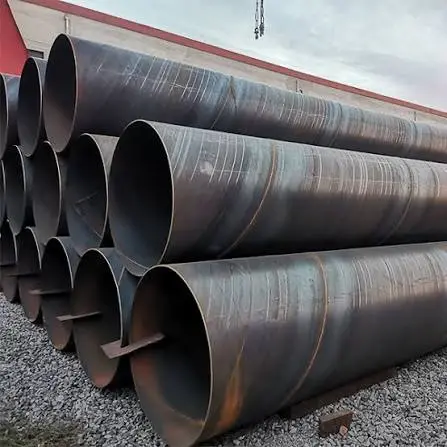
Understanding SSAW Carbon Steel Pipe Specifications
To make SSAW pipes, hot-rolled steel coils are repeatedly shaped into a cylindrical shape at a controlled helix angle. The spiral seam is then joined together using submerged arc welding technology. This manufacturing method allows the production of large-diameter pipes, typically from approximately NPS 8 inches and above, without requiring expensive retooling. This significantly reduces material costs, making it highly advantageous for long-distance transmission and municipal water projects.
Manufacturing Process and Core Advantages
Longitudinal welding (LSAW) and electric resistance welding (ERW) are very different from spiral welding. The process cuts down on waste by using thinner steel strips wound at an angle. It also allows different pipe diameters to be produced from various strip widths. Our automatic submerged arc welding system makes sure that the heat is spread evenly along the seam. A full X-ray (RT) inspection makes sure that the strength of the weld matches the strength of the base metal. When you put these two things together, you get pipes that can handle high internal pressures and loads from the ground, which is especially useful in rough territory and underground systems.
LSAW pipes are best for heavy-wall applications from 16" to 60" for high-pressure gas mains, while ERW pipes are typically limited to NPS 1/2" to 24" and are optimal for small to medium-sized utility lines.Spirally welded pipes, on the other hand, are the most cost-effective choice for large-bore water transmission and low-pressure pipelines. The spiral seam helps distribute stress more evenly across the pipe body, which makes it less likely that there will be weak spots when the ground moves or the pipe expands due to heat.
Standards and Material Grades
The API 5L, ASTM A53, and ASTM A252 standards are followed to the letter when we make spiral-welded pipes. API 5L grades, which range from B to X70, set limits for chemical composition, yield strength, and tensile properties. Grade B has a minimum yield strength of 35 ksi (241 MPa) and is suitable for general water transmission and structural applications. To keep brittle fractures from happening during field installation, carbon equivalent (CE) values stay within the limits of what can be welded.
ASTM A252 piles are designed for structural foundation work, where pipes must be able to handle high axial and lateral loads in naval building and bridge piling. Charpy V-Notch impact tests at low temperatures, guided bend tests to check how flexible the weld is, and spectrographic analysis to confirm the amounts of alloying elements are all part of our strict quality control. These steps make sure that pipes stay strong and reliable even in very cold places or marine environments.
Dimensional Tolerances and Geometric Precision
Dimensional accuracy has a direct effect on how well a project works and how long it lasts. Our laser measuring systems keep an eye on deviations in straightness, wall thickness uniformity, and ovality that are usually less than 0.2% of the total length. Accurate control of the outer diameter makes field alignment easier, cuts down on the time needed to prepare for welding, and lowers the risk of joint failure during hydraulic testing. Each pipe is put through a hydrostatic test at a level equal to or greater than 90% of its stated minimum yield strength (SMYS). This makes sure that the pipes can hold pressure before they are shipped.
Surface Treatment Methods for SSAW Carbon Steel Pipes
Protection against corrosion determines whether a pipeline lasts as long as it was meant to or breaks down before its time. Surface treatments are very important because they protect steel from damaging natural factors like water, acidic soil, and chemical pollutants. When choosing the right covering system, you need to weigh the original cost against the cost of repairs over time and the system's ability to perform its function.
Common Protective Coating Systems
- 3-Layer Polythene (3LPE): This multi-layer system is made up of an epoxy primer that is fused together, a copolymer glue, and a high-density polythene finish. 3LPE coats are very good at protecting against cathodic disbondment and mechanical damage that can happen when pipes are being moved or installed. They are often used for underground pipes in water distribution and district heating networks, where chemical protection and long-term impermeability are very important. When used with cathodic protection, the system can last longer than 50 years.
- Fusion-Bonded Epoxy (FBE): Applied electrostatically as a thermosetting powder onto preheated steel surfaces and cured at elevated temperatures, FBE forms a dense cross-linked polymer film with excellent adhesion and dielectric strength for SSAW carbon steel pipe. Single-layer FBE works well in moderate settings, while dual-layer configurations are better for rocky soil because they can handle more impact. This coating does a great job of keeping soil-side rust at bay, and it's often used on SSAW carbon steel pipe, oil and gas gathering lines, and Class 1 transmission pipes.
- Cement Mortar Lining (CML): These linings improve flow by smoothing out the surface, reduce tuberculation in drinking water systems, and create an alkaline environment that significantly reduces internal corrosion. When paired with external 3LPE coatings, CML-lined pipes protect local water infrastructure completely, keeping the water clean and the structure strong for decades of use.
- Hot-Dip Galvanising: Zinc coatings provide both barrier protection and sacrificial cathodic protection for the underlying steel, corroding more quickly. Galvanising works well for structural piles in coastal settings and above-ground pipes that will be exposed to air and water splash zones. The length of protection depends on the thickness of the coating, which is usually between 70 and 100 microns. Heavier coatings last longer in harsh coastal conditions.
Selection Criteria Based on Operational Conditions
To pick the best surface treatment, you need to think about the surface's exposure to the environment, its mechanical stress, and your budget. For buried pipes in soils that are harsh on chemicals, 3LPE coatings with cathodic protection are helpful. For above-ground installations in mild climates, painted or galvanised finishes may be enough. When we look at the specifics of a client's situation—such as the soil's resistivity, pH levels, underground chemistry, and temperature ranges—we suggest treatments that will work best without costing too much.
As part of quality control, adhesion tests, high-voltage spark testing for holiday detection, and magnetic thickness gauges for checking thickness are all done. Our coating inspection procedures follow ISO 21809 requirements, while cathodic protection systems are designed in accordance with NACE SP0169 where applicable.This ensures coating integrity is fully verified before the pipes leave our facility. This proactive method lowers the cost of repairs in the field and stops corrosion problems before they happen, which could stop activities and put people at risk.
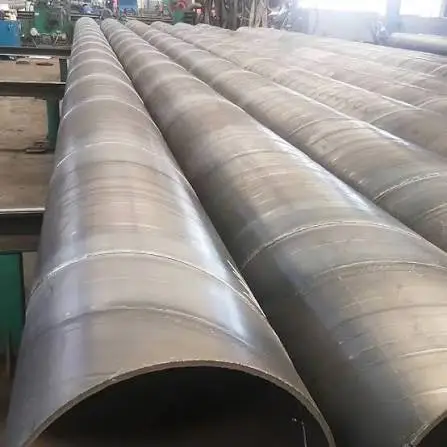
How to Choose the Right SSAW Carbon Steel Pipe and Surface Treatment for Your Project?
Buying choices depend on how well the SSAW carbon steel pipe specs and surface treatments match the needs of the project. A structured evaluation method lowers risk, keeps prices low, and makes sure that engineering standards and government rules are followed.
Defining Project Parameters
First, find out the working pressure, the type of fluid, the temperature, and the state of the soil. For high-pressure gas transmission, the walls need to be thicker, and the steel grade needs to be higher (X52 or X60). For low-pressure water mains, Grade B pipes with moderate wall thickness can be used. Coating choices are based on things like the acidity of the soil, the amount of water in it, and how close it is to saltwater. In corrosive settings, you need strong, multi-layer systems, but in benign ones, you can use simpler protective systems.
Evaluating Supplier Qualifications
Reliable suppliers show that they have all the necessary certifications, have a history of making good products, and have clear quality control procedures. These are the licences we have: ISO 9001, CE, and GOST-R. The National Iranian Oil Company, the Abu Dhabi National Oil Company, and Petrobras all trust us as a provider. Our 43 years of manufacturing expertise and monthly output of more than 90 containers show that we can handle big projects with steady quality and delivery rates above 95%.
When projects need non-standard sizes or coatings, the ability to customise is important.We supply large-diameter API 5L SSAW carbon steel pipes (typically DN200 and above) and can accommodate custom requirements for non-standard wall thicknesses, lengths, and specialized coatings. Our skilled foreign trade team handles order details, export paperwork, and logistics planning, making it easier for EPC contractors, distributors, and government infrastructure developers to buy things.
Balancing Cost, Quality, and Delivery Timelines
Saving money doesn't mean putting safety or performance at risk. For large-diameter uses, spiral-welded pipes are the best value because they reduce waste and make production easier. The overall cost of purchase, on the other hand, includes cleaning the surface, transporting it, installing it, and maintaining it over its lifetime. Investing in better coatings up front lowers the costs of repairs, downtime, and replacements over many years of use.
You can get better prices and earlier production slots by negotiating big contracts or long-term supply deals. Our strict inventory management and monthly shipment capacity let us respond quickly to urgent orders, which helps contractors meet tight project deadlines. Clear contact and full after-sales service, including technical help and handling complaints, help build trust and encourage customers to buy again.
Applications and Industry Use Cases of SSAW Carbon Steel Pipes
In many different fields, spiral-welded pipes are very important, and each one has its own special needs when it comes to specs and surface treatments. Understanding these uses makes it easier to see how customised solutions improve safety, durability, and cost-effectiveness.
Onshore Oil and Gas Transmission
Long-distance oil and gas pipelines go through rough terrain, so the pipes have to be able to stay strong over hundreds of kilometres while the ground moves and the temperature changes. SSAW carbon steel pipes are strong and flexible at the same time, and they meet API 5L material requirements for onshore transmission pipelines operating in various ASME B31.8 location classes. On the outside, 3LPE coatings stop corrosion from the soil, and on the inside, FBE linings stop degradation caused by hydrocarbons. The spiral seam evenly distributes stress, which lowers the chance of longitudinal cracking when the ground moves or there are earthquakes.
Structural Piling and Marine Construction
Foundation piles for bridges, marine platforms, and wind farms need to be very strong compared to their weight and be able to withstand both vertical loads and lateral shear forces. When made from spiral-welded steel, ASTM A252 piles keep structures stable in difficult soil conditions and sea conditions. Heavy-duty epoxy coatings or hot-dip galvanising protect against splash-zone corrosion and chloride attack, which makes them last longer in harsh coastal climates. Our dimensional control process ensures accurate pipe geometry, simplifying field installation, which makes installation easier and cuts down on the need for field welding.
Municipal Water and Thermal Networks
China's large-diameter SSAW carbon steel pipes carry drinkable water and thermal fluids over big distribution networks for urban water supply and district heating systems. When you combine SSAW lines with an internal cement mortar lining (CML) and an external 3LPE covering, they protect against chemical erosion and keep the water quality high for more than 50 years in underground settings. Spiral welding is a cost-effective way to make large-bore water transfer possible. This helps growing cities build more infrastructure while keeping people safe and healthy.
Conclusion
Choosing the correct SSAW carbon steel pipe and surface treatment has a direct effect on the success of the project, the safety of operations, and the lifecycle costs. Procurement professionals can make decisions that minimise risk and maximise value by knowing about manufacturing processes, material grades, coating options, and supplier qualifications. For large-diameter uses, spiral-welded pipes are the most cost-effective option. Customised surface processes keep them from corrosion and weather damage for a long time. EPC contractors, distributors, and industrial end-users can get reliable piping solutions that meet deadlines, stay within budget, and last for decades by working with experienced manufacturers who are dedicated to quality, compliance, and customer service.
FAQ
1. What distinguishes SSAW pipes from seamless pipes?
SSAW pipes are made by winding steel coils into a spiral shape and welding the seam. This makes it cheaper to make pipes with a big diameter. Seamless pipes are made by extruding solid steel billets. They have uniform wall thickness and higher pressure ratings, but they are much more expensive and only come in a few diameter ranges. For water transportation and moderate-pressure uses, spiral-welded pipes work best. Seamless pipes, on the other hand, are best for high-pressure oil and gas systems that need the strongest structure possible.
2. How often should surface treatments be inspected to prevent corrosion?
Inspection times vary on how the coating is used and how exposed it is to the surroundings. Every year, cathodic protection surveys are done on buried pipelines with 3LPE coatings, and every five years, close-interval surveys are done. Above-ground systems need to be inspected visually every six months, and damage to the coating needs to be fixed before rust starts. Following NACE standards and manufacturer suggestions helps find coating failures early and increases the service life of pipelines.
3. Can SSAW pipes be customised for non-standard dimensions?
We manufacture spiral-welded pipes from DN15 to DN2000 with customised lengths, wall thicknesses, and coating configurations. Non-standard measurements are used when a project has special needs, like dealing with difficult terrain, needing a certain amount of flow, or being limited by regulations. Our engineering team works with clients to create custom solutions that meet their technology needs, budget, and delivery deadlines without sacrificing safety or quality.
Partner with JS FITTINGS for Reliable SSAW Carbon Steel Pipe Supply
JS FITTINGS has been making high-quality products for 43 years and has a history of working with big energy companies around the world. Our thorough quality control includes spectrographic analysis, 100% X-ray weld inspection, hydraulic testing, and sealing verification. This makes sure that the pipes we make meet the highest international standards. We offer the stability and speed that EPC contractors, distributors, and industrial end-users need by shipping more than 90 containers every month, delivering on time more than 95% of the time, and maintaining a customer repeat business rate of more than 98%. Our experienced team can help you with any project, whether it needs large-diameter water transmission pipelines, structural piling for marine construction, or custom coatings for harsh environments. We offer free consultations and fair prices. Get in touch with admin@jsfittings.com right away to talk about your needs with a reliable SSAW carbon steel pipe maker and get piping solutions that are designed to last and help your project succeed.
References
1. American Petroleum Institute. API Specification 5L: Specification for Line Pipe. 46th Edition, 2018.
2. ASTM International. ASTM A53/A53M-20: Standard Specification for Pipe, Steel, Black and Hot-Dipped, Zinc-Coated, Welded and Seamless. West Conshohocken, PA, 2020.
3. ASTM International. ASTM A252-21: Standard Specification for Welded and Seamless Steel Pipe Piles. West Conshohocken, PA, 2021.
4. NACE International. NACE SP0169-2013: Control of External Corrosion on Underground or Submerged Metallic Piping Systems. Houston, TX, 2013.
5. ISO. ISO 21809-1:2018: Petroleum and Natural Gas Industries—External Coatings for Buried or Submerged Pipelines Used in Pipeline Transportation Systems—Part 1: Polyolefin Coatings (3-Layer PE and 3-Layer PP). Geneva, Switzerland, 2018.
6. Thompson, S.W., and Colvin, D.J. Welded Steel Pipe: Manufacturing Processes and Applications in Infrastructure. Materials Engineering Press, 2019.
Send Inquiry
You may like
Related Industry Knowledge
- Large Diameter LSAW Welded Pipe Manufacturer in China
- ASTM A105 Carbon Steel WN Flanges for the Oil and Gas Industry
- Industrial Steel Carbon Pipe Guide for High Performance Engineering
- Buttweld Bend for Oil & Gas Pipelines: Material & Specs
- ASTM A234 WPB Buttweld Tee Material Properties Overview
- FBE vs 3LPE vs CWC for Underground and Subsea Applications
- What is carbon steel pipe made of?
- How Does a Buttweld Elbow Reduce Pressure Loss in Pipelines?
- What is seamless carbon steel pipe?
- What is carbon steel pipe used for?