
ASTM A105 Carbon Steel WN Flanges for the Oil and Gas Industry






2026-07-30 11:10:39
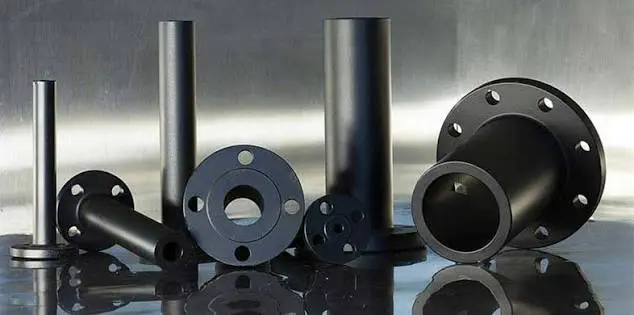
When selecting components for high-pressure oil and gas pipelines, the ASTM A105 weld neck flange stands as an industry benchmark. This forged carbon steel piping component features a long tapered hub that butt-welds directly to pipe systems, effectively transferring mechanical stress from the flange body to the pipe wall. This structural design makes it the preferred choice for demanding environments where safety, compliance, and long-term reliability cannot be compromised.
Understanding ASTM A105 Weld Neck Flanges: Specifications and Material Properties
What Defines an ASTM A105 Weld Neck Flange?
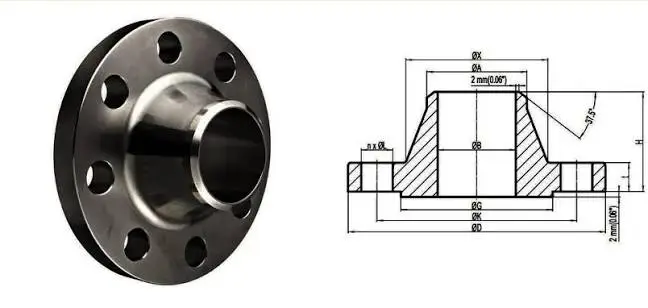
The ASTM A105 standard specifies the material requirements for forged carbon steel piping components intended for ambient and higher-temperature pressure systems. When applied to the weld neck flange design, this material solves critical technical challenges in oil and gas infrastructure.The long, tapered hub gradually changes from the flange ring to the thickness of the pipe wall, so there are no sharp stress concentration points that can cause the part to fail too soon. This geometry reinforces the joint, keeping the structure strong even when thermal cycling and mechanical loading occur, which can happen in upstream wellheads and midstream transmission pipelines.
Chemical Composition and Mechanical Strength
Chemistry is where material tracking starts. The ASTM A105 standard says that killed carbon steel must have a manganese content of between 0.60 and 1.05%, with a maximum of 0.035% phosphorus and 0.040% sulfur. These managed ratios make sure that the metal is easy to machine and weld while keeping its structural integrity. The minimum tensile strength is 70,000 psi (485 MPa), the minimum yield strength is 36,000 psi (250 MPa), and the maximum hardness is 187 HBW. The forging process lines up the grain flow with the form of the flange, making it more resistant to impact than cast options. This is a very important benefit when working in places where there are sudden changes in temperature and pressure.
Dimensional Standards and Pressure Ratings
Specifications for the sizes of carbon steel flanges are set by ASME B16.5; it sets uniform standards for bolt hole dimensions, facing measurements, and hub profiles. Weld neck flanges that are made to this standard come in pressure classes that range from 150# to 2500#, so they can be used in a variety of situations, from low-pressure gathering systems to high-pressure injection wells. Standard sizes run from 1/2" to 24", and custom sizes can be made for specific uses. The bore is precisely machined to fit certain pipe schedules, such as Schedule 40, 80, 160, or XXS. This makes sure that the internal flow paths are smooth and stops erosion at the joint interface caused by turbulence.
Comparing ASTM A105 Weld Neck Flanges with Other Flange Types
ASTM A105 vs. ASTM A350 LF2: Temperature Considerations
Operating temperature ranges have a big impact on the choice of material. ASTM A105 weld neck flanges are commonly used in moderate-temperature service. For low-temperature applications, the minimum design temperature should be verified in accordance with the applicable design code and project requirements. But ASTM A350 LF2 is required when pipelines go through arctic areas or deal with cryogenic fluids. The label LF2 means that it can be used in low temperatures and has better notch hardness to avoid brittle fracture. During the sourcing phase, procurement teams must correctly define service temperatures to make sure that materials will work together and to avoid catastrophic joint failures in cold-weather operations.
Carbon Steel vs. Stainless Steel: Cost-Benefit Analysis
Stainless steel flanges are better at resisting corrosion, but ASTM A105 weld neck flanges and carbon steel A105 flanges work just fine in environments that aren't very corrosive or are only slightly corrosive, and they're a lot cheaper. When used in crude oil pipelines, where the fluids don't contain many corrosive chemicals, carbon steel lasts for decades if it is properly coated and kept. When it comes to large-diameter applications, the price difference is big—a 16" Class 600 A105 flange usually costs 40–50% less than its stainless steel counterpart. Projects that are trying to stick to a budget can use the money they save to improve inspection procedures or add extra safety systems while keeping the integrity of the operation.
Weld Neck vs. Slip-On and Blind Flanges
Choosing the right flange type depends on how it will be installed and what the structure needs to be able to support it. Weld neck designs need full-penetration butt welds with beveled end preparation (usually 37.5°), which lets radiographic testing of the weld seam help verify weld quality and detect internal discontinuities. This testing ability makes them essential for critical service lines transporting volatile hydrocarbons. Slip-on flanges are easier to install, but their design leaves a crevice at the pipe-flange interface that can collect corrosive deposits. Furthermore, their fillet weld geometry makes them unsuitable for complete radiographic inspection. Blind flanges seal pipeline ends, but they have a very different job. The weld neck configuration's better stress distribution and inspection accessibility justify its specification in high-consequence applications where leakage poses safety or environmental risks.
Manufacturing Process and Identification of ASTM A105 Weld Neck Flanges
Forging and Heat Treatment Methods
When raw steel billets are hot-forged, they are shaped and compressed while the grain structure is aligned with the flange geometry. This mechanical working increases density, improves overall material integrity, and significantly reduces internal voids that could otherwise allow cracks to propagate under cyclic loading. After forming, heat treatment is necessary. Normalisation, which is marked with an 'A105N' symbol, involves heating the flange above its critical temperature and then cooling it in air to refine the grain structure and make it tougher.
Quality Control and Industry Certifications
Reputable manufacturers use multi-stage inspection protocols that are in line with ISO 9001 quality management systems. The first step is spectral analysis to make sure the raw materials are chemically correct, and then they do mechanical testing to make sure the tensile and yield strengths are correct. Non-destructive testing methods like ultrasonic inspection can find internal discontinuities in forgings, and magnetic particle inspection can find surface defects on machined bevels.
Verifying Flange Authenticity Through Documentation
To keep low-quality goods out of your supply chain, every ASTM A105 weld neck flange should come with a Material Test Report (MTR) that lists the heat number, chemical analysis, mechanical test results, and heat treatment details. This paperwork connects the physical part to its manufacturing history, so it can be checked against the specifications in the purchase order. A visual inspection should confirm that the flange face has the correct markings, including the material grade, pressure class, size, manufacturer, and heat number.
Procurement Guide: Sourcing ASTM A105 Weld Neck Flanges Efficiently
Identifying Reliable Global Suppliers
Choosing the right supplier has a direct effect on the success of the project, especially when sourcing A105 WN Flanges. Manufacturers that have been in business for a long time tend to be more reliable than newcomers to the industry. JS FITTINGS is a good example of this because they have been making pipe fittings and A105 WN Flange since 1983, gaining 43 years of metallurgical expertise and process refinement. They are an approved supplier for major operators such as the National Iranian Oil Company, Abu Dhabi National Oil Company (ADNOC), and Petrobras, which shows that they can meet strict international standards. When looking at potential suppliers, look at their certifications, production capacity metrics, and client retention rates to see how well they have been doing over time.
Understanding Pricing Dynamics and Bulk Purchasing
Pricing for ASTM A105 weld neck flanges depends on many things, such as the cost of raw materials, the difficulty of manufacturing, the pressure class, and the amount of the order. Class 600 and higher pressure ratings need thicker forgings and more extensive machining, which drives up unit costs compared to Class 150 equivalents. Buying in bulk creates economies of scale, as manufacturers can optimize production runs and lower per-unit overhead when processing larger orders. Setting up framework agreements for expected annual requirements often secures better pricing while ensuring supply continuity. When making budget predictions, it's important to take into account how volatile the steel market is and plan for price changes on long-lead projects.
Delivery Timelines and Logistics Planning
Standard-size flanges in common pressure classes usually ship from stock within two to three weeks. Custom dimensions or special material grades may take eight to twelve weeks for forging, heat treatment, and machining. JS FITTINGS keeps a large inventory to support fast fulfillment—every month they ship over 90 containers full of flanges to destinations around the world, and their on-time delivery rate is above 95%. When sourcing parts for fast-track projects, it's important to get clear on lead times before placing orders.
Advantages and Industry Applications of ASTM A105 Weld Neck Flanges
Superior Performance in Demanding Environments
The oil and gas industry puts a lot of stress on piping systems, which tests the limits of materials and the strength of joints. ASTM A105 weld neck flanges work really well in these situations because they have several benefits that work together. The tapered hub absorbs vibration energy and allows for thermal expansion without causing fatigue cracks at the flange-pipe junction. This stress distribution ability extends joint life significantly compared to designs with abrupt geometry changes.
Compatibility with Carbon Steel Piping Infrastructure
Material compatibility makes sure that piping systems are stable and can be welded. For example, carbon steel A105 flanges fit perfectly with ASTM A106 or API 5L pipe, which is often used for oil and gas transmission. Using matched materials gets rid of the electrochemical potential differences that cause galvanic corrosion at different metal junctions. Welding procedures stay the same across components, making it easier for welders to get qualified and reducing the complexity of construction procedures.
Real-World Case Studies in Upstream and Midstream Operations
Proven performance in the field backs up design theory and material specifications. For example, Class 900 and 1500 weld neck flanges connect wellhead assemblies to production manifolds. They have to be able to handle formation pressures of more than 5,000 psi and mechanical vibration from platform equipment. The ability to do radiographic weld inspections is necessary in these safety-critical installations where regulatory agencies require proof of joint integrity. Midstream pipeline projects also benefit from weld neck flange designs because of their long-term reliability. During 15 years of continuous use, these joints kept working without any leaks by replacing the gaskets at regular maintenance times. The project met its total cost of ownership goals by avoiding unexpected shutdowns and reducing the number of inspections needed compared to other flange designs that showed faster wear patterns.
Cost Savings Through Lifecycle Performance
When looking at the whole project timeline, the initial buy price of a flange is only a small part of how much it will cost in total. Large-diameter Class 600/900/1500 A105 weld neck flanges provide excellent structural strength, which lowers the chance of failure. This keeps plants from having to shut down in an emergency, which costs thousands of dollars an hour in lost production. Radiographic inspection can find problems with welds before they are put into service, which stops failures in the field that cost a lot to fix. The smooth internal flow path lowers the rate of erosion, which means that checks and part repairs can be put off longer. When these operational factors are evaluated alongside acquisition costs, the value proposition of properly specifying large-diameter A105 weld neck flanges (Class 600, 900, or 1500) becomes undeniably strong. Lifecycle cost optimization projects always choose this type of flange for important service applications, even if it means spending a little more up front but saving a lot in the long run and lowering risk.
Conclusion
Finding the best flange option means balancing long-term reliability goals, technical needs, and cost limits. ASTM A105 weld neck flanges have been used successfully in oil and gas applications because they are better at managing stress, allowing inspection, and maximizing flow. Knowing the properties of materials, signs of good manufacturing, and specific needs for each application helps procurement teams make smart choices that lower project risk and keep costs low. Working with experienced sources who follow strict quality standards and have the right industry certifications protects the stability of parts from the time they are manufactured until they are put into service.
FAQ
1. What is the difference between ASTM A105 and ASTM A105N designations?
The base A105 specification sets the chemical make-up and mechanical properties of the material. The "N" suffix indicates that the forging has been supplied in the normalized heat-treated condition. By carefully heating and cooling the grains, normalization improves their structure, making them tougher and more resistant to impact, especially at lower temperatures. Many operators use A105N as standard to make sure that the materials are the same from one project to the next.
2. Can these flanges be used in cryogenic service applications?
The coldest temperature that ASTM A105 weld neck flanges can be used in is -20°F (-29°C). For applications operating at lower temperatures, ASTM A350 LF2 material is required to prevent brittle fracture.To make sure the right material is chosen, the working temperature ranges must be correctly shown in the procurement specifications.
3. Why must the pipe schedule be specified when ordering weld neck flanges?
To keep flow changes smooth, the flange hole needs to match the inside diameter of the pipe it fits. When schedules don't match up, internal steps happen that cause turbulence, a drop in pressure, and erosion to focus at the break. When you specify the right pipe schedule, the hole will be perfectly aligned, and the hydraulics will work at their best.
Partner with JS FITTINGS for Your ASTM A105 Weld Neck Flange Requirements
With over 40 years of specialized manufacturing experience, JS FITTINGS is equipped to support your most critical piping projects. We are a qualified ASTM A105 weld neck flange provider for some of the biggest energy companies in the world. Our certifications include ISO, CE, GOST-R, and operator-specific standards from PETROBRAS, NIOC, and ADNOC. Our factory can make more than 700 tonnes of flanges every month, so we can quickly deliver standard configurations from DN15 to DN2000. We can also make custom specs for specific uses. Our quality control system gives your projects the stability they need with customer complaint rates below 0.5% and repurchase rates above 98%. Email our technical team at admin@jsfittings.com to talk about your specific needs, look at material certifications, and get competitive quotes with full engineering support.
References
1. ASTM International. "Standard Specification for Carbon Steel Forgings for Piping Applications." ASTM A105/A105M-21, West Conshohocken, PA, 2021.
2. American Society of Mechanical Engineers. "Pipe Flanges and Flange Fittings: NPS 1/2 through NPS 24 Metric/Inch Standard." ASME B16.5-2020, New York, NY, 2020.
3. American Petroleum Institute. "Specification for Line Pipe." API Specification 5L, Forty-Sixth Edition, Washington, DC, 2018.
4. The American Society of Mechanical Engineers. "Process Piping." ASME B31.3-2020, New York, NY, 2020.
5. Nayyar, Mohinder L. "Piping Handbook." Seventh Edition, McGraw-Hill Education, New York, 2000.
6. Becht, Charles IV. "Process Piping: The Complete Guide to ASME B31.3. "Fourth Edition, ASME Press, New York, 2017.
Send Inquiry
You may like
Related Industry Knowledge
- API 5L Grade B SSAW Carbon Steel Pipe for Oil and Gas Projects
- Custom Steel Flange: all the information worth knowing
- Types of ASTM A105 weld neck flange
- Differences Between AWWA Flanges and ANSI Pipe Flanges
- Buttweld Tee vs Socket Weld Tee for High-Pressure Piping
- What is FBE Coated Steel Pipe?
- How thick is the FBE Coated Steel Pipe?
- How long does FBE Coated Steel Pipe last?
- Sch 40 Buttweld Reducer vs Sch 80 Pressure Performance
- What is the temperature to weld carbon steel pipe?