
LSAW Pipe vs SSAW Pipe: Which is Better for Your Project?






2026-07-23 11:01:05
When evaluating welded steel pipes for industrial applications, the choice between LSAW carbon steel pipe and SSAW pipe significantly impacts project success. LSAW pipes excel in high-pressure, large-diameter scenarios requiring superior weld integrity and dimensional precision, while SSAW pipes offer cost-effective solutions for large-bore, lower-pressure transmission systems. Your selection depends on pressure requirements, project specifications, and long-term performance expectations.
Introduction
When handling industrial building projects, one of the most important decisions procurement professionals have to make is which carbon steel pipe to use. Whether you're in charge of installing structural pilings, oil and gas transmission lines, or local water systems, knowing the basic differences between LSAW and SSAW pipes can make the difference between a successful job and one that runs low on budget and costs a lot to fix.
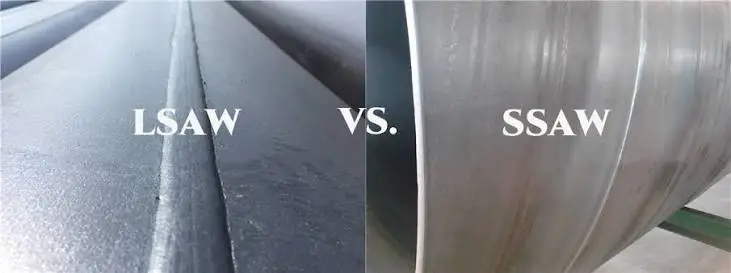
To make LSAW pipes, steel plates are bent into tubular shapes and the lengthwise seam is welded using double-sided submerged arc welding technology. This method of manufacturing produces high-quality welds and strong structures. SSAW pipes, on the other hand, are made by spirally welding continuous steel strips together. They come in a wider range of diameters and are often cheaper for certain uses.
This study looks at the technical, business, and practical differences between these two welding methods. We'll talk about manufacturing methods, its mechanical properties, cost, certification requirements, and suitability for specific applications. Procurement managers and engineers can get the best results from projects by knowing these comparative factors. They can do this while keeping performance needs, price limits, and supply chain reliability in mind.
Understanding LSAW and SSAW Carbon Steel Pipes
Manufacturing Process of LSAW Pipes
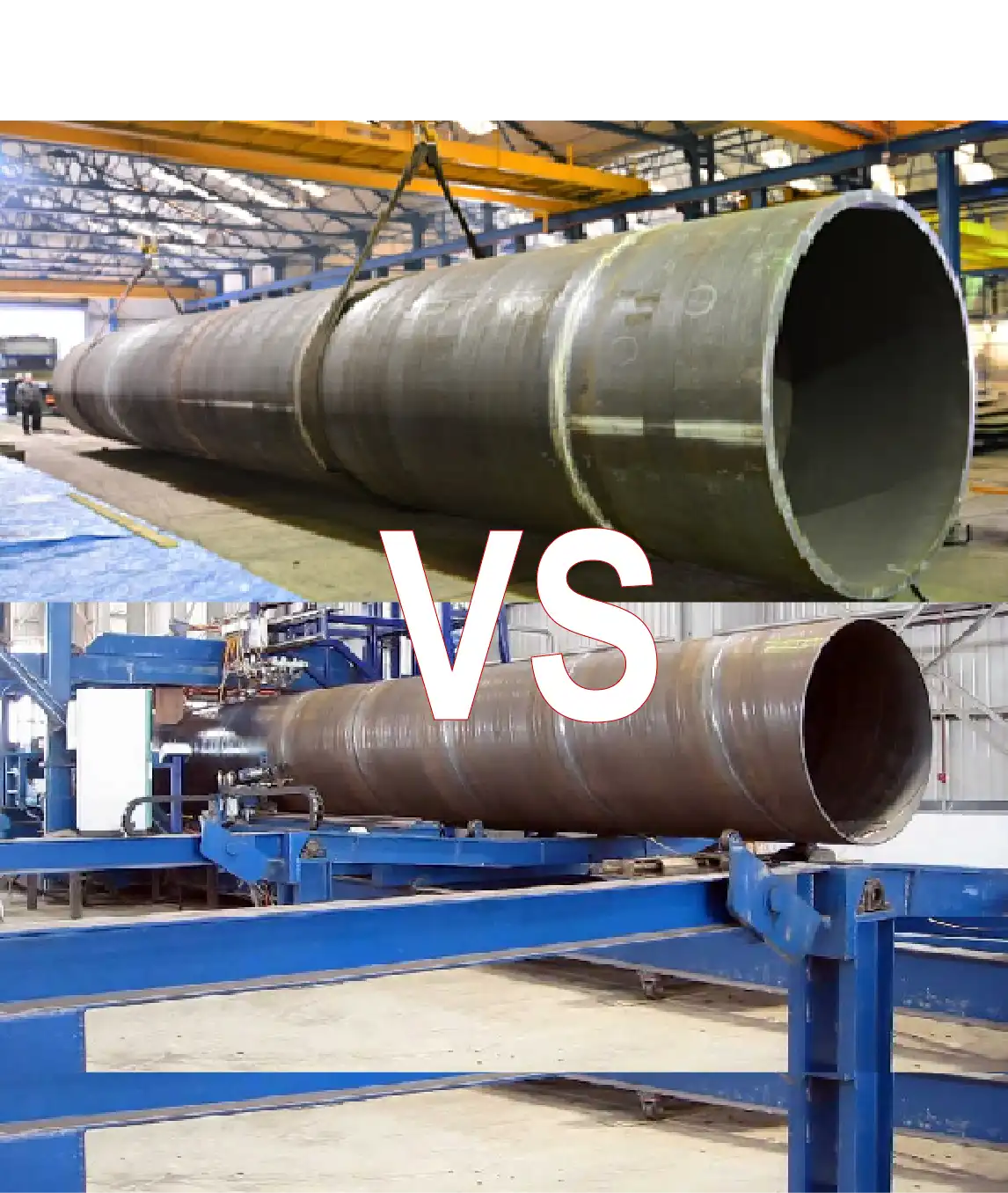
JCOE or UOE forming technology is used to make LSAW pipes. In this method, separate steel plates go through precise forming processes. After the sides of the plate are straightened and beveled, they are joined together using automatic double-sided submerged arc welding. With this method, a single longitudinal seam runs along the entire length of the pipe. After being welded, the pipe goes through cold expansion, which improves its shape and reduces any remaining strains. The end result is a heavy-wall pipe that is very round and has a consistent thickness.
We usually sell LSAW pipes in the NPS 16" to 60" range, and the walls can be as thick as 65 mm or more. These pipes are designed to work in tough situations where pressure ratings and fracture toughness are important. The cold-expansion process improves dimensional accuracy and helps control pipe diameter and roundness within specified tolerances. This makes installation faster in the field and girth welding safer while the pipeline is being built.
Manufacturing Process of SSAW Pipes
To make SSAW pipes, a continuous steel strip is fed through forming rollers that slowly shape the material into a tube-like shape. The strip moves forward in a spiral pattern, and submerged arc welding is used to join the ends. With this spiral shape, manufacturers can make pipes with larger diameters from coils of steel that are narrower. This gives them more production options, which can be helpful in some supply situations.
You can get SSAW pipes in diameters from NPS 8" to 120", which means they can be used for large-bore tasks. When stress is spread out, spiral welds are different from linear welds. This can change how well something works in high-pressure situations. When cost is the most important factor, these pipes work well for water transmission, low-pressure systems, and other uses.
Key Structural Differences
The main difference between LSAW and SSAW pipes is the direction of the weld and how it affects the pipes' mechanical properties. LSAW pipes have a straight lengthwise seam that spreads stress evenly when there is pressure inside the pipe. This design makes it less likely that seams will fail in high-pressure situations and lets sizes be more closely controlled.
Because they have a spiral weld design, SSAW pipes react to stress in different ways. The spiral seam introduces different stress distribution characteristics, and fatigue performance depends on weld quality, operating conditions, and design requirements. It's also harder to keep the dimensions straight when spiral welding, which can make field alignment more difficult during installation.
Comparative Analysis: LSAW vs SSAW Pipes
Mechanical Properties and Performance
LSAW carbon steel pipe can provide excellent mechanical performance, particularly when manufactured to API 5L PSL2 standards with controlled steel chemistry and qualified for sour service requirements.The longitudinal joint design reduces the number of stress concentration points, which makes catastrophic failure less likely in serious situations. Because they are made with low-carbon control and micro-alloying elements like niobium, vanadium, and titanium, these pipes are very resistant to hydrogen-induced cracks in sour service conditions.
Cost Analysis and Procurement Considerations
Prices per metre usually favour SSAW pipes, especially for larger diameters where the spiral welding process makes better use of material. Buying SSAW pipes in bulk can save you a lot of money on jobs that don't need a lot of pressure and don't have a lot of money to spend.
Due to their higher production accuracy and better performance, LSAW pipes are more expensive. When you look at the total cost of ownership, which includes how easy it is to install, how often it needs to be maintained, and how long it lasts, LSAW pipes are often more cost-effective for important uses. Tight tolerances on dimensions cut down on the cost of labour in the field during installation, and better durability cuts down on long-term maintenance costs.
Working with factory-direct suppliers like JS FITTINGS, which can produce more than 30,000 tonnes of goods every year and ship more than 90 containers every month, makes sure that bulk orders are performed competitively without sacrificing quality. Over 95% of the time, we finish on time, which cuts down on project delays and the costs that come with them.
Application Suitability and Industry Standards
For oil and gas transport pipelines, high-pressure gas mains, offshore platforms, and structural piles, LSAW pipes are the best choice. In these places, dependability is very important, and the money spent on LSAW technology pays off by lowering the chance of failure and increasing the service life. API 5L PSL2 certification indicates compliance with stricter manufacturing, testing, and performance requirements compared with PSL1.
SSAW lines work great for distributing water in cities, draining big areas, and moving things in factories with low pressure. Because they are cheap, they are good for projects where pressure ratings aren't very strict, but diameter requirements are. These pipes are commonly manufactured according to standards such as API 5L, AWWA C200, and other applicable specifications depending on the application, so they will work well for what they're meant to do.
Testing and Certification Requirements
LSAW and SSAW pipes are both put through a lot of tests, such as hydraulic pressure tests, non-destructive examinations, and material verifications. Because they are used in more serious situations, LSAW pipes usually go through more tests. At JS FITTINGS, we have foreign standards like ISO, CE, and GOST-R. We are also approved suppliers for major national oil companies like Petrobras, the National Iranian Oil Company, and the Abu Dhabi National Oil Company.
Our spectral analyzers check the chemical composition, and before goods leave our building, modern flaw-detection equipment finds any possible flaws. Our ISO9001 quality management system and this strict quality assurance method make sure that every pipe meets or beats the standards that have been set.
Making the Right Choice for Your Project
Evaluating Pressure and Temperature Requirements
The most important things to consider when choosing a pipe are the operating pressure and temperature. Because they are better at resisting pressure and weld quality, LSAW pipes are commonly selected for high-pressure and critical applications where weld quality, dimensional accuracy, and reliability are important. LSAW technology also works better in high-temperature environments because the longitudinal weld pattern is better at controlling thermal expansion.
SSAW pipes are widely used in water transmission and other applications where cost efficiency and large diameters are important. The money saved by choosing SSAW can then be used for other important parts of the project.
Considering Diameter and Wall Thickness Specifications
The required pipe width affects how feasible and expensive it is to make. LSAW pipes work well in the NPS 16" to 60" range because they have thick walls that are needed to send high-pressure gas. When your project needs walls that are thicker than 25 mm, LSAW technology gives you the safety you need to meet design requirements.
Because SSAW pipes can have diameters up to 120 inches, they are perfect for large-bore water transmission where wall thickness requirements are less strict. This means that project engineers can specify exactly the diameter they need without being limited by manufacturing limits.
Assessing Corrosion Resistance and Service Life
Long-term corrosion resistance depends on the type of material used, the coating system used, and the environment it is exposed to. LSAW carbon steel pipes manufactured with appropriate steel grades and protective coatings offer enhanced durability and a longer service life in harsh chemical environments.
While protective coatings can be applied to both pipe types, precise dimensional control ensures more consistent coating thickness, thereby enhancing corrosion protection and reducing long-term maintenance costs. When figuring out the lifecycle costs, the longer service life and lower maintenance needs of LSAW pipes often justify their higher initial investment.
Partnering with Certified Suppliers
Choosing the right supplier has a big effect on how well a project turns out. When you work with ISO-certified, factory-direct manufacturers, you avoid middlemen's markups and get direct access to technical expertise. For example, JS FITTINGS has been making products since 1983 and has over 40 years of experience. They offer professional piping solutions that are backed by comprehensive quality certifications.
Our monthly production capacity of 800 tonnes of pipe fittings and 700 tonnes of flanges ensures a steady supply, even for big projects. We support products from DN15 to DN2000 and can make special adjustments to meet your needs. Our international trade team responds to enquiries within one hour, which speeds up the buying process and cuts down on delays.
Advantages of Choosing LSAW Carbon Steel Pipes
Superior Weld Integrity and Reduced Defect Rates
The double-sided submerged arc welding process in LSAW pipes makes welds that are very strong and uniform. Unlike spiral welds, which create helical stress patterns, the longitudinal seam spreads pressure loads evenly across the pipe wall. This design minimizes stress concentration and lowers the risk of weld failure.
LSAW pipes have much lower rates of manufacturing defects than spiral-welded pipes. This is because the controlled forming process and precise weld parameters ensure consistent quality and minimize production batches. At JS FITTINGS, our quality management system helps maintain consistent product quality and customer satisfaction, which shows our dedication to manufacturing excellence. Our strong customer retention demonstrates confidence in our products and shows that customers understand the reliability benefits of our LSAW products.
Dimensional Precision for Installation Efficiency
Cold expansion processing makes sure that LSAW pipes stay very round and the same diameter all the way through. This accuracy makes field alignment easier during installation, cutting down on labor hours and the chance of misalignment problems that can weaken the joint. Contractors benefit from straightforward alignment and fit-up, which speeds up project timelines and lowers installation costs.
Accurate measurements also make automatic welding easier when building a pipeline. When the geometry of the pipe stays the same, welding equipment can keep its best settings, which makes girth welds that are stronger and more reliable and improves the overall stability of the system.
Long-Term Reliability and Performance
When project requirements call for maximum dependability, LSAW pipes perform better than any other type. Their higher fracture toughness and resistance to brittle failure provide safety margins that protect against unexpected operating conditions. The strong construction handles pressure surges, thermal cycling, and mechanical stress better than other pipe types.
This stability directly lowers operating risk. Maintenance intervals get longer, unexpected shutdowns get shorter, and the total cost of ownership goes down. These benefits are especially valuable for remote, hard-to-access sites where repair and maintenance costs are exceptionally high for operators.
Conclusion
When choosing between LSAW and SSAW pipes, you need to carefully look at the budget, the service environment, the pressure needs, and the size requirements. Lsaw carbon steel pipe works better in high-pressure, important situations where weld quality and exact measurements are very important. The higher price of these lines is justified by their higher trustworthiness, ease of installation, and longer service life.
Because they are cheap, SSAW pipes are a good choice for large-diameter, low-pressure uses where price is a factor. If you know exactly what your project needs, you can make a choice that balances performance needs with budget limitations. Working with certified, experienced manufacturers gives you access to high-quality products, technical know-how, and reliable delivery times that help your project succeed.
FAQ
1. What are the main manufacturing differences between LSAW and SSAW pipes?
LSAW pipes are made from separate steel plates using JCOE or UOE technology. They have a single lengthwise seam that is joined by submerged arc welding on both sides. This method makes heavy-wall pipes with excellent dimensional control. Spirally welding continuous steel strips together makes SSAW pipes, which are large-diameter pipes with helix seam designs. In LSAW pipes, the longitudinal weld better distributes stress under pressure, while in SSAW pipes, the spiral weld provides production flexibility and material efficiency.
2. Why do LSAW pipes cost more than SSAW alternatives?
LSAW pipes cost more because they are made from separate steel plates instead of continuous tubes, and the technology used for shaping them needs to be more precise. There are more steps in the production process when using the cold-expansion method, but dimensional tolerances are tighter. The better weld integrity, increased pressure resistance, and improved roundness make the extra cost worth it for critical applications where failure risk must be kept to a minimum and long-term dependability is crucial.
3. What certifications should I require when procuring welded steel pipes?
Pipes made to API 5L standards are recommended for oil and gas use, ASTM A53 standards are recommended for general pipeline use, and ASTM A252 standards are recommended for structural piling. Check to see if providers have the ISO 9001 quality management certification and any other industry-specific certifications, like CE, GOST-R, or approvals from the client. Ask for mill test papers that show the chemical make-up, mechanical qualities, and results of non-destructive tests. Suppliers who have licenses from big energy companies have shown they can handle tough jobs.
Connect with JS FITTINGS for Expert LSAW Pipe Solutions
To choose the best pipe technology, you need to carefully look at the needs and limitations of your project. JS FITTINGS has a lot of experience making LSAW carbon steel pipes. They have been doing it for over 40 years and have certifications from some of the best energy companies in the world. Whether you need heavy-wall pipes for high-pressure gas transfer or large-diameter pipes for building projects, our engineering team can help you find the right pipes for the job.
We keep a large stock of NPS pipes with diameters from 16" to 60" and wall thicknesses of up to 65 mm, so we can deliver quickly to meet your project deadline. Our factory-direct prices don't include markups from middlemen, and our quality management systems ensure that products comply with applicable standards such as API 5L, ASTM A53, or ASTM A252 depending on the application requirements. Email our team at admin@jsfittings.com to talk about your needs and get a full quote from a reliable LSaw carbon steel pipe seller who wants your project to succeed.
References
1. American Petroleum Institute (2021). "Specification for Line Pipe - API 5L, 46th Edition." API Publishing Services, Washington, D.C.
2. Zhang, L. and Chen, Y. (2019). "Comparative Study of Mechanical Properties in Longitudinal and Spiral Welded Large Diameter Pipes," Spiral-Welded Large-Diameter Engineering & Tech. Sawgy, Vol. 8, Issue 3, pp. 156-167.
3. ASTM International (2020). "Standard Specification for Pipe, Steel, Black and Hot-Dipped, Zinc-Coated, Welded and Seamless - ASTM A53/A53M-20." ASTM Technical PA53/A53M-20. West Conshohocken, PA.
4. Morrison, J.R. (2018). "Weld Integrity Assessment in High-Pressure Pipeline Systems: "ASTMs. SSAW Performance Analysis." International Pipeline Conference Proceedings, American Society of Mechanical Engineers, Calgary, Canada.
5. European Pipeline Research Group (2020). "Guidelines for Selection of Steel Grade and Manufacturing Process for Offshore Pipeline Applications. "EPRG Technical Report 2020-02 Applications. Netherlands.
6. National Association of Corrosion Engineers (2019). "Material Selection and Corrosi"EPRGtrol for Oil and Gas Production Systems." NACE International Standard Practice SP0775-2019, Houston, Texas.
Send Inquiry
You may like
Related Industry Knowledge
- Class 150 Flat Face (FF) Forged Steel Flange for Water Service
- Carbon Steel Forged Steel Flange: Forged vs Plate Compared
- What is the difference between 3LPE and FBE Coated Steel Pipe?
- How Custom ASTM A105N Forged Flanges Meet Specialized Requirements
- Types of ASTM A105 weld neck flange
- Buttweld Elbow Dimensions Guide for ASTM A234 WPB Fittings
- Getting to Know ASTM A53 ERW Pipe: Characteristics & Uses
- CRA Clad Pipe vs Mechanically Lined Pipe: Key Differences Explained
- A105 Carbon Steel Forged Steel Flange for Refinery Piping
- Sch 40 Buttweld Reducer vs Sch 80 Pressure Performance