
What Types of Butt Weld Fittings Are Commonly Used?






2026-09-14 14:23:02
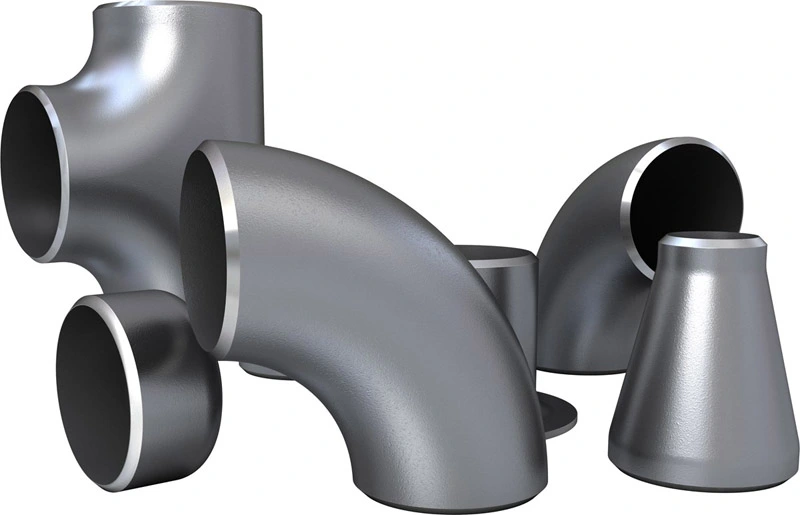
When selecting components for industrial piping systems, understanding the range of available fittings can make the difference between a seamless installation and costly project delays. Butt weld fittings represent the backbone of permanent pipeline connections, offering high strength and reliable leak-tight performance. Commonly used types include elbows for directional changes, tees for branching, reducers for size transitions, caps for termination, and stub ends for flanged connections. Each serves a distinct purpose in refinery, petrochemical, power generation, and water treatment applications where safety and long-term reliability are non-negotiable.
Introduction
Getting the right fittings is the first step toward maintaining pipeline safety. Over the past 40 years, we've seen how proper component selection affects project success, from achieving timely commissioning to ensuring reliable operation for decades. This guide is for procurement managers, project engineers, and distributors who have to work hard every day to meet tight deadlines, keep costs low, and minimize risk. We know that your reputation depends on getting parts that meet strict requirements and are delivered on time .
At JS Fittings, we have been manufacturing high-quality piping components since 1983 and have a huge selection of NPS 1/2" through NPS 60" fittings. Our monthly production capacity is more than 1,500 tons, and it helps with projects ranging from offshore platforms to city infrastructure. Whether you're choosing parts for an expansion of a refinery or making sure that distributors have enough stock, this resource makes the technical landscape and buying decisions that lead to success clear.
What Are Butt Weld Fittings?
Butt weld fittings are precisely engineered pipe parts that are designed to make permanent connections by welding around the outside. These fittings are different from threaded or socket weld options because they have beveled ends (usually prepared with a standard welding bevel that matches the applicable pipe and welding procedure) that line up with matched pipe preparation to allow full-penetration welds. This design provides a smooth internal transition that can reduce turbulence and deposit accumulation, helping lower the risk of corrosion and flow-related problems.
Materials and Manufacturing Standards
The choice of material has a direct effect on the safety limits and service life. Carbon steel grades (ASTM A234 WPB) are used most often in general industry settings because they are cheap and have good mechanical qualities for moderate temperatures. Stainless steel types (ASTM A403 WP304/316) are better at resisting corrosion in chemical processing areas, while alloy steel types (ASTM A234 WP11, WP22) can handle high temperatures in power plants.
Global compatibility and quality standards are made possible by manufacturing standards. ASME B16.9 sets the sizes and tolerances for factory-made wrought fittings, and MSS SP-43 covers wrought and fabricated butt-welding fittings for low-pressure, corrosion-resistant applications, primarily for Schedule 5S and 10S pipe. European markets use EN 10253 as a guide, and our production lines can handle all the major standards, including ASTM, DIN, JIS, and GOST, so they can work with foreign projects without any problems.
Why Full-Penetration Welding Matters?
When stress is added, the structural advantage becomes clear. Full-penetration butt welds can provide high joint efficiency when properly designed, qualified, welded, and inspected in accordance with the applicable code, which means that the strength of the weld is the same as or greater than the strength of the base material. During hydrostatic testing and pressure surges, this feature is very important. Socket weld fittings, on the other hand, have a specified root gap that must be properly controlled to accommodate thermal expansion and reduce the risk of excessive stress concentration during temperature fluctuations.
Another significant advantage of buttweld fittings is that joint inspections are straightforward. Radiographic and ultrasonic non-destructive testing (NDT) can check the integrity of the weld throughout the thickness of the joint. This provides the proof needed to meet nuclear and petrochemical code requirements. Our quality control procedures include visual examination of every fitting and, when required by the applicable code or project specification, radiographic or ultrasonic testing to make sure it meets the performance standards we've written down.
Common Types of Butt Weld Fittings and Their Applications
To solve problems with flow routing, system designers use a standard catalog of fitting geometries. Knowing the features of each type helps match parts to specific practical needs while avoiding over-specification that drives up costs needlessly.
Elbows: Directional Change Solutions
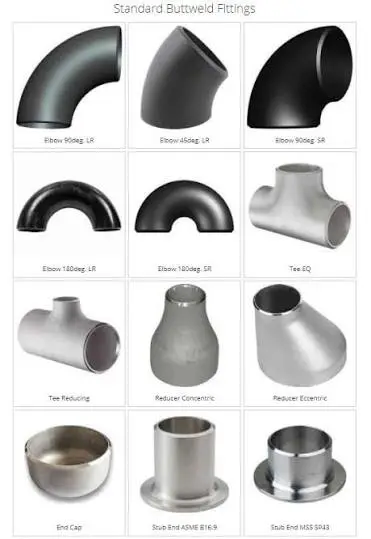
Elbows change the flow at 45°, 90°, or unique angles. The cost and hydraulic performance are affected by the radius classes. When compared to short-radius elbows, long-radius elbows (LR, with centerline radius = 1.5 × nominal diameter) cause lower pressure drops and less erosion. Long radius elbows are recommended for slurry applications with high speeds or when reducing pumping energy is important. They pay for themselves over the system's lifetime.
We make elbows with wall thicknesses ranging from Schedule 10S to XXS and sizes ranging from 1/2 inch to 60 inches. In refineries, our 90° elbows can handle pipeline turns, and our 45° elbows can handle smoother directional changes in water treatment plants that need to maintain the desired flow conditions and support consistent chemical dosing.
Tees: Branching and Distribution
Tees make three-way crossings that let fluids flow or equipment join without putting the structure at risk. Equal tees have outlets that are the same size, while reducing tees have a branch connection that is smaller. The header-to-branch reinforcement design takes care of the stress buildup where the branch goes through the run pipe.
In industrial applications, tees are used as takeoff points for instruments, pump suction headers in cooling water systems, and process fluid distribution manifolds. For example, a ½" instrument connection doesn't need a full-bore 12" equal tee. When specifying tees, make sure the branch size matches the actual flow requirements. This will save you money on materials and pressure loss.
Reducers: Size Transition Components
Reducers join pipes of different sizes together while keeping the flow going. Concentric reducers have a uniform cone shape and are good for gas and air lines where keeping the flow centered can help maintain a more uniform flow pattern. Eccentric reducers have centerlines that aren't lined up perfectly. The flat side keeps air pockets from forming in liquid lines or lets the whole system drain during maintenance shutdowns.
The choice has a direct effect on how well the system performs. For example, installing a concentric reducer on the suction side of a horizontal pump can promote air accumulation and may contribute to cavitation. On the other hand, eccentric reducers in vertical runs make velocity curves that aren't even. To avoid these mistakes in the field that hurt performance, our engineering team helps with making sure that the installations are done in the right way.
Caps: Pipeline Termination
Caps close off pipe ends permanently or temporarily. They are often used for system testing, future expansion plans, or isolating equipment. Caps weld directly to the pipe end, unlike blind flanges that bolt to matching flanges. This makes a lower-profile ending without bolt rings sticking out.
We have caps with diameters from ½" to 60" and all standard wall thicknesses. Because they are manufactured to applicable dimensional and material standards, properly specified caps can be designed for the pressure requirements of the piping system. This means that caps can be used for hydrostatic testing, where the piping system may be subjected to a hydrostatic leak test pressure specified by the applicable code, commonly 1.5 times the design pressure under ASME B31.3 conditions. Some engineers like blind flanges because they are easier to access when future growth is expected, but welding caps get rid of possible leak points during interim service.
Stub Ends and Lap Joint Flanges
This two-piece system has a short welded section (stub end) and a loose backing flange (lap joint). The loose backing flange allows the flange to rotate during bolt-up without affecting the welded connection. Two types of stub ends are the short pattern and the long pattern. The short pattern is for light-duty uses, and the MSS pattern is for general work.
In corrosion-resistant metal systems, choosing the right short end is based on minimizing costs. Instead of making expensive flanges out of Inconel or Hastelloy, the corrosion barrier is built into the stub end, and the lap joint flange can be paired with a carbon steel buttweld pipe fitting. This mixed method cuts the cost of materials by 40 to 60 percent in uses for rare alloys while keeping full corrosion protection at the process border.
Specialized Fittings: Saddles and Swages
Custom solutions are needed for niche applications. When standard reducers are too sudden for the job, a swage offers a smoother change in diameter. When you use them, reinforcing saddles are welded to existing headers; they can provide additional reinforcement around branch connections. Where hot work is prohibited, specially designed mechanical branch connections may be considered instead; you can use mechanical connections instead of welding in dangerous places.
Non-standard curves, multi-branch collectors, and transition pieces that connect different pipe specs are all things that we can make to order. Our engineering team brings 43 years of manufacturing expertise, having solved unique plumbing problems that standard catalog items can't. This gives projects with limited space or changes to existing buildings the freedom to use custom solutions that don't come off the shelf.
How to Choose the Right Butt Weld Fitting for Your Project?
To make a good specification, you have to balance technical needs with budget and schedule constraints. The decision framework includes things like material compatibility, pressure-temperature ratings, and code compliance. The final choice is affected by how easy it is to get the materials.
Material Selection: Performance vs. Cost
When temperatures and corrosion conditions are within the material's allowable limits, carbon steel is often a cost-effective choice for general industrial service. The price is about a third of what 316 stainless steel costs, so this is the standard material for general industry use. But in corrosive environments, carbon steel needs protective coatings, and the costs of upkeep add up over time.
Stainless steel grades don't rust and can handle some chemical contact without coatings. Type 304 is suitable for many general corrosion-resistant applications, while Type 316 generally provides better resistance to chloride-induced pitting and is often preferred for marine environments and selected chloride-containing process streams. The higher cost at first is worth it because the material lasts longer. In the right situations, our customers have reported steel systems that last over 30 years without needing to be replaced.
For high-temperature applications, alloy steels provide an alternative to carbon steel. Grades of chromium-molybdenum like P11 and P22 stay strong at temperatures where carbon steel weakens. This is why chromium-molybdenum grades such as P11 and P22 are commonly considered for elevated-temperature steam and process services where their creep and high-temperature strength provide an advantage. The alloy steel option is 50–80% more expensive than carbon steel, but it is still much more cost-effective than stainless steel options for handling high temperatures.
Pressure Class and Schedule Considerations
Fitting dimensions are specified according to applicable standards such as ASME B16.9, while the allowable pressure and temperature are determined using the applicable material, piping code, fitting dimensions, and design conditions. Schedule numbers (10, 40, 80, 160, and XXS) show how thick the wall is compared to the wall thickness. Higher schedules can handle higher pressures. By matching fitting schedules to adjacent pipes, you can keep them straight and make sure that the preparation for the weld is always the same.
Our stock covers fittings for piping systems ranging from lower-pressure utility service to high-pressure applications, with pressure capability determined according to the applicable material, dimensions, and design code. These range from low-pressure HVAC systems to high-pressure injection wells. In the specification process, it is necessary to make sure that the pressure-temperature ratings of the fittings meet or exceed the design conditions of the system, with the appropriate safety margins as required by the pipe codes.
Butt Weld vs. Socket Weld Comparison
When installing small-bore pipes (usually 2" or less), where fit-up tolerance isn't as important, socket-weld fittings are faster. Socket weld fittings can simplify alignment during assembly of small-bore piping, although proper fit-up and welding still require qualified procedures and skilled personnel. But the hole design makes a crack inside that collects deposits during erosive or acidic service, making it easier for the attack to happen.
Through clean internal alignment, butt weld joints get rid of this weakness. Because the smooth bore stops turbulence and deposit buildup, butt welds are often preferred for systems handling corrosive fluids or severe cyclic service when a smooth internal bore and higher fatigue performance are required by the design. No matter how big the line is, our technical advice is to use butt welds whenever there is vibration, thermal cycling, or corrosion.
Certification and Traceability Requirements
Material test reports (MTRs) that list the chemical make-up and mechanical qualities of materials are required by major project requirements. As required by ASME, our production method keeps full traceability from the certification of the steel mill to the final check. This is done by stamping a unique heat number on each fitting.
We have certificates from a number of international organizations, including ISO 9001 for quality management, CE marking for European markets, and GOST-R for projects in Russia. Our position as an approved provider with NIOC (National Iranian Oil Company), ADNOC (Abu Dhabi National Oil Company), and Petrobras shows that we consistently deliver high-quality products on projects where meeting specifications is what makes a contractor qualified.
Conclusion
Selecting the right butt weld fittings requires an understanding of how the qualities of the material, manufacturing standards, and installation methods work together to keep the system intact. Different types of fittings, like elbows, tees, reducers, caps, and stub ends, meet different flow route needs and keep the system leak-proof in tough situations. When making purchases, people weigh technology requirements against things like cost, delivery times, and how reliable the seller is. Engineered performance means decades of trouble-free service if installation and maintenance are done correctly. Working with experienced makers who offer quality that has been proven, quick expert support, and a track record of on-time deliveries lowers project risk and keeps costs down over the lifecycle.
FAQ
1. What distinguishes butt weld fittings from socket weld alternatives?
Butt weld fittings have beveled ends that make full-penetration welds. This makes the inside of the joint clean and free of cracks. The socket design in socket weld fittings is set back, which leaves a small space that can rust and build up deposits. Butt welds are better for cyclic service, corrosive fluids, and larger pipe sizes because they have higher joint efficiency and better fatigue resistance. Socket welds, on the other hand, can be installed more quickly on small-bore pipes where alignment tolerance is less important.
2. Can carbon steel fittings handle corrosive chemical environments?
When properly coated and watched, carbon steel can handle mildly corrosive conditions. But chemicals that are more aggressive need alloys that are immune to rust. The choice relies on the long-term cost of corrosion. If carbon steel only lasts five years before it needs to be replaced, but stainless steel lasts thirty years for three times as much, the stainless option is the better choice. The process of choosing a material is guided by looking at data on corrosion rates for different chemicals and temperatures.
3. How do I determine the correct fitting size for my application?
Fitting standard sizes are the same as the pipes they link to, and wall thickness schedules make sure that they work together. Find out the outside diameter and wall thickness of the current pipe, then look at ASME B36.10M to make sure the nominal size and plan are correct. For the right fit-up and weld preparation orientation, the fitting must be the same size in both directions. When you need unique manufacturing for sizes or wall thicknesses that aren't normal, our expert team can help.
Request a Quote from Your Trusted Butt Weld Fittings Supplier
JS Fittings is ready to help you with your pipeline projects. For 43 years, they have been making high-quality butt weld fittings and other pipeline products. Our large selection of NPS 1/2" through 60" carbon steel, stainless steel, and alloy materials makes sure that you meet all the requirements, whether you're building a new refinery or keeping the old one up and running. We ship more than 90 containers every month to customers in more than 30 countries. Our 98% repeat-customer rate shows that our customers are happy, as evidenced by the fact that we deliver on time more than 95% of the time. For project-specific advice, technical specifications, or volume quotes, email our engineering team at admin@jsfittings.com. We offer material test reports, dimensional certifications, and application support that keep your schedule and reduce the risk of procurement.
References
1. ASME. (2020). ASME B16.9: Factory-Made Wrought Buttwelding Fittings. American Society of Mechanical Engineers.
2. Becht, C. (2010). Process Piping: The Complete Guide to ASME B31.3 (3rd ed.). ASME Press.
3. Mohitpour, M., Golshan, H., & Murray, A. (2007). Pipeline Design & Construction: A Practical Approach (3rd ed.). ASME Press.
4. ASTM International. (2021). ASTM A234: Standard Specification for Piping Fittings of Wrought Carbon Steel and Alloy Steel for Moderate and High-Temperature Service.
5. The Tube & Pipe Journal. (2019). "Understanding Butt Weld Fitting Standards and Applications. "The Fabricator," May 2019.
6. Pipeline & Gas Journal. (2018). "Material Selection for Corrosive Pipeline Service." Pipeline & Gas Journal, 245(11).
Send Inquiry
You may like
Related Industry Knowledge
- Stainless Steel vs Carbon Steel Buttweld Reducer Comparison
- Industrial Buttweld Elbow Solutions for Power Plant Piping
- Custom CRA Clad Flanges and Pipes for Corrosive Media
- Metallurgically Bonded CRA Clad Pipe vs Mechanically Lined Pipe
- ASTM A252 SSAW Carbon Steel Pipe Manufacturer for Foundation Piling
- Types of ASTM A105 weld neck flange
- What Is the Difference Between LR and SR Buttweld Elbow?
- A312 stainless steel pipe – Stainless Steel Pipe Dimensions, Chemical Composition
- CRA Clad Pipe vs Mechanically Lined Pipe: Key Differences Explained
- What is seamless carbon steel pipe used for?