
Can Threaded Flanges Handle High Pressure?






2026-09-08 17:16:16
Threaded Flanges can handle high pressure—but with important qualifications. Screwed flanges are engineered to withstand substantial pressures when properly specified, installed, and maintained. At JS Fittings, we manufacture threaded connections rated from Class 150 through Class 2500 that serve reliably in specialised high-pressure applications, particularly for small-diameter piping systems up to 4 inches. The key lies in understanding their pressure limitations, selecting appropriate materials, and adhering to installation best practices. While they may not match the extreme pressure capabilities of weld-neck flanges, threaded flanges offer a proven, safe solution for many industrial high-pressure services where welding restrictions or operational constraints make them the most practical choice.
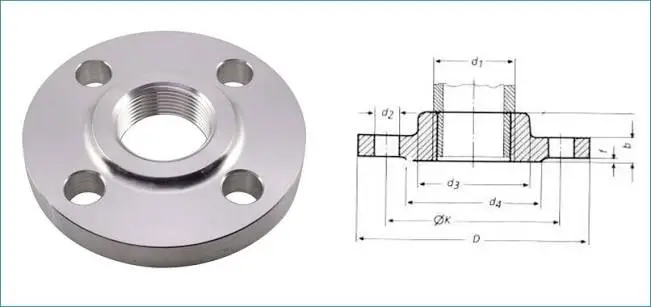
Understanding Threaded Flanges and Their Pressure Ratings
A threaded flange, sometimes called a screwed flange, has internal tapered threads instead of a smooth bore for welding. This part screws directly onto pipes that have matching external threads. This makes a mechanical seal that doesn't need to be welded.Due to their design, they are particularly advantageous for small-diameter piping systems where hot work presents safety risks or operational disruptions.
At JS Fittings, we manufacture our products in accordance with the exact rules set by ASME/ANSI B16.5 and DIN/EN 1092-1. This helps ensure that the dimensions are correct and the threads meet the applicable requirements for the specified pressure and temperature conditions. Since 1983, we have cultivated decades of manufacturing excellence, honing our forging and machining capabilities so that we can make threaded connections that meet the strict requirements of global energy infrastructure projects.
How do pressure ratings work?
For screwed flanges, pressure values are based on standard categories that show the highest pressure that can be used at certain temperatures. These are called Class 150, 300, 600, 900, 1500, and 2500 in the American standard system. Each class has a more durable build and higher pressure limits.
The choice of material has a big impact on how much pressure a joint can handle. Forgings made of carbon steel, like ASTM A105, are very strong and can be used in a wide range of industrial settings. Forgings made of stainless steel, like ASTM A182 F316L, are much more resistant to corrosion in chemical processing settings. Different types of alloy steel are used for low-temperature tasks or specific corrosive conditions. For positive material identification, our quality control system uses material identification equipment to verify that each forging matches its specified grade before it is machined.
The type of thread has a big effect on how well the seal works under pressure. The National Pipe Thread (NPT) has a 1:16 taper that makes the male and female threads overlap with each other, creating a mechanical lock when the threads are tightened. BSPT (British Standard Pipe Taper) works in a similar way, but its pitch sizes are different to fit markets in Europe and the Commonwealth. Both designs depend on the depth of thread contact and the right amount of force to keep connections leak-tight when pressure builds up inside.
Critical Design Parameters
As pressure requirements increase, size restrictions become increasingly critical. For Class 600 and higher applications, the allowable size of a threaded connection should be established from the applicable piping code, design loads, pressure-temperature conditions, and project specifications rather than from pressure class alone. Smaller sizes are generally preferred where threaded joints must accommodate higher pressure, external loads, or cyclic service. This is a limitation because larger diameters create stronger separation forces when under pressure, which threads can't always counteract compared to a full-penetration weld's continuous metal bond. Our normal output range is from ½ inch to 4 inches, and our Class 2500 choices are mostly for small-bore instrumentation and control lines.
Facing options gives you more control over the sealing. Most of the time, raised face (RF) configurations are used, which make a narrow contact band that focuses gasket compression. For low-pressure or brittle gasket materials, Flat Face (FF) designs spread the pressure more evenly. Ring Type Joint (RTJ) facings can hold metal ring gaskets for the toughest high-pressure jobs, but using them with threaded bores needs careful engineering study.
Pressure ratings are affected by temperature in a direct way. The safe working pressure goes down as the running temperature goes up because the material's yield strength goes down. Pressure-temperature charts in ASME B16.5 change the class grades for different temperature ranges. When stating pressure class needs, procurement professionals need to think about both peak operating conditions and possible upset scenarios.
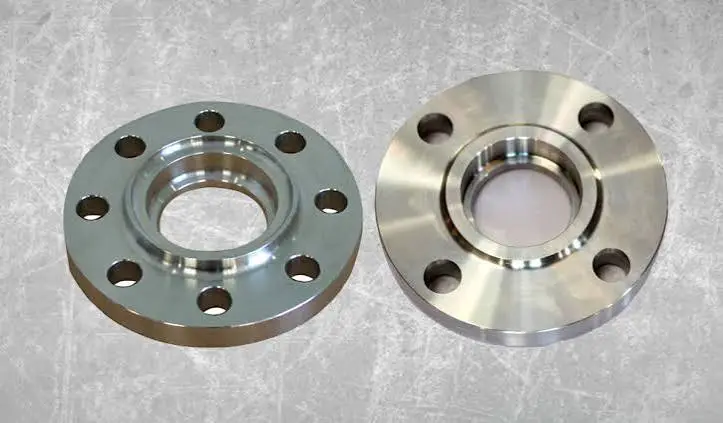
Comparing Threaded Flanges with Other Flange Types for High-Pressure Applications
When procurement teams know how screwed connections compare to other designs, they can make decisions that balance technical needs with the cost and time of the project.
Weld Neck Flanges
For high-pressure and high-temperature applications, weld neck flanges are the standard. Their long, tapered hub transfers pipe stress slowly into the flange body, making it very resistant to bending moments and cycle wear. The full-penetration butt weld creates a continuous metallic link that gets rid of the leak path that comes with mechanical threads.
However, this better performance comes with a lot of installation work that needs to be done. Certified welders must perform precise joint preparation and beveling. Radiographic testing (RT) or ultrasonic testing (UT) may be used to verify weld quality when required by the applicable code or project specification. A lot of alloys need to be heated again after welding to get their mechanical properties back to how they were before the welding. When compared with threaded flanges, these steps make installation more time-consuming and labour-intensive.
Socket Weld and Slip-On Flanges
Socket weld flanges are a middle ground because they let the pipe fit into a hole before fillet welding around the outside. Because they do not require the same pipe-end bevel preparation as weld-neck flanges, they can provide a rigid welded connection in applications where welding is permitted. Slip-on flanges fit over the end of the pipe and can accept both internal and external fillet welds. They are moderately strong and don't cost much.
Both alternatives still necessitate hot work permits, specialized welding equipment, and certified welders. Threaded flanges can be a practical option in locations where hot work is restricted or difficult to permit, such as operating petrochemical units or offshore facilities during production. For small-bore instruments and auxiliary piping, some clients in Zone 1 classified areas may prefer screwed connections when welding would require additional hot-work controls, permits, or shutdown planning.
Lap Joint Flanges
Lap joint designs have a loose backing flange and a stub end that is welded to the pipe. This setup makes it easier to line up the bolt holes and lets the ring rotate after it has been installed. But the cut end still needs to be welded, which brings back the problems that threaded flanges get rid of. Their main benefit is in systems that need to be taken apart often and use expensive alloys. For example, the loose flange part can be made of carbon steel, while only the stub end needs to be made of expensive alloys.
This comparison demonstrates that threaded flanges are optimal for small-diameter piping systems subjected to moderate-to-high pressures, particularly when welding is deemed unsafe, compromises protective coatings, or is economically prohibitive.When these things happen and your project needs them, threaded connections give you the best value and performance.
Advantages and Limitations of Using Threaded Flanges in High-Pressure Piping Systems
Knowing the pros and cons of screwed connections is important for making sure they are used correctly and avoiding expensive mistakes or over-specification.
Core Advantages
Their primary advantage is exceptional suitability for hazardous environments. Chemical plants, gas processing plants, and oil refineries all have strict hot work control programmes that include permits, air monitoring, fire watch staff, and often partial shutdowns for welding. With threaded links, none of these things are needed at all. Our customers at big energy companies like NIOC, ADNOC, and Petrobras specifically ask for screwed flanges because they allow safe installations in explosive environments without the need for special permits.
Small-bore piping projects take less time and cost less money when installation logistics are made easier.Threaded flanges enable technicians to assemble connections using standard hand tools such as pipe wrenches, thread gauges, and torque wrenches.They don't need any special welding equipment or a certified welder to do it. This feature is especially useful in hard-to-reach places, on offshore platforms, or during short maintenance windows when getting welding crews to the site can be hard.
For galvanised fire safety systems and corrosion-resistant lining pipes, coating maintenance is very important. Temperatures used for welding damage the zinc coating for a few inches around the area that is heated, leaving openings for rust to start. Plastic or ceramic linings inside also can't stand up to welding close by. Threading keeps the coating's consistency from the pipe to the flange all the way through, which increases the system's service life and makes sure it meets all regulations. This is one reason threaded connections are used in some fire protection piping applications where they are permitted by the applicable NFPA requirements.
Maintenance accessibility is good for operations all the time. When connections can be unscrewed instead of cut and re-welded, systems that require regular internal inspection, cleaning, or modification are much easier to service. Threaded connections are used in some utility, research, and non-sanitary piping installations where easy disassembly and reconfiguration are important.
Eliminating the requirement for post-weld heat treatment (PWHT) significantly accelerates project schedules for alloy piping systems. After welding, many high-alloy and stainless steels need to go through controlled heating and cooling processes to keep them from stress corrosion cracking and to achieve their properties. These PWHT steps can make construction take days or weeks longer than planned. Threaded connections don't have to follow this rule at all, so the base material stays in its as-forged metallurgical condition.
Important Limitations
Thermal cycling is the main problem with the technology. When temperatures change a lot, the pipe and flange expand at different rates, which could make the threaded contact weaken over time. ASME B31.3 requires threaded joints to be evaluated carefully where cyclic loading, thermal expansion, or other conditions could impose additional stress on the joint. The code also recommends avoiding threaded joints where crevice corrosion, severe erosion, or cyclic loading may occur. For situations involving steam, thermal oil systems, or processes that undergo frequent heating and cooling, welded connections, such as socket-weld or weld-neck configurations, are generally more appropriate when permitted by the applicable design code.
Thread galling is more likely when the material is hard and when it is installed incorrectly. Grades of stainless steel that are more likely to gall need to be carefully oiled, and the installation torque needs to be kept under control. Once galling occurs, the threads distort and seize, preventing proper engagement and compromising seal integrity. To stop this type of failure, our technical documentation lists anti-seize compounds that are compatible with service fluids.
The bending moment resistance is still a lot smaller than that of welded options. The threaded joint puts a lot of stress on the first thread that engages, which is not carrying its fair share of the load. External forces like temperature expansion, shaking, or not enough pipe support can build up stress here, which could lead to thread stripping or link loosening. It's important to place the pipe supports correctly; for threaded connections, support lengths must be shorter than for welded systems.
At the thread interface, where small gaps can trap corrosive fluids, there is a chance of crevice corrosion. In aggressive chemical or marine services, trapped fluids can concentrate corrosive species and accelerate localised corrosion in that area. Some specifications call for seal welding around the thread junction to get rid of this gap, but this takes away from the benefits of installation and adds stress.
Conclusion
Threaded flanges can handle high pressure as long as the engineering teams make sure that the flanges' capabilities match the needs of the application. Precision-machined NPT or BSPT threads make a mechanical seal that can reliably hold pressures up to Class 2500 for connections of the right size. Screwed flanges are the only way to go for installations in dangerous areas, system integrity, and quick entry for upkeep because they don't need to be welded. When procurement professionals know how to choose the right materials, how to install them correctly, and how their benefits compare to other flange types, they can safely mention threaded connections when their strengths match the needs of the project. With more than 40 years of experience making things, we've sent these important parts to big energy infrastructure projects all over the world, making sure that we meet strict quality standards that lower project risk while still meeting tight deadlines.
FAQ
1. Can threaded flanges be used in high-temperature cyclic services?
Screwed flanges are generally not recommended by industry standards for applications involving severe thermal cycling or high external bending loads.ASME B31.3 requires threaded joints to be evaluated carefully under cyclic loading and thermal expansion conditions and recommends avoiding threaded joints where cyclic loading or other conditions could adversely affect joint integrity, which can cause leaks. When there are a lot of temperature changes or thermal transients, socket weld or weld neck flanges are better because they don't come free as easily and can handle the stresses that come from repeated rounds of expansion and contraction better.
2. Why are threaded flanges typically limited to small sizes?
As the diameter of the pipe grows, so does the torque needed to tighten tapered threads. This makes it harder and harder to put the pipe together correctly. When under pressure, larger sizes also apply huge forces that separate the two parts that threads can't safely handle compared to a full-penetration butt weld's continuous metal bond. Because of this mechanical limit, threaded connections are usually limited to NPS 4 or smaller for most uses, and Class 600 and higher services are even more limited to NPS 2 or smaller.
3. When should I apply a seal weld to a threaded flange?
When there is a chance of crevice rust or when the service fluid is very dangerous or penetrating, seal welding is the right choice. The small fillet weld that is put around the thread junction closes off the space where corrosive fluids could gather. But once the joint is seal-welded, it can't be broken. This means that threaded connections no longer have the maintenance-friendly benefits that made them appealing in the first place. Seal welding also makes the connection more difficult to disassemble and introduces welding-related considerations that must be addressed during design and fabrication.
Partner with JS Fittings for Your High-Pressure Threaded Flange Requirements
JS Fittings is ready to help you with your next project by providing threaded flange options that are built to last and meet foreign standards. We can make anything from Class 150 to Class 2500, and we can use materials ranging from carbon steel to rare alloys, so we can be sure to meet your exact needs. We understand the strict needs of energy infrastructure projects where failure is not an option because we are an approved Threaded Flanges provider for NIOC, ADNOC, and Petrobras. When you contact us, our expert team will get back to you within an hour to answer your questions and give you application advice, pressure-temperature estimates, and quotes that are tailored to your needs. Email us at admin@jsfittings.com right now to talk about your threaded flange needs, get detailed product specs, or set up a factory inspection visit.
References
1. American Society of Mechanical Engineers. (2020). ASME B16.5: Pipe Flanges and Flanged Fittings. ASME International. https://www.asme.org/codes-standards/find-codes-standards/b16-5-pipe-flanges-flanged-fittings-nps-1-2-nps-24-metric-inch-standard
2. American Society of Mechanical Engineers. (2021). ASME B31.3: Process Piping. ASME International. https://www.asme.org/codes-standards/find-codes-standards/b31-3-process-piping
3. Becht Engineering. (2019). "Threaded and Socket Welded Connections." Becht Engineering Technical Library. https://www.becht.com/resource/threaded-and-socket-welded-connections/
4. Piping Technology & Products, Inc. (2022). "Flange Types and Their Applications in Piping Systems." PT&P Technical Resources. https://www.pipingtech.com/flange-types-applications
5. Engineers Edge. (2023). "Pipe Flanges and Flanged Fittings Standards and Specifications." Engineers Edge Reference. https://www.engineersedge.com/pipe_flanges.htm
6. Coastal Flange. (2021). "Understanding Threaded Flanges: Applications, Advantages, and Limitations." Coastal Flange Technical Guide. https://www.coastalflange.com/threaded-flanges-guide/
Send Inquiry
You may like
Related Industry Knowledge
- Understanding Weld Neck Flanges: Types and Applications
- Hot Dipped Galvanized Carbon Steel Pipe for Water Supply System
- Which Standard Governs Carbon Steel Forged Steel Flange Size?
- Welding Neck Flange – Composition, Material, Standard, and Dimensions chart
- CRA Clad Pipe: Applications, Benefits, and Future Trends
- Internal Burr Removed ASTM A53 ERW Pipe for Precision Applications
- Carbon Steel vs Stainless Steel Buttweld Bend: Which to Use?
- Seamless vs Welded Buttweld Tee: Which Performs Better?
- Does ASME require hydrotesting for a blind flange?
- What are butt weld fittings?